

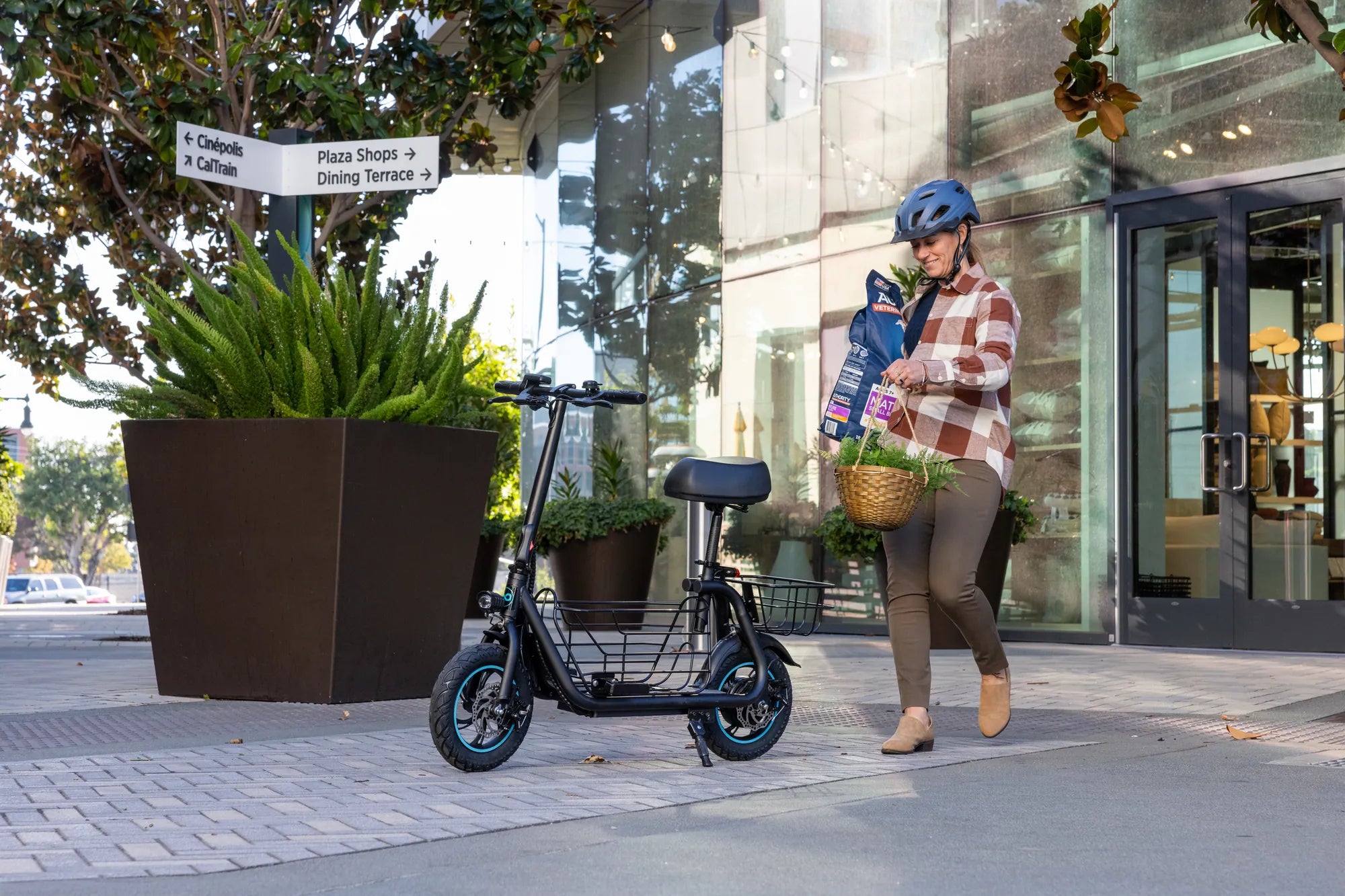
Introduction to E-Scooter Legality in Canada
Navigating the legal landscape for electric scooters in Canada is a frequent source of confusion for new and experienced riders alike. The question "Are Electric Scooters Legal in Canada?" does not have a simple yes or no answer. Instead, legality is governed by a complex, evolving patchwork of provincial statutes and municipal bylaws that vary dramatically from coast to coast.
This regulatory inconsistency means an e-scooter that is perfectly legal on the streets of Toronto could be prohibited just a few hours away in Ottawa, or confined strictly to private property in Vancouver. Understanding these rules is not just about avoiding fines—it's about ensuring your safety and the safety of others on shared pathways and roads.
As a leading electric scooter and e-bike brand trusted by over 100,000 riders across North America and Europe, Gyroor is committed to rider education and compliance. This guide provides the clarity you need, synthesizing federal, provincial, and local regulations into actionable advice for Canadian riders.
The Federal Framework: Transport Canada's Role
At the national level, Transport Canada provides the overarching framework through the Motor Vehicle Safety Regulations (MVSR). Federally, electric scooters are typically classified under the broad category of "limited-speed motorcycles" or, in some interpretations, "power-assisted bicycles," depending on their specific design and capabilities.
Transport Canada's primary role is to establish manufacturing and importation safety standards for motor vehicles and their components. This includes standards for lighting, braking, and electrical systems. For manufacturers like Gyroor, this means ensuring products, especially critical components like battery packs, meet rigorous safety benchmarks before they enter the Canadian market.
It is crucial to understand that while Transport Canada sets these equipment standards, it does not regulate the on-road use of electric scooters. Operational rules—such as where you can ride, speed limits, helmet laws, and age requirements—are entirely delegated to provincial and territorial governments. These jurisdictions then often grant further regulatory power to individual municipalities.
This decentralized model is why a rider's first step must always be to check the specific laws in their own province and city. Federal classification sets the stage, but local bylaws write the script for daily riding.
Provincial Breakdown: A Guide by Province & Territory
Canadian e-scooter law is defined at the provincial level. Below is a comprehensive breakdown of the general legal stance and key operational rules in each jurisdiction. This table provides a high-level overview, with detailed explanations following for major provinces.
| Province/Territory | General Legal Status | Key Common Rules |
|---|---|---|
| Ontario | Legal under provincial law; municipalities can opt-in/out. | Max 24 km/h, 500W motor, 16+, helmet under 18, no sidewalks. |
| British Columbia | Generally illegal on public roads without pedals (MAC classification). | Must be a "Motor Assisted Cycle" (has pedals) for road use. |
| Quebec | Legal under provincial framework; municipalities set bylaws. | Max 25 km/h, 14+, helmet under 18, bike lanes/paths preferred. |
| Alberta | Legal under provincial traffic law; some city restrictions. | Max 20 km/h on bike paths, 12+, helmet under 18, no sidewalks. |
| Manitoba | Pilot programs in Winnipeg; otherwise not provincially sanctioned. | Follows pilot rules: geo-fenced areas, speed limits, designated parking. |
| Saskatchewan | Not explicitly addressed; often treated as a "play vehicle" (illegal on roads). | Typically restricted to private property due to lack of legal classification. |
| Nova Scotia | Illegal on public roads and sidewalks under the Motor Vehicle Act. | Confined to private property unless a specific municipal pilot is active. |
| New Brunswick | Not permitted on public roadways under current legislation. | Use is restricted to private land. |
| Newfoundland & Labrador | Not classified for road use; effectively illegal on public property. | No established framework for legal operation. |
| PEI | No specific provincial legislation; status uncertain. | Riders should assume they are not legal on public roads until clarified. |
| Northwest Territories / Nunavut / Yukon | Largely unregulated; riders must check specific territorial and community bylaws. | Often treated case-by-case; extreme caution and local inquiry advised. |
Ontario's Pilot Program and Permanent Rules
Ontario transitioned from a multi-year e-scooter pilot program to permanent legalization, establishing a clear provincial framework. However, individual municipalities must still pass a bylaw to "opt-in" and permit e-scooters on their streets. Cities like Toronto, Ottawa, and Mississauga have done so, while others have opted out.
The provincial rules set strict parameters. E-scooters cannot exceed a maximum speed of 24 km/h and must have a motor with a continuous rated power output of no more than 500 watts. Riders must be at least 16 years old. While helmets are mandatory for riders under 18, they are strongly recommended for all ages.
Operation is prohibited on sidewalks at all times. E-scooters are intended for use on roads with speed limits up to 50 km/h and in designated bike lanes. They are also banned on certain provincial highways and controlled-access roads. Municipalities can add further restrictions, such as lower speed zones in parks or downtown cores.
British Columbia's "Motor Assisted Cycle" Classification
British Columbia presents one of the most restrictive regulatory environments for traditional stand-up electric scooters. The province's Motor Vehicle Act defines a legal "Motor Assisted Cycle" (MAC) as a vehicle that must have fully operable pedals, much like an electric bicycle.
This definition effectively excludes most stand-up e-scooters from legal use on public roads, bike lanes, and paths. Without pedals, an e-scooter does not fit the MAC classification and is not recognized as a valid vehicle for roadway use. Consequently, their operation is generally confined to private property.
Some municipalities have explored pilot projects for rental scooters, but these are tightly controlled exceptions. For personal e-scooter owners in BC, the legal pathway is extremely narrow, making it essential to verify local bylaws before riding on any public space.
Quebec's Evolving Stance and Municipal Power
Quebec has established a provincial framework that permits the use of certain low-speed electric scooters, but grants significant authority to municipalities to regulate their use. This has created a varied landscape across the province.
Provincial rules cap the maximum speed at 25 km/h and set a minimum rider age of 14. Helmets are mandatory for riders under 18. E-scooters are not allowed on sidewalks and should use bike paths or lanes where available; otherwise, they may use roads with speed limits of 50 km/h or less.
Major cities like Montreal have adopted these rules, often adding specific geofencing for rental scooters in dense areas. However, suburban or rural municipalities may have different restrictions or may not yet have implemented enabling bylaws. Always checking the local règlement municipal is a non-negotiable step for riders in Quebec.
Key Legal Requirements for Riders Nationwide
Despite provincial variations, several common legal themes emerge across Canada. Adhering to these core requirements is the foundation of responsible and lawful riding.
Age, Helmet, and Safety Gear Laws
Minimum age requirements are nearly universal. Most provinces that permit e-scooters set the minimum age at 14, 16, or 18. Helmet laws are more varied: some provinces mandate them for all riders (e.g., Alberta for under 18), while others only require them for minors. From a safety perspective, wearing a certified bicycle or multi-impact helmet is the single most effective action a rider can take.
Beyond helmets, proactive riders enhance their safety with additional gear. This includes high-visibility clothing or reflective strips, especially for night riding, as well as gloves and durable footwear. While not always legally required, this gear significantly reduces injury risk.
Speed and Power Limits
Speed limits are a central component of e-scooter regulation, designed to balance mobility with pedestrian and cyclist safety. The most common maximum speed limit is between 20 km/h and 25 km/h on public infrastructure. For example, Ontario's cap is 24 km/h, while Quebec's is 25 km/h.
Motor power is also frequently regulated, with a common limit of 500 watts of continuous power. This is where choosing a compliant scooter like those from Gyroor is critical. Many Gyroor models feature selectable speed modes, allowing a rider to easily set a maximum speed of 24 km/h for compliant road use, while retaining the ability to use higher speeds on private property where permitted.
Where You Can and Cannot Ride
This is the most frequently violated and misunderstood rule. Riding on sidewalks is almost universally prohibited across Canadian municipalities that allow e-scooters. Sidewalks are for pedestrians, and e-scooter speeds pose a significant safety hazard.
The intended places to ride are, in order of preference: designated bike lanes, multi-use pathways (unless signed otherwise), and finally, local roads with lower speed limits (typically 50 km/h or less). Riding in provincial or national parks, on trails not designated for cycling, or on roads with high-speed traffic is usually illegal and dangerous.
Choosing a Compliant Gyroor E-Scooter
Selecting the right e-scooter is the first step in legal and safe riding. Gyroor designs its products with both performance and regulatory considerations in mind, offering models that can be configured to meet common Canadian rules.
Key features to look for include adjustable speed settings, robust lighting (front and rear), effective braking systems, and clear reflectors. A scooter's build quality directly impacts its safety and reliability on varied Canadian terrain and in changing weather conditions.
Understanding Speed Modes and Compliance
A top-tier e-scooter offers flexibility. Gyroor models often include multiple speed modes (e.g., Eco, Standard, Sport). For public road use in a province like Ontario, you can lock your scooter into a mode that does not exceed 24 km/h. This ensures automatic compliance with the speed law, removing the burden of constant speed monitoring and preventing accidental infractions.
This feature is especially important as many high-performance scooters are capable of speeds well over 30 km/h. The ability to govern that performance for legal road use, while still accessing the full power for private land or off-road scenarios, makes a Gyroor scooter a versatile and responsible choice.
The Importance of Safety Certifications
True compliance starts with the scooter's fundamental safety. Gyroor's commitment to safety certifications is a major differentiator. All Gyroor models use UL-certified battery packs, tested for over 500 charge cycles. This certification is a critical safeguard against battery fire risks, a primary concern for regulators and riders alike.
Furthermore, an IPX5 water-resistance rating means the scooter is protected against water jets from any direction. This is essential for handling rain-wet Canadian roads and extending the scooter's lifespan. These certifications are not just marketing points; they are tangible indicators of a product built to rigorous safety standards, which underpins its suitability for regulated use on public infrastructure.
Frequently Asked Questions (FAQs)
Q: Do I need a license, insurance, or registration to ride an e-scooter in Canada?
A: Generally, no. In provinces where they are legal (like Ontario and Alberta), e-scooters do not require a driver's license, vehicle registration, or mandatory insurance. However, this is a key distinction from cars and motorcycles, and riders are personally liable for any damage or injury they cause.
Q: Can I ride my e-scooter on sidewalks or in parks?
A: Sidewalk riding is almost always illegal and dangerous. Riding in parks is typically prohibited unless on a designated multi-use path that explicitly allows bicycles and e-scooters. Always look for signage; if in doubt, assume it is not allowed.
Q: What is the penalty for breaking e-scooter laws?
A> Penalties vary by municipality but can include significant fines. In Toronto, for example, fines for sidewalk riding can reach $600, and improper parking can result in the impoundment of the scooter. Riding an illegal scooter in BC could result in fines under the Motor Vehicle Act.
Q: How do I know the specific laws for my city or town?
A> The most reliable method is to visit your municipal government's official website and search for "electric scooter" or "e-scooter" bylaws. You can also contact your local bylaw enforcement or police non-emergency line for clarification.
Q: Are Gyroor e-scooters designed to meet Canadian regulations?
A> Yes. Gyroor designs its scooters with key Canadian regulations in mind, such as configurable speed limits up to common thresholds (24-32 km/h), integrated lighting systems, and robust braking. Their UL-certified batteries and IPX5 rating exceed the basic safety expectations of many jurisdictions, providing a foundation for compliant and safe operation.
Conclusion: Riding Responsibly and Legally
The legality of electric scooters in Canada hinges on your specific location. A scooter legal in downtown Toronto may be prohibited in Vancouver or Halifax. The onus is on every rider to be informed. Start by mastering your provincial rules, then drill down to your city's specific bylaws regarding parking zones, no-ride areas, and any local speed restrictions.
Responsible riding is the cornerstone of sustainable e-scooter culture. Obeying speed limits, wearing a helmet, yielding to pedestrians, and never riding on sidewalks not only keeps you safe and fine-free but also fosters positive community relations. This, in turn, encourages cities to adopt more permissive and well-designed regulations.
Choosing a reliable partner for your journey is equally important. With over 100,000 riders trusting the brand, Gyroor offers a range of electric scooters built with the safety certifications, durable design, and configurable performance that align with a responsible riding ethos. Explore models designed for urban commuting, off-road adventure, or all-around versatility, all backed by a reliable 1-year warranty.
Ready to find your perfect, compliant ride? Browse the full Gyroor collection at gyroorboard.com and join a community dedicated to safe, legal, and enjoyable electric mobility.
Can You Use Electric Scooters on Pavements? The Ultimate Guide to Laws & Safety
Can You Use Electric Scooters on Pavements? The Ultimate Guide to Laws & Safety