



Navigating the Rules of the Road
Electric scooters have surged in popularity across English cities, offering a convenient and eco-friendly mode of transport. However, their legal status remains a significant source of confusion for many. This guide provides a clear, comprehensive, and up-to-date answer to the question: Are electric scooters legal in England? We will dissect the current laws for both private and rental e-scooters, outline the strict regulations governing their use, explain the penalties for non-compliance, and offer practical advice for choosing a scooter designed with future UK standards in mind.
The Current Legal Landscape: Private vs. Rental E-Scooters
The law makes a fundamental distinction that is critical to understand. As of now, privately owned electric scooters are not legal for use on public roads, pavements, cycle lanes, or bridleways in England. They are classified as Personal Light Electric Vehicles (PLEVs) under the Highway Act 1835 and the Road Traffic Act 1988, requiring type approval, insurance, tax, and licensing—standards they cannot currently meet.
In stark contrast, government-approved rental e-scooters are legal to use in specific trial areas. These trials, launched in 2020, are designed to assess the safety and impact of e-scooters on public roads. The rental scooters used in these schemes are the only type currently permitted on public highways and cycle lanes where the trials are active.
Where Can You Legally Ride a Private E-Scooter?
The only place you can legally ride a privately owned e-scooter is on private land with the express permission of the landowner. This could include your own driveway, a private estate, or designated off-road tracks. Public parks, footpaths, and canal towpaths are generally off-limits unless a local bylaw explicitly permits their use, which is exceptionally rare.
Many riders are unaware of this restriction, leading to widespread illegal use. It is crucial to recognize that purchasing a private e-scooter is legal, but its use is heavily restricted to private property only. Riding it anywhere else exposes you to significant legal and financial penalties.
Understanding the Approved Rental Schemes
The Department for Transport (DfT) oversees ongoing rental trials in over 30 regions across England. Major cities participating include London (with multiple boroughs), Manchester, Bristol, Birmingham, Liverpool, and Newcastle. These schemes are operated by licensed companies like Lime, Tier, and Voi.
To use a rental e-scooter, you must download the operator's app, hold a full or provisional driving license for categories AM, A, or B, and be at least 18 years old. The scooters are geo-fenced to operate only within designated trial zones and are automatically limited to 15.5 mph. Riding on pavements is prohibited, and the app will typically warn you or slow the scooter if you enter a restricted area.
Key Regulations and Safety Requirements for Legal Use
The regulations governing rental trial e-scooters provide the clearest indication of the standards future private e-scooter legislation will likely mandate. These rules are designed to ensure rider and public safety and form a blueprint for responsible ownership.
Age, License, and Insurance Mandates
For rental e-scooters, you must be 18 or over and possess at least a provisional car or motorcycle license. The rental operator provides third-party insurance as part of the rental agreement. This insurance requirement is the primary legal barrier for private e-scooters, as obtaining standalone insurance for a private PLEV is currently extremely difficult and not recognized for road use.
This framework suggests that any future legalization of private e-scooters will likely mandate user age verification, a valid license, and compulsory third-party insurance, similar to the requirements for cars and motorcycles.
Technical Specifications: Speed, Power, and Lighting
Legally ridden e-scooters in trials must adhere to strict technical standards. The maximum permitted speed is 15.5 mph (25 km/h). The motor power must not exceed 500W. They must be equipped with front and rear lights, reflectors, and an audible warning device like a bell.
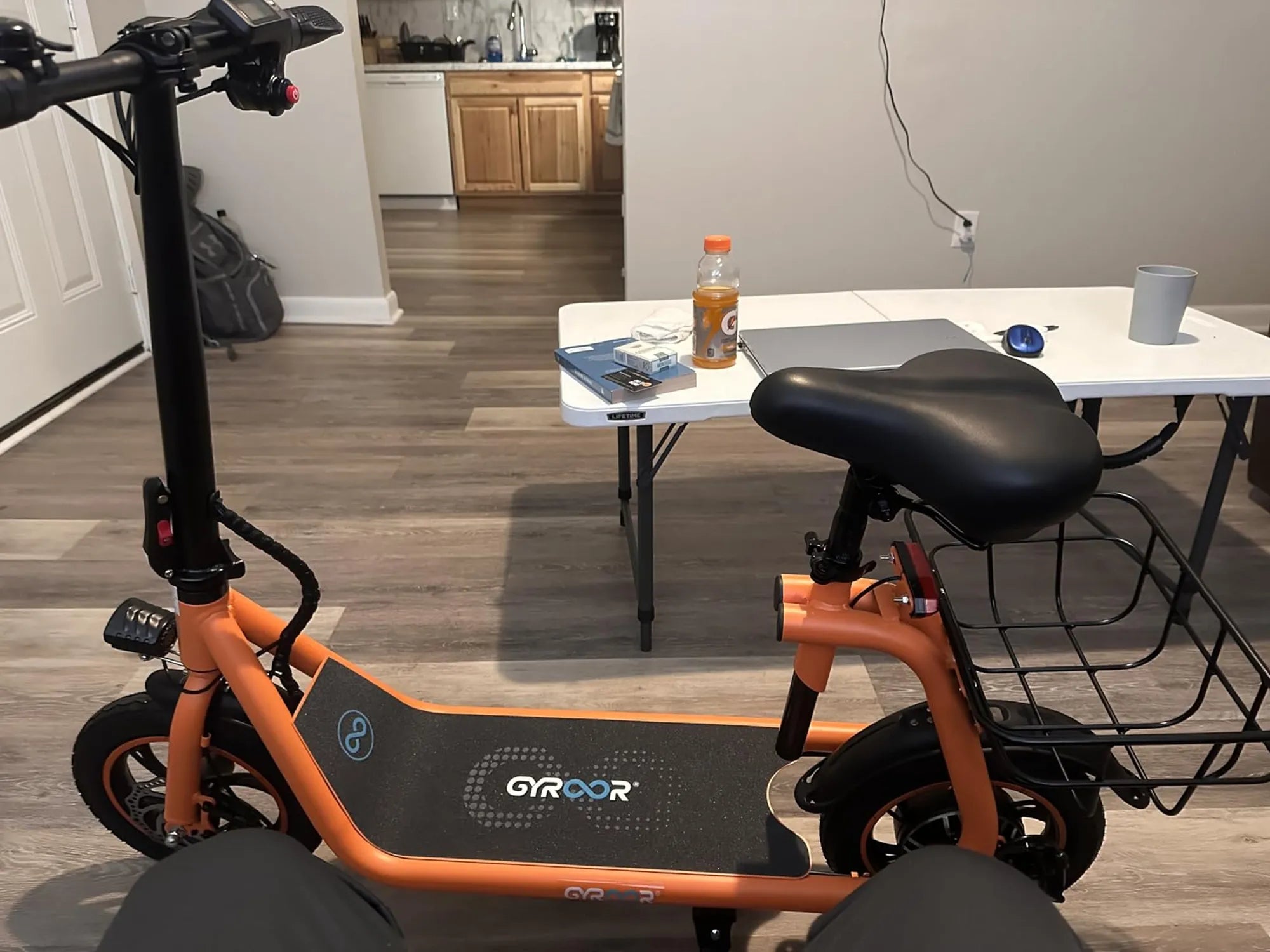
Forward-thinking brands design their products to meet or anticipate these standards. For instance, Gyroor's commuter-focused electric scooters are engineered with these exact specifications in mind. They feature compliant, integrated lighting systems for visibility, motors within the power limits, and programmable speed modes that allow riders to select a legal, lower-speed setting for safe urban travel.
Riding Etiquette and Prohibited Actions
Several universal rules apply to the legal use of e-scooters. Only one person is allowed per scooter; carrying a passenger is illegal. Using a mobile phone while riding is prohibited. It is illegal to ride on pavements, with fines and penalty points applicable.
While not a legal requirement for adults, wearing a helmet is strongly recommended by the government, safety groups, and rental operators. Riders are also encouraged to undertake basic online safety training, which is often provided within the rental apps.
The Risks and Penalties of Illegal Riding
Using a private e-scooter on public roads carries serious consequences. Police forces are increasingly enforcing the law, particularly in city centers. The penalties are designed to be a significant deterrent.
You can receive a £300 fixed-penalty notice and 6 penalty points on your driving license for the offence of driving without insurance. If you do not have a valid license, you can face further fines and penalty points. Perhaps most impactful, the police have the power to seize the e-scooter under Section 165 of the Road Traffic Act.
Beyond fines, you are personally liable for any damage or injury caused in an accident, which could lead to substantial civil claims. Understanding these penalties underscores why knowing and following the current law is non-negotiable.
What to Look for in a Future-Proof E-Scooter
While the law for private use may change, investing in a scooter built to high safety and quality standards is wise. Choosing a model from a reputable brand that prioritizes regulatory compliance ensures your scooter is ready for potential legalization and is a safer, more reliable investment.
Prioritize Certified Battery Safety
The battery is the heart of an e-scooter and its most critical safety component. Look for scooters that use UL-certified lithium-ion battery packs. This independent certification is a global benchmark for electrical and fire safety, involving rigorous testing for overcharge, short circuit, and extreme conditions.
As a leader in personal electric transport, Gyroor equips all its models with UL-certified battery packs tested for over 500 charge cycles, ensuring long-term reliability and peace of mind—a key concern for future regulators and savvy consumers alike.
Demand Durability for English Weather
English weather is notoriously unpredictable. A scooter needs to withstand rain, puddles, and road spray. An IPX5 water-resistance rating is essential for practical, year-round commuting. This rating means the scooter can withstand water jets from any direction, making it resilient against wet road conditions.
Gyroor models are built with IPX5 water-resistant designs, protecting the electrical systems from moisture ingress and significantly enhancing the scooter's durability and lifespan for daily use.
Choose a Brand with Reliable Support
E-scooters are complex vehicles. A comprehensive warranty and accessible customer support are not just perks but necessities. A 1-year warranty covering the motor, battery, and frame indicates a manufacturer's confidence in its product.
With over 100,000 riders across North America and Europe and a 4.5/5 average rating, Gyroor backs its products with a reliable 1-year warranty and responsive support network, protecting your investment and ensuring assistance is available when needed.
Comparison: Private Ownership vs. Rental Schemes
| Feature | Private E-Scooter (Current Law) | Rental E-Scooter (Trial Areas) |
|---|---|---|
| Legal Use on Public Roads | No | Yes, in designated zones |
| Where to Use | Private land only | Public roads & cycle lanes in trial areas |
| License Required | N/A (illegal on road) | Full or provisional car/motorcycle license |
| Insurance | Extremely difficult to obtain for road use | Provided by operator |
| Upfront Cost | Purchase price (£300-£1000+) | Pay-as-you-go or subscription |
| Speed Limit | N/A | 15.5 mph (geo-fenced) |
| Modification Potential | High (but illegal for road use) | None (locked by operator) |
| Long-Term Value | High if used on private land/awaiting law change | Low for frequent commuters |
Frequently Asked Questions (FAQ)
Q: Are electric scooters legal on pavements in England?
A: No. It is illegal to ride any e-scooter (private or rental) on the pavement. This is to ensure pedestrian safety. Riding on pavements can result in a fixed penalty notice.
Q: Can I buy a private e-scooter in England?
A: Yes, you can legally purchase one. However, you may only ride it on private land with the landowner's permission. Using it on public roads, cycle lanes, or pavements is against the law.
Q: Will the law change to allow private e-scooters soon?
A: The government is collecting data from the rental trials. An announcement on future legislation, which may create a new vehicle category for approved private e-scooters, is expected but no definitive timeline has been set.
Q: Do I need to wear a helmet?
A> While not a legal requirement for adults (except in rental trial terms of service in some areas), wearing a helmet is strongly recommended for safety. It is a simple precaution that can prevent serious head injuries.
Q: Can I get insurance for my private e-scooter?
A> Standalone insurance for private e-scooter use on public roads is not currently available in a form that makes them legal. Some insurers may offer cover for theft or damage on private property, but this does not permit road use.
Riding Responsibly Towards the Future
The path to legal, widespread private e-scooter use in England is being paved by ongoing trials and safety data. For now, the rule is clear: rental schemes are the only legal option for public roads in trial areas, while private scooters are confined to private land. Staying informed about legal changes, prioritizing your safety and the safety of others, and choosing a well-engineered product from a reputable brand are the keys to a positive micro-mobility experience. Brands like Gyroor, with their commitment to UL-certified safety, weather-resistant durability, and strong warranties, exemplify the standards that will define the future of responsible personal transport. Explore scooters designed with these principles in mind and be ready for the journey ahead.
Browse the full Gyroor collection at gyroorboard.com
Cheapest Electric Scooters 2025: Affordable and Efficient Rides for Everyone
Electric Scooters Under $900: Your Guide to Smart Urban Mobility