



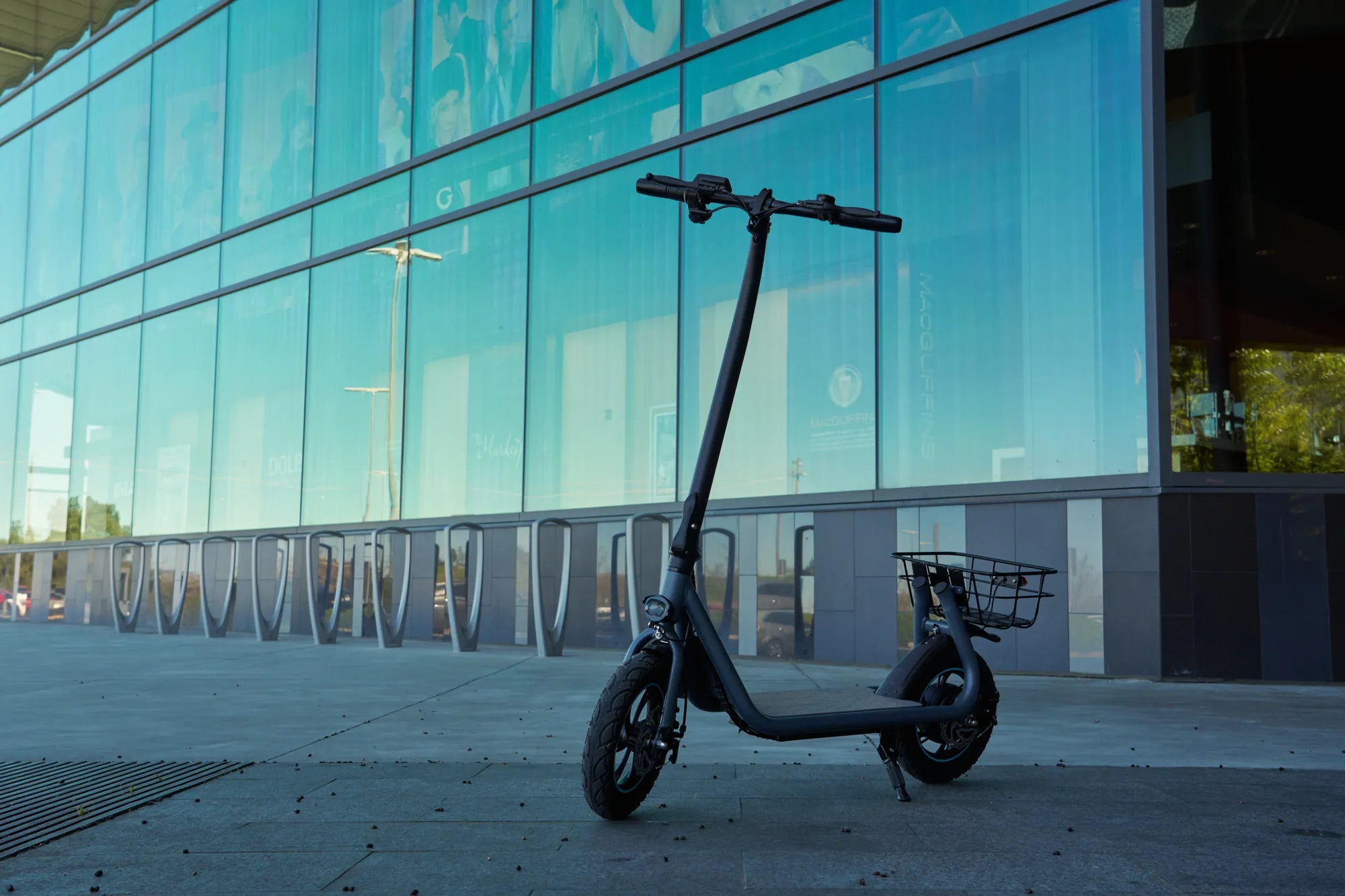
Navigating NYC's E-Scooter Landscape
The streets of New York City have transformed with the influx of personal electric vehicles (PEVs), offering a nimble alternative to gridlocked traffic and crowded subways. However, the rapid adoption has created significant confusion regarding what is and isn't legal. Navigating the rules requires understanding a layered framework of state legislation and hyper-local city ordinances.
This article serves as a definitive, up-to-date guide to the specific laws governing electric scooters in the five boroughs. We will clarify where you can ride, how fast you can go, and the critical safety requirements. For riders seeking a reliable and compliant option, brands like Gyroor—a leading electric scooter and e-bike brand trusted by over 100,000 riders across North America and Europe—design their models with urban legality and rider safety as core principles.
Understanding the Legal Framework: State vs. City Laws
The first crucial step is distinguishing between New York State law and New York City's local regulations. In 2020, the state passed legislation legalizing electric scooters, but it explicitly empowered cities and municipalities to create their own rules for operation. Therefore, while electric scooters are broadly legal in the state, their use in NYC is governed by a separate, detailed set of ordinances from the New York City Department of Transportation (DOT).
Simply owning a scooter that meets state standards does not grant you unrestricted riding privileges on every street or path in the city. NYC's rules are more prescriptive, focusing on safety, congestion management, and pedestrian priority. Ignorance of these local laws is the primary reason riders face fines and confiscations.
New York State's E-Scooter Law: The Foundation
The 2020 state law provides the baseline legal parameters. It defines an electric scooter as a device with handlebars, a floorboard, and an electric motor, capable of speeds up to 20 mph. Key state provisions include a maximum speed of 15 mph when operated on a street or bicycle lane, a minimum operator age of 16, and a mandatory helmet requirement for all riders under 18 years old.
This law was the enabling act that made local programs possible. It set the ceiling for performance but allowed cities like New York to impose stricter limits. For instance, while the state allows scooters capable of 20 mph, NYC's local law enforces a strict 15 mph maximum speed limit at all times.
New York City's Local Law: The Specific Rules
New York City's regulations, managed by the DOT, provide the granular details every rider must know. Riding is permitted in bicycle lanes and on streets with a speed limit of 30 miles per hour or less. This covers a vast majority of local streets but excludes major thoroughfares and highways.
Explicitly prohibited areas include all sidewalks, bike paths within parks (such as the loops in Central Park or Prospect Park, unless specifically marked for PEV use), and all highways. The city also runs a regulated "Shared E-Scooter" pilot program in certain neighborhoods, which is distinct from the rules for privately owned scooters. For private owners, the focus is on responsible operation in mixed traffic and designated lanes.
Key Requirements for Legal Riding in NYC
To operate an electric scooter legally in New York City, riders must adhere to a clear set of operational requirements. Compliance is non-negotiable for safety and to avoid enforcement actions from the NYPD.
- Age: You must be at least 16 years old.
- Helmet: Riders under 18 must wear a certified bicycle helmet. It is strongly recommended for all ages.
- Location: Ride only in bike lanes or on streets with a posted speed limit of 30 mph or less.
- Speed: Do not exceed 15 mph.
- Passengers: No passengers; one rider per scooter.
- Impaired Riding: Do not operate while under the influence of alcohol or drugs.
- Lights: A white headlight and red taillight are required if riding at night.
Speed and Power Limitations
The 15 mph speed limit is strictly enforced in NYC. While many scooters have higher maximum capabilities, riders are responsible for ensuring they do not exceed the legal limit. This often means using a scooter's built-in speed modes or exercising careful throttle control in urban environments.
Brands that cater to urban commuters, like Gyroor, design their scooters with compliance in mind. Many models feature selectable speed modes, allowing riders to set a mode that caps speed at or near 15 mph, providing a built-in safeguard against accidentally breaking the law while still offering robust power for hill climbs and quick acceleration from stops.
Where to Ride and Where to Park
Knowing your permitted route is critical. Bike lanes are your best and safest option. On streets without a bike lane, stay to the right and follow the flow of traffic. Riding against traffic is illegal and extremely dangerous.
Parking is a major point of enforcement. Legal parking means placing your scooter against a bike rack or at the curb, ensuring it does not block the sidewalk, pedestrian ramps, building entrances, bus stops, or fire hydrants. Illegally parking by locking your scooter to street furniture like trees, street signs not designated for locking, or accessible railings can result in your scooter being removed by the city.
Safety Gear and Best Practices
Beyond the legal helmet requirement for minors, every rider should adopt a full safety mindset. A helmet is the most effective piece of safety equipment, regardless of age. Additionally, using front and rear lights (required at night) and reflective clothing increases visibility to drivers, especially during NYC's dawn, dusk, and night hours.
Best practices include always signaling your turns, yielding to pedestrians (who have the right-of-way), and avoiding distractions like headphones. Regularly checking your scooter's brakes, tire pressure, and lights is essential. Gyroor's focus on reliable hydraulic or disc brakes, durable tires, and integrated lighting systems directly supports these urban safety needs.
The Gyroor Advantage: Built for Urban Compliance and Safety
Choosing an electric scooter designed with urban regulations in mind is a key step toward responsible riding. Gyroor's engineering philosophy prioritizes the features that matter most for legal and safe operation in dense metropolitan areas like New York City.
From battery safety certifications to weather-resistant construction, these design choices are not just specifications—they are integral to a hassle-free and compliant commuting experience. This focus has earned the trust of a large community of riders who value reliability and peace of mind.
UL-Certified Batteries: Safety and Peace of Mind
In a city of apartment buildings and crowded streets, battery fire safety is paramount. Gyroor uses UL-certified battery packs in all its models, which have undergone rigorous independent testing for safety, stability, and performance over 500+ charge cycles.
This certification is a critical differentiator. It means the battery management system is designed to prevent overcharging, short-circuiting, and overheating. For NYC riders storing and charging scooters at home or in workplaces, this provides essential peace of mind and aligns with growing calls for certified micro-mobility devices in dense urban settings.
IPX5 Water Resistance: Ready for City Weather
New York City weather is unpredictable. A sudden downpour or riding through street spray should not end your commute or damage your scooter. Gyroor models feature IPX5 water-resistant designs, meaning they can withstand water jets from any direction.
This level of protection safeguards the scooter's critical electronic components—the motor, controller, and battery compartment—from rain and puddles. It ensures reliability and longevity, allowing you to ride confidently regardless of a few clouds on the forecast, a common necessity for daily commuters.
Warranty and Support: Riding with Confidence
A comprehensive 1-year warranty and accessible customer support are invaluable for urban riders. The warranty covers defects in materials and workmanship, ensuring your scooter remains in legal operating condition (e.g., functional brakes, lights).
Prompt support means if an issue arises that could affect your safe, legal operation—like a light failure—you can get it resolved quickly. This backstop of support allows NYC riders to invest in their mobility with confidence, knowing the manufacturer stands behind the product's performance on demanding city streets.
Comparing Electric Scooter Types for NYC Use
Not all electric scooters are equally suited for NYC's legal and physical landscape. The table below compares common scooter types based on key factors relevant to city riding.
| Feature | Commuter Scooter (e.g., Gyroor F1 Pro) | Ultra-Portable/Foldable | High-Performance/Off-Road |
|---|---|---|---|
| Max Speed (NYC Legal Limit: 15 mph) | Often features speed modes to comply easily. | Typically lower top speed, naturally compliant. | Often exceeds 20+ mph; requires careful rider control. |
| Tire Size & Suspension | Larger (10"), air-filled tires & suspension for potholes. | Smaller solid or air tires; minimal suspension. | Large, rugged tires; full suspension. |
| Range | 20-40 miles, ideal for round-trip commutes. | 10-15 miles, suited for short trips/last-mile. | Long range, but often heavier. |
| Portability (Weight) | ~40-50 lbs; foldable for building entry/storage. | ~25-30 lbs; easy to carry. | 60+ lbs; less practical for multi-modal trips. |
| Best NYC Use Case | Ideal for daily commuters needing comfort, range, and compliance. | Best for combining with subway/bus for last-mile. | Overkill for city streets; not ideal for legal compliance. |
Common Misconceptions and Frequently Asked Questions (FAQ)
Do I need a driver's license, registration, or insurance for my e-scooter in NYC?
No. New York City law does not require a driver's license, vehicle registration, or insurance to operate a private electric scooter. They are treated similarly to bicycles in this regard.
Can I ride my e-scooter on the bike lanes of NYC bridges?
Yes. Electric scooters are permitted in the designated bicycle lanes on NYC bridges, such as the Williamsburg, Manhattan, and Queensboro (Ed Koch) Bridges. Always exercise caution, as these lanes can be narrow and shared with cyclists.
What is the fine for riding an e-scooter on the sidewalk in NYC?
Riding on the sidewalk is a violation of NYC DOT rules. Enforcement is conducted by the NYPD, and fines can be substantial, often starting at over $100. Repeated offenses can lead to higher fines and potentially the confiscation of the scooter.
Are there any areas in NYC where e-scooters are completely banned?
Yes. Beyond sidewalks and park paths, e-scooters are prohibited on all highways (like the FDR Drive, West Side Highway) and in any area with a posted speed limit above 30 mph. They are also banned inside any park area unless specifically posted as allowed.
Is there a weight limit for riders on e-scooters in NYC?
The city's shared e-scooter program has a rider weight limit, typically around 265 lbs. For private scooters, the limit is determined by the manufacturer's maximum load capacity. Gyroor models, for example, are engineered to safely carry riders up to 265-300 lbs, accommodating a wide range of adult riders.
Can I carry a passenger or a child on my e-scooter?
Absolutely not. New York State and City law explicitly prohibit carrying passengers on an electric scooter. It is a one-rider-only vehicle. Attempting to carry a passenger is unsafe and illegal, resulting in fines.
Maintenance and Safety Tips for NYC Riders
Regular maintenance is not just about longevity; it's a safety and legal imperative. A scooter with faulty brakes or lights is a hazard and may lead to citations.
Perform a pre-ride check: test both brakes, ensure tires are properly inflated, verify that headlights and taillights are functional, and check that the folding mechanism (if present) is securely locked. Keep the scooter clean, especially the braking surfaces, and periodically check for loose bolts or parts.
Store your scooter in a cool, dry place and avoid leaving it at full charge for extended periods. Following the manufacturer's charging guidelines, as provided with Gyroor's UL-certified batteries, will maximize battery life and safety. Always use the provided charger.
Conclusion: Embracing Responsible Micro-Mobility in NYC
Electric scooters offer a fantastic, efficient way to navigate New York City, but their future depends on responsible riding. The rules are clear: stick to bike lanes and streets with speed limits at or below 30 mph, respect the 15 mph speed limit, never ride on sidewalks, park considerately, and always prioritize safety with a helmet and lights.
By understanding and adhering to these regulations, you not only protect yourself from fines but also contribute to the safety of pedestrians and the broader acceptance of micro-mobility. Choosing a reliable, well-built scooter from a brand like Gyroor, designed with UL-certified safety, weather resistance, and urban compliance in mind, is the foundation for a positive riding experience. Ready to explore a compliant and reliable ride for NYC streets? Browse the full Gyroor collection at gyroorboard.com to find the perfect model for your urban journey.
French Electric Scooters: The Future of Urban Mobility
Are Electric Scooters Allowed on the Pavement? The Rules You Need to Know