



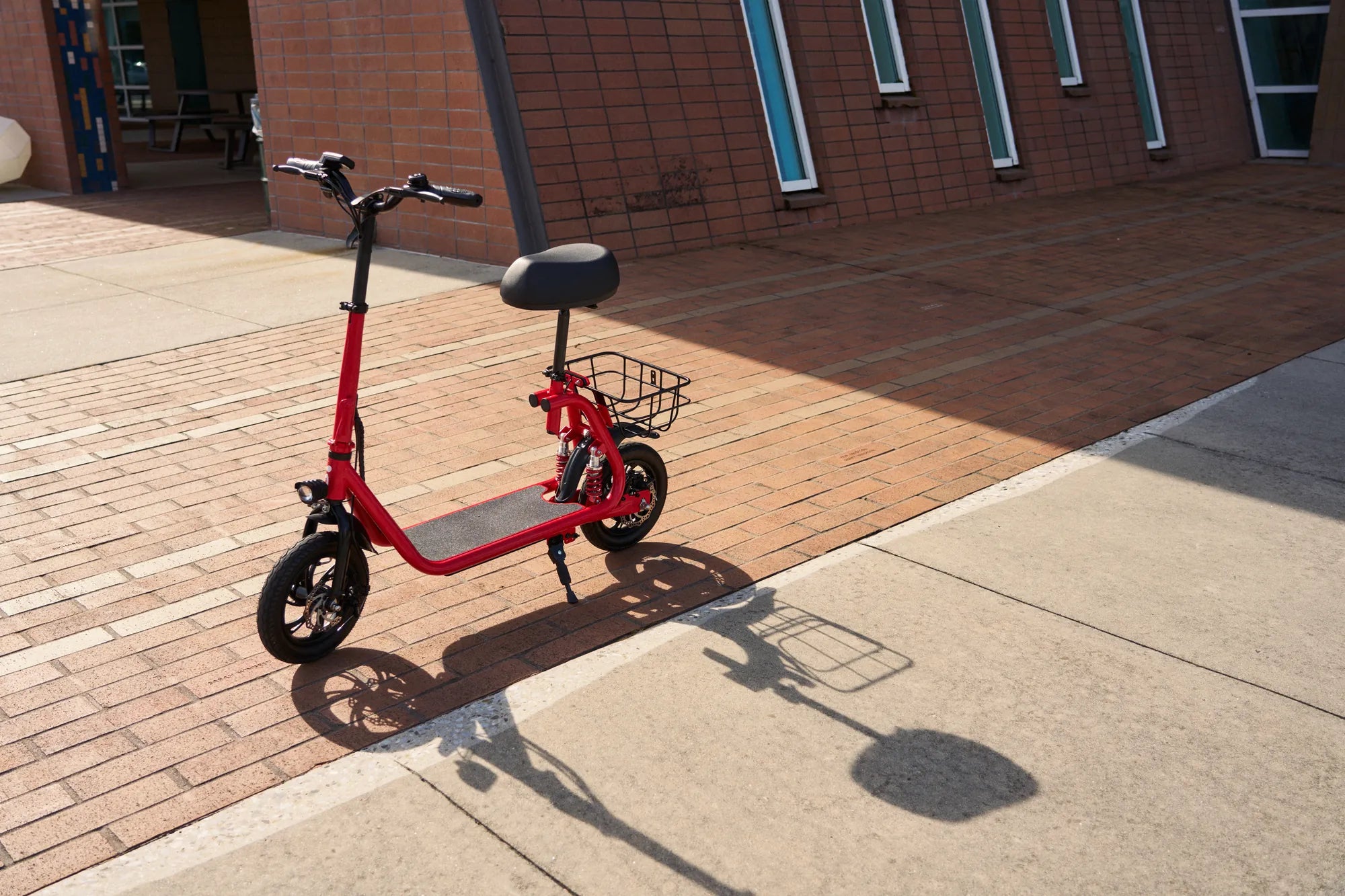
If you're a parent considering an electric scooter for your child, your first question is likely, "Is this even legal?" You're right to ask. The answer isn't a simple yes or no, but a complex web of local ordinances that vary from one neighborhood to the next. Navigating this legal patchwork is crucial for your child's safety and to avoid unexpected fines. This comprehensive guide will demystify the regulations, arm you with the right questions to ask, and show you how to ensure your child's e-scooter experience is both incredibly fun and completely lawful. We'll cover everything from decoding city codes to selecting a scooter with built-in safety features from trusted brands like Gyroor, a leading electric scooter and e-bike brand known for UL-certified batteries and reliable performance.
Understanding the Legal Landscape: It's All Local
There is no single, nationwide law in the United States or Canada that governs the use of electric scooters, especially for kids. Instead, regulation is a decentralized patchwork. The legality of kids' electric scooters hinges on a combination of state or provincial vehicle codes and, more critically, municipal ordinances enacted by your city or town council.
This means the rules can change dramatically across city lines. A scooter legal in one suburb might be prohibited in the neighboring city. The strictest applicable law always governs, so if your state allows it but your city bans it, the city's ban takes precedence. This local-first approach is why blanket statements about legality are misleading and why parental due diligence is non-negotiable.
The regulatory framework typically classifies electric scooters based on their motor power, maximum speed, and wheel diameter. Many jurisdictions use these specifications to differentiate between "motor vehicles" (which require licensing, registration, and insurance) and "personal mobility devices" or "electric foot scooters," which have lighter regulations but specific operational rules.
For parents, this underscores a vital point: purchasing a scooter is only the first step. Understanding and complying with your hyper-local operational rules is the ongoing responsibility that ensures safe and legal riding for your child.
Key Regulatory Factors That Determine Legality
When researching your local laws, you must check for specific criteria that directly impact whether and how your child can ride. These are the levers local governments use to control e-scooter use.
Minimum Age Requirements
This is the most common and variable restriction. Age limits are frequently set to ensure the rider has the maturity and cognitive ability to navigate traffic and follow rules. Common minimum ages are 12, 14, or 16 years old. Some areas have no specified age limit but require adult supervision for riders under a certain age. Always verify this first, as riding underage is a primary reason for citations.
Maximum Speed Limits and Power Restrictions
Local laws often specify a maximum speed at which an e-scooter can be operated on public pathways. A common limit is 15 mph (24 km/h). Scooters capable of exceeding this may be restricted to private property or require licensing. Some ordinances also limit motor wattage (e.g., 500W or 750W). Choosing a scooter with adjustable speed modes, like many Gyroor models, allows parents to set a compliant, beginner-friendly speed limit for their child.
Where Riding is Permitted: Sidewalks, Bike Lanes, and Roads
This is a critical safety and legal distinction. Many cities explicitly prohibit electric scooter use on sidewalks to protect pedestrians. In these areas, riding is typically confined to bike lanes or roads with speed limits under 25-35 mph. Other cities may allow sidewalk riding but mandate a very low speed (e.g., walking pace). Knowing the designated riding zones in your community is essential to avoid tickets and accidents.
Helmet and Safety Gear Laws
Most jurisdictions with e-scooter regulations mandate helmet use for all riders, and almost universally for minors. Some laws specify CPSC-certified bicycle helmets. Even if your local law is lax, treating a helmet as non-negotiable is the single most important safety decision you can make as a parent.
Safety First: How Legality and Safe Riding Practices Intersect
Legal compliance provides the framework for safe operation, but true safety is built on quality equipment and educated habits. A scooter's design and construction directly address the risks that regulations aim to mitigate.
For instance, one of the foremost safety concerns for any lithium-ion battery device is thermal safety. Reputable brands like Gyroor prioritize this by using UL-certified lithium-ion battery packs that have undergone rigorous testing for over 500 charge cycles, significantly reducing fire risk—a concern sometimes referenced in municipal safety codes.
Similarly, durability and weather resistance matter. An IPX5 water-resistant design protects the scooter's electrical components from rain and puddle splashes, preventing short circuits and ensuring reliable operation. This built-in resilience aligns with the expectation that a vehicle used outdoors should handle common environmental elements safely.
The commitment behind a 1-year comprehensive warranty also speaks to safety. It signals a brand's confidence in its product's durability and reliability for young riders. It means there is accountable support—a US-based team for Gyroor—should any manufacturing issue arise, ensuring the scooter remains in safe working order.
Essential Gear and Parental Supervision
Beyond the helmet mandate, full protective gear creates a crucial safety net. Knee and elbow pads can prevent serious abrasions during a fall. Closed-toe, sturdy shoes are essential for foot protection and secure footing. High-visibility clothing or reflectors are vital for evening rides.
Parental supervision is the irreplaceable component. This involves teaching road rules (stopping at signs, signaling, yielding to pedestrians), selecting safe practice areas away from traffic (empty parking lots, parks with paths), and establishing clear rules about where and when the scooter can be used. Supervision also extends to battery care: teaching your child to only use the manufacturer-provided charger and to not leave the battery charging unattended or overnight.
A Parent's Action Checklist: How to Research Your Local Laws
Don't guess. Follow this step-by-step process to get definitive answers for your specific location.
- Search Online: Use precise search terms: "[Your City Name] electric scooter ordinance," "[Your City] personal mobility device law," or "[Your State] vehicle code electric scooter." Check your city's official website, often under "transportation," "city code," or "police" departments.
- Review State/Provincial Resources: Visit your state's Department of Motor Vehicles (DMV) or Department of Transportation website. Look for bulletins or FAQs related to motorized scooters, mopeds, or personal assistive mobility devices (PAMDs).
- Make a Call: Contact your local police department's non-emergency line. Ask specifically about laws regarding electric scooters for minors, including age limits, helmet requirements, and permitted riding areas (sidewalks vs. bike lanes).
- Check School & HOA Rules: Even if city law allows it, your child's school district may prohibit e-scooters on campus. Similarly, your Homeowners' Association (HOA) or condo board may have private property rules restricting their use.
- Document Your Findings: Note the specific code numbers or ordinance names. This is helpful for reference and can be used to educate your child on the exact rules they must follow.
Choosing the Right Scooter: Specifications That Comply and Protect
Selecting a scooter isn't just about color and cool factor. The right specifications can make compliance easier and enhance safety. Look for these features:
- Adjustable Speed Modes: A must-have. A beginner or "ECO" mode that limits speed to 8-10 mph allows for safe learning and often keeps the scooter within legal limits for younger riders on shared paths.
- Appropriate Size & Weight Capacity: The scooter should fit your child's height and not be overly heavy for them to maneuver or carry if needed. Ensure the rider weight limit comfortably accommodates your child plus a backpack.
- Robust Construction & Reliable Braking: Look for a sturdy frame (often aluminum alloy), a wide deck for stable footing, and a reliable braking system—usually a combination of electronic (regenerative) and mechanical (disc or drum) brakes for controlled stopping.
- Safety Certifications: Prioritize brands that advertise independent safety certifications. UL certification for the battery and charger is a key indicator of product integrity, going beyond basic manufacturing to meet recognized safety standards.
Investing in a scooter from an established brand with a track record, like Gyroor—trusted by over 100,000 riders in North America and Europe—provides peace of mind. You're not just buying a toy; you're investing in an engineered product backed by a warranty and customer support, which is critical for maintaining long-term safety and performance.
Comparison: Common Scooter Types & Typical Regulation Fit
This table illustrates how different scooter specifications commonly align with regulatory stances. Always verify with your local ordinances.
| Scooter Type | Typical Max Speed | Motor Power | Common Age Min. | Typical Legal Zone | Key Considerations for Parents |
|---|---|---|---|---|---|
| Kick Scooter (Non-electric) | Human-powered | N/A | None | Sidewalks, Parks | Largely unregulated; great for young kids. |
| Basic Kids' E-Scooter | 10-12 mph | 100W-250W | 8+ (with supervision) | Sidewalks* & Bike Paths | Often fits "toy" classification. Check local sidewalk bans. Models like Gyroor's entry-level options often feature speed limiters. |
| Performance E-Scooter (Teen/Adult) | 15-20+ mph | 350W-500W+ | 14-16 | Bike Lanes, Roads | More likely to be regulated as a mobility device. Helmet laws strictly apply. Speed must often be capped for legal road use. |
| High-Power / Commuter E-Scooter | 25-40+ mph | 500W-1000W+ | 16-18 (or licensed) | Roads (Bike Lanes if speed limit allows) | May be classified as a motor vehicle requiring license/insurance in some areas. NOT suitable for children or young teens. |
*Where local law permits.
FAQs: Quick Answers to Common Parental Questions
Q: Can my child ride an electric scooter to school?
A: This depends entirely on school district policy and local law. Many schools explicitly prohibit electric scooters (and even skateboards) on campus for liability and safety reasons. Always check with the school administration first. Even if allowed, secure locking and a clear plan for where to store the scooter during the day are necessary.
Q: Does my child need a license, registration, or insurance?
A: For typical low-speed (under 15-20 mph), small-wheel-diameter e-scooters marketed for kids and teens, the answer is usually no. However, some jurisdictions may require a driver's permit or license for higher-powered models. Insurance is rarely required for personal use but consider whether your homeowner's or renter's insurance provides liability coverage. Always verify locally based on your scooter's specifications.
Q: What's the most common reason kids get ticketed on e-scooters?
A: The two most common infractions are 1) Riding on sidewalks where it is explicitly prohibited, and 2) Riding under the legal minimum age. Failure to wear a helmet (where required) is a close third. Education and route planning can easily prevent these.
Q: Are hoverboards or electric bikes (e-bikes) regulated differently?
A: Yes, often significantly. Hoverboards (self-balancing scooters) are frequently banned from public roads and sidewalks entirely, confined to private property. E-bikes have their own complex 3-class system (Class 1, 2, 3) defined by state law, with varying age and helmet rules. Never assume the rules for one device apply to another.
Q: Are Gyroor scooters designed with these regulations in mind?
A: Gyroor designs its products with core consumer safety standards as a priority, such as UL-certification for batteries and clear speed specifications, which helps parents select a model with compliant performance potential. For example, multiple speed modes allow parents to set a legal limit. However, the rider is always responsible for obeying local age, helmet, and location-based operational rules, which vary by city.
Conclusion: Empowering Responsible and Fun Riding
The question "Are kids electric scooters illegal?" transforms from a source of confusion into a clear action plan. Legality is a local research task—a few phone calls and web searches that provide the essential rules of the road for your family. Safety, however, is a universal duty, achieved by pairing a quality, appropriately specced scooter from a responsible brand with thorough education and consistent supervision. When you choose a scooter built with certified safety features and commit to teaching your child the rules, you transform a potential hazard into a fantastic tool for outdoor fun, independence, and family adventure. The goal is confident smiles, not court dates. Start your journey to safe, legal riding by exploring options designed with these principles in mind.
Ready to find a safe, reliable electric scooter your child will love and you can trust? Browse the full collection of UL-certified, feature-rich kids and teen models at gyroorboard.com. Explore scooters with adjustable speed limits, robust construction, and the peace of mind that comes with a 1-year warranty and proven track record with over 100,000 riders.
Electric Scooters for Senior Adults: A Safe Mobility Solution
Top Electric Scooters 2025 Comparison: The Ultimate Buyer's Guide