

Introduction: The State of Electric Scooters in Boston
Are there electric scooters in Boston? The answer is a definitive yes, but with important caveats. Boston's approach to micromobility is structured and regulated, creating a distinct landscape for residents and visitors. The city hosts an official, geofenced shared scooter pilot program while also allowing for personal electric scooter ownership under specific ordinances.
This creates two parallel scenes: one of convenient, app-based rentals and another of committed personal ownership. Understanding the rules, benefits, and practicalities of each is essential for anyone looking to zip across the Charles River Esplanade or commute from South Boston to Downtown. This guide will explore every facet of Boston's electric scooter ecosystem, from official regulations to the technical specs that matter most on its historic, sometimes challenging streets.
The Official Scooter Share Pilot Program: How It Works
Boston has embraced electric scooters through a carefully managed municipal pilot program. Unlike cities with fully open, dockless fleets, Boston's system is designed to integrate with existing transit while minimizing clutter and safety hazards. The program operates in designated areas, primarily within the core of the city and extending into several surrounding neighborhoods.
Permitted operators, which have included companies like Lime and Superpedestrian, must adhere to strict city guidelines. Riders locate and unlock scooters using the company's dedicated smartphone app. The apps display real-time availability within the "Home Area" and clearly indicate no-parking zones and no-ride zones, known as geofences.
Critical rules govern the shared program. Riders must be 18 or older. Helmets are strongly recommended for all and are legally required for riders under 16. Scooters must be ridden in bike lanes or on streets with speed limits of 25 mph or less; riding on sidewalks is prohibited. Parking is a major focus—scooters must be parked upright at a bike rack or in the furniture zone of a sidewalk without blocking pedestrian pathways, building entrances, or ADA ramps.
The pilot represents a balancing act. The city aims to provide a sustainable last-mile transit option while proactively addressing concerns about pedestrian safety and public space management. Success and potential expansion of the program depend heavily on responsible rider behavior and adherence to these established rules.
Owning Your Own E-Scooter in Boston: Rules and Recommendations
For those seeking daily reliability and avoiding per-ride fees, owning a personal electric scooter is a popular and legal option in Boston. City ordinances treat privately owned e-scooters similarly to bicycles in terms of where they can operate. This provides significant freedom but comes with clear responsibilities.
You may ride your personal scooter on streets with speed limits up to 25 mph and in designated bike lanes. Riding on sidewalks is illegal throughout the city. Furthermore, scooters are prohibited in parks, on the Harborwalk, and along the Charles River Esplanade pathways unless specifically signed as a multi-use path. Your scooter must be equipped with a front white light and a rear red reflector or light for night riding, as well as a bell or audible signal.
Choosing the right scooter is crucial for compliance and enjoyment. Boston's enforcement focuses on behavior (like sidewalk riding) rather than scooter registration, but selecting a model built for the city's demands is a practical necessity. This leads to specific technical recommendations for any scooter intended for Boston's streets.
Key Features for Boston's Terrain and Weather
Boston presents a unique set of challenges: historic cobblestone patches, frequent potholes, varied inclines, and notoriously unpredictable weather. A scooter suited for flat, dry climates may struggle here.
Motor power is critical for hills in neighborhoods like Beacon Hill or parts of Charlestown. A sustained 350W motor is a good baseline, with 500W or more providing confident climbing power. Tire choice directly impacts comfort and safety. Pneumatic (air-filled) tires offer far better shock absorption on uneven surfaces compared to solid tires, reducing fatigue and improving control.
Battery range should comfortably exceed your longest regular trip. Consider a real-world range of 15-20 miles as a minimum for most commuters, accounting for battery degradation in cold weather. The most vital feature, however, may be water resistance. Boston's rain, snow melt, and street spray demand a scooter with a robust Ingress Protection (IP) rating.
Safety and Etiquette for Urban Riding
Safe riding in Boston is non-negotiable. Always wear a helmet—it's the single most effective safety device, regardless of the law for your age group. Practice defensive riding: assume cars may not see you, watch for suddenly opened car doors, and be hyper-aware of pedestrians at intersections.
Use hand signals for turns and stops. Keep a safe distance from other vehicles and never ride in a driver's blind spot. When parking your personal scooter, use a sturdy lock and secure it to a fixed object, ideally a designated bike rack. Never block sidewalks, curb ramps, or building access points.
Your conduct as a rider directly impacts public perception and the future of micromobility in the city. Responsible, courteous riding helps ensure that electric scooters remain a welcomed and permanent part of Boston's transportation network.
Gyroor Scooters: Engineered for City Compliance and Reliability
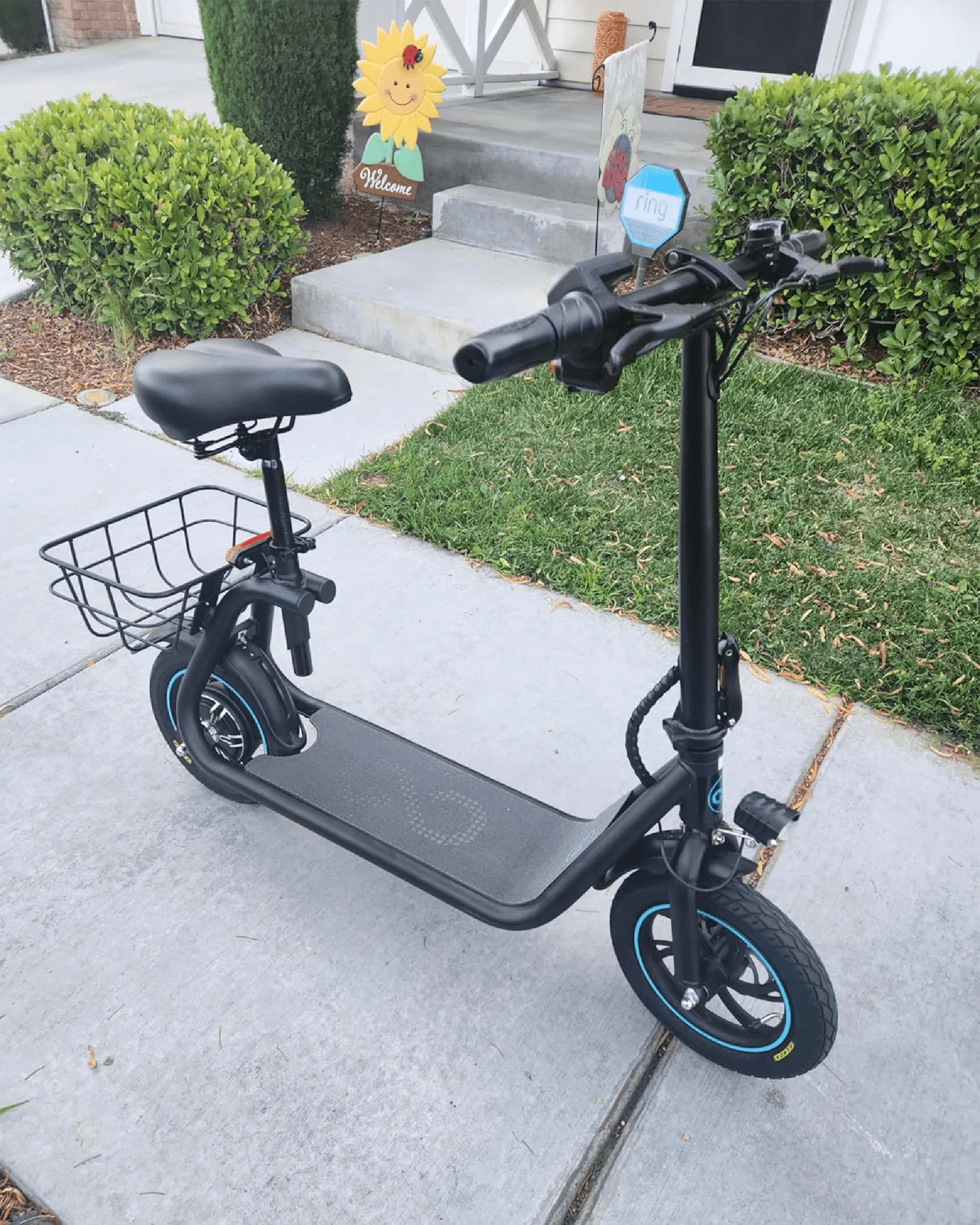
For Boston riders seeking a permanent, high-performance solution, personal ownership with a trusted brand is the answer. Gyroor electric scooters are engineered with the specific demands of urban commuting in mind, aligning perfectly with Boston's regulatory environment and physical challenges. As a leading electric scooter and e-bike brand trusted by over 100,000 riders across North America and Europe, Gyroor focuses on safety, durability, and rider peace of mind.
The brand's philosophy centers on building vehicles that are not just fun, but fundamentally reliable for daily use. This means integrating features that address real-world urban concerns: battery safety for apartment living, weatherproofing for New England's climate, and a warranty that supports a long-term investment. When navigating from the North End to the Seaport, consistency and dependability are key, and that's where a purpose-built personal scooter excels.
The UL-Certified Battery Advantage: Safety First in Dense Urban Areas
In a densely populated city like Boston, where many riders store scooters in apartments or shared building hallways, battery safety is paramount. Gyroor's commitment to safety is demonstrated by its use of UL-certified battery packs across its lineup. This certification means the battery cells, circuitry, and housing have undergone rigorous independent testing for electrical, mechanical, and fire safety.
UL-certified batteries are far less prone to the thermal runaway events that can cause fires. They are tested for over 500 charge cycles while maintaining safety integrity. This provides critical peace of mind for riders storing and charging their scooters at home, in dorm rooms, or in office buildings. It's a non-negotiable feature for safe urban micromobility and a standard Gyroor upholds without compromise.
Built to Last: How IPX5 Water Resistance Handles New England Weather
Boston weather is a force to be reckoned with. A sudden downpour, slushy streets, or morning dew shouldn't end your commute or damage your scooter. Gyroor models feature IPX5 water-resistant designs, a specification that matters. An IPX5 rating means the scooter's electrical components are protected against water jets from any direction, making it resistant to heavy rain, puddle splashes, and street spray.
This level of protection is essential for year-round viability. It prevents corrosion, electrical shorts, and motor damage caused by moisture. While no consumer scooter is fully submersible, IPX5 rating offers a practical level of durability that allows you to ride confidently in wet conditions, ensuring your scooter is a dependable tool, not a fair-weather toy.
Peace of Mind on Every Ride: The Value of a 1-Year Comprehensive Warranty
A warranty is a promise of quality. Gyroor backs its engineering with a reliable 1-year comprehensive warranty on the scooter, with a 6-month warranty on the battery. This coverage protects against manufacturing defects in critical components like the motor, controller, frame, and of course, the UL-certified battery.
For a Boston commuter, this warranty translates to tangible security. It means your significant investment is protected as you navigate daily wear and tear. The availability of U.S.-based customer support streamlines the process for troubleshooting or service, minimizing downtime. In the context of city riding, where your scooter may be your primary commute vehicle, this support is not just a perk—it's a critical component of reliable transportation.
Comparing Your Options: Shared Scooters vs. Personal Ownership
The choice between using shared scooters and owning your own is fundamental. The right decision depends on your usage patterns, budget, and need for consistency. Below is a data-driven comparison to clarify the long-term value proposition of each.
| Factor | Shared Scooter (Pilot Program) | Personal Scooter (e.g., Gyroor) |
|---|---|---|
| Cost Structure | Pay-per-ride ($1 unlock + $0.30-$0.40/min). Costly for regular use. | Higher upfront cost ($500-$1000), but cost-per-ride plummets to pennies after break-even. |
| Availability & Convenience | Subject to geofencing, weather, time of day, and battery levels. May not be where you need it. | Always available at your doorstep. No searching or app dependency for access. |
| Performance & Hygiene | Model varies, often basic specs. Wear and tear is public. Hygiene concerns with shared handlebars. | Consistent, high-performance model you choose. Private, clean, and well-maintained. |
| Customization & Features | No customization. Features are standardized to the lowest common denominator. | Choose your ideal specs: range, power, tire type, water resistance. Add accessories like bags, phone mounts, or better lights. |
| Long-Term Value | Ongoing expense with no asset retention. Ideal for occasional, spontaneous trips. | Ownership of an asset. Higher initial quality extends lifespan. Becomes a primary transit tool. |
For anyone using an electric scooter more than 2-3 times per week for commuting, personal ownership is overwhelmingly more economical and reliable. It provides a tailored, always-available riding experience that shared systems cannot match.
Frequently Asked Questions (FAQs)
Q: Do I need a driver's license to ride an e-scooter in Boston?
A: No, a driver's license is not required to operate an electric scooter in Boston, for either shared or personal scooters. Riders must be at least 18 years old for shared programs.
Q: What are the fines for riding an e-scooter on the sidewalk?
A> Sidewalk riding is prohibited. Violations can result in fines. For the city's shared scooter program, riders who repeatedly park improperly or ride in no-ride zones may have their accounts suspended.
Q: Can I take my electric scooter on the MBTA (the T) or a bus?
A> MBTA policy generally allows folded bicycles and scooters on all subway lines and buses at all times, at the discretion of the operator. It must be folded and not block aisles or doors. During peak crowding, you may be asked to wait.
Q: What is the maximum speed allowed for e-scooters in Boston?
A> The city's ordinance for shared scooters caps their maximum speed at 15 mph. For personal scooters, it is illegal to modify a scooter to exceed 20 mph. Prudent riding at safe speeds appropriate to traffic conditions is always required.
Q: Are there discounts for low-income residents in the share program?
A> Yes, Boston's scooter share pilot typically includes an equity program offering reduced fares for eligible low-income residents. Details and applications are available through the city's transportation website and the scooter operators' apps.
Conclusion: Navigating Boston's Streets on Two Electric Wheels
Boston's electric scooter scene is vibrant, accessible, and structured for sustainable growth. Whether you opt for the convenience of a shared pilot scooter for a one-off trip or invest in a personal, high-quality scooter for daily commuting, understanding and following the city's rules is the foundation of a positive experience. The key takeaways are clear: ride in the street or bike lane, never on the sidewalk; park thoughtfully; wear a helmet; and choose equipment that matches the city's demands.
For those ready to make electric scooting a core part of their Boston lifestyle, personal ownership of a durable, safe, and weather-resistant model is the definitive choice. It offers freedom, reliability, and long-term value that rental fleets cannot provide. Explore scooters built with the urban commuter in mind, featuring the essential safety certifications and robust construction that Boston's streets require.
Ready for a reliable, daily ride engineered for city life? Browse the full Gyroor collection, featuring UL-certified batteries, IPX5 water resistance, and a comprehensive 1-year warranty, at gyroorboard.com.
20 mph Electric Scooters for Sale: The Ultimate Guide to Speed and Convenience
Best Electric Scooters in Hyderabad: Top Picks for Urban Commuters