

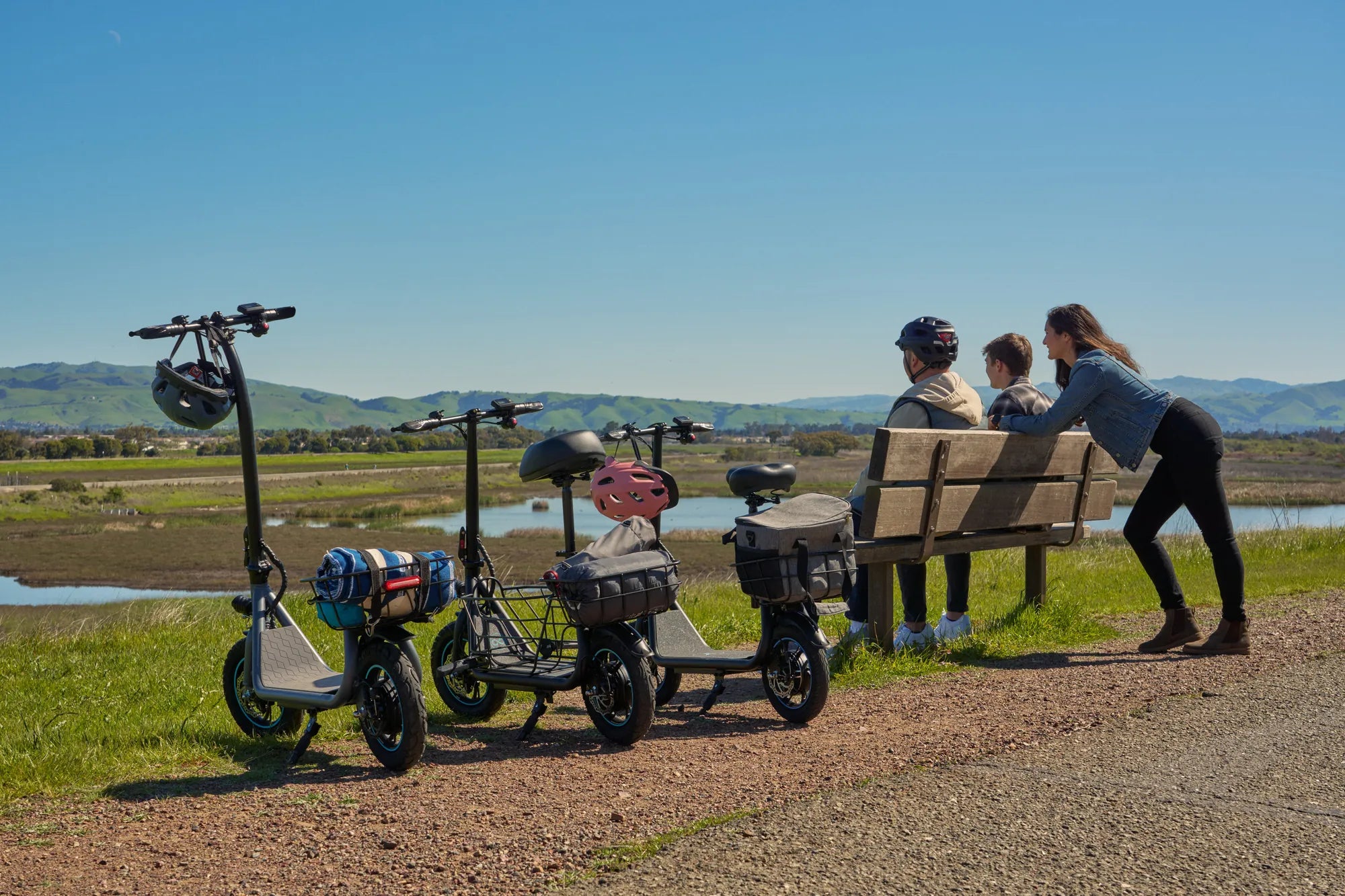
Introduction: Embracing a New Era of Mobility for Seniors
Finding the best electric bike for seniors is about more than just transportation; it's about reclaiming independence, enjoying gentle exercise, and accessing the world with ease. An e-bike provides a perfect blend of pedal-powered activity and electric assist, making hills manageable and longer distances attainable. This guide is dedicated to helping you navigate the key features that prioritize comfort, safety, and freedom, ensuring you find a model that fits your lifestyle perfectly.
We will break down the critical components, from frame design to braking systems, that make an e-bike truly senior-friendly. You'll learn about the different styles of e-bikes suited for various activities, from leisurely park rides to practical errands. Our goal is to provide you with the knowledge needed to make an informed, confident decision that enhances your daily life.
For many seniors, an e-bike represents a gateway to renewed social connections, improved physical health, and the simple pleasure of being outdoors. It's a tool that can reduce reliance on cars, lower stress, and increase overall well-being. By focusing on the right specifications, you can find a bike that feels stable, secure, and effortless to ride.
Let's begin this journey by exploring the fundamental features that define the best electric bike for seniors. This guide will serve as your comprehensive checklist, moving from essential mechanics to practical purchasing advice.
Key Features to Look for in a Senior-Friendly E-Bike
Not all electric bikes are created equal, especially when considering the unique needs of older adults. The best electric bike for seniors incorporates specific design elements that address common physical considerations like reduced flexibility, balance concerns, and the need for stability. Prioritizing these features will lead you to a bike that is not only functional but also a joy to use every day.
The core philosophy is accessibility and ease of use. Every component, from how you get on the bike to how you stop it, should work with you, not against you. This section details the non-negotiable features that should be at the top of your evaluation list. These elements work together to create a riding experience that is safe, comfortable, and empowering.
Step-Through Frame Design
The frame is the foundation of the bike, and for seniors, a step-through or low-step design is paramount. This style features a low or absent top tube, creating a large open space to step through rather than swing a leg over. This design drastically reduces the risk of losing balance during mounting and dismounting, a common concern.
A step-through frame allows you to place both feet flat on the ground while seated, providing immense confidence at stops. It also minimizes strain on hips, knees, and lower back. When searching for the best electric bike for seniors, this should be your first filter. Many modern e-bikes offer this design without compromising structural integrity, using reinforced aluminum alloys.
Motor Power and Pedal Assist Modes
The motor is the heart of the e-bike experience. For seniors, smooth, predictable power delivery is more important than raw top speed. Hub motors in the rear wheel are common and provide good assistance, but mid-drive motors (located at the bike's crank) often offer better balance and more natural pedaling feel, especially on hills.
Look for a bike with multiple, easily selectable pedal assist levels (PAS). A range of 3 to 5 levels is ideal, allowing you to tailor the motor's help from a gentle nudge to significant power. Crucially, the best electric bike for seniors will include a walk-assist mode. This feature, activated by a button, powers the bike at walking speed, making it effortless to push the bike up a ramp or alongside you if needed.
Battery Range and Ease of Charging
Range anxiety can deter enjoyment. Focus on the real-world range, not just the manufacturer's maximum claim. For most senior riders, a battery offering 20-40 miles per charge is more than sufficient for errands, leisure rides, and park visits. Consider your typical ride distance and add a comfortable buffer.
Equally important is the battery's accessibility. A removable battery is a major convenience feature. You can charge it indoors without bringing the entire bike inside, which is ideal for those who store their bike in a garage or shed. It also allows for the possibility of purchasing a spare battery to effectively double your range on longer outings.
Comfort-Optimized Geometry and Seating
Riding posture is critical for comfort. The best electric bike for seniors promotes an upright seating position. This keeps your back straight, opens your airways, and provides a clear, forward-facing view of the road. It also reduces strain on your neck, shoulders, and wrists compared to a forward-leaning sport posture.
The saddle should be wide, well-cushioned, and ideally have a central cutout to relieve pressure. An adjustable, suspension seatpost is a worthwhile investment that acts as a shock absorber for bumps. Pair this with a bike that has either a front suspension fork or wide, cushioned tires, and you have a recipe for a ride that's gentle on the joints.
Prioritizing Safety: The Most Important Considerations
Safety is the cornerstone of confidence for any rider, especially seniors. The best electric bike for seniors integrates safety into its very design, going beyond just adding reflectors. This means reliable, fail-safe systems for stopping, inherent stability, and high visibility to other road users. A safe bike is one that you trust implicitly, allowing you to relax and enjoy the ride.
When evaluating safety, think about both active and passive features. Active safety involves components you control, like brakes. Passive safety includes design elements like stability and visibility that work automatically. Investing in a bike with superior safety features is an investment in your long-term riding enjoyment and peace of mind.
Stability and Wheel Size
Stability comes from a combination of wheel size, tire width, and the bike's wheelbase (the distance between the front and rear axles). Larger wheels (26-inch or 27.5-inch) roll more smoothly over cracks and bumps, providing a stable, predictable feel. They are generally the preferred choice for senior riders on varied surfaces.
Wider tires (often called "fat tires" at 4 inches wide or more) offer increased cushioning and grip, which can boost confidence on loose gravel or wet pavement. However, they can make steering feel slightly slower. A hybrid approach—a 26" wheel with a 2.5" wide tire—often provides an excellent balance of comfort, stability, and manageable handling for seniors.
Braking Systems: Hydraulic vs. Mechanical Disc Brakes
This is one of the most critical safety decisions. Disc brakes, which grip a rotor near the wheel hub, are far superior to old-fashioned rim brakes, especially in wet conditions. For seniors, we strongly recommend hydraulic disc brakes over mechanical (cable-actuated) disc brakes.
Hydraulic brakes use fluid to transfer force from the lever to the brake caliper. The result is braking that requires minimal hand strength—often just one or two fingers—while providing powerful, consistent, and modulated stopping power. This reduces hand fatigue and ensures you can stop safely and confidently, whether on a downhill or in an emergency. It's a non-negotiable feature for the best electric bike for seniors.
Visibility and Integrated Safety Features
Being seen is a primary defense against accidents. Look for e-bikes with integrated, always-on LED lighting systems. A bright headlight and taillight that are powered by the main battery are ideal, as you never have to worry about dead batteries. The taillight should have brake-light functionality, brightening when you apply the brakes.
Additional features enhance safety: reflective sidewalls on tires, reflective stickers on the frame, and a loud, electronic horn. A sturdy rear rack is also a safety feature; it allows you to carry cargo in panniers low and centered over the rear wheel, maintaining a low center of gravity and balanced handling, rather than in a backpack or on a handlebar basket.
Top E-Bike Styles Ideal for Senior Riders
E-bikes come in various styles, each with a different riding position and intended use. For seniors, certain styles naturally align better with common needs for comfort, stability, and utility. Understanding these categories will help you narrow your search to the type of bike that best fits your envisioned riding life. The best electric bike for seniors is the one that matches your primary activity.
Whether your goal is relaxed recreation, practical transportation, or ultimate stability, there is a style built for you. Let's explore the three most popular and suitable e-bike styles for older riders, detailing their strengths and ideal use cases.
Comfort/Cruiser E-Bikes
Comfort or cruiser e-bikes are arguably the top choice for pure, leisurely riding. They are characterized by a supremely relaxed, upright riding position, very wide and cushioned saddles, and often, swept-back handlebars that bring the grips closer to your body. The geometry is designed for casual rides on paved paths, boardwalks, and neighborhood streets.
These bikes prioritize comfort above all else. They often feature extra-soft seatposts, wide tires for cushioning, and minimalistic gearing. The electric assist is tuned to be smooth and quiet, complementing the serene riding experience. If your main goal is to enjoy the outdoors, ride with grandchildren, or take gentle exercise in the park, a comfort e-bike is an excellent contender for the best electric bike for seniors.
Hybrid/Commuter E-Bikes
Hybrid or commuter e-bikes are the versatile all-rounders. They blend the comfortable, upright posture of a cruiser with slightly more efficient geometry and components for a wider range of activities. They are perfect for the senior who wants to run errands, ride on paved trails, and get light exercise, all on the same bike.
These bikes typically have a slightly more forward-leaning position than a cruiser, which can improve pedaling efficiency. They come equipped with practical features like full fenders, integrated racks, and lights. The tires are smooth for pavement but may have a light tread for packed gravel paths. For the senior seeking a "do-it-all" vehicle that is both comfortable and capable, a hybrid e-bike is a superb and popular choice.
Three-Wheel E-Trikes
For seniors with significant balance concerns or those who desire the absolute pinnacle of stability, the three-wheel e-trike (electric tricycle) is the ultimate solution. With two wheels in the rear, tipping over is virtually impossible. This design allows you to start, stop, and sit completely still without putting a foot down, which can be liberating for many.
E-trikes often have a large rear basket or storage bin between the rear wheels, making them exceptional grocery-getters. They are ideal for casual riding on flat, paved surfaces. The trade-off is a larger turning radius and a wider body, requiring more storage space. However, for confidence and utility, the e-trike is unmatched and represents a crucial category in the search for the best electric bike for seniors with balance considerations.
Making the Right Choice: A Senior's Buying Guide
Armed with knowledge about features and styles, the next step is the practical process of selecting and purchasing your e-bike. This involves honest self-assessment, hands-on evaluation, and planning for long-term ownership. Rushing this process can lead to buying a bike that doesn't truly fit, which may end up unused. A methodical approach ensures your investment brings lasting joy and freedom.
This guide moves from internal reflection to external action. We'll cover how to assess your personal needs, the irreplaceable value of a test ride, and the importance of support after the sale. Following these steps will help you find not just any e-bike, but your perfect personal mobility companion.
Assessing Your Needs and Local Terrain
Start by asking key questions. What is my primary use? (Leisure, errands, fitness?). What is my local terrain like? (Flat, hilly, paved roads, gravel paths?). Hills demand a more powerful motor (500W+) and possibly a mid-drive system. Flat terrain allows for more flexibility.
Consider physical factors: your height and inseam for frame size, any joint issues that affect mounting or pedaling, and your strength for handling the bike (e-bikes are heavy, often 50-70 lbs). Also, evaluate your storage situation. Do you have a secure, accessible place to keep and charge the bike? Answering these questions creates a personalized specification list.
The Critical Importance of a Test Ride
Never buy an e-bike without a test ride. It is the only way to assess the intangible "feel" of the bike. Contact local bike shops that carry e-bikes and schedule a ride. Wear your normal shoes and comfortable clothing. During the test ride, focus on key checkpoints: Can you mount and dismount easily? Can you reach the ground comfortably? Are the controls intuitive?
Test the different pedal assist levels and the brakes. Ride over a small bump to feel the suspension. Make a slow, tight turn to check stability. Pay attention to the noise of the motor and the overall smoothness. The best electric bike for seniors will feel stable, intuitive, and inspiring from the first pedal stroke. A reputable dealer will encourage and facilitate a thorough test ride.
Understanding Warranty and Local Support
E-bikes are sophisticated machines with electrical components. A strong warranty is essential. Look for a minimum of a 2-year warranty on the frame and motor, and at least a 1-year warranty on the battery and electronic components. Read the fine print regarding what is covered and any exclusions.
Purchasing from a local bike shop (LBS) is highly advantageous over an online-only brand. An LBS will professionally assemble and tune the bike, provide fitting adjustments, and be there for ongoing maintenance and repairs. They can handle warranty claims locally. This support network is invaluable for ensuring your e-bike remains safe and reliable for years. As a leading brand in personal electric mobility, Gyroor understands the importance of reliable performance and user-friendly design, principles that align with finding the best electric bike for seniors.
E-Bike Style Comparison Table
| Style | Best For | Key Features | Considerations |
|---|---|---|---|
| Comfort/Cruiser | Leisurely rides, parks, flat paved paths. | Upright posture, plush saddle, swept-back bars, smooth motor. | Less efficient for long distances/hills; focus is purely on comfort. |
| Hybrid/Commuter | Versatility, errands, paved/gravel trails, light exercise. | Balanced geometry, practical accessories (rack, fenders), efficient riding. | May be less plush than a cruiser; a jack-of-all-trades. |
| Three-Wheel E-Trike | Maximum stability, balance concerns, cargo hauling. | No balance required, easy mounting, large storage capacity. | Wider turning radius, requires more storage space, less agile. |
Frequently Asked Questions (FAQ)
Q1: Is it hard to learn to ride an electric bike?
A1: If you know how to ride a traditional bicycle, riding an e-bike is very easy. The pedal assist feels natural—like a gentle push at your back. Start in a low assist level in a safe, open area to get accustomed to the power. The learning curve is minimal for most seniors.
Q2: What happens if the battery runs out while I'm riding?
A2: You can still pedal the bike home, just like a regular bicycle. However, e-bikes are heavier, so it will be more work. This is why choosing a bike with adequate range for your trips and monitoring battery level is important. Always charge after use.
Q3: Are e-bikes too heavy for seniors to handle?
A3> E-bikes are heavy (50-70 lbs), but the electric assist makes riding them easy. The challenge can be maneuvering them when not riding, such as rolling them up a step or into a storage shed. Look for features like a walk-assist mode and a lightweight frame material (aluminum). A step-through frame also makes stabilizing the bike while standing easier.
Q4: What are the laws for riding an e-bike?
A4: Laws vary by state and country. In the U.S., most states follow a 3-class system regulating top assisted speed (typically 20mph or 28mph for Class 1 & 3). Helmets are often required for higher classes or all riders over a certain age. Always check your local regulations regarding where you can ride (bike paths, roads) and any age, helmet, or licensing requirements.
Q5: How much maintenance does an e-bike require?
A5> It requires similar maintenance to a regular bike: keeping tires inflated, checking brakes, and lubricating the chain. The electrical components (battery, motor, display) generally need little upkeep beyond keeping them clean and dry. An annual check-up at a bike shop familiar with e-bikes is recommended to ensure all systems are safe and optimized.
Conclusion: Your Journey to Freedom on Two Wheels
Choosing the best electric bike for seniors is a decision that can profoundly impact your quality of life. It's an investment in freedom, health, and joy. By prioritizing a step-through frame for accessibility, hydraulic disc brakes for safety, and a comfort-optimized design, you select a bike that respects your needs and empowers your adventures.
Remember, the perfect e-bike is the one that fits your body, your lifestyle, and your local environment. Use the guidelines on motor power, battery range, and style to narrow your search. Then, take the crucial step of a test ride to feel the difference for yourself. Your confidence on the bike is the ultimate metric of a good fit.
Embrace the process of finding your ideal ride. The right electric bike can rekindle the simple pleasure of cycling, connect you with community and nature, and provide a sustainable, enjoyable way to stay active. It's more than a vehicle; it's a key to a more engaged and independent life.
Ready to explore models that embody these senior-friendly principles? Begin your journey to enhanced mobility and discover a range of thoughtfully designed options. Shop at gyroorboard.com to find electric bikes built with the comfort, safety, and freedom of every rider in mind.
Do You Need a License to Drive an Electric Bike? The Ultimate Guide
What Is an Electric Bike: The Ultimate Guide to E-Bikes