

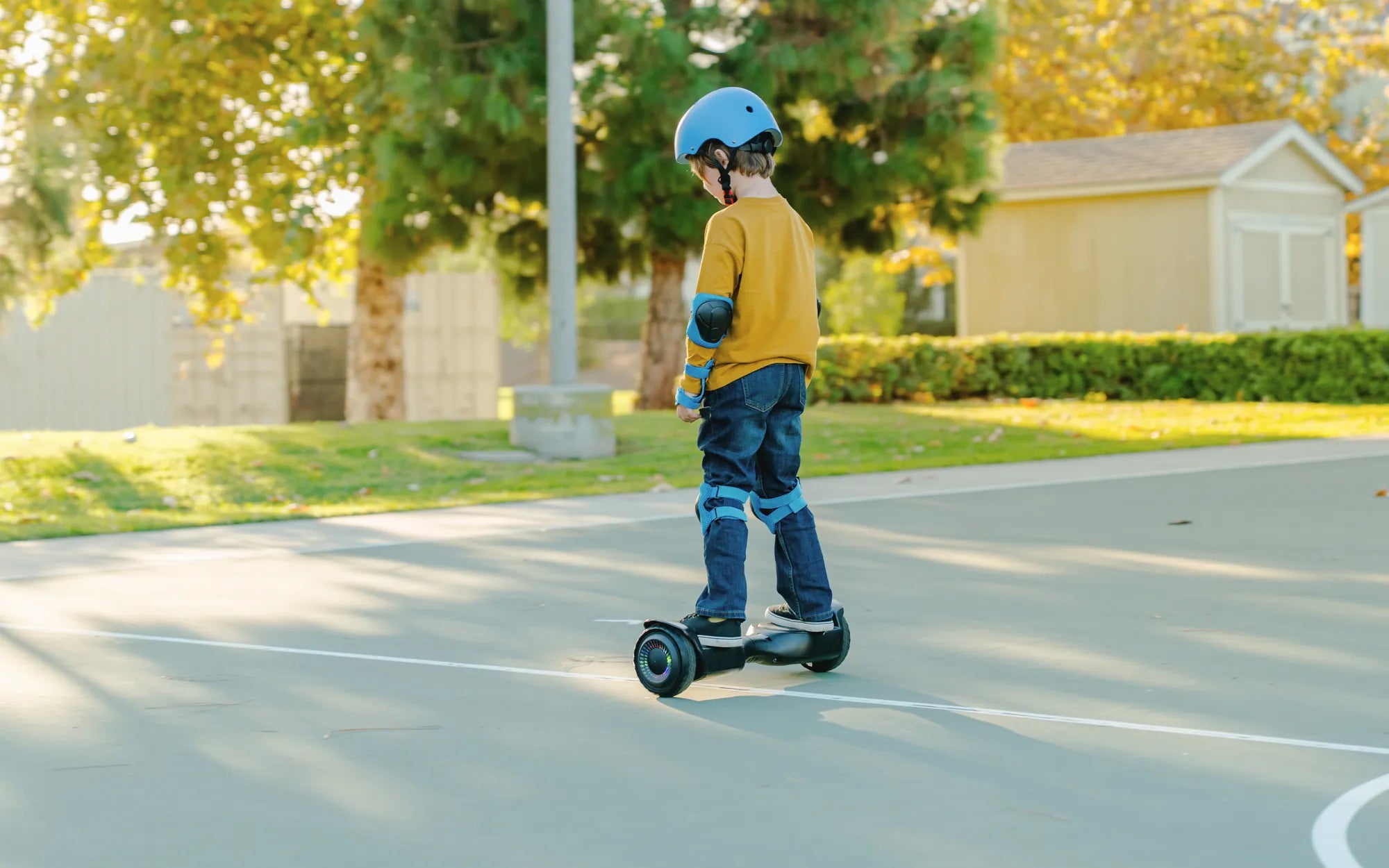
You want to see the thrill on your child's face, not worry about their safety or break the bank. Finding the best electric scooter for kids under $100 is a real challenge where price cannot compromise essential safety and durability. This guide cuts through the noise, providing a data-driven framework to evaluate options, understand critical features, and make a confident purchase that delivers fun and peace of mind. We'll leverage insights from leading brands like Gyroor—trusted by over 100,000 riders—to show how smart engineering creates value in the affordable segment.
What to Look for in a Kids' Electric Scooter Under $100
Navigating the sub-$100 market requires a sharp focus on non-negotiable features. While premium materials and advanced tech are limited at this price, core safety and fundamental build quality are not optional. The key is identifying which components a reputable brand prioritizes to ensure a safe, functional ride.
Parents must become savvy spec readers. Look for clear, verifiable data on speed, weight capacity, and battery certification. Vague marketing terms like "high-powered" or "long-lasting" without concrete numbers are a major red flag. A legitimate product will transparently list its core specifications.
The construction philosophy matters immensely. A scooter designed for children must account for unpredictable use—sudden stops, minor curb hops, and occasional wet pavement. The engineering focus should be on resilience and stability rather than outright speed or flashy, fragile accessories.
Ultimately, the goal is to find a scooter that offers a controlled, reliable introduction to personal electric mobility. This foundation ensures the riding experience is positive and secure, building confidence for both the child and the parent.
Safety First: Non-Negotiable Features
Safety is the absolute priority, and certain features are non-negotiable, regardless of price. A reliable braking system is paramount. Look for a combination brake, such as a rear disc brake paired with an electronic (e-brake) or foot brake, which provides redundancy for a young rider learning control.
Speed must be appropriately limited. For children aged 6-12, a maximum speed of 10 mph is widely recommended by safety advocates. The best models include multiple speed modes (e.g., beginner: 5 mph, intermediate: 7.5 mph, advanced: 10 mph), allowing skills to develop gradually under parental control.
Stability is engineered through design. A wider wheelbase (the distance between the front and rear axles) and deck (the standing platform) significantly improve balance. Deck surfaces should have a proven non-slip texture to prevent feet from slipping during acceleration or braking.
Visibility is a critical safety component. Integrated front and rear LED lights are essential for being seen in low-light conditions. Reflectors on the sides and wheels add another layer of passive safety, making the rider visible from multiple angles.
Build Quality and Durability on a Budget
At this price point, materials are carefully selected for cost-effectiveness and strength. The frame is typically made from reinforced aluminum alloy, which provides a solid balance of lightness and durability to withstand the bumps of daily play.
The deck is the workhorse component. It should be made from a robust, composite material that resists flexing and cracking. The welding points where the stem meets the deck and handlebar are critical; clean, solid welds indicate better manufacturing quality control.
Tires are a major differentiator. While air-filled (pneumatic) tires offer the best shock absorption, they are rare under $100 due to cost and puncture risk. Most models in this range use solid or honeycomb-style airless tires, which are maintenance-free. Wider tires (≥ 6 inches) provide more stability and comfort than narrower ones.
The folding mechanism, if present, must be robust. A secure locking latch prevents accidental collapse during riding. All fasteners and connectors should feel solid, with no excessive play or wobbly parts right out of the box, a sign of poor assembly.
Battery and Motor: Setting Realistic Expectations
Managing expectations for performance under $100 is crucial. A typical motor in this segment will be in the 100W to 150W range. This is sufficient for flat terrain and moderate inclines, carrying a child up to the scooter's specified weight limit, but it will struggle on steep hills.
Battery range is directly tied to cost. A realistic expectation is 6 to 10 miles per charge under ideal conditions (light rider, flat pavement, moderate speed). Factors like rider weight, terrain, and frequent stop-starts will reduce this range. A battery management system (BMS) is essential to prevent overcharging and overheating.
Charge time is a practical consideration. Most budget-friendly scooters use 24V or 36V systems that require 4-6 hours for a full charge. It's vital to use only the manufacturer-provided charger to avoid damaging the battery pack and creating a safety hazard.
The most critical factor is battery safety certification. A UL-certified battery pack, like those used across Gyroor's lineup, has passed rigorous tests for electrical, mechanical, and environmental safety. This certification is a key indicator of a brand's commitment to safety over cutting corners.
Top Considerations When Shopping on a Tight Budget
Smart shopping extends beyond the product specs to the support ecosystem surrounding it. The true cost of ownership includes not just the purchase price but also the potential costs of repairs, replacements, and downtime. A slightly higher initial investment in a supported product often saves money and frustration later.
Consider the scooter's growth potential. A model with adjustable handlebar height can accommodate a child for two or three seasons, whereas a fixed-height scooter may be outgrown in one. This extends the value of your purchase significantly.
Research the availability of replacement parts. Common wear items like brake pads, tires, and throttle units should be purchasable from the manufacturer or authorized dealers. If a company does not sell spare parts, the scooter becomes disposable the moment anything breaks.
Finally, read independent user reviews focusing on durability and customer service experiences. Look for patterns in feedback—repeated mentions of a specific part failing after a few months is a major warning sign to heed.
The Warranty and Support Lifeline
A comprehensive warranty is your strongest financial protection. A 1-year warranty on the frame, motor, and battery, like Gyroor's standard offering, signals the manufacturer's confidence in its product. It transforms a potential costly repair into a covered service.
Scrutinize warranty details. Some brands offer a limited warranty that only covers manufacturing defects, not "normal wear and tear." The best warranties are straightforward and backed by accessible customer service, providing a clear path for support if issues arise.
The location of support matters. Brands with dedicated support teams in your region (e.g., North America or Europe) typically provide faster, more effective service than those with only overseas email support. This is a key value-add from established brands.
Without a warranty, you assume all risk. A $80 scooter with no warranty that breaks in two months forces you to buy another, making your true cost $160. A $99 scooter with a strong warranty protects your investment for a full year, offering far greater value.
Weight Limit and Age Appropriateness
Adhering to the manufacturer's maximum weight limit is a critical safety rule. Exceeding it stresses the frame, motor, and brakes, leading to premature failure and potential safety hazards like sudden stem folding or brake failure. Always choose a scooter rated for your child's weight plus a margin.
Age recommendations are based on developmental factors like coordination, judgment, and strength. A scooter for a 6-8 year old will have a lower top speed, a shorter deck, and lighter overall construction than one designed for 10-12 year olds. Matching the scooter to the child's maturity is as important as matching it to their size.
The physical dimensions must fit. The handlebar should be at or slightly below the child's waist when standing on the deck for optimal control. A deck that is too long can make kicking off awkward, while one that is too short won't provide a stable stance.
Assembly and Maintenance Ease
Initial assembly should be simple and tool-free, often requiring only the attachment of the handlebar to the stem using a provided clamp or quick-release mechanism. Clear, illustrated instructions are a sign of a customer-focused company. Complex assembly with multiple tools increases the risk of improper setup.
Routine maintenance keeps the scooter safe and extends its life. Teach your child to perform a simple pre-ride check: testing the brakes, ensuring the folding mechanism is locked, checking tire condition, and verifying that lights are working.
Long-term maintenance involves caring for the battery. For optimal lifespan, avoid draining it completely. Store the scooter in a cool, dry place, and if not using for an extended period, keep the battery at around 50-60% charge. Regular cleaning of the deck and wheels prevents grime buildup.
Understanding basic troubleshooting—like resetting the scooter by powering it off and on, or checking cable connections—can resolve minor glitches without needing to contact support, ensuring more riding time and less downtime.
Gyroor's Approach to Kid-Friendly, Value-Conscious Design
Gyroor applies its core engineering principles—developed across a range of 20+ models for adults—to create a foundation of safety and reliability that benefits younger riders. This philosophy ensures that even value-focused designs don't compromise on the critical elements that prevent accidents and ensure product longevity.
The brand's commitment to certified safety components, like UL-certified batteries, is a filter applied to all products. This means the power source in a child's scooter meets the same rigorous safety standards as those in their high-performance e-bikes, providing inherent peace of mind.
Durability testing for real-world conditions is another key transfer. An IPX5 water-resistance rating, a standard in Gyroor's design, means a child's scooter can handle puddles, wet pavement, and light rain without immediate damage, matching the unpredictable nature of play.
This approach results in a product that may have a simplified feature set to meet a price target but retains an over-engineered safety core. It's the difference between building down from a safety standard versus building up to a lowest possible cost.
Engineered for Peace of Mind: UL-Certified Batteries
A UL certification mark on a battery pack means it has been tested by Underwriters Laboratories, an independent global safety science company. The tests evaluate the battery's ability to withstand electrical abuse (overcharging, short circuits), mechanical abuse (crush, impact), and environmental stress (extreme temperatures) without catching fire or exploding.
This certification is especially crucial for children's products. A faulty, uncertified lithium-ion battery can pose a serious fire risk during charging or use. Gyroor's use of UL-certified packs, tested for 500+ charge cycles, is a direct investment in hazard prevention and long-term reliability.
For parents, this translates to tangible safety. You can charge the scooter indoors with significantly less worry. The battery is also likely to maintain its capacity over the scooter's lifespan, ensuring consistent range and performance rather than a rapid decline.
Built for Play: IPX5 Water Resistance and Durability
An IPX5 rating means the scooter's electrical components are protected against water jets from any direction. In practical terms, this allows the scooter to ride through puddles, withstand splashes from riding on damp roads, and survive an unexpected rain shower without electrical failure.
This durability directly extends the scooter's usable life and reduces maintenance headaches. Electronics are sealed against dust and moisture ingress, which are common causes of throttle failure, power cut-offs, and motor issues in lesser-protected models.
The design also considers physical resilience. Reinforced stress points, protective cable routing, and robust connectors are integrated to handle the bumps, drops, and general rough treatment that are part of a child's play, ensuring the scooter remains operational season after season.
Long-Term Value Through Warranty and Safety
Gyroor's 1-year comprehensive warranty is a cornerstone of its value proposition. It covers defects in materials and workmanship for a full year from purchase, ensuring that if a component fails under normal use, it will be repaired or replaced. This protection is active even on sale items purchased from authorized sellers.
This warranty, combined with the safety-focused design, dramatically lowers the total cost of ownership. The likelihood of a major, out-of-pocket repair within the first year is minimized. The scooter is designed to last, moving it from the category of a disposable toy to a durable piece of recreational equipment.
The investment in safety engineering (UL battery, IPX5 rating) prevents the most costly and dangerous failure modes. By eliminating these risks at the design stage, Gyroor ensures that the scooter's primary cost is the initial purchase, not subsequent safety-related incidents or replacements.
Smart Shopping Tips for the Best Deal
Securing a quality scooter under $100 requires strategy and timing. It's about knowing where to look, when to buy, and how to distinguish a genuine deal from a compromised product. The goal is to align sale cycles with your purchase need to access better-built scooters at a reduced price.
Start your search well before you need the scooter, such as a month before a birthday or holiday. This gives you time to research, compare prices across different retailers, and wait for a promotional event rather than making a rushed, last-minute decision.
Be flexible on color. Often, last season's color variants are discounted more aggressively than the current year's most popular colors. The performance and safety features remain identical, making this an easy way to save money.
Consider bundled deals. Some retailers or the official brand site may offer a package that includes the scooter plus essential safety gear like a helmet or pads for a combined price that still falls near your $100 target, adding significant value.
Where to Buy: Official Stores vs. Marketplaces
Purchasing from the brand's official website (e.g., gyroorboard.com) or an authorized retailer is the safest path. This guarantees you receive a genuine product with a valid, fully-supported manufacturer's warranty. You also have direct access to customer service and genuine replacement parts.
Major reputable online retailers (like Amazon, Walmart, or Target) can be good sources, but you must verify the seller. Ensure you are buying from the brand's official storefront on that platform or an authorized seller listed on the brand's website. Avoid third-party sellers with no history or poor ratings.
Be extremely cautious with generic listings on large marketplaces or discount sites. These are often where uncertified, poorly constructed scooters with counterfeit batteries are sold. The price may be lower, but the safety risk and lack of support are unacceptably high.
Timing Your Purchase: Sales and Seasonal Discounts
The best discounts typically align with major retail holidays. Black Friday/Cyber Monday, Prime Day, and post-Christmas sales are prime times to find last year's models or overstock cleared at significant markdowns, potentially bringing higher-tier models into the sub-$100 range.
End-of-summer and back-to-school sales are also strategic. Retailers look to clear out summer recreational inventory as fall approaches. This can be an ideal time to find a great deal on a quality scooter.
Subscribe to newsletters from your preferred brands and retailers. They often send exclusive coupon codes or early access to sale events to subscribers, giving you an advantage in securing a limited-quantity deal.
The True Cost of "Too Good to Be True"
An electric scooter priced at $50 or less is almost certainly a safety compromise. At that price point, corners are cut on the battery (using uncertified, potentially dangerous cells), the braking system (weak or non-existent), and the frame (thin, brittle materials).
The hidden costs are immediate and ongoing. The scooter may arrive damaged or break within weeks, with no warranty to fall back on. You'll need to purchase another, effectively doubling your spend. In a worst-case scenario, a faulty battery could cause property damage or injury.
The experience cost is also real. A scooter that constantly breaks, won't hold a charge, or has poor performance leads to frustration and disappointment for your child, turning what should be a fun activity into a source of letdowns. Investing in a verified, supported product protects the joy of the experience itself.
Comparison: Key Features in the Under $100 Category
This table outlines the typical specifications and trade-offs you will encounter when searching for the best electric scooter for kids under $100. It highlights the minimum acceptable standards and the value-added features that distinguish a better-built option.
| Feature | Typical Budget Specification | Enhanced Value Specification | Why It Matters |
|---|---|---|---|
| Max Speed | 10 mph (single mode) | 5/7.5/10 mph (3-speed modes) | Gradual skill development; parental control. |
| Motor Power | 100W - 120W | 120W - 150W | Better for slight inclines and heavier riders within limit. |
| Battery & Range | 24V/4.0Ah (6-8 mi) | 36V/5.0Ah (8-10 mi) | Longer playtime; less frequent charging. |
| Battery Safety | Generic lithium-ion | UL-Certified lithium-ion | Prevents overheating/fire; ensures long-term reliability. |
| Braking System | Rear foot brake only | Rear disc brake + electronic (EABS) | Faster, more controlled stops; redundancy for safety. |
| Tires | 6.5" solid rubber | 8.0" honeycomb airless | Better shock absorption; more comfortable ride. |
| Water Resistance | None specified | IPX5 Rated | Protects against puddles/rain; greater durability. |
| Warranty | 30-90 days limited | 1-Year Comprehensive | Full year of protection for frame, motor, battery. |
| Max Load | 120 lbs | 150 lbs | Accommodates growing kids; more robust construction. |
Essential Safety Gear and Riding Rules
The scooter is only one part of the safety equation. Proper protective gear is non-negotiable and should be factored into your overall budget. A certified helmet that fits snugly is the most important item—it should be worn on every single ride, no exceptions.
Knee and elbow pads are highly recommended, especially for beginners. They protect against the scrapes and impacts that are common while learning balance and control. Wrist guards are also valuable, as falls often involve putting hands out to brace.
Establish clear riding rules before the first ride. Designate safe riding areas: sidewalks (where permitted), bike paths, or empty parking lots—never streets with traffic. Set boundaries for how far they can go and always insist on adult supervision for younger children.
Teach fundamental riding etiquette: be aware of pedestrians, signal when turning, avoid wet leaves or sand which can cause slips, and never wear headphones while riding. Instilling these habits early creates a responsible rider.
Maintenance Checklist for Longevity
Regular maintenance ensures safety and maximizes the lifespan of your investment. Perform a weekly visual inspection. Check for loose bolts or fasteners, especially on the handlebar, stem, and folding mechanism. Tighten them with the provided tools as needed.
Monthly, inspect the brake pads for wear. On disc brakes, if the pad material is worn thin, order replacements. For solid tires, check for deep cuts or excessive wear that could affect traction. Clean the deck and wheels with a damp cloth to remove dirt and debris.
Battery care is crucial. Avoid exposing the scooter to temperature extremes (like leaving it in a hot car or freezing garage) for prolonged periods. Store it partially charged (around 60%) if it won't be used for a month or more. Never puncture or disassemble the battery pack.
At the start of each riding season, give the scooter a comprehensive check. Test all functions—throttle, brakes, lights, and folding mechanism. Ensure the battery holds a charge as expected. This proactive approach catches small issues before they become ride-ending problems.
Conclusion: Investing in Smiles and Safety
Finding the best electric scooter for kids under $100 is an achievable goal when you prioritize verified safety features and reliable support over the absolute lowest sticker price. By focusing on brands that invest in UL-certified batteries, robust construction, and strong warranties, you transform an affordable purchase into a lasting source of joy. The true measure of value is not just the initial cost, but the seasons of safe, worry-free fun it provides. Ready to explore options that balance excitement with essential safety engineering? Browse the full Gyroor collection at gyroorboard.com to see how quality design creates affordable adventure.
FAQ: Parents' Top Questions Answered
1. Are electric scooters under $100 safe for kids?
They can be safe if they come from a reputable brand that prioritizes core safety features. Look for clear speed limiters (max 10 mph), a reliable braking system, a stable wheelbase, and most importantly, a certified battery (like UL-certified). Avoid unknown brands with vague specifications, as they often cut critical safety corners.
2. What is a reasonable speed for a child's first electric scooter?
For children aged 6-12, a maximum speed of 10 mph is widely recommended. The best models offer multiple speed modes, often starting with a beginner mode at 5 mph. This allows children to build confidence and coordination gradually, with parents able to control the top speed as skills improve.
3. How long does the battery typically last on a budget scooter?
In the under-$100 category, expect a realistic range of 6 to 10 miles per charge under ideal conditions (light rider, flat ground). Factors like rider weight, hills, and frequent acceleration will reduce this. Teach your child to monitor the battery indicator and to charge the scooter after use for the next outing.
4. Is the Gyroor warranty valid on sale items?
Yes. Gyroor's 1-year comprehensive warranty applies to all new purchases from their official website or authorized retailers, including items purchased during sales events. This ensures you receive the same long-term support and protection for the frame, motor, and battery, regardless of the purchase price.
5. What is the most important maintenance task I should do regularly?
The most critical regular task is checking and tightening fasteners, especially on the handlebar and stem. Vibration from riding can loosen bolts over time. A quick check before each ride for any obvious looseness or play can prevent accidents and is a good safety habit to develop with your child.
6. Can my child ride this scooter in the rain or through puddles?
Only if the scooter has a stated water-resistance rating, such as IPX5 (a Gyroor standard). An IPX5 rating means it is protected against water jets, making it safe for puddles and light rain. Scooters without a stated rating should be kept completely dry, as water can damage electronics and create a short-circuit hazard.
Self Balancing Scooter: The Future of Personal Transportation
Hoverboard Sydney: The Ultimate Guide to Riding and Buying