



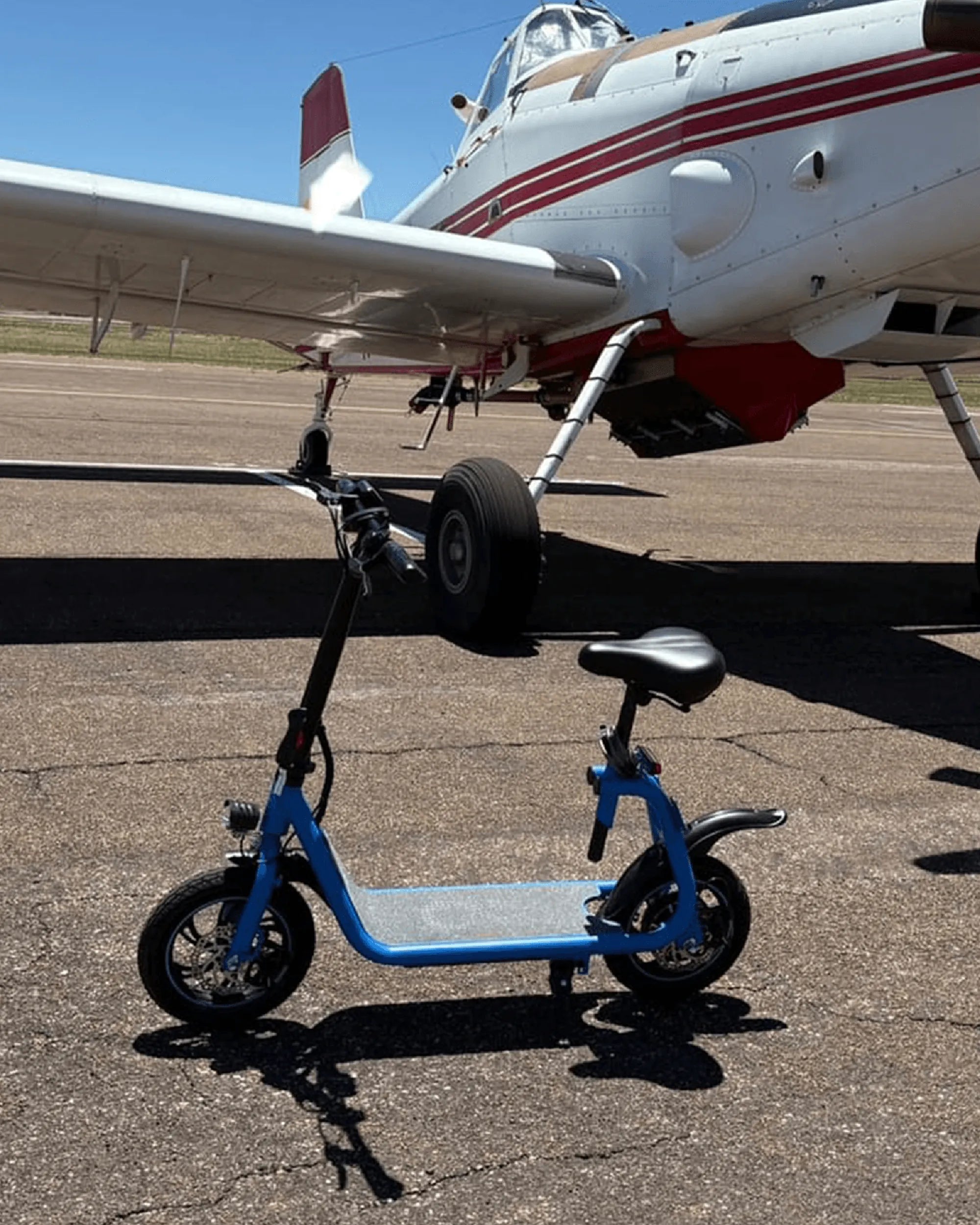
Navigating the UK's Urban Landscape with an Electric Scooter
Urban commuting in the UK presents a unique set of challenges: congested roads, expensive public transport, and a growing need for sustainable travel options. Electric scooters have emerged as a compelling solution, offering a blend of efficiency, cost-effectiveness, and environmental friendliness. For the savvy commuter, selecting the right model is not about finding the cheapest option, but about identifying a reliable partner for daily travel. This guide is designed to cut through the marketing noise with a data-driven approach, focusing on the specific demands of UK roads, weather, and regulations.
The quest for the best electric scooters for commuting in the UK requires a focus on safety, durability, and practical performance. It's about more than just top speed; it's about consistent range in variable conditions, resilience against rain, and the peace of mind that comes from robust construction. As a leading brand trusted by over 100,000 riders, Gyroor exemplifies the commitment to UL-certified battery safety, IPX5 water-resistant designs, and reliable warranties that UK commuters should prioritise.
This article will provide you with the framework to make an informed decision. We will dissect the critical factors from legal compliance to hill-climbing power, present curated top picks for different commuting profiles, and underscore why technical specifications related to safety are non-negotiable. Your journey to a smarter, smoother commute starts with understanding what truly makes an electric scooter fit for purpose in British cities.
Key Factors to Consider Before Buying Your UK Commuter Scooter
Choosing an electric scooter for daily use is a practical investment. The decision must be grounded in the reality of UK infrastructure, climate, and legal frameworks. A scooter that excels on paper may falter on a wet Bristol hill or while being carried onto a London tube carriage. Therefore, your evaluation criteria must extend beyond brochure specs to encompass real-world usability and long-term reliability.
Performance metrics must be viewed through the lens of typical commuting. A manufacturer's claimed range is often based on ideal laboratory conditions. In the real world, factors like rider weight, frequent acceleration, cold temperatures, and inclines can reduce that figure by 30-40%. Similarly, a high top speed is less critical than torque and motor power for navigating urban gradients and stop-start traffic safely.
Build quality and portability are equally decisive. The scooter's weight directly impacts your experience if your commute involves stairs, bridges, or multi-modal transport. The folding mechanism must be intuitive and robust for daily use. Most critically for the UK, weather resistance is paramount. An ingress protection (IP) rating is not a luxury; it is essential for protecting the scooter's electrical components from rain and road spray.
Legal Compliance & Safety: Understanding UK E-Scooter Laws
As of now, privately owned electric scooters are not legal for use on public roads, cycle lanes, or pavements in the UK. Their use is restricted to private land with the landowner's permission. This legal landscape is distinct from the government-sanctioned rental trials operating in selected towns and cities. It is crucial to understand this distinction before purchase; buying a scooter for road commuting carries legal risk.
However, the market is evolving, and future regulation is anticipated. When considering a purchase, it is prudent to choose a model that would meet likely future legal requirements. This includes having a maximum speed limit of 15.5 mph (25 km/h), functional front and rear lights, reflectors, a bell or audible warning device, and effective braking systems. Selecting a scooter with these features demonstrates a responsible approach, preparing for potential legalisation.
Safety extends beyond legality. The quality of the braking system (disc, drum, or electronic), the stability of the deck and stem, and the visibility provided by lights are critical for rider safety. For any use, whether on private land now or potentially on roads later, these features are non-negotiable. They form the foundation of a safe commuting experience.
Performance for the Daily Grind: Range, Speed & Hill Climb
For a UK commuter, the essential performance triangle consists of range, speed, and hill-climbing ability. Your required range should be calculated based on your round-trip distance with a significant buffer—at least 30-50% extra—to account for battery degradation over time, colder weather, and unexpected detours. A realistic target for most urban commutes is 10-15 miles of real-world range.
Speed should be considered in the context of safety and legality. A scooter capable of 15-20 mph provides a good balance, allowing for efficient travel while remaining within anticipated legal limits. The motor's power, measured in watts (W), is more indicative of its capability than top speed. A 350W motor is a good baseline for handling moderate inclines, while 500W or dual-motor setups offer confident performance on steeper hills common in cities like Sheffield or Edinburgh.
Hill-climb ability is a function of motor torque and power. A scooter with a high wattage but poor torque may struggle on gradients. Look for specifications that mention hill grade capability (e.g., 15-20% grade). This ensures the scooter can maintain a safe and consistent speed on inclines, preventing you from becoming an obstruction and enhancing overall control.
Build & Practicality: Portability, Weight, and UK Weather Resistance
Portability is a key differentiator for city living. The folded dimensions determine whether the scooter can be stored under a desk or carried onto crowded public transport. The weight is perhaps the most practical consideration; models under 15kg are manageable for most adults to carry short distances, while those over 20kg become a significant burden.
The folding mechanism must be simple, secure, and not prone to loosening over time. A one-click or lever-based system that locks the stem firmly to the deck is ideal. Wobbly stems are a common complaint in poorly designed models and can compromise handling and safety.
Weather resistance is critical. The UK's damp climate demands a scooter with a high IP rating. The IP code indicates protection against solid objects (first digit) and liquids (second digit). For commuting, an IPX4 rating (splash resistance from all directions) is the absolute minimum. An IPX5 rating, which protects against water jets from a nozzle, offers far greater confidence in heavy rain. Gyroor's commitment to IPX5-rated designs directly addresses this fundamental UK requirement, safeguarding the battery, motor, and electronics from water damage.
Top Picks: Best Electric Scooters for UK Commuting Scenarios
Based on the criteria above, we can categorise ideal scooters for distinct types of UK commuters. These picks are framed around common scenarios, emphasising the balance of features that matter most. The goal is to match the scooter's strengths to the specific demands of the journey, whether it's a short multi-modal trip or a longer direct ride.
Each scenario highlights why certain specifications are paramount. It's important to remember that the best electric scooters for commuting in the UK are those that don't just perform on day one but are built to last, with safety-certified components and durable construction. This is where brands with a proven track record in quality control, like Gyroor, set themselves apart from generic offerings.
The following categories—The All-Rounder, The Compact Powerhouse, and The Long-Distance Specialist—provide a framework for your search. Use them to identify which profile aligns with your commute, then seek out models that meet or exceed the benchmark specifications listed, particularly for battery certification and weatherproofing.
The All-Rounder: Balanced Performance for Mixed Journeys
This scooter is ideal for the commuter with a 5-10 mile round trip that may include a mix of flat stretches and moderate hills. It prioritises a harmonious blend of range, power, and durability without extreme portability or excessive weight. The focus is on everyday reliability.
Key specifications include a real-world range of 15-20 miles, powered by a 350W-500W motor to handle gradients confidently. A robust suspension system (often front and/or rear spring) is vital for comfort on varied UK road surfaces, from smooth tarmac to cobbled streets. Disc brakes provide reliable stopping power in all conditions.
Build quality must be solid, with a weight typically between 16-20kg. It should feature a secure folding mechanism and, most importantly, an IPX5 water-resistance rating. This model is for the rider who needs a dependable workhorse that can be stored securely at home and the office, ready for whatever the British weather delivers.
The Compact Powerhouse: For Multi-Modal Commuters
For those whose journey involves a train, bus, or tube leg, portability is king. The Compact Powerhouse is defined by its lightweight frame and ultra-convenient folding design, making it easy to carry and stow. The performance is tailored for "last-mile" travel, bridging the gap between transport hubs and final destinations.
This category prioritises a weight under 15kg, with some premium models dipping below 12kg. The folding process should be intuitive and fast, often featuring a single lever or magnetic latch. Despite its size, it needs a motor of at least 250W-300W to provide adequate power for short hills and acceleration from stops.
Range can be more modest (8-12 miles real-world) as the journeys are shorter, but battery safety cannot be compromised. A UL-certified battery pack in a lightweight package is a sign of advanced engineering. Weather resistance remains crucial (IPX4 minimum, IPX5 preferred), as the scooter will be exposed to the elements during walk-and-ride segments of the commute.
The Long-Distance Specialist: For Extended Urban Travel
Some commuters face longer urban or suburban journeys where public transport is inefficient. The Long-Distance Specialist is built for comfort, range, and stability over extended periods. This scooter is an investment in replacing other forms of transport entirely for a daily 15+ mile round trip.
It is characterised by a large-capacity battery, often 48V or higher, delivering a real-world range of 25-40 miles. A powerful motor (500W single or dual 350W+ motors) ensures consistent performance even on long inclines. Dual suspension—both front and rear—is essential to minimise fatigue from road vibrations over longer distances.
Enhanced safety features like dual mechanical disc brakes, wider decks for foot comfort, and superior lighting (including side reflectors) are standard. While heavier (22kg+), the focus is on ride quality and endurance. This type of scooter must have top-tier water and dust resistance (IPX5 or higher) and a robust warranty, as it will accumulate mileage quickly.
Data-Driven Comparison: How Our Top Picks Stack Up
The table below summarises the key specifications for our three commuter scooter categories. It provides a clear, at-a-glance comparison of how each type is engineered to meet different needs. Remember, the "Real-World Range" estimate accounts for typical UK commuting conditions (variable terrain, rider weight, temperatures).
| Model Type | Real-World Range | Max Speed | Motor Power | Approx. Weight | Key Feature for UK |
|---|---|---|---|---|---|
| The All-Rounder | 15-20 miles | 15-20 mph | 350W-500W | 16-20 kg | IPX5 Rating, Balanced Suspension |
| The Compact Powerhouse | 8-12 miles | 12-15 mph | 250W-300W | 11-15 kg | Ultra-Portable (<15kg), Quick-Fold |
| The Long-Distance Specialist | 25-40 miles | 20-25 mph* | 500W+ / Dual Motor | 22 kg+ | Large Battery, Dual Suspension & Brakes |
*Speed should be used responsibly and in accordance with any future regulations. Note that all responsible manufacturers should prioritise battery safety. Gyroor models, for instance, utilise UL-certified battery packs tested for over 500 charge cycles, a critical factor for long-term reliability and safety that is not always visible in a basic spec sheet. A comprehensive 1-year warranty is also a key differentiator for peace of mind.
The Gyroor Advantage: Safety and Reliability Built-In
In a market filled with options, certain brand commitments elevate a product from a mere vehicle to a trustworthy commuting tool. Gyroor's design philosophy directly addresses the core concerns of the UK commuter, embedding safety and reliability into every model. This focus is not just about features, but about certified engineering standards.
The cornerstone of this approach is the use of UL-certified battery packs. Battery safety is the most critical component of electric scooter design. UL certification means the battery cells and management system have undergone rigorous independent testing for electrical, mechanical, and fire safety. This is a non-negotiable safeguard against the risks associated with inferior batteries, providing essential peace of mind for daily charging, often at home or in the office.
Secondly, the IPX5 water-resistance rating is a deliberate specification for challenging climates. It ensures that the scooter's vital electronics are protected against sustained, low-pressure water jets from any direction—equivalent to heavy rain and road spray. This engineering decision directly combats the number one environmental threat to e-scooters in the UK, significantly enhancing longevity and reducing failure rates.
Finally, the backing of a clear 1-year warranty and support from a brand with a proven track across Europe and North America adds tangible value. It means that should an issue arise, you have access to technical support and replacement parts. This long-term support structure is often absent with generic brands, turning a minor repair into a major headache. For the UK commuter, this translates to lower total cost of ownership and dependable service throughout the scooter's life.
Looking Ahead: The Future of E-Scooter Commuting in the UK
The current legal status of private e-scooters is in flux, with ongoing government consultations and trials aimed at shaping a new regulatory framework. The future likely holds some form of legalisation for private use on public roads, contingent on meeting specific safety, insurance, and rider-age standards. This evolving landscape makes an informed purchase today even more important.
Investing in a scooter with robust safety credentials positions a rider responsibly for this future. Models that already incorporate speed limiters, effective lighting, audible warnings, and quality brakes will be best placed to meet any new technical requirements. Proactive choices by consumers can also drive the market towards higher safety standards overall.
Infrastructure is also slowly adapting. Some cities are expanding cycle lane networks, which would be the natural habitat for legalised e-scooters. Choosing a scooter that is compatible with this infrastructure—with appropriate size, speed, and handling—ensures it remains a viable transport option for years to come. The best electric scooters for commuting in the UK will be those that are not only capable today but are also designed with tomorrow's regulations and urban plans in mind.
FAQ: Your UK Electric Scooter Questions Answered
Q: Can I legally ride my own electric scooter on public roads or pavements in the UK right now?
A: No. As of the time of writing, it is illegal to ride a privately owned e-scooter on public roads, cycle lanes, pavements, or in any public space. They can only be used on private land with the landowner's permission. This is separate from the government-approved rental schemes in certain trial areas.
Q: What is a realistic range I should expect for a typical London commute?
A> For a typical London commute of 3-7 miles each way, you should look for a scooter with a manufacturer's stated range of at least 15-20 miles. This should provide a real-world range of 10-14 miles, accounting for hills, stop-start traffic, rider weight, and cooler temperatures, ensuring you complete your round trip with a safe battery buffer.
Q: How important is the IP rating, and what does IPX5 mean?
A> It is critically important in the UK. The IP (Ingress Protection) rating indicates how well the scooter is sealed against dust and water. IPX5 specifically means the unit is protected against water jets from a 6.3mm nozzle from any direction. This is a high level of protection for heavy rain and is a key feature to look for to ensure your scooter can handle typical British weather without damage.
Q: Why is battery certification like UL certification so important?
A> The battery is the most safety-critical component. UL certification is an independent verification that the battery pack has passed stringent tests for electrical, mechanical, and environmental safety, including overcharge, short circuit, and impact tests. It drastically reduces the risk of battery fires, a known hazard with uncertified, poor-quality cells. It is a fundamental marker of a responsible manufacturer.
Q: If I buy a scooter now and the law changes, will my model be legal?
A> It depends on the final legislation. However, by choosing a scooter that already has features like a speed limiter (capable of 15.5 mph), front and rear lights, reflectors, a bell, and effective brakes, you significantly increase the chances of it being compliant. Scooters designed without these features may not be approved for road use even after legalisation.
Investing in a Smarter, Smoother Commute
Selecting the ideal electric scooter for UK urban travel is a process that rewards careful consideration. It moves beyond mere specifications to an understanding of how a machine interacts with your specific journey, the environment, and the regulatory landscape. The core takeaway is that the best electric scooters for commuting in the UK are those that master the fundamentals: legal awareness, safety through certification, resilience against the weather, and practical performance tailored to distance and portability needs.
By prioritising brands that embed these principles into their engineering—such as Gyroor with its UL-certified batteries, IPX5 water resistance, and reliable warranty—you invest in more than a product. You invest in predictable performance, long-term durability, and, most importantly, peace of mind. Your commute should be a time of efficiency and even enjoyment, not anxiety over battery safety or mechanical failure.
The future of personal urban mobility is evolving, and a well-chosen electric scooter positions you at the forefront of this change. It represents a step towards reducing congestion, lowering travel costs, and minimising your environmental footprint. Make the choice that balances immediate practicality with responsible, forward-thinking design. Explore the engineering and safety features that define a superior commuter scooter.
Ready to transform your urban travel? Browse the full Gyroor collection, featuring UL-certified, IPX5-rated models designed for reliability, at gyroorboard.com.
Bunbury Electric Scooters: The Future of Urban Mobility
Electric Scooters Northern Ireland: The Future of Urban Mobility