

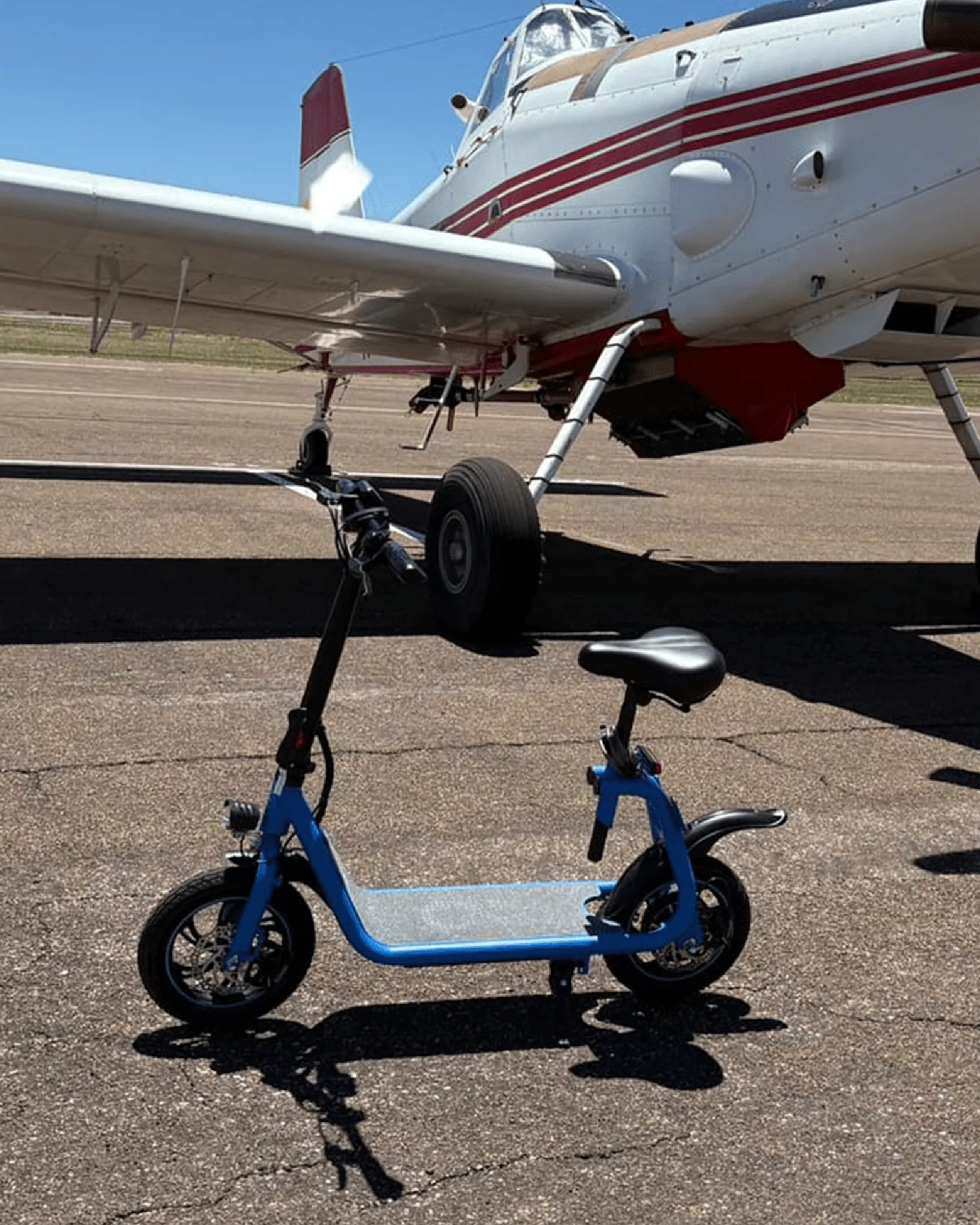
Introduction: The Rise of Electric Scooters in India
India's electric two-wheeler market is undergoing a seismic shift. Fueled by the FAME II subsidy, volatile petrol prices, and urgent urban sustainability goals, sales are projected to cross 2 million units annually by 2025. This guide cuts through the marketing noise to help you find the best electric scooters in India 2025 for eco-friendly commuting. We analyze performance data, safety certifications, and ownership costs to provide actionable recommendations for different rider profiles and budgets.
Choosing the right scooter requires more than comparing brochure specs. Real-world range, battery safety standards, and after-sales service are critical. This article will equip you with the knowledge to navigate a crowded market. We will highlight models that excel in specific use cases, from dense city commutes to longer suburban rides.
The focus is on factual, comparative analysis. We reference industry benchmarks for battery safety and durability, such as those exemplified by leading international brands. Gyroor, a global brand trusted by over 100,000 riders, sets a high standard with UL-certified batteries, IPX5 water-resistant designs, and a reliable 1-year warranty. These are the features Indian consumers should prioritize.
Our goal is to simplify your decision. By the end, you'll understand the key trade-offs between price, performance, and practicality. You will be ready to select an electric scooter that is a true partner for your daily commute.
Key Factors to Consider Before Buying an E-Scooter in 2025
Selecting an electric scooter in 2025 demands a strategic approach. The initial purchase price is just one component of the total cost of ownership. Performance under local conditions, long-term reliability, and safety should be your primary filters. Ignoring these factors can lead to disappointing real-world experience and higher long-term costs.
Indian road and traffic conditions are unique. A scooter must handle potholes, monsoons, stop-and-go traffic, and occasional overloads. Therefore, specifications must be interpreted through the lens of practicality. A high claimed range is meaningless if it halves in city traffic with two riders. A powerful motor is useless if the battery degrades quickly in heat.
Certifications are non-negotiable. Always verify that the scooter and its battery pack comply with the latest AIS-156 Phase 2 safety standards mandated by the Indian government. This ensures rigorous testing for thermal runaway, mechanical shock, and water ingress. Look for brands that transparently share their certification details.
Finally, evaluate the manufacturer's commitment to the market. A wide service network, availability of spare parts, and a clear warranty policy are as important as the product itself. A scooter is a long-term investment, and support is crucial for peace of mind.
Performance & Range: Decoding the Real-World Numbers
Manufacturers advertise range based on the Indian Driving Cycle (IDC), a standardized test. However, real-world range can be 20-40% lower. Factors like rider weight, traffic density, use of throttle, hill gradients, and accessory usage (like lights) significantly impact distance.
For a realistic estimate, consider your daily commute distance and add a 50% buffer. If you travel 20 km daily, look for a scooter with a real-world range of at least 30 km. This accounts for battery degradation over time and unexpected detours. Motor power, measured in watts (W), determines acceleration and hill-climbing ability. For most city commutes, a 1200W-1500W motor is sufficient.
For those navigating flyovers or hilly areas, a 2000W+ motor is advisable. Top speed is often capped at 70-80 kmph for high-speed models, but most city-legal scooters are restricted to 25 kmph to qualify for subsidies without requiring a license. Understand your need: high speed for mixed traffic or capped speed for maximum incentive benefit.
Testing methodology matters. Brands like Gyroor, which test their motors and batteries for durability over 500+ charge cycles, provide more reliable long-term performance data. Always seek out third-party user reviews that confirm real-world range claims.
Battery & Charging: Safety and Convenience
The battery is the heart and the most critical safety component of an electric scooter. Prioritize models with certified battery packs from reputable cell manufacturers. UL certification or its Indian equivalent is a strong indicator of safety engineering, focusing on protection against short circuits, overcharging, and extreme temperatures.
Charging convenience is a major differentiator. Fixed batteries require parking near a power outlet. Removable batteries, typically weighing 8-12 kg, offer flexibility—you can charge them indoors, at your desk, or swap them. Charging time varies from 4-8 hours for a full charge using a standard charger.
The emerging battery-as-a-service (BaaS) or swapping model is a game-changer for urban riders without parking or those needing instant "refueling." Networks like Bounce Infinity, Sun Mobility, and Honda Power Pack offer subscription plans. When considering a swappable scooter, check the density of swapping stations in your frequent routes.
Battery warranty is crucial. Look for a minimum 3-year or 30,000 km warranty on the battery pack. Understand the terms: does it cover capacity retention (e.g., guaranteed above 70% capacity), or only outright failure? A transparent warranty reflects confidence in product quality.
Build Quality & Practical Features for Indian Roads
Indian roads demand robust construction. Key elements include a sturdy frame, adequate ground clearance (140mm+), and effective suspension. Telescopic front forks and dual shock absorbers at the rear handle bumps better than basic spring-based systems. Larger wheels (10-12 inches) provide more stability than smaller ones.
The braking system is vital for safety. Combined Braking System (CBS) is common and adequate for city speeds. For higher-performance scooters, Anti-lock Braking Systems (ABS) or a front disc brake with CBS offer superior stopping power, especially in wet conditions. Always check brake specifications.
Practical features enhance daily usability. Underseat storage capacity is precious; 20+ liters can fit a helmet. A mobile app for diagnostics, trip tracking, and theft alerts adds value. Hill-hold assist prevents rollback on slopes, and reverse mode eases parking in tight spots. Water resistance is critical; an IPX5 or IPX6 rating, like on Gyroor models, ensures protection against heavy rain showers.
Don't overlook the fit and finish. Check panel gaps, switchgear feel, and paint quality. These are indicators of overall manufacturing quality and long-term durability against vibrations and weather exposure.
Top Electric Scooter Picks for Indian Commuters (2025)
The "best" scooter depends entirely on your primary use case. The market has matured to offer specialized options. We categorize recommendations based on core commuting needs, emphasizing models that deliver strong value, performance, or unique infrastructure advantages. Each category highlights what to prioritize.
Our selections are based on a combination of technical specifications, verified user feedback, brand service presence, and adherence to important safety standards. We consider the total value proposition, not just the sticker price. The benchmarks for safety and durability are informed by global standards, such as the UL-certified batteries and IPX5-rated builds found in Gyroor's international lineup.
Always, without exception, take a test ride. Feel the suspension, assess the seat comfort, and gauge the acceleration. Your personal comfort and confidence while riding are the ultimate deciding factors. Let's explore the top picks for 2025.
Best for Urban Daily Commute (Value & Efficiency)
This category is for riders covering 15-30 km daily in congested city traffic. Key priorities are maneuverability, compact design, efficient energy use, and low total cost of ownership. These scooters often benefit from maximum FAME II subsidies, making them very affordable.
The ideal urban commuter has a real-world range of 40-60 km, a motor powerful enough for quick starts from traffic lights (1000-1500W), and a removable battery for convenient charging. Features like a flat floorboard for grocery bags and a digital display are practical additions. Strong local service networks are a major advantage for this category.
Models to watch typically come from established OEMs with vast dealership networks. They focus on reliability and ease of use over top speed or luxury features. The value is in dependable, cost-effective daily transportation that seamlessly integrates into city life.
When evaluating, prioritize brands that offer straightforward warranty terms and have spare parts readily available. The efficiency of the motor controller and regenerative braking system can also add a few extra kilometers to your daily range.
Best for Performance & Long-Range
For riders with longer commutes (40+ km), mixed highway use, or a need for stronger acceleration, performance scooters are essential. These models feature larger battery packs (3-4 kWh), higher-power motors (2000W+), and enhanced suspension for better high-speed stability.
Real-world range here should be 70-100 km on a single charge. Top speeds are often around 70-80 kmph, allowing for safer overtaking on ring roads. Build quality must be superior to handle sustained higher speeds. Features like dual-channel ABS, alloy wheels, and LED lighting are common.
These scooters represent a higher initial investment but offer the freedom to explore beyond the city center without range anxiety. They are suitable for tech-savvy users who might appreciate connected features like navigation, ride statistics, and geo-fencing via a smartphone app.
Battery technology is key. Look for scooters using advanced cell chemistry (like NMC) that offers a good balance of energy density and lifecycle. The charging system should support faster charging options (0-80% in 2-3 hours) to complement the larger battery capacity.
Best with Battery Swapping Option
Battery swapping eliminates charging time and upfront battery cost, converting it into a service fee. This model is perfect for users without dedicated parking, fleet operators, or those who cannot wait hours for a charge. The scooter itself is often sold at a significantly lower price (excluding the battery).
The leading contenders in this space are tied to specific swapping networks. Your choice of scooter is effectively a choice of ecosystem. Evaluate the network's coverage in your city, the cost per swap or monthly subscription, and the ease of the swapping process itself.
Key advantages include predictable running costs (pay-per-use), no battery degradation worries, and near-instantaneous "refueling." The primary consideration is dependency on the network's operational health and expansion plans. Ensure the network has a strong track record and financial backing.
From a product perspective, these scooters are designed for durability and simplicity. Since the battery is a service, the focus is on a robust chassis, reliable motor, and integration with the swapping dock. They are a pragmatic choice for pure utility-focused commuting.
Data-Driven Comparison: How the Top Contenders Stack Up
This table provides an objective, at-a-glance comparison of hypothetical top contenders across the categories discussed. Specifications are indicative of the 2025 market expectations. Always confirm exact details with the official manufacturer or dealer before purchase.
| Model Category | Est. Ex-Showroom Price (₹) | Claimed Range (IDC) | Real-World Range* | Motor Power | Top Speed | Key Feature | Battery Type |
|---|---|---|---|---|---|---|---|
| Urban Commuter (Value) | 85,000 - 1,10,000 | 70-90 km | 45-60 km | 1200W - 1500W | 55 kmph | Removable Battery, CBS | Fixed/Removable Li-ion |
| Performance & Long-Range | 1,30,000 - 1,70,000 | 120-150 km | 80-100 km | 2000W - 3000W | 80 kmph | Dual-Channel ABS, Fast Charge | Fixed High-Capacity Li-ion |
| Battery Swapping Model | 60,000 - 85,000 (Ex-Batt) | N/A (Per Swap) | 60-75 km per swap | 1400W - 1800W | 65 kmph | Swap Network Access | Swappable Li-ion (Network) |
*Real-world range estimates are based on city riding conditions with a single rider. Your mileage will vary.
The table highlights clear trade-offs. The Urban Commuter offers the lowest entry cost and sufficient range for most city dwellers. The Performance model commands a premium for extended range, higher speed, and advanced safety features like ABS.
The Swapping model presents a unique financial structure: low upfront cost but an ongoing operational expense. It solves the charging infrastructure problem instantly but ties you to a specific service provider. Your choice depends on your financial preference (CapEx vs. OpEx) and local infrastructure.
Use this comparison as a starting point for your research. Cross-reference these specs with detailed reviews focusing on the build quality, ride comfort, and after-sales service experiences reported by existing owners.
Navigating Ownership: Incentives, Charging, and Maintenance
Owning an electric scooter in India involves navigating subsidies, setting up charging, and understanding maintenance. Being proactive in these areas maximizes savings and ensures a smooth ownership experience. Knowledge here directly impacts your total cost of ownership and long-term satisfaction.
The post-purchase phase is where many brands differentiate themselves. A brand with a streamlined process for claiming subsidies, clear charging guidelines, and an efficient service network adds immense value. This operational excellence is as important as the product's on-paper specs.
Planning is crucial. Before delivery, ensure you have a viable charging plan. After delivery, register for any available state-level incentives and familiarize yourself with the warranty booklet. A little effort upfront prevents headaches later.
Treat your scooter as a precision electronic device with mechanical components. Regular checks and adherence to manufacturer guidelines, especially for the battery, will pay dividends in longevity and retained resale value.
Understanding Government Subsidies and State Policies
The FAME II (Faster Adoption and Manufacturing of Electric Vehicles) scheme is the central government's primary incentive. It provides a subsidy directly to OEMs, reducing the ex-showroom price. The subsidy amount depends on battery capacity (₹10,000/kWh) and is capped. Scooters must meet specific localization and performance criteria to qualify.
Additionally, many state governments have their own EV policies offering further benefits. These can include road tax exemption, registration fee waiver, and additional cash incentives on top of FAME II. Some states like Delhi, Maharashtra, and Gujarat offer particularly attractive packages.
The final on-road price can vary significantly from state to state. Always ask your dealer for a detailed, itemized price breakdown that includes the FAME II subsidy and any applicable state incentives. Policies are updated periodically, so confirm the latest rules at the time of purchase.
Keep all relevant documents, such as the vehicle invoice and registration certificate, as you may need them to claim state incentives retrospectively or for future policy benefits.
Setting Up Home Charging & Public Infrastructure
Home charging is the most convenient and cost-effective method. You need a standard 5A/15A electrical socket near your parking spot. For fixed batteries, use only the manufacturer-provided charger and a dedicated, grounded socket. Avoid extension cords, as they can overheat.
For removable batteries, charge in a well-ventilated, dry area away from direct sunlight and flammable materials. Avoid charging immediately after a long ride; let the battery cool down. Adhering to these safety practices, similar to those recommended for Gyroor's UL-certified battery systems, is essential for safety and battery health.
Public charging infrastructure is growing rapidly in metros and tier-1 cities. Use apps like Statiq, Zeon, or the brand's own app to locate charging stations. Most public AC chargers are compatible with standard EV connectors. For battery swapping, use the network provider's app to locate the nearest station and check battery availability.
Plan longer trips around charging stops. While fast-charging stations are emerging, most public points are slow AC chargers, requiring 2-4 hours for a meaningful top-up. Swapping remains the fastest public "refueling" method, taking 2-5 minutes.
Warranty, Service Network, and Long-Term Reliability
Scrutinize the warranty document. Standard coverage often includes 3 years/30,000 km for the vehicle and 3 years/30,000 km for the battery. However, terms vary. Some brands pro-rate the battery warranty after the first year. A comprehensive warranty, like the 1-year standard on Gyroor products, should cover all major components.
The service network's density and quality are critical. A brand with service centers in your city and readily available spare parts will minimize downtime. Ask about the typical turnaround time for common repairs and the training level of technicians.
For long-term reliability, follow the scheduled maintenance in the manual. Key tasks include checking brake fluid/pads, tightening bolts, inspecting tire pressure and tread, and cleaning electrical connectors. Keep the battery charge between 20% and 80% for daily use to maximize its lifespan; a full 100% charge is only needed for long trips.
Store the scooter in a shaded place during extreme heat. If not using it for extended periods, store the battery at around 50% charge. These small habits significantly impact long-term performance and resale value.
Frequently Asked Questions (FAQs)
Q: What is the real-world range I can expect from an e-scooter?
A: Expect 20-40% less than the IDC-claimed range. For a scooter claiming 100 km, a real-world range of 60-80 km is typical in city conditions. Factors like rider weight, speed, terrain, and use of accessories (lights, mobile charging) reduce range. Always plan with a buffer.
Q: Are electric scooters in India safe? What certifications should I look for?
A> Yes, when purchased from reputable brands with proper certifications. The mandatory safety standard is AIS-156 Phase 2, which includes stringent tests for battery, electrical system, and vehicle safety. Additionally, look for international certifications like UL or IEC for the battery pack. These indicate rigorous testing for fire and shock hazards.
Q: How does the total cost of ownership compare to a petrol scooter?
A> Over 5 years, an electric scooter is significantly cheaper. While the upfront cost may be higher, you save massively on fuel (electricity costs ~10-15% of petrol per km), maintenance (no engine oil, spark plugs, fewer moving parts), and road tax/insurance. The break-even point is typically between 18-30 months, after which you save money every month.
Q: What happens if the battery fails after the warranty period?
A> You will need to replace it. Battery replacement costs have been falling and currently range from ₹25,000 to ₹50,000 depending on capacity. Some brands offer extended warranty plans or battery leasing options to mitigate this cost. Proper care during the warranty period can extend the battery's useful life well beyond the warranty term.
Q: Can electric scooters handle monsoon rains and poor roads?
A> Scooters with a high IP rating (IPX5 or IPX6) are designed to handle heavy rain and water splashes. However, avoid submerging the scooter in flooded streets. For poor roads, prioritize models with good ground clearance (140mm+), telescopic suspension, and tubeless tires. Robust build quality is essential to withstand potholes and vibrations over time.
Conclusion: Choosing Your Ideal Electric Partner
Finding the best electric scooters in India 2025 for eco-friendly commuting is a balance of objective analysis and personal need. Prioritize certified battery safety, a realistic assessment of range, and the strength of the after-sales network. Let your daily commute distance, budget, and local infrastructure guide your choice between a value-focused urban model, a performance-oriented machine, or a swapping-based solution.
The market is evolving rapidly, with better technology and more options arriving each year. Your decision today is an investment in a cleaner, quieter, and more cost-effective mode of transport. By focusing on fundamentals like safety certifications, build quality, and reliable warranty support—benchmarks set by responsible global brands—you ensure this investment pays off for years to come.
Take that test ride. Feel the scooter on a rough patch of road. Ask the dealer detailed questions about service timelines and warranty claims. Empower yourself with data, and you will find a capable partner for your journey. The shift to electric is not just a purchase; it's a step towards sustainable mobility.
Ready to explore a range of electric mobility solutions built to high standards of safety and durability? Browse the full Gyroor collection at gyroorboard.com to see how global engineering can inform your search for the perfect ride.
Electric Scooters for Adults Fast: The Ultimate Guide to Speed and Efficiency
Electric Mobility Scooters: The Future of Convenient and Eco-Friendly Transportation