


Introduction: Navigating the Australian Hoverboard Market
Finding the best hoverboard in Australia requires careful consideration of local regulations, diverse terrain, and stringent safety standards. These self-balancing scooters have evolved from novelty items to legitimate tools for short-distance commuting and recreation. The key to a great purchase lies in selecting a model that is not only fun but also certified safe, durable enough for Australian conditions, and backed by reliable local support.
This guide will provide you with the data and insights needed to make an informed decision. We focus on critical factors like mandatory safety certifications, motor performance for hills, and water resistance for unpredictable weather. Our goal is to help you find a hoverboard that delivers smooth and safe riding, whether you're navigating city footpaths, park trails, or suburban streets.
Why Safety and Certification are Non-Negotiable in Australia
Safety is the paramount concern when purchasing any personal electric vehicle. In Australia, this starts with the UL 2272 certification. This global safety standard, developed by Underwriters Laboratories, rigorously tests the electrical drive train system, including the battery and charger, for fire and electrical hazards. A hoverboard without this certification poses a significant fire risk and should be avoided entirely.
Beyond the product itself, you are protected by the Australian Consumer Law (ACL). The ACL provides guarantees that products must be of acceptable quality, fit for purpose, and match their description. Purchasing from an authorised Australian retailer ensures these guarantees are upheld and that you have access to remedies like repair, replacement, or refund if a major failure occurs. A reputable local warranty, typically one year, is a strong indicator of a brand's confidence in its product and commitment to the Australian market.
Key Safety Features to Look For
Certification is the foundation, but specific design features enhance safe operation. Always look for a UL 2272 certified battery pack, which has undergone extensive testing for over 500 charge cycles. Robust construction with a sturdy frame and non-slip footpads provides stability and control. Bright LED front and rear lights are essential for visibility during dawn, dusk, or night riding.
Quality control from established brands is another critical layer. Brands with a proven track record implement stricter manufacturing processes and use higher-grade materials. Features like a low-battery warning system, overcharge protection, and a battery management system (BMS) are standard in quality models and prevent dangerous operational scenarios.
Top Hoverboard Picks for Australian Riders in 2024
Our selections are based on a combination of safety certification, performance data, user reviews from Australian riders, and suitability for local use cases. We have prioritized models available through official channels in Australia to guarantee warranty and ACL protection.
1. Best All-Rounder for Urban Commuting: Gyroor G-F1 Pro
The Gyroor G-F1 Pro stands out as the best all-rounder for Australian urban environments. It is fully equipped with UL 2272 certification, providing fundamental safety assurance. Its dual 300W motors offer ample power for commuting across flat pavements and tackling the mild inclines common in many suburbs, with a top speed of 12 km/h that balances efficiency and control.
A key feature for Australian conditions is its IPX5 water-resistant rating. This means it can withstand water jets from any direction, making it safe to ride on damp paths or through unexpected light rain, a common occurrence. The 6.5-inch solid tires provide a smooth ride on sealed surfaces, and the integrated LED lights ensure visibility. Backed by a reliable 1-year warranty and available through official channels, the G-F1 Pro offers peace of mind for daily riders.
2. Best for Off-Road & Australian Terrain
For riders wanting to explore beyond the pavement, an off-road hoverboard is essential. The top pick in this category features 10-inch all-terrain air-filled tires. These larger tires provide superior shock absorption and traction on grass, gravel, dirt paths, and uneven surfaces commonly found in Australian parks and beachfronts.
This model is powered by dual 500W motors, delivering the high torque needed to navigate loose surfaces and steeper slopes. The robust frame and enhanced suspension system maintain stability and comfort. While such models are heavier, their capability to handle diverse terrain makes them ideal for adventurous riders. Always verify that off-road models also carry the necessary UL 2272 safety certification.
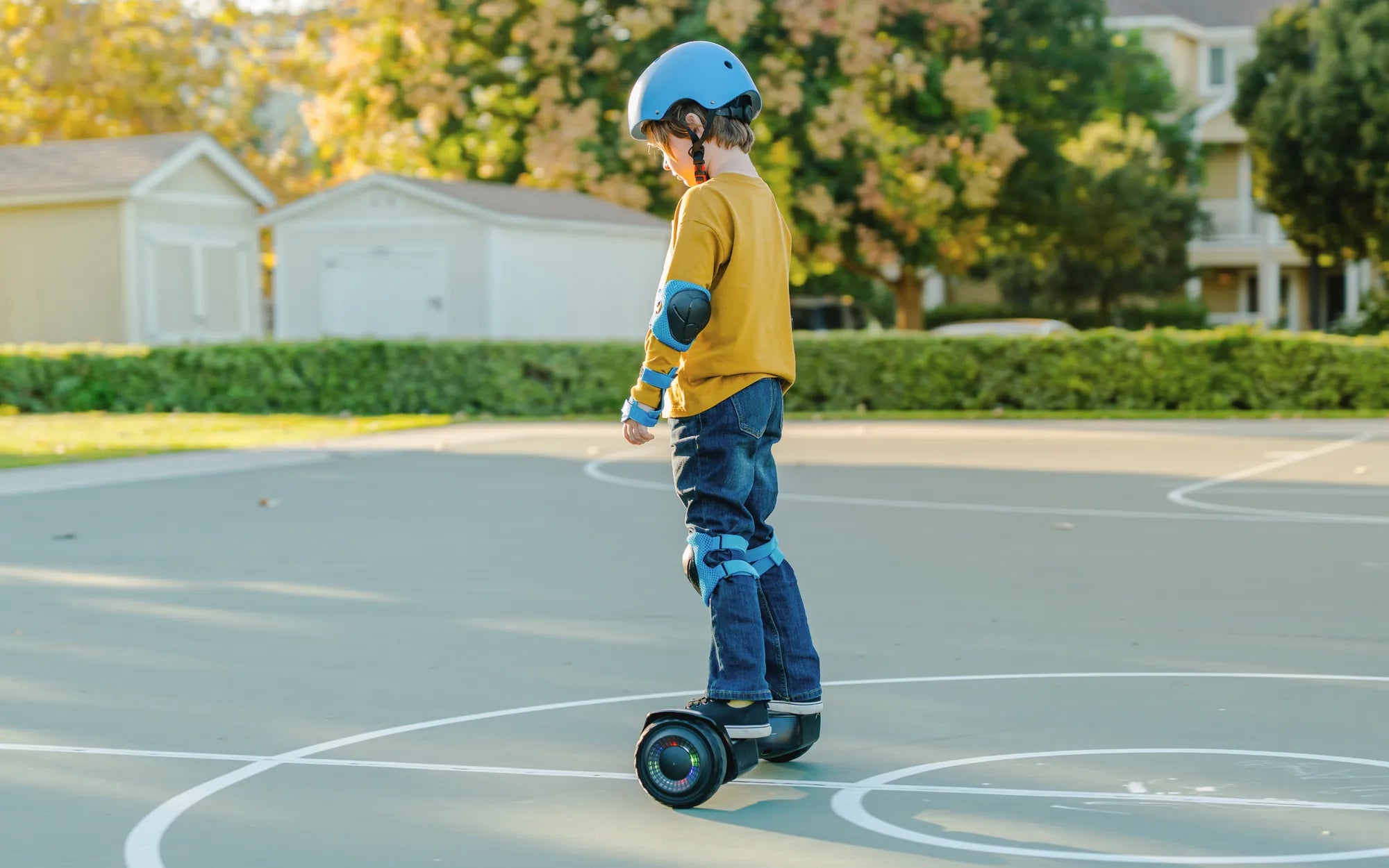
3. Best for Beginners & Younger Riders
Safety and stability are the highest priorities for beginners. The ideal beginner model features a lower maximum speed (often around 10 km/h), a robust learner or training mode that restricts speed and increases responsiveness, and a wider wheelbase for better balance. These features build confidence during the initial learning phase.
Construction is also key. A sturdy, impact-resistant shell and well-defined, responsive footpads help new riders maintain control. Bright, always-on LED lights are a must for visibility. Many beginner-friendly models also include Bluetooth speaker systems, adding an element of fun. Crucially, they must not compromise on core safety certifications like UL 2272, ensuring protection as skills develop.
Critical Buying Guide: Features to Compare Before You Buy
Use this detailed framework to evaluate any hoverboard model against your specific needs and local environment. Moving beyond marketing claims to compare hard data will ensure you get the best value and performance.
Motor Power & Range: Matching Your Daily Needs
Motor power, measured in watts (W), directly impacts performance. Dual motor systems (e.g., 300W x2) provide better balance, torque, and hill-climbing ability than a single motor. For flat urban commuting, 250W-350W per motor is sufficient. For suburbs with hills or for off-road use, look for 400W+ per motor.
Range is determined by battery capacity, measured in Watt-hours (Wh). A larger Wh rating generally means a longer range. However, real-world range in kilometres is affected by rider weight, terrain, temperature, and speed. A 36V, 4.0Ah (144Wh) battery may offer 10-15 km, while a 6.5Ah (234Wh) battery can extend that to 18-22 km per charge. Match the battery capacity to your typical journey length with a safety margin.
Wheel Size & Terrain Compatibility
Wheel size is the primary determinant of terrain capability. Smaller wheels (6.5 inches) are standard for smooth, sealed surfaces like footpaths and shopping centres. They offer agility but transmit more vibration. Larger wheels (8.5 inches and above) handle cracks and bumps better.
For true all-terrain use, 10-inch air-filled (pneumatic) tires are necessary. They provide cushioning and grip on grass, dirt, and gravel. The table below summarizes the key differences:
| Wheel Type | Typical Size | Best For | Comfort Level | Maintenance |
|---|---|---|---|---|
| Solid Rubber | 6.5" - 8.5" | Pavement, indoor surfaces | Medium | Low (no punctures) |
| Air-Filled (Pneumatic) | 8.5" - 10"+ | Off-road, grass, uneven paths | High | Medium (check tire pressure) |
Weight Limit, Portability & Extra Features
Always check the maximum load capacity. Most adult models support 100-120 kg. Exceeding this limit stresses the motors and battery, reducing performance, range, and safety. The board's own weight (10-15 kg) affects portability; models with a built-in carrying handle are significantly easier to transport when not riding.
Extra features can enhance the experience. Bluetooth speakers allow you to play music. App connectivity can provide speed tracking, battery monitoring, and firmware updates. Ambient LED wheel lights improve style and visibility. While these are nice-to-haves, they should never be prioritized over core safety and performance specifications.
Where to Buy and What to Avoid in Australia
The safest and most reliable purchasing path is through authorised Australian retailers or the brand's official Australian website. This ensures you receive a product that meets Australian standards, comes with a valid local warranty, and is fully covered by the Australian Consumer Law. Established sporting goods stores, specialist electric vehicle retailers, and official brand storefronts on major marketplaces are good options.
You should actively avoid unknown brands sold on generic international marketplaces or obscure websites. These products frequently lack legitimate UL 2272 certification, use substandard battery cells, and offer no meaningful warranty or local support. The lower upfront cost carries a high risk of product failure, safety hazards, and no recourse for repair or refund, ultimately representing poor value and significant danger.
Frequently Asked Questions (FAQs)
Q: Are hoverboards legal on Australian footpaths and roads?
A: Laws vary by state and territory. Generally, hoverboards are not permitted on public roads. Their use on footpaths and in public spaces is often governed by local council regulations. It is crucial to check with your local council for specific rules. Always yield to pedestrians and ride responsibly in permitted areas.
Q: What is the average lifespan of a quality hoverboard battery?
A> A quality UL-certified battery, like those used by reputable brands including Gyroor, is typically rated for 500+ full charge cycles. With average use, this translates to 2-4 years of service before a noticeable reduction in range occurs. Proper care, such as avoiding full discharges and not leaving the board plugged in indefinitely, will maximize battery life.
Q: Can I ride a hoverboard in light rain?
A> This depends entirely on the Ingress Protection (IP) rating. A hoverboard with an IPX5 rating, like the Gyroor G-F1 Pro, is protected against water jets and is safe for riding in light rain and on wet surfaces. Models without a stated water resistance rating should be kept strictly dry, as water ingress can cause immediate damage and create electrical hazards.
Q: How does Gyroor's warranty work for Australian customers?
A> Gyroor offers a standard 1-year warranty on its hoverboards for Australian customers purchasing through authorised channels. This warranty covers manufacturing defects in materials and workmanship. Customers should register their product and contact the official Gyroor support team or their point of purchase to initiate a warranty claim, which is processed in accordance with Australian Consumer Law guarantees.
Q: How long does it take to learn to ride a hoverboard?
A> Most adults can learn the basics of balancing, starting, and stopping within 30-60 minutes of practice in a safe, open area. Mastering smooth turns and building confidence for public paths usually takes a few days of consistent practice. Using a model with a beginner mode and wearing protective gear significantly speeds up the learning process and enhances safety.
Conclusion: Your Path to a Smooth and Safe Ride
Choosing the best hoverboard in Australia is a decision that hinges on verified safety, practical performance for your local environment, and the security of buying from a reputable source. Prioritizing the UL 2272 certification is non-negotiable—it is the baseline for a product that won't compromise your safety. From there, match the motor power, wheel type, and range to your intended use, whether it's city commuting, off-road exploration, or learning the basics.
Trusted brands like Gyroor, with their commitment to UL-certified batteries, IPX5 water-resistant designs, and solid 1-year warranties, exemplify the standard Australian riders should seek. This combination of certified safety features, terrain-appropriate design, and reliable customer support delivers the peace of mind needed to fully enjoy the freedom and fun of hoverboarding. For a range of models built to these high standards, browse the full Gyroor collection at gyroorboard.com.
Hoverboard for 10-Year-Old Girl: The Ultimate Guide to Fun and Safety
Hoverboard 2025: The Future of Personal Transportation Unveiled