

Finding the Perfect First Ride for Your 5-Year-Old
Selecting the best kids electric scooter for a 5 year old is a decision that blends excitement with responsibility. Your child sees the thrill of independent mobility, while you prioritize their safety and the scooter's durability. This guide is designed to navigate that balance, transforming a complex market into a clear path forward.
We will dissect the critical features that define a suitable scooter for a young beginner, from gentle motor power to robust construction. Beyond the specs, we provide a foundational safety protocol every parent should implement. As a leader in family-friendly electric transport, Gyroor exemplifies the standards we discuss, with a focus on UL-certified battery safety, IPX5 water-resistant designs, and a reliable 1-year warranty trusted by over 100,000 riders.
What Makes a Scooter "Best" for a 5-Year-Old? Key Features Decoded
The "best" scooter isn't the fastest or most powerful; it's the one that best matches a 5-year-old's physical capabilities and learning curve. Key features must promote control, stability, and safety above all else. Understanding these specifications is the first step toward a purchase you can trust.
For a 5-year-old, the primary goal is building confidence on two wheels. A scooter that is too heavy, too fast, or too complicated can quickly lead to frustration or accidents. The ideal model acts as a supportive tool for developing coordination and spatial awareness in a controlled, enjoyable way.
Motor Power & Speed: Gentle Acceleration is Key
For a 5-year-old, motor power should facilitate easy starts and manageable cruising, not high-speed thrills. A motor in the 80W to 120W range is typically ideal. This provides enough torque to handle slight inclines on a driveway or sidewalk without delivering a jolting, unpredictable start that could unbalance a novice rider.
Speed must be strictly capped. A maximum speed of 7 to 10 mph (11-16 km/h) is the safe sweet spot. Many top models, including those from Gyroor, feature multiple speed modes, often starting with a beginner setting as low as 4 mph. This allows parents to lock in a slow, safe pace while the child learns, only increasing the limit as their skill and confidence grow.
Weight & Portability: For Little Riders and Parent Carriers
A scooter's weight impacts both the child's ability to maneuver it and your ability to carry it home when little legs get tired. The best kids electric scooter for a 5 year old should weigh under 15 pounds (approx. 7 kg). This ensures your child can safely handle the scooter, lean into turns, and even walk it up a curb if needed.
Portability is a parent's concern. A foldable design is a non-negotiable convenience feature. It allows for easy storage in a car trunk, a closet, or beside the front door. Look for a simple, secure folding mechanism that doesn't require tools. The compact size when folded makes transportation and storage hassle-free.
Battery Life & Range: Matching Short Adventures
A 5-year-old's attention span and energy for focused riding are limited. Therefore, an extensive range is unnecessary. A battery offering 5 to 7 miles (8-11 km) of range, or about 40-60 minutes of continuous use, is perfectly adequate for neighborhood adventures and park visits.
Battery safety is paramount. Always verify that the scooter uses a UL-certified battery pack, like those standard in Gyroor models. These batteries undergo rigorous testing for stability and are housed in fire-resistant casings. A charge time of 3-5 hours is standard, and teaching your child that the scooter is "resting" while charging is a good safety habit.
Build Quality & Durability: Withstanding the Learning Curve
The first scooter will take bumps, scrapes, and the occasional tip-over. Build quality determines if it survives this learning phase. A frame constructed from aerospace-grade aluminum alloy offers an optimal blend of strength and light weight. Avoid plastic-heavy constructions at critical stress points.
Stability is provided by a combination of a wide deck for secure footing and pneumatic (air-filled) or high-quality rubber tires. Air-filled tires offer better shock absorption on uneven pavement. For braking, a system combining a rear foot fender brake with an electronic brake controlled by the handlebar provides redundant, easy-to-use stopping power for a young rider.
The Safety First Checklist: Beyond the Scooter Specs
Even the best kids electric scooter for a 5 year old is only as safe as the environment and practices around it. Proactive safety measures are your most important investment. This checklist forms the essential foundation for every ride.
Safety is a holistic practice involving gear, environment, and education. Establishing these habits from the very first ride sets a standard that protects your child and gives you peace of mind. A brand's commitment, like Gyroor's focus on certified components and stable designs, supports these efforts, but parental guidance is irreplaceable.
Essential Gear: Helmet, Pads, and Visibility
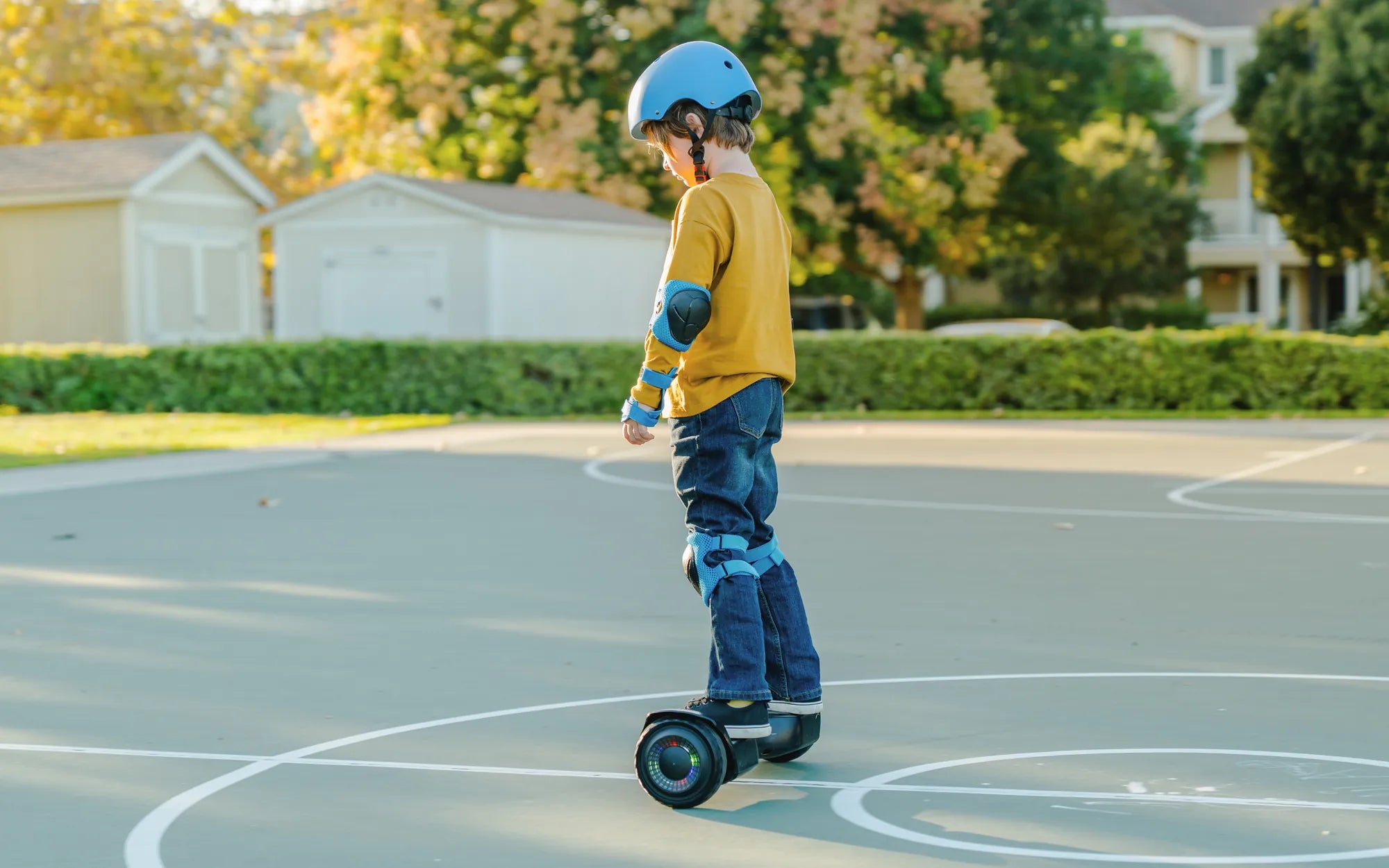
A properly fitted CPSC-certified bicycle helmet is mandatory, every single time. It should sit level on the head, snug but not tight, with the strap forming a "V" under each ear. Knee and elbow pads are highly recommended, especially during the learning phase, to prevent scrapes and bruises from inevitable falls.
Enhance visibility for afternoon or evening rides. Add reflective stickers to the scooter's deck and stem. Many models, including Gyroor scooters, come with built-in LED lights in the deck and a headlight, which should always be used in low-light conditions. Brightly colored clothing also helps make your child more visible to others.
Choosing the Right Practice Environment
Begin in a completely controlled, traffic-free zone. An empty tennis court, a smooth driveway, or a quiet cul-de-sac are perfect. The surface should be paved, flat, dry, and free of major cracks, gravel, or sand. Wet surfaces drastically reduce tire traction and braking effectiveness, increasing the risk of slips.
Always avoid hills, slopes, and areas near roads, parking lots, or bodies of water during initial training. Constant, direct adult supervision is required. Stay within an arm's reach initially, guiding your child on starting, stopping, and gentle steering before allowing more independent practice in the same controlled area.
Teaching Core Riding Etiquette and Rules
Instill fundamental rules before the scooter is even turned on. The cardinal rule: always step off to start and stop. The scooter should be powered on only when the child is standing beside it, one foot on the deck. To stop, they should come to a halt, step off, and then power down.
Teach them to always scan the path ahead for obstacles like sticks, rocks, or cracks. They must learn to yield to all pedestrians, walking their scooter past people on sidewalks. Establish a firm "no riding in the street" rule and a strict prohibition against touching the charger. Practice using the brakes deliberately in a safe area until it becomes second nature.
Navigating Your Options: A Data-Driven Look at Suitable Models
With safety and feature criteria established, comparing specific models becomes a practical exercise. The following table highlights key specifications for scooters designed with young riders in mind, focusing on the controlled performance and durable build essential for a 5-year-old.
| Model Name | Rec. Age & Weight | Max Speed | Motor Power | Key Feature | Best For |
|---|---|---|---|---|---|
| Gyroor Swift | 5-8 yrs, up to 120 lbs | 9 mph | 100W | 3 Speed Modes, LED Display | First-Time Riders |
| Gyroor Explorer | 5-10 yrs, up to 140 lbs | 10 mph | 120W | Pneumatic Tires, Rear Suspension | Uneven Pavement |
| Gyroor Mini Glider | 4-7 yrs, up to 110 lbs | 7.5 mph | 80W | Lightweight (12 lbs), Simple Controls | Younger Beginners |
All featured Gyroor models include essential safety-oriented specifications: IPX5 water resistance for protection against puddles and splashes, UL-certified battery packs, and a reliable 1-year warranty. The Gyroor Swift, with its parent-controlled speed modes, is often an ideal entry point, while the Explorer offers added comfort for varied terrain. Choosing the best kids electric scooter for a 5 year old means matching the model's strengths to your child's environment and your specific safety priorities.
Maintenance and Care: Ensuring Long-Term Safety and Performance
Regular maintenance is not just about longevity; it's a critical component of ongoing safety. A well-maintained scooter performs predictably. Establish a simple pre-ride checklist: inspect tires for proper inflation or wear, test that brakes engage firmly, ensure the folding mechanism is locked securely, and verify all lights are functional.
Keep the scooter clean by wiping it down with a damp cloth; avoid high-pressure hoses which can damage electrical components. Store the scooter in a dry, temperate place, away from direct sunlight or extreme cold, which can degrade the battery. Always follow the manufacturer's charging instructions—never leave the battery charging unattended for extended periods or overnight as a general safety precaution.
Periodically check for loose screws, especially on the handlebar, stem, and folding latch, and tighten them as needed. If the scooter will not be used for several weeks, store the battery at a partial charge (around 50-60%) to maintain its health. This routine, taking just a few minutes, ensures the scooter remains a reliable and safe vehicle for your child's adventures.
Developmental Benefits: More Than Just Fun
Riding the best kids electric scooter for a 5 year old offers significant developmental advantages. It promotes gross motor skill development, requiring coordinated use of legs for balance and arms for steering. This activity strengthens core muscles and improves overall body awareness and coordination.
It also fosters cognitive growth. Navigating a path requires constant assessment—judging distance, speed, and the need to brake or steer. This enhances spatial reasoning, decision-making, and risk assessment in a controlled, real-world context. Successfully mastering the scooter builds self-confidence and a sense of independence, valuable emotional milestones for a young child.
Furthermore, it can be a social activity that encourages outdoor play, away from screens. Riding with parental supervision or friends in a safe area teaches turn-taking, awareness of others, and shared enjoyment of an active hobby. These combined physical, cognitive, and social benefits make a quality scooter a valuable tool for holistic development.
Parent FAQs: Your Top Questions, Answered
Q1: Is an electric scooter truly safe for a 5-year-old?
A: With the right product and precautions, yes. Choose a scooter specifically designed for young children with a speed cap (≤10 mph), a low-power motor, and a stable, wide deck. The paramount factors are constant adult supervision, mandatory safety gear (especially a helmet), and practice in a safe, traffic-free environment.
Q2: How long does the battery take to charge, and how long will it last?
A: A full charge typically takes 3 to 5 hours. Battery life per charge is usually 40-60 minutes of ride time, covering 5-7 miles—more than enough for a young child's outing. For long-term battery health, avoid completely draining it before recharging.
Q3: Can it handle a slight incline like our driveway?
A> A scooter with at least an 80W motor should manage gentle slopes commonly found on driveways and sidewalk ramps. However, steep hills should always be avoided for safety. Teach your child to walk the scooter up any incline that seems challenging.
Q4: What does the 1-year warranty typically cover?
A> A reputable warranty, like Gyroor's, covers defects in materials and workmanship for the frame, motor, and battery. It generally does not cover damage from accidents, misuse, or normal wear and tear (like tires). Always read the specific warranty terms for details.
Q5: Are there any specific maintenance tasks I should do regularly?
A> Yes. Weekly, check tire pressure (if pneumatic), test brake responsiveness, and ensure all bolts (especially on the folding mechanism and handlebars) are tight. Keep it clean and dry, and store it indoors. This simple routine ensures optimal safety and performance.
Conclusion: Confidence on Two Wheels
Choosing the best kids electric scooter for a 5 year old is an investment in joyful, active childhood memories, built on a foundation of safety. By prioritizing a scooter with gentle speed controls, a lightweight and durable build, and certified battery safety, you select a tool designed for success. Pairing that with unwavering safety practices—the helmet, the safe zone, the clear rules—transforms the experience from a simple purchase into a valuable rite of passage.
Trusted brands like Gyroor, with their commitment to UL-certified components, water-resistant designs, and robust construction, provide the reliable hardware that supports this journey. Your informed choice empowers your child with a thrilling taste of independence while giving you the peace of mind that comes from thoughtful preparation. Ready to explore models that put safety and fun first? Browse the full Gyroor collection at gyroorboard.com to find the perfect first ride for your young adventurer.
Which Scooter Is Best for Kids: A Comprehensive Guide for Parents
Electric Scooter Safety Tips for Kids Every Parent Should Know: A Complete Guide