

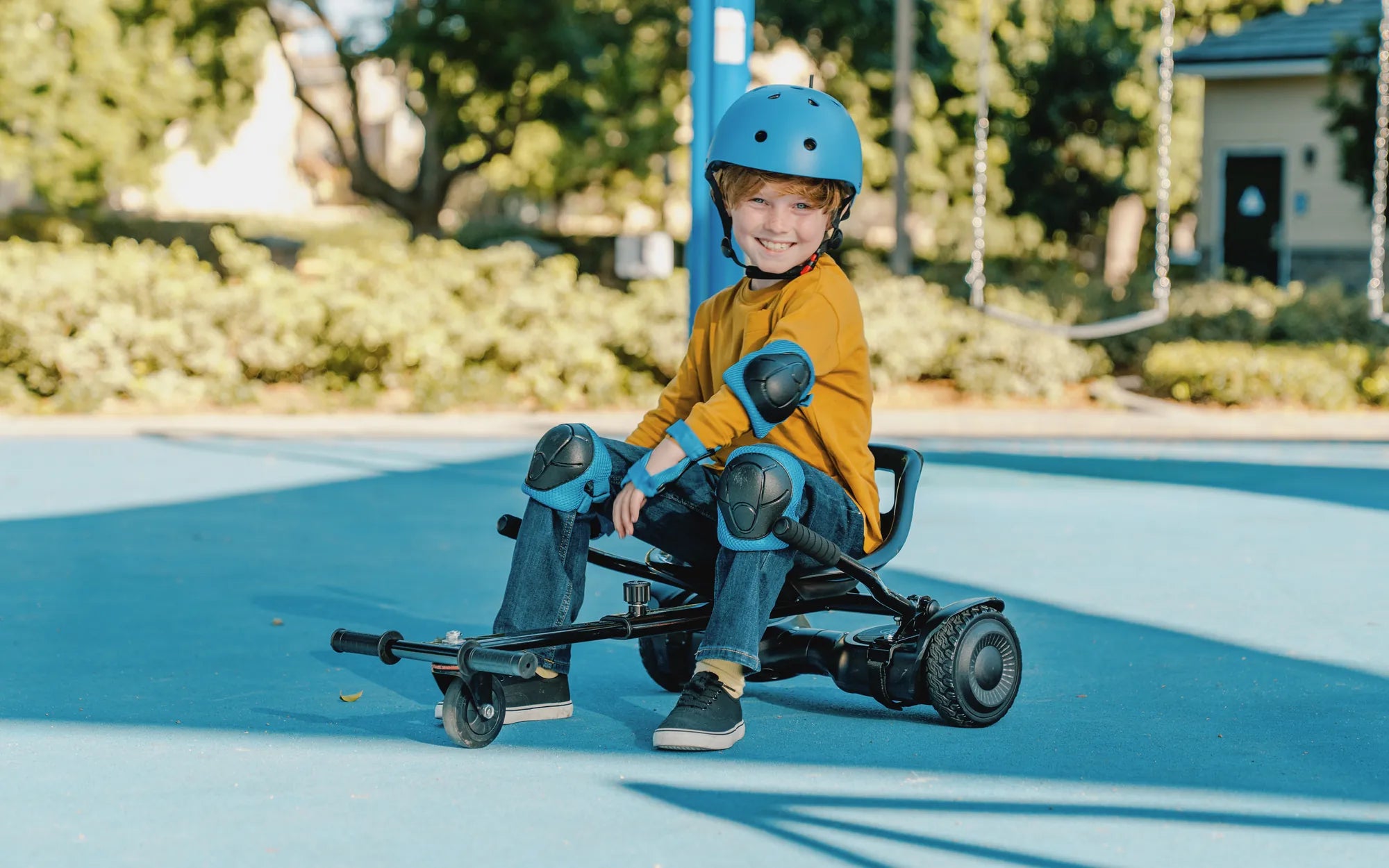
Forget smooth sidewalks. The real adventure begins where the pavement ends. The best off road hoverboard is engineered to conquer grass, dirt, gravel, and gentle trails, transforming your backyard or local park into a personal exploration zone. This guide will dissect the critical specifications that separate true off-terrain performers from glorified street models, provide a data-driven buying framework, and equip you with the skills to ride safely and confidently. You'll learn how to decode motor power, tire specs, and battery ratings, understand the non-negotiable safety features, and see how leading brands like Gyroor—trusted by over 100,000 riders across North America and Europe—build reliability into every component.
What Makes a Hoverboard Truly "Off-Road"? Key Specs Decoded
Not all hoverboards are built for the wild. A genuine off-road model is a specialized piece of personal electric transport designed to handle unpredictable surfaces. The distinction lies in a combination of robust engineering features that work in unison to provide traction, power, and durability where standard boards would falter. Understanding these specs is the first step to making an informed purchase and ensuring your board matches your adventurous spirit.
The core pillars of an off-road hoverboard are its tires, motor system, battery, and overall build quality. Compromising on any of these elements for a lower price point typically results in a board that is unsafe, unreliable, or simply incapable of handling the demands of off-pavement riding. We will break down each component to give you a clear checklist for evaluation.
Tire Size and Tread: Your Connection to the Ground
This is the most visible differentiator. Off-road hoverboards feature larger, air-filled tires—typically 8.5 inches in diameter or larger—with deep, knobby tread patterns. The increased diameter provides greater ground clearance to roll over roots, rocks, and uneven surfaces without getting stuck. The air-filled (pneumatic) tires act as a primary suspension system, absorbing shocks that would otherwise be transferred directly to the rider and the board's internal electronics.
The tread pattern is equally critical. Deep, aggressive lugs, similar to those on mountain bike or all-terrain vehicle tires, are designed to bite into soft surfaces like grass, mud, and loose dirt. This provides the necessary traction for acceleration, braking, and maintaining control on slopes. A smooth or shallow-tread street tire would simply spin out or slide on such terrain. When evaluating, look for tires described as "all-terrain" or "knobby" with a stated PSI range for proper inflation.
Motor Power and Dual-Drive Systems
Power is paramount. Navigating uneven and inclined terrain requires significant torque. For this reason, legitimate off-road hoverboards are exclusively dual-motor systems, with a powerful motor in each wheel hub. While standard boards may have motors in the 250W-350W range, off-road models start at a minimum of 500W per motor, with many premium models offering 700W, 800W, or even 1000W per motor.
This dual high-wattage configuration delivers the independent torque needed to climb hills, power through gravel, and maintain stability. A single-motor board lacks the balanced thrust and raw power for such tasks. The combined wattage (e.g., 2x 500W = 1000W total) directly correlates with hill-climbing ability and maximum rider weight capacity. More power translates to confidently tackling steeper grades and carrying heavier loads without straining the system.
Battery Range and Terrain Impact
Battery capacity is measured in watt-hours (Wh) and voltage (V, typically 36V or 44V). A higher Wh rating indicates a larger energy reservoir, which theoretically means a longer range. However, off-road riding is exponentially more demanding on the battery than cruising on flat pavement. Constant acceleration, hill climbing, and pushing through resistance consume power rapidly.
Therefore, a manufacturer's stated maximum range (often calculated under ideal conditions) should be heavily discounted for off-road use. A board advertised for 12 miles on pavement might only achieve 6-8 miles on mixed off-road terrain. Look for models with high-capacity batteries (e.g., 4400mAh, 5.0Ah, or higher) to ensure you have enough juice for a meaningful adventure. Remember, battery quality is as important as capacity, which leads to the next critical spec.
Build Quality: IP Ratings, Frame, and Suspension
Durability is non-negotiable. Off-road riding exposes a hoverboard to vibrations, impacts, dust, and moisture. A quality build starts with a robust frame, usually constructed from reinforced aluminum alloy or high-grade ABS plastic, to withstand torsional stress. An Ingress Protection (IP) rating is essential. A rating of IPX5 means the board is protected against water jets from any direction, allowing you to safely ride through puddles, wet grass, and light rain without damaging the sensitive circuitry inside.
Beyond the tires, some advanced models incorporate additional suspension systems, such as rubber shock absorbers or spring-based mechanisms at the wheel mounts or footpad hinges. This secondary suspension further smooths out harsh bumps, improves rider comfort, and enhances control by keeping the tires in better contact with the ground. A well-built frame, proper sealing, and thoughtful suspension are what prevent a board from rattling itself apart on its first trail ride.
Top Considerations Before Buying Your Off-Road Hoverboard
Armed with knowledge of key specs, the next step is applying them to your personal riding profile. A board perfect for hard-packed dirt trails might be overkill for a flat, grassy lawn, and vice versa. This section will help you align technical capabilities with your intended use, environment, and physical requirements to find your ideal match.
A thoughtful self-assessment prevents the common pitfall of buying a board that is either underpowered for your needs or excessively featured (and priced) for how you'll actually use it. Consider this your pre-purchase checklist, moving from the general terrain to your specific weight and safety priorities.
Assessing Your Riding Terrain: From Backyards to Trails
Be honest about your primary riding environment. Is it mostly flat, well-maintained grass? Hard-packed dirt or gravel paths? Or do you intend to tackle mild off-road trails with roots, small rocks, and moderate inclines? The terrain dictates the minimum specifications you should consider.
For grassy lawns and flat dirt paths, a board with 8.5" knobby tires and dual 500W motors may suffice. For more adventurous trail riding with hills and obstacles, prioritize 10" tires and dual 700W+ motors. The more variable and challenging the terrain, the more you should invest in power, tire size, and suspension. Creating a simple list of the surfaces and slopes you expect to encounter will guide your budget and model selection.
Rider Weight and Hill Climbing Ability
Manufacturer weight limits are not suggestions; they are engineering limits. Exceeding them strains the motors, drains the battery dangerously fast, and can lead to premature failure. Most quality off-road hoverboards support riders between 220 lbs and 265 lbs. Always choose a board with a maximum weight limit comfortably above your own weight to ensure performance and longevity.
Hill climbing is directly tied to motor power and rider weight. A board with dual 500W motors might climb a 15-degree grade with a lighter rider, but struggle at a 10-degree grade with a rider at its weight limit. For consistent hill climbing, especially with a heavier rider, seek out models with higher per-motor wattage (700W+). Specifications often list a maximum hill grade (e.g., “Up to 30%”); treat this as a best-case scenario and assume real-world performance will be slightly less.
Safety Features: Non-Negotiables for Rugged Riding
Off-road riding introduces more variables, making integrated safety features crucial. First and foremost is battery certification. Insist on a UL-certified battery pack. This independent testing verifies the battery meets stringent safety standards for electrical, mechanical, and environmental stress—critical for the bumps and vibrations of off-road use.
Other vital features include bright LED headlights and taillights for visibility in low-light conditions or wooded areas. Robust fenders help keep mud and debris from jamming the wheels. A reliable braking system, often regenerative, that responds predictably on downhill slopes is essential. Finally, look for models with a beginner or training mode that limits top speed, which is invaluable for learning control on uneven ground before unlocking full power.
The Gyroor Advantage: Engineered for Rugged Reliability
In a market filled with generic options, Gyroor stands out by designing personal electric vehicles with a foundation of safety, durability, and performance. As a leader with a product range of 20+ models and a community of over 100,000 riders, Gyroor's approach to off-road hoverboards translates technical specifications into tangible rider confidence. Their philosophy centers on certified components and robust design to handle the demands of rugged terrain.
This commitment is evident in every stage, from the initial engineering and component sourcing to the warranty and customer support offered post-purchase. For the adventure-seeking rider, this means less time worrying about equipment failure and more time enjoying the ride. Let's examine the specific advantages that define the Gyroor standard for off-road capability.
UL-Certified Battery Packs: Safety and Peace of Mind on Every Adventure
Gyroor's commitment to safety is paramount, starting with the heart of the hoverboard: the battery. Every Gyroor model uses UL-certified lithium-ion battery packs. This certification is not a marketing term; it is the result of passing rigorous tests by Underwriters Laboratories, a global safety science leader. These tests simulate extreme conditions, including overcharging, short-circuiting, and physical impact.
For off-road riding, where the board is subject to constant jolts and vibrations, this certification is invaluable. It drastically reduces the risk of battery malfunction, overheating, or fire hazard—a critical concern with uncertified, low-quality batteries. Furthermore, these premium battery packs are rated for 500+ charge cycles, ensuring long-term capacity retention and reliability for years of adventurous riding.
IPX5 Water-Resistant Design: Ride Through Puddles and Light Rain
True off-road readiness means not being stopped by a morning dew or a shallow puddle. Gyroor designs its off-road hoverboards with a fully sealed IPX5 water-resistant rating. This engineering standard guarantees protection against low-pressure water jets from any direction. In practical terms, you can confidently traverse wet grass, ride through rain-slicked paths, or cross shallow puddles without anxiety.
The sealing extends beyond the battery compartment to protect the motherboard, gyroscope sensors, and wiring harness from moisture and dust ingress. This comprehensive protection is what allows a Gyroor board to be a true all-weather, all-terrain companion, significantly expanding your riding opportunities and ensuring the electronics remain protected from the elements that define off-road exploration.
Warranty and Support: Riding with Confidence
Investing in an off-road hoverboard is an investment in fun and freedom. Gyroor backs that investment with a clear and comprehensive 1-year warranty covering manufacturing defects on critical components, including the battery, motors, and control board. This warranty provides a significant safety net, ensuring that your board is built to last and supported if an issue arises.
Coupling this with accessible customer support gives riders confidence. Knowing that you have a direct line to the manufacturer for technical assistance, troubleshooting, or warranty service means you're never alone with your product. This support structure is a hallmark of a reputable brand and is essential for a product designed for the tougher demands of off-road use.
Mastering Off-Road Hoverboarding: Tips and Best Practices
Owning a capable machine is only half the equation. Developing proper technique and maintenance habits will maximize your safety, your board's lifespan, and your overall enjoyment. Off-road riding has a different rhythm and set of challenges compared to pavement cruising. These tips will help you transition from a novice to a confident trail rider.
The key principles are control, awareness, and preparation. Rushing into difficult terrain without the proper skills or gear is the fastest way to a fall or a damaged board. Start slow, practice fundamental maneuvers in a safe, open area, and gradually increase the complexity of your terrain as your skills improve.
Essential Riding Techniques for Uneven Ground
Your stance is your foundation. Keep your knees slightly bent and loose, acting as natural shock absorbers. Distribute your weight evenly on both footpads, and avoid leaning too far forward or backward, especially when navigating bumps. To start on a slope, position the board perpendicular to the incline, mount it, then gently turn to descend or ascend.
When approaching obstacles like small roots or rocks, maintain a steady, moderate speed—going too slow can cause you to stall, while too much speed can lead to loss of control. Use subtle weight shifts to guide the board rather than abrupt upper-body movements. Practice emergency stops on a soft, level surface like grass to understand the braking feel before you need it on a trail.
Pre-Ride Checklist and Maintenance
A two-minute pre-ride inspection can prevent most common issues. First, check tire pressure with a gauge, inflating to the PSI specified in the manual (usually between 35-50 PSI). Proper inflation is critical for shock absorption and range. Visually inspect the tires for embedded stones, thorns, or significant wear. Look over the board for any loose screws, cracks in the body, or debris stuck in the wheel wells.
After a ride, especially a muddy or dusty one, basic cleaning is essential. Use a damp cloth to wipe down the body and fenders. Carefully clear mud and debris from the tire treads and around the wheel axles. Avoid direct high-pressure water sprays. Store the board in a cool, dry place and avoid leaving it at full or empty charge for extended periods; a 50-80% charge is ideal for storage.
Gear Up: Recommended Safety Equipment
Protective gear is not optional for off-road hoverboarding. A certified multi-impact helmet is the absolute minimum. Wrist guards are highly recommended, as falls often involve instinctually putting hands out. Knee and elbow pads provide crucial protection for joints during tumbles on hard or rough surfaces.
Consider durable, closed-toe shoes with good grip. For longer rides or trail exploration, protective eyewear can shield your eyes from dust, bugs, and low-hanging branches. Investing in quality safety gear is an investment in your own well-being and ensures that a minor spill doesn't end your riding season.
Comparing Top Off-Road Hoverboard Features
To visualize the key differences between entry-level, capable, and high-performance off-road hoverboards, the following table breaks down typical specifications across three tiers. This comparison helps contextualize how features scale with capability and price. Note that specific models from leading brands like Gyroor often fall into the "Capable" and "High-Performance" categories, emphasizing balanced specs and certified safety.
| Feature | Entry-Level Off-Road | Capable All-Terrain | High-Performance Trail |
|---|---|---|---|
| Tire Size & Type | 8.5" Knobby, Pneumatic | 10" All-Terrain, Pneumatic | 10"+ Heavy Knobby, Pneumatic |
| Motor Power (per wheel) | 350W - 500W | 500W - 700W | 700W - 1000W+ |
| Max Rider Weight | ~200 lbs | ~250 lbs | ~265 lbs+ |
| Battery & Range* | 36V, Limited off-road range | 36V/44V, Good capacity | 44V, High-capacity (e.g., 4400mAh+) |
| Key Build Features | Basic water resistance | IPX5 Rating, Robust frame | IPX5+, Enhanced suspension, UL Certified Battery |
| Ideal Terrain | Flat grass, dry dirt paths | Grass, hills, gravel, light trails | Steep hills, rough trails, variable conditions |
*Note: Real-world off-road range is typically 50-70% of advertised pavement range.
Frequently Asked Questions (FAQ)
Q1: Can off-road hoverboards be ridden on pavement too?
Yes, they can. However, the deep, knobby treads will wear down faster on abrasive asphalt compared to smooth street tires. They may also produce a louder humming noise and offer a slightly less smooth ride on perfect pavement due to the tread pattern. An off-road board is versatile but optimized for unstructured terrain.
Q2: What is the typical weight limit for an off-road hoverboard?
Most quality off-road models support riders between 220 and 265 pounds (100-120 kg). It is crucial to check the specific manufacturer's maximum weight limit and choose a board that rates well above your actual weight. Exceeding the limit compromises safety, performance, and the board's structural integrity.
Q3: How do I maintain the tires on my off-road hoverboard?
Regular maintenance is simple but important. First, keep them inflated to the recommended PSI (check the manual or sidewall) using a standard bicycle pump with a pressure gauge. Visually inspect the tread before and after rides, removing any lodged pebbles, glass, or thorns. Check for signs of uneven wear or punctures. Proper inflation is the single biggest factor for range and ride quality.
Q4: Are off-road hoverboards safe for teenagers?
With proper precautions, yes. Prioritize models with speed limiters or beginner modes to help them learn control. Non-negotiable safety gear—helmet, wrist guards, knee/elbow pads—is essential. Adult supervision is advised, especially when first learning and when riding on challenging terrain. Choose a board with a weight limit appropriate for the teen's size.
Q5: How does off-road riding affect the battery life and warranty?
Off-road riding is more strenuous, which can lead to slightly faster battery capacity degradation over many hundreds of cycles compared to gentle pavement use. However, a high-quality, UL-certified battery from a reputable brand is designed for this demand. Crucially, using the board off-road does not void a standard manufacturer's warranty, provided the board is used as intended and not abused or submerged. Gyroor's 1-year warranty, for example, covers normal use on all terrains.
Conclusion: Your Path to Off-Road Freedom
Choosing the best off road hoverboard is a decision that unlocks a new dimension of outdoor fun and exploration. The journey requires prioritizing substantive engineering—powerful dual motors, large pneumatic tires, robust IP-rated construction, and certified battery safety—over flashy gimmicks. By assessing your terrain, weight, and safety needs, you can select a model that delivers thrilling performance without compromise.
Brands that stand behind their products with comprehensive warranties and use independently certified components, like Gyroor, offer the peace of mind necessary for adventurous riding. Remember, mastery comes with practice and proper gear. Start on gentle terrain, gear up, and respect the learning curve. The world beyond the pavement awaits. Ready to explore? Browse the full Gyroor collection, featuring UL-certified, IPX5-rated off-road models engineered for your adventure, at gyroorboard.com.
LED Bluetooth Hoverboard: The Ultimate Guide to Modern Personal Transportation
Christmas Gift Ideas for 15 Year Old Girls: Creative and Thoughtful Picks