


Introduction: Why the Right Outdoor Hoverboard Unlocks True Adventure
Choosing the best outdoor hoverboard is about more than just finding a toy; it's about selecting a capable, reliable vehicle for exploration. An outdoor-worthy model must conquer grass, dirt paths, gravel, and slight inclines with stability and power.
This requires specific engineering: robust motors, large air-filled tires, water-resistant construction, and high-capacity, safe batteries. Without these features, a standard hoverboard will struggle or fail on anything beyond smooth pavement.
This guide cuts through marketing hype with a data-driven approach. We analyze the key specifications that translate to real-world performance. As a leader in personal electric mobility, Gyroor designs its products for adventure, a philosophy trusted by over 100,000 riders across North America and Europe who demand durability and safety.
Key Features to Look for in an Outdoor Hoverboard
Not all hoverboards are created equal for off-pavement use. The difference between a frustrating experience and exhilarating fun lies in four critical hardware categories. These features form the evaluation criteria for any model claiming to be an all-terrain or outdoor hoverboard.
Compromising on any of these areas significantly limits where you can ride safely. The following sections detail why each specification is non-negotiable for adventure seekers.
Motor Power and Climbing Ability
Motor wattage directly determines torque, acceleration, and hill-climbing capability. For outdoor use, dual motors are essential, providing independent power to each wheel for better control on uneven surfaces.
A model with 350W motors per wheel (700W total) is considered the minimum for reliable outdoor performance. This power allows it to handle grass, packed dirt, and inclines up to 15-20 degrees. More powerful setups, like 400W or 500W per motor, offer superior acceleration and the ability to tackle steeper, looser terrain.
Higher wattage also means better weight capacity and more consistent speed when the terrain creates drag. For true all-terrain adventure, prioritize maximum motor power within your budget.
Tire Type and Size: Air-Filled vs. Solid
This is arguably the most important differentiator. Standard hoverboards use small (6.5-inch to 8.5-inch) solid rubber tires, which are harsh and lack traction on anything but smooth surfaces.
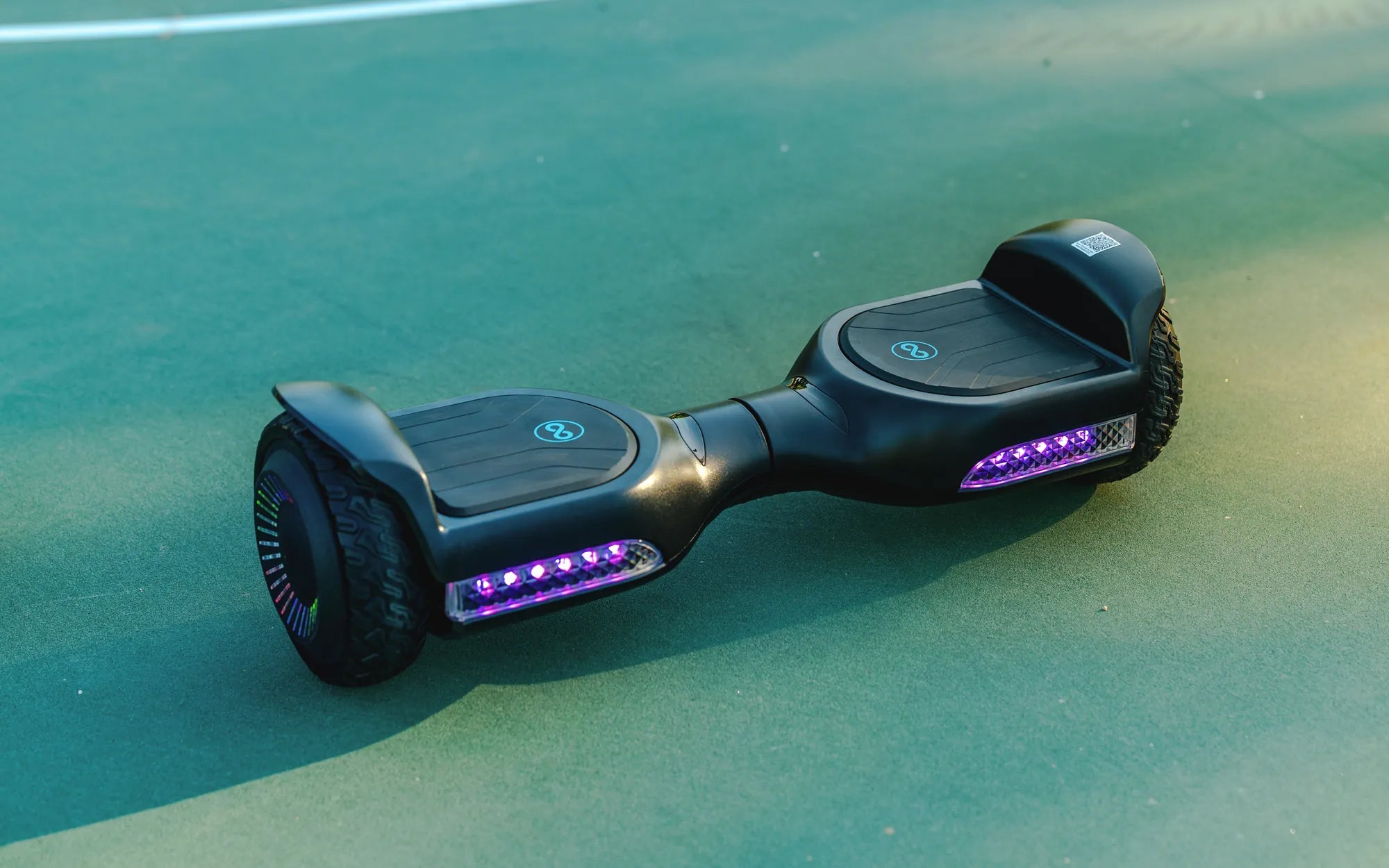
The best outdoor hoverboards feature large, air-filled (pneumatic) tires, typically 10 inches in diameter. These tires act as natural shock absorbers, smoothing out bumps from roots, rocks, and cracks. The tread pattern provides essential grip on grass, dirt, and wet surfaces.
The air cushion also reduces strain on the board's internal components and the rider's joints. While pneumatic tires require occasional pressure checks, their performance and comfort benefits for outdoor riding are unparalleled.
Build Quality and IP Water Resistance Rating
Outdoor riding exposes a hoverboard to vibrations, impacts, and moisture. A rugged frame made from reinforced materials is crucial to prevent cracking or component failure.
Equally important is a certified Ingress Protection (IP) rating. An IPX5 rating, like those found on Gyroor's outdoor models, means the device is protected against water jets from any direction. This allows you to confidently ride on wet grass, through morning dew, or in light rain without worrying about water damage to the electronics.
This rating is a key indicator of a board built for real-world conditions, not just dry, perfect pavement.
Battery Range and Safety Certifications
Outdoor terrain demands more power, which reduces range. Therefore, a larger battery capacity (measured in Watt-hours or Ah) is necessary to ensure a useful riding time. Look for models advertising 12-15 miles of range, understanding that aggressive off-road use may reduce this by 30-40%.
More critical than capacity is safety certification. Always insist on a UL-certified battery pack. This certification, a standard for all Gyroor batteries, means the lithium-ion cells have passed rigorous tests for electrical, mechanical, and environmental safety, drastically reducing fire risk. Never compromise on this for any rideable product.
Top Picks: Best Outdoor Hoverboards for Different Riders
Based on the criteria above, we categorize top picks for specific user profiles. The right choice depends on your primary terrain, budget, and performance expectations.
Best All-Terrain Performer: For the Serious Adventurer
This category is for riders who see no path as an obstacle. The winner here needs extreme power, maximum suspension, and rugged construction.
We recommend hoverboards with dual 500W motors (1000W total) or higher and 10-inch or larger pneumatic knobby tires. These machines can climb hills over 25 degrees and plow through rough trails, sandy patches, and rocky terrain.
A model like the Gyroor Warrior exemplifies this category. It combines 500W dual motors, 10-inch off-road tires, and a robust frame with an IPX5 water resistance rating. Crucially, it's powered by a UL-certified battery, ensuring safety is part of the adventure. Its design prioritizes raw capability for the most demanding environments.
Best for Parks and Light Trails: Balanced Fun and Portability
For most riders, the ideal outdoor hoverboard handles grassy parks, dirt bike paths, and gravel driveways without being overly bulky. This category focuses on a balance of performance and practicality.
Look for dual motors in the 350W-400W range and 10-inch pneumatic tires. This provides ample power for moderate inclines and excellent comfort on uneven ground, while the board remains manageable to carry when needed.
These models offer the true outdoor experience—freedom to leave the sidewalk—without the extreme weight or price tag of dedicated all-terrain beasts. They are versatile workhorses for everyday adventure.
Best for Teens and Young Adults: Durable Fun on a Budget
Durability and safety are paramount for younger riders. This pick focuses on reliable outdoor capability with essential protective features at a accessible price point.
The key is finding a model that doesn't cut corners on core safety features like battery certification or build quality, even at a lower cost. It should still have air-filled tires (often 8.5-inch or 10-inch) and sufficient motor power (300W+) for park use.
Prioritize brands that offer a strong warranty, like Gyroor's 1-year comprehensive warranty, which signals confidence in product longevity. This ensures the board can withstand the learning process and active use while providing peace of mind for parents.
Comparison Table: Outdoor Hoverboard Key Specs
| Feature Category | All-Terrain Performer | Park & Trail Specialist | Durable Value Pick |
|---|---|---|---|
| Motor Power (Dual) | 500W+ (1000W+ Total) | 350W - 400W (700W-800W Total) | 300W+ (600W+ Total) |
| Tire Type | 10"+ Knobby Pneumatic | 10" Pneumatic | 8.5" - 10" Pneumatic |
| Max Incline | 25°+ | 15° - 20° | 10° - 15° |
| Key Build Feature | IPX5 Rating, Ultra-Rugged Frame | IPX4/IPX5 Rating, Reinforced Frame | Reinforced Frame, Reliable Components |
| Battery Safety | UL-Certified (Essential) | UL-Certified (Essential) | UL-Certified (Non-Negotiable) |
| Ideal Terrain | Steep Trails, Sand, Rocks, Fields | Grass, Dirt Paths, Gravel, Parks | Lawns, Smooth Dirt, Pavement with Cracks |
Safety and Maintenance Tips for Outdoor Hoverboarding
Outdoor riding amplifies both the fun and the risks. Proper preparation and care protect both the rider and the investment in your hoverboard.
Essential Safety Gear is Non-Negotiable
Off-road riding increases the likelihood of falls due to unpredictable terrain. A certified multi-impact helmet is an absolute must. Wrist guards are critical, as falls often involve putting hands out.
Knee and elbow pads are highly recommended, especially for beginners and those attempting more challenging terrain. This gear can prevent the scrapes, sprains, and fractures that are common in wheeled sports.
Pre-Ride Checklist and Terrain Awareness
Before every ride, perform a quick check. Inspect tire pressure and look for punctures or excessive wear. Ensure the battery is adequately charged. Check that the foot pads are clean and the board powers on and calibrates correctly.
Always scout new terrain at a slow speed first. Be wary of wet leaves, loose gravel, sand, and deep mud, which can cause loss of traction. Avoid steep slopes beyond your board's rated incline and never ride through deep puddles or standing water, even with a water-resistant rating.
Caring for Your Outdoor Hoverboard
After off-road use, clean the board with a damp cloth to remove dirt, grass, and debris from the tires, wheel wells, and underside. Never use a high-pressure hose. Store the board in a cool, dry place.
Charge the battery with the provided charger and avoid leaving it at 0% or 100% for extended periods. Regularly check tire pressure and inflate to the manufacturer's recommended PSI. For any issues, leverage the manufacturer's warranty—Gyroor, for instance, offers support from its US-based service team.
Frequently Asked Questions (FAQ)
Q: Can hoverboards really go on grass and dirt?
A: Yes, but only models specifically designed for it. They require high-wattage dual motors (350W+ per motor) for torque and large, air-filled (pneumatic) tires for traction and shock absorption. Standard hoverboards with small solid tires will stall or perform poorly.
Q: What does IPX5 water resistance mean for a hoverboard?
A: An IPX5 rating means the hoverboard's enclosure is protected against water jets from any direction. This allows you to ride on wet surfaces, through puddles, and in light rain without immediate damage. It's a crucial feature for an outdoor hoverboard, as found on Gyroor's off-road models.
Q: How important is a UL certification for a hoverboard battery?
A> It is the single most important safety feature. UL certification (like UL 2272) means the battery pack has passed independent safety tests for electrical, mechanical, and environmental hazards. It drastically reduces the risk of battery fires. Never purchase a hoverboard without this certification.
Q: What's the average range for an outdoor hoverboard on rough terrain?
A: While manufacturers advertise range on ideal pavement (often 10-15 miles), expect a 30-40% reduction on rough outdoor terrain. Grass, dirt, and inclines demand more power. A board with a 12-mile pavement range may deliver 7-9 miles of adventurous off-road riding, depending on rider weight and terrain difficulty.
Q: Are outdoor hoverboards safe for beginners?
A: They can be, but with important caveats. Their larger tires and wider stance can offer more stability than smaller models. However, beginners should start on flat, open grassy areas to practice basics like mounting, dismounting, and turning without the risk of hard falls. Full safety gear is absolutely essential during the learning phase.
Conclusion: Choosing Your Adventure Companion
Selecting the best outdoor hoverboard comes down to aligning four pillars of performance with your adventure goals: sufficient motor power for your terrain, large pneumatic tires for comfort and grip, a water-resistant and rugged build, and a UL-certified battery for fundamental safety.
Whether you're a trail blazer, a park explorer, or a family looking for durable fun, prioritizing these features ensures your investment delivers lasting excitement. The right board transforms your environment, turning every path into a potential adventure.
For riders who value this engineered reliability and safety-first design, exploring a brand built for this purpose is the logical next step. Gyroor's lineup, from the rugged Warrior to versatile all-terrain models, embodies these principles with UL-certified batteries, IPX5 ratings, and a commitment to rider trust. Ready to leave the sidewalk behind? Browse the full Gyroor collection at gyroorboard.com and find the model that matches your adventure profile.
New Kids Scooter: The Ultimate Guide to Choosing the Perfect Ride
New Kids Scooter: The Ultimate Guide to Choosing the Perfect Ride