

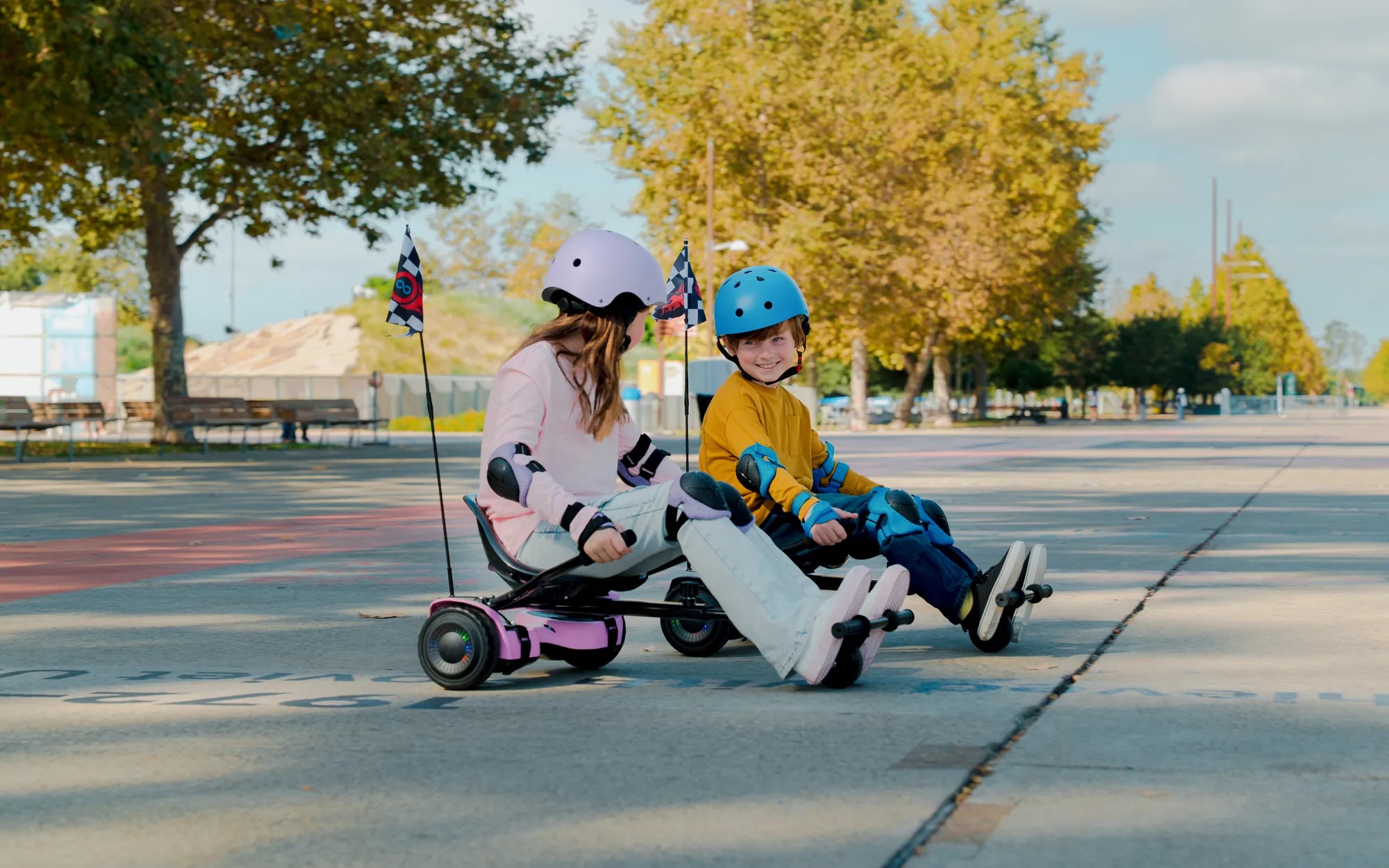
Choosing the best scooter for little kids is about far more than picking a fun toy. It's a decision that impacts your child's safety, physical development, and confidence. This guide cuts through the noise to provide parents with a clear, data-driven framework for selecting a scooter that prioritizes stability and growth. You'll learn how to identify key safety features, match scooter types to developmental stages, and ensure every ride is a step toward greater skill and independence.
Introduction: Why the Right Scooter Matters for Your Little One
The first scooter is a milestone purchase, marking a child's move towards independent mobility. Selecting the wrong model can lead to frustration, falls, and a loss of confidence. The right choice, however, becomes a catalyst for development. It's a tool that teaches balance, coordination, and spatial awareness in a controlled, engaging way.
Safety is the non-negotiable foundation. For toddlers and preschoolers, a scooter is not a scaled-down adult product. It requires specific engineering for their lower center of gravity, developing motor skills, and unpredictable movements. This guide focuses on these critical, age-appropriate design principles.
Beyond safety, the best scooter for little kids fosters a love for active, outdoor play. It encourages exercise, improves focus, and provides a tremendous sense of achievement. We will analyze scooter categories from sit-and-ride models to three-wheel kick scooters, providing the evidence you need to make an informed choice for your child's unique stage.
Key Safety Features Every Parent Must Check
Before considering brand or color, parents must vet a scooter's fundamental safety architecture. These features are your primary checklist and should never be compromised for style or a lower price. A safe scooter for a young child is defined by its inherent stability and ease of control.
The construction materials matter immensely. Look for a sturdy frame made from reinforced aluminum or high-grade polymer composites. Plastic wheels should be thick and durable, with sealed bearings to prevent dirt ingress. Every weld and connection point should be smooth and robust, with no sharp edges or pinch points.
A proper weight limit is not a suggestion. Exceeding the manufacturer's stated limit stresses the frame, compromises steering geometry, and makes braking less effective. Always choose a scooter rated for at least 20% more than your child's current weight to allow for growth and a safety margin.
Stability First: The 3-Wheel vs. 2-Wheel Decision
For beginners aged 2 to 5, a three-wheel scooter is overwhelmingly the safer, more appropriate choice. The triangular wheel configuration provides a stable platform that prevents tipping during the learning phase. This design allows children to focus on the basic mechanics of kicking, steering, and balancing without constant fear of falling.
The most stable configuration features two wheels at the front and one at the rear. This "2-in-front" setup offers superior directional stability and is less prone to sudden, sharp turns that can throw a beginner. Single-front-wheel three-wheelers are also common but require slightly more steering precision.
Transitioning to a two-wheel scooter should be a deliberate milestone, not a starting point. It is suitable for children typically aged 5 and older who have mastered balance on a three-wheeler. The move to two wheels significantly increases the challenge and risk of falls, making it inappropriate for most toddlers.
Adjustable Handlebars and Weight Limits
Proper ergonomics are critical for control and safety. Adjustable handlebars are a must-have feature, allowing the scooter to grow with your child over 2-3 years. The ideal standing position has the child's back straight, with a slight bend in the elbows when gripping the handles.
Handlebars should lock securely at multiple height settings, with a simple, tool-free adjustment mechanism. Wobble or play in the handlebar column is a major red flag, indicating poor construction that can lead to loss of control. The grips themselves should be made of a soft, non-slip material like TPE or rubber.
Adhering to the weight limit is a strict safety rule. Data from product recalls frequently cites frame failure under excess weight as a cause of injury. A scooter rated for 44 lbs (20 kg) is standard for the 2-5 age range, but always verify the specific model's certification.
Deck Design and Braking Systems
The deck is the child's platform, and its design dictates stability. A low-to-the-ground deck lowers the center of gravity, making the scooter feel more planted and secure. The deck should also be wide enough for a child to place both feet side-by-side comfortably, often around 4-5 inches.
A textured, non-slip surface is essential, especially for shoes that may be wet or dirty. Raised side rails or foot guides can help a child intuitively find the correct foot placement without looking down. The deck length should allow for a natural, staggered stance when kicking.
For little kids, the braking system must be simple and intuitive. A rear foot brake—a fender over the back wheel that is pressed down by the rider's foot—is the gold standard. It requires gross motor skill (stomping) rather than fine finger control. Hand brakes are generally unsuitable for children under 6, as they lack the grip strength and coordination to use them effectively without pitching forward.
Developmental Benefits: More Than Just a Toy
Classifying a scooter as merely a toy underestimates its value. Pediatric occupational therapists often recommend scooters as targeted tools for developing foundational motor skills. The act of scooting engages multiple muscle groups and cognitive functions simultaneously, providing holistic developmental exercise.
Outdoor scooter play contributes to daily physical activity goals, combating sedentary habits. It builds cardiovascular health, leg strength, and overall stamina in a way that feels like pure fun. This establishes positive associations with exercise that can last a lifetime.
The social and emotional benefits are equally significant. Scooting in parks or driveways with peers encourages turn-taking, spatial awareness of others, and cooperative play. Mastering a new skill, from a first push to navigating a turn, provides tangible boosts to self-esteem and resilience.
Building Gross Motor Skills and Coordination
Scooting is a cross-lateral activity, meaning it requires coordinated movement of opposite sides of the body. The child kicks with one leg while balancing on the other and steering with both arms. This directly strengthens neural pathways between the brain's hemispheres, enhancing overall coordination and cognitive function.
Core strength is quietly developed through the constant micro-adjustments needed to maintain balance. The abdominal and back muscles engage to keep the torso upright, promoting better posture. The kicking action builds strength in the glutes, quadriceps, and calf muscles.
Visual-motor integration is honed as the child learns to steer around obstacles, judge distances, and adjust speed. This skill is directly transferable to handwriting, sports, and other academic tasks. The proprioceptive system—the sense of body position—is also heavily engaged, improving overall body awareness.
Boosting Confidence and Independence
Each successful ride is a lesson in "I can do it." For a young child, the ability to propel themselves independently is a powerful source of pride. This builds a growth mindset, where challenges are seen as opportunities to learn rather than reasons to quit.
Parents can scaffold this confidence by starting in a safe, open area and allowing the child to set the pace. Celebrating small victories, like a smooth stop or a successful turn, reinforces positive effort. The scooter becomes a vehicle for learning risk assessment in a controlled environment.
This fostered independence extends beyond the scooter. Children who feel capable in their physical abilities often show greater willingness to try new activities, from playground equipment to new sports. The confidence gained through physical mastery is a cornerstone of emotional resilience.
Top Scooter Types for Little Kids: A Comparative Guide
The market segments scooters into clear categories based on age, skill, and design. Understanding these categories is key to matching the product to your child's current abilities. The following table provides a data-driven comparison of the primary scooter types for young children.
| Type | Ideal Age Range | Wheel Config | Key Features | Primary Benefit | Considerations |
|---|---|---|---|---|---|
| Sit-and-Ride Scooter | 1 - 3 years | 3 or 4 wheels | Seated position, wide base, often convertible | Maximum stability; introduces steering & motion | Very low speed; outgrown quickly |
| 3-Wheel Kick Scooter (2-front) | 2 - 5 years | Two front, one rear | Lean-to-steer, adjustable handlebar, foot brake | Ideal first upright scooter; teaches balance safely | Most popular category; focus on build quality |
| 3-Wheel Kick Scooter (1-front) | 3 - 6 years | One front, two rear | Traditional steering, often lighter | Easier, sharper turns; transition toward 2 wheels | Slightly less stable than 2-front design |
| Lightweight 2-Wheel Scooter | 5+ years | Two wheels | Folding mechanism, hand brake, air tires possible | Advanced skill development; portability | Requires good balance; not for beginners |
Sit-and-Ride Scooters (Ages 1-3)
These scooters are the entry point into wheeled mobility. Designed for toddlers who are steady walkers, they feature a wide, stable base with three or four wheels and a secure seat. The child propels themselves with their feet while seated, learning the concepts of pushing, coasting, and basic steering.
Their primary value is in building confidence with movement in a completely secure, low-to-the-ground format. Many models are convertible, allowing the seat to be removed as the child grows, transforming into a basic kick scooter. This extends the product's lifespan and offers good value.
Key features to look for include a wide wheelbase, a secure seat with a backrest, and a low step-through height. Speed is intentionally very limited. This type is outgrown once the child seeks more speed and challenge, typically around age 3.
3-Wheel Kick Scooters (Ages 2-5)
This is the definitive "first real scooter" for the vast majority of children. The three-wheel design, particularly with two wheels in front, provides the perfect balance of safety and fun. It allows a child to stand and kick, developing the full range of scooting skills.
A revolutionary feature in many modern models is lean-to-steer technology. Instead of turning handlebars, the child leans their weight to the left or right, and the front wheels turn accordingly. This intuitive system mimics natural balance movements and dramatically reduces the risk of over-steering and tipping.
When selecting a 3-wheel scooter, prioritize models with a robust lean-to-steer mechanism (if applicable), a wide anti-slip deck, and a reliable rear foot brake. Adjustable handlebars are essential. This category offers the longest useful life for preschoolers.
Lightweight 2-Wheel Scooters (Ages 5+)
For the older, more coordinated child who has mastered a three-wheeler, a two-wheel scooter represents the next challenge. These models are designed for greater speed and maneuverability. They often feature folding mechanisms for easy transport and storage, making them popular for trips to the park.
Construction shifts to lighter materials like aircraft-grade aluminum. Hand brakes begin to appear, though a rear foot brake is often still present. Some models may offer larger, air-filled tires for a smoother ride on varied surfaces. The deck is narrower and higher, requiring greater balance.
This transition should be child-led, based on demonstrated skill and interest, not just age. A child ready for a two-wheeler can confidently glide on one foot for extended periods, control their speed, and navigate gentle slopes safely.
The Gyroor Promise: Safety Engineered for Young Riders
Gyroor brings its core engineering principles—developed across a range of electric scooters and e-bikes trusted by over 100,000 riders—to the design of durable, kid-friendly ride-ons. While safety standards for non-motorized kids' scooters differ, the underlying commitment to robust construction and reliable performance remains paramount.
This philosophy translates into key design choices for young riders. Frames are built for the rigors of childhood use, with reinforced connection points and durable finishes. Where electronic components are used in related ride-on toys, the brand's stringent approach to battery safety and electrical integrity provides an added layer of parent peace of mind.
The focus is on creating products that withstand daily play. Features like water-resistant construction (inspired by higher IPX ratings) protect against puddles and damp grass. A reliable warranty backs this durability, ensuring your investment is protected as your child grows and explores.
Essential Gear: Helmets and Protective Equipment
A scooter is incomplete without proper safety gear. A helmet is legally mandated in many regions and is an absolute necessity for every ride, regardless of skill level. For a young child, a fall from standing height can result in a serious head injury.
Select a helmet certified for bicycle use (CPSC in the US, CE EN1078 in Europe). It must fit snugly, sitting level on the head about two finger-widths above the eyebrows. The side straps should form a "V" under each ear, and the chin strap should be tight enough that only one or two fingers can fit between the strap and the chin.
Knee and elbow pads are highly recommended, especially for beginners. They prevent painful scrapes and bruises that can deter a child from continuing. Look for pads with hard plastic caps, soft foam padding, and adjustable straps that won't slip during movement. Wrist guards, while common for skateboarding, can limit a young child's grip and steering ability on a scooter.
Parent FAQs: Your Top Questions Answered
Q: What is the best age for a child to start scooting?
A: Most children are ready for a sit-and-ride scooter around 18-24 months, once they are confident walkers. Transition to a standing 3-wheel kick scooter typically happens between ages 2 and 3, depending on the child's coordination, balance, and interest. Let your child's physical readiness, not just their age, be your guide.
Q: How do I know if a scooter is the right size?
A: The handlebar height is the key metric. When standing on the deck, the handlebars should come between your child's waist and lower chest. Their arms should be slightly bent at the elbows when gripping the handles, not fully extended or cramped up high. An adjustable handlebar is the simplest solution for maintaining correct sizing over time.
Q: Are electric scooters safe for little kids?
A> For children under 8, motorized scooters are generally not recommended by safety experts. They introduce high speeds, complex controls (throttle, hand brakes), and heavier weight, all of which significantly increase the risk of injury. The focus for young children should be on developing fundamental balance and propulsion skills on a non-motorized kick scooter first.
Q: Where is the safest place for my child to practice?
A> Begin on a smooth, flat, and paved surface away from traffic, such as a empty tennis court, basketball court, or a quiet driveway. Avoid sidewalks near roads initially due to cracks, slopes, and potential driveway crossings. Grass may seem softer, but it creates too much resistance and can lead to sudden stops that cause falls.
Q: How can I teach my child to brake safely?
A> Practice the braking motion off the scooter first. Have your child stand next to it and practice stomping on the rear fender brake with their dominant foot. Then, on the scooter at a slow roll, have them practice applying gentle, then firmer pressure. Emphasize keeping their weight centered and not leaning back when braking, which can cause the scooter to tip.
Conclusion: Rolling Towards Fun and Growth
Selecting the best scooter for little kids is an investment in their safety, development, and joy. By prioritizing a stable three-wheel design, adjustable components, and simple controls, you lay the foundation for countless hours of healthy, confident play. Remember that protective gear is non-negotiable, turning every learning moment into a safe one.
Match the scooter type to your child's current abilities, not their future aspirations. A well-chosen scooter grows with them, from tentative first pushes to confident glides. This journey of mastery builds physical skills, cognitive connections, and emotional resilience that extend far beyond the driveway.
For parents seeking durable, thoughtfully designed ride-ons that align with these principles of safety and growth, exploring trusted brands is key. Discover a range of options engineered for young adventurers. Browse the full Gyroor collection at gyroorboard.com to find the perfect match for your child's next adventure.
Can a Kids Electric Scooter Smell of Sulfur When Charging? Exploring the Causes and Solutions
6 Inch Hoverboard: The Ultimate Guide to Compact and Portable Fun