

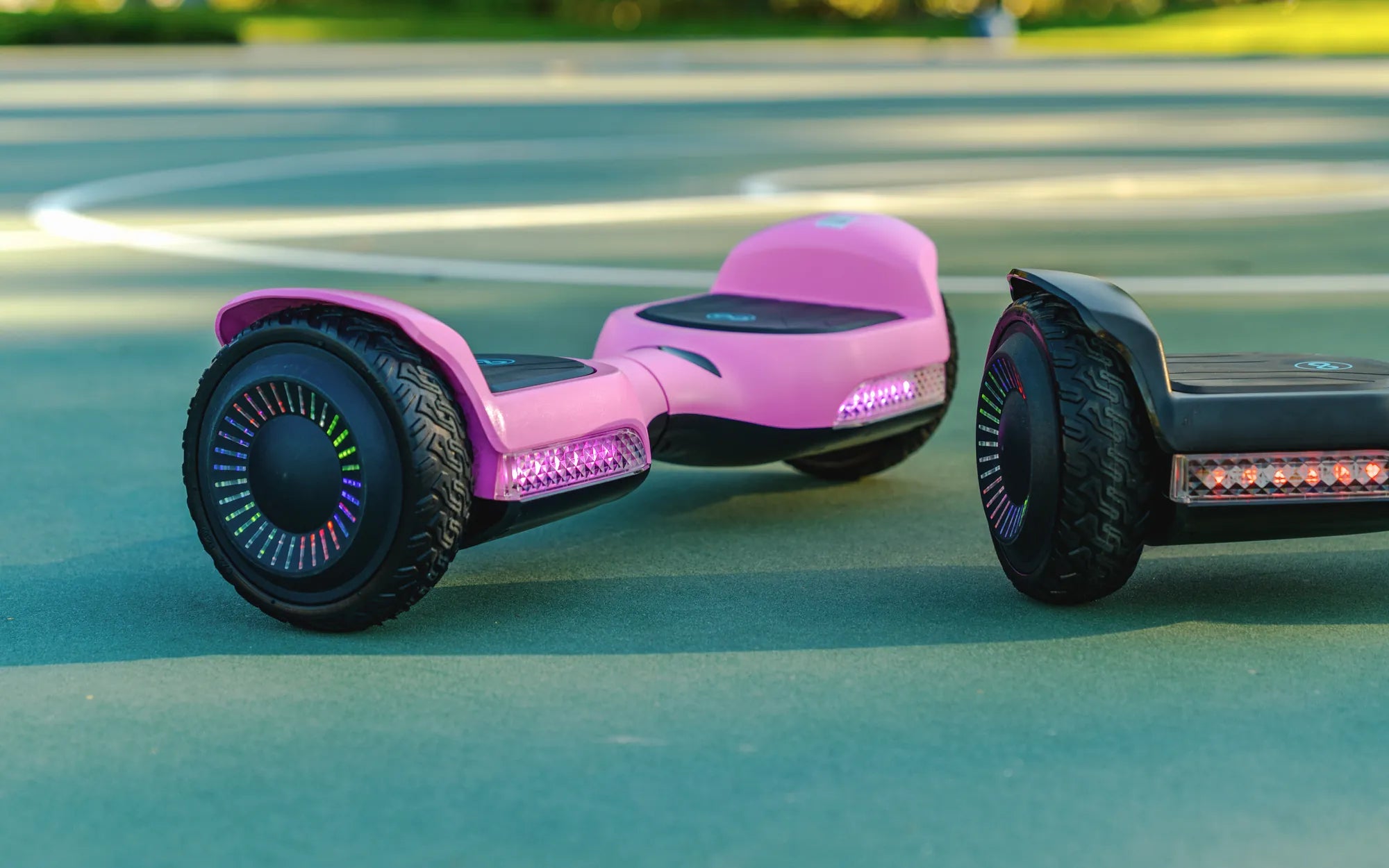
Introduction to Self-Balancing Scooters
Finding the best self-balancing scooter requires navigating a market filled with technical jargon and varying quality. This guide cuts through the noise with a factual, feature-focused analysis. You will learn to evaluate motor performance, understand battery safety certifications, and identify the durability features that matter for your daily commute or weekend adventure.
Self-balancing scooters, encompassing hoverboards and electric unicycles, use gyroscopic sensors and internal motors to maintain stability. This technology provides an intuitive, hands-free riding experience ideal for urban mobility, campus travel, and recreational fun. The core appeal lies in their portability, low operating cost, and the pure enjoyment of gliding effortlessly.
As a leading electric scooter and e-bike brand trusted by over 100,000 riders across North America and Europe, Gyroor emphasizes that safety and reliability are non-negotiable. This guide will reference key features, such as UL-certified batteries and IPX5 water-resistant designs, that define a quality ride versus a mere gadget.
Why Choose a Self-Balancing Scooter? Key Benefits & Use Cases
The decision to invest in a personal electric transporter hinges on specific advantages over traditional options. A high-quality self-balancing scooter offers unparalleled last-mile connectivity, seamlessly bridging the gap between public transit stops and your final destination. This efficiency saves time and reduces reliance on cars for short trips.
Portability is a major benefit. Many models are compact and lightweight enough to carry into offices, classrooms, or onto buses. The fun factor is also significant; riding provides a unique sense of freedom and is an engaging form of outdoor activity that appeals to all ages.
Operating costs are remarkably low compared to vehicles. After the initial purchase, expenses are limited to occasional tire maintenance and electricity for charging. This makes it a cost-effective solution for daily travel within a 5-15 mile radius.
Primary use cases include:
- Daily Commuting: Navigating city sidewalks and bike lanes to avoid traffic congestion.
- Campus & Corporate Travel: Moving efficiently across large university grounds or business parks.
- Recreational Riding: Enjoying parks, boardwalks, and paved trails for leisure.
- Indoor Use: Practical mobility in large warehouses, airports, or shopping centers.
Critical Features to Compare: Your Buying Checklist
Selecting the best self-balancing scooter demands a systematic evaluation of its components. This checklist forms the core framework for making an informed, value-driven decision that prioritizes both performance and long-term safety.
Motor Power & Performance
Motor wattage directly dictates a scooter's capability. A 300W motor is suitable for flat terrain and lighter riders, typically reaching speeds of 7-9 mph. For adults, hills, or a more dynamic ride, a 500W to 700W dual-motor system is essential. This provides the torque needed for inclines up to 15-20 degrees and supports higher weight capacities, often up to 265 lbs.
Performance isn't just about top speed; it's about consistent power delivery. A robust motor ensures stable acceleration and maintains speed on slight gradients without straining the battery. Underpowered scooters can feel sluggish and may struggle with basic urban obstacles like driveway ramps.
Battery Life & Range
Manufacturer range claims are often based on ideal conditions. Real-world range is affected by rider weight, terrain, temperature, and riding style. A scooter with a 36V, 4.4Ah (158Wh) battery may realistically travel 6-8 miles, while a 36V, 7.5Ah (270Wh) unit can achieve 12-15 miles.
The most critical factor is battery safety certification. UL-certified battery packs, like those used in all Gyroor models, have undergone rigorous testing for over 500 charge cycles, thermal stability, and short-circuit protection. This certification is a non-negotiable safety standard, drastically reducing fire risk and ensuring long-term reliability.
Build Quality & Durability
Frame construction determines longevity. A high-grade ABS shell with a reinforced steel or aluminum frame can withstand the impacts of daily use. Tire choice is equally crucial: solid rubber tires are puncture-proof but offer a harder ride, while pneumatic (air-filled) tires provide superior shock absorption on uneven surfaces.
For all-weather resilience, an IPX5 water-resistant rating is essential. This rating means the scooter can withstand water jets from any direction, protecting its internal electronics from puddles, wet roads, and light rain. This feature, a standard in Gyroor's design philosophy, separates durable commuter tools from fair-weather toys.
Safety & Stability Features
The core self-balancing gyroscope system must be precise and responsive. Look for models with a dedicated beginner mode that limits speed and softens acceleration for easier learning. Non-slip foot pads with clear tactile indicators enhance control and stability.
Integrated safety lighting is a must for visibility. Bright LED headlights and taillights, often with side ambient lighting, ensure you are seen by others at dawn, dusk, or night. Some advanced models include Bluetooth speakers and app connectivity for speed control and diagnostics.
Portability & Weight
The scooter's weight impacts its practicality. Lightweight models around 22-25 lbs are easier to carry upstairs or onto public transit. Heavier all-terrain models (30+ lbs) offer more power and battery capacity but are less portable.
A built-in or retractable carry handle significantly improves portability. For electric unicycles, a telescopic trolley handle is a key feature for rolling the device when not riding, conserving energy during multi-modal travel.
Navigating the Market: Types and Top Models
The self-balancing market is segmented into distinct types, each suited for different riders and terrains. Understanding these categories is the first step in narrowing your search for the best self-balancing scooter for your lifestyle.
Standard Hoverboards (Two-Wheeled): The most common type, with wheels typically sized 6.5" to 8.5". Ideal for smooth, paved surfaces like sidewalks, indoor floors, and parks. They are generally the most affordable and user-friendly, with a quick learning curve. Best for recreational riders, teens, and short-distance commuters on flat terrain.
All-Terrain Hoverboards: Feature larger, rugged tires (often 10" pneumatic) with deep treads. Designed to handle grass, gravel, dirt paths, and uneven ground. They usually have more powerful dual motors (700W+) and higher ground clearance. The ideal choice for riders who need versatility or live in areas with poor pavement.
Electric Unicycles (EUCs): A single-wheel device where the rider stands on folding foot pedals. EUCs offer the greatest range (often 30+ miles), higher top speeds (25+ mph), and superior portability due to their compact form. They have a steeper learning curve but provide the most efficient and advanced riding experience for serious commuters.
| Model Type | Ideal For | Key Specs (Example) | Terrain | Notable Features |
|---|---|---|---|---|
| Standard Hoverboard | Beginners, Recreation | 300W Dual Motor, 158Wh Battery | Paved/Smooth Indoor | LED Lights, Bluetooth |
| All-Terrain Hoverboard | Adventure, Rough Paths | 700W Dual Motor, 270Wh Battery | Grass, Gravel, Dirt | 10" Pneumatic Tires, IPX5 |
| Electric Unicycle (EUC) | Advanced Commuters | 1000W Motor, 500Wh Battery | Mixed Urban | Long Range, High Speed, Trolley Handle |
| Gyroor All-Terrain Pro (Example) | Versatile Daily Use | 700W Motor, 270Wh UL Battery | All-Terrain | IPX5 Water-Resistant, 1-Year Warranty |
Making the Right Choice: A Step-by-Step Selection Guide
Now, apply the feature knowledge to your personal situation. Follow this step-by-step guide to systematically identify the best self-balancing scooter for your needs.
Step 1: Define Your Primary Use. Are you commuting 3 miles to a train station, riding on campus, or exploring park trails? A commuter needs water resistance and range; a campus rider needs portability; a trail rider needs all-terrain tires.
Step 2: Assess Your Terrain & Climate. Will you face hills? Choose a motor with 500W+. Will you ride in rain or on wet roads? An IPX5 rating is mandatory. For grass or dirt, pneumatic tires are non-negotiable.
Step 3: Determine Your Range Requirement. Calculate your typical round-trip distance. Add a 20-30% buffer for real-world conditions (hills, wind). This will point you to the necessary battery capacity (Wh).
Step 4: Set Your Budget with Safety in Mind. Allocate your budget around non-negotiable safety features first: a UL-certified battery and a robust frame. It is better to invest in a reliable model from a reputable brand like Gyroor, backed by a 1-year warranty, than to opt for an uncertified, potentially hazardous alternative.
Step 5: Consider Portability Needs. If you must carry the scooter frequently, weight and the presence of a handle become critical deciding factors. An extra 5 pounds feels significant after climbing a flight of stairs.
Beyond the Purchase: Riding Tips & Maintenance
Owning the best self-balancing scooter also means using it responsibly and maintaining it properly. These practices ensure safety, longevity, and optimal performance throughout the scooter's life.
Essential Riding Safety: Always wear protective gear—at minimum, a helmet and wrist guards. Start learning in a flat, open, car-free area like an empty parking lot. Master mounting, dismounting, and gentle turns before increasing speed. Understand and obey local laws regarding where you can ride; many cities restrict use on sidewalks or require specific age limits.
Routine Maintenance Checklist: Keep tires properly inflated (for pneumatic models) to maximize range and comfort. Regularly inspect the scooter for loose screws, cracks in the body, or worn foot pads. Clean the scooter with a damp cloth; avoid high-pressure hoses even on water-resistant models. Store it in a cool, dry place and avoid leaving it at full or zero charge for extended periods.
The value of a 1-year comprehensive warranty cannot be overstated. It provides peace of mind against manufacturing defects and is a hallmark of a brand that stands behind its products. Gyroor's warranty, covering the battery, motor, and frame, exemplifies this commitment to customer support and product reliability.
Frequently Asked Questions (FAQ)
Q1: Are self-balancing scooters legal?
A1: Laws vary by city, state, and country. Typically, they are allowed on bike paths and private property but often restricted on sidewalks and roads. Always check your local regulations before riding in public spaces.
Q2: How long does the battery last, and what's the charging time?
A2: A quality battery lasts 2-3 years or 500+ charge cycles with proper care. Charging time usually ranges from 2 to 4 hours for a full charge, depending on capacity. Never leave the scooter charging unattended for prolonged periods.
Q3: Can it get wet? What does IPX5 mean?
A3: Scooters with an IPX5 water-resistant rating, like Gyroor models, can safely handle puddles, wet roads, and light rain. They are protected against low-pressure water jets from any direction. They are not submersible and should not be ridden through deep standing water.
Q4: Is a self-balancing scooter suitable for adults?
A4> Absolutely. Many models are designed specifically for adults, with higher weight capacities (up to 265 lbs), more powerful motors for hills, and larger decks for comfort. The key is selecting a model with adequate motor power and build quality.
Q5: What is the learning curve like?
A5> For hoverboards, most people achieve basic competency in 15-30 minutes. Mastery of tight turns and higher speeds may take a few hours of practice. Electric unicycles have a steeper curve, often requiring 5-10 hours of dedicated practice to ride confidently.
Conclusion: Finding Your Perfect Ride
Choosing the best self-balancing scooter is a process of matching technical specifications to your personal needs, environment, and safety standards. Prioritize certified battery safety, adequate motor power for your terrain, and durable, water-resistant construction. A reputable brand with strong customer support and a clear warranty provides invaluable long-term security for your investment.
The perfect ride seamlessly integrates into your life, offering reliable performance whether for daily commutes or weekend adventures. By applying the framework in this guide, you can confidently select a scooter that delivers fun, freedom, and practical utility for years to come. For a range of models that embody these principles—featuring UL-certified batteries, IPX5 water resistance, and robust warranties—explore what a trusted brand has to offer.
Ready to find your ideal ride? Browse the full Gyroor collection at gyroorboard.com.
Scooter for Kids 9 Years Old: The Ultimate Guide to Choosing the Best Ride
Christmas Gift Ideas for Boys Age 15: Top Picks for Teens