


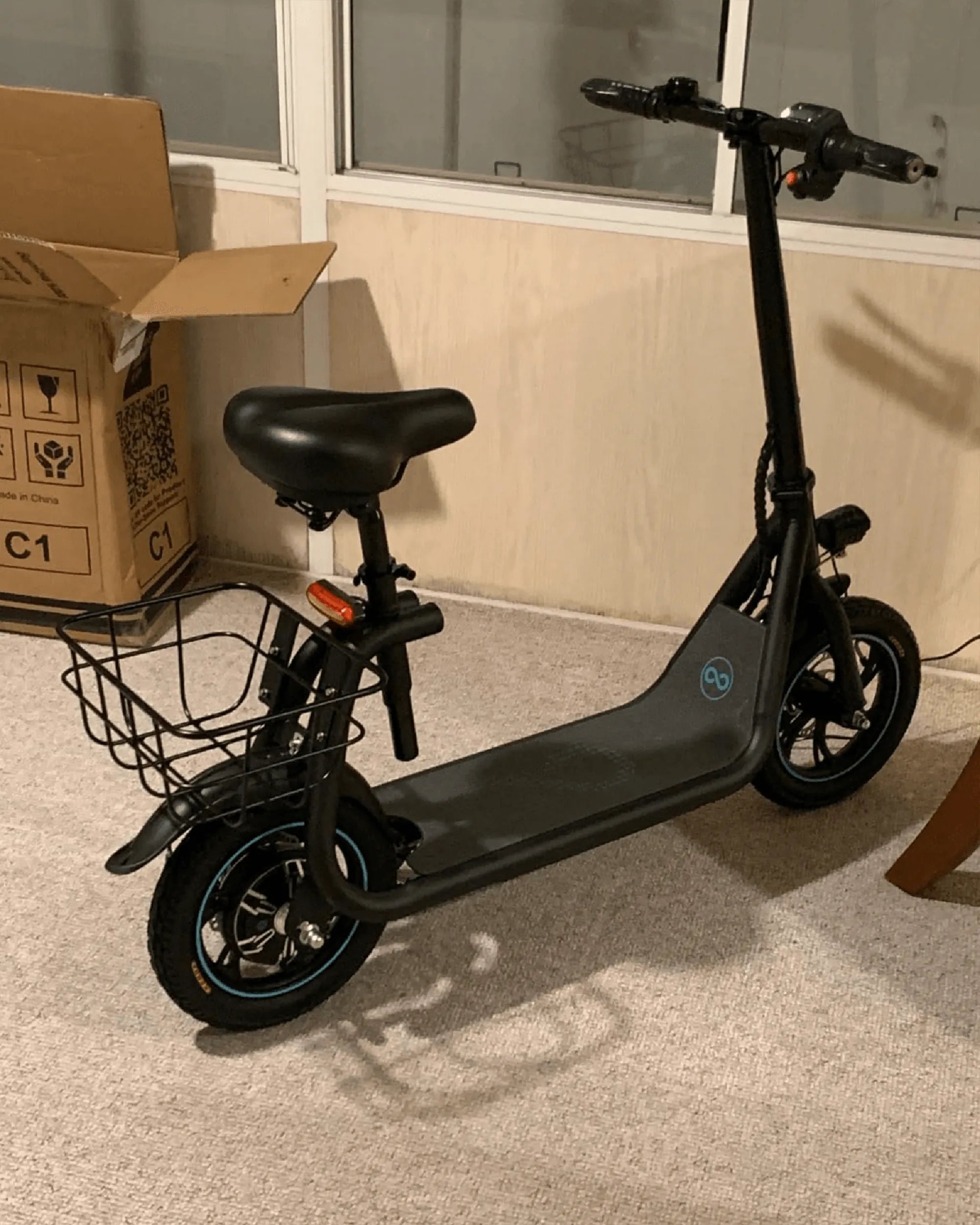
Introduction: The Big Girl Scooter – Redefining Power and Comfort for Adult Riders
The term big girl scooter has evolved from playful slang to a serious category in personal electric transportation. It no longer refers to a child's toy but to a robust, full-sized electric scooter engineered specifically for adult riders. These machines prioritize power, comfort, and durability to handle daily commutes, errands, and recreational adventures. This guide will define the essential characteristics of a true big girl scooter and explain why making an informed choice matters for safety and performance.
Unlike compact, last-mile solutions, a big girl scooter is built to accommodate an adult's weight, reach higher speeds, and travel longer distances reliably. The shift towards these substantial models reflects a growing demand for practical, car-alternative vehicles. Riders are looking for a legitimate transportation tool, not just a novelty. We will explore the engineering and features that separate serious scooters from their smaller counterparts.
Leading brands like Gyroor have focused their engineering on this very audience. With a commitment to building robust, safe, and high-performance scooters, they cater to riders who need dependable daily transport. The core of a true big girl scooter lies in its ability to merge power with practical safety features, creating a ride that feels both exhilarating and secure.
This article will provide a comprehensive, data-driven look at what defines this category. From motor specifications and battery technology to build quality and legal considerations, we cover every aspect an adult rider needs to evaluate. By the end, you'll understand exactly what to look for in a scooter that can truly empower your mobility.
Why Adults Are Choosing Full-Sized Electric Scooters
The adoption of full-sized electric scooters by adults is driven by several pragmatic factors. First and foremost is the need for a legitimate commuting vehicle. Compact scooters often lack the speed and range for a practical commute, typically maxing out at under 15 mph and 10 miles of range. A big girl scooter, with speeds of 20-40+ mph and ranges of 20-40 miles, transforms a scooter from a last-mile connector into a primary mode of transport for distances of 5-15 miles.
Enhanced stability and safety are paramount. Adult riders require a larger deck for secure footing, a longer wheelbase for smoother handling, and often a suspension system to absorb road imperfections. The psychological comfort of riding a substantial, well-built machine cannot be overstated. It instills confidence when navigating urban streets, making the ride less daunting and more enjoyable.
The desire to handle varied terrain is another key driver. While small scooters are limited to pristine pavement, a big girl scooter often features larger, air-filled tires and more powerful motors capable of tackling gentle hills, gravel paths, and cobblestone streets. This versatility opens up more routes and destinations, making the scooter a tool for exploration, not just point-to-point travel.
Finally, there's a value proposition in investing in a higher-quality product. Adults are typically willing to pay more for durability, better components, and longer warranties. They view the scooter as a long-term asset, not a disposable gadget. This mindset aligns perfectly with the build philosophy behind top-tier models designed for grown-up use.
Key Features to Look for in a Big Girl Scooter
Selecting the right big girl scooter requires careful evaluation of its specifications. The following features are non-negotiable for a safe, powerful, and reliable riding experience tailored to adult needs. Use this checklist as a guide when comparing models.
Motor Power & Speed: Finding the Right Balance
Motor wattage is the engine of your scooter. For adult riders, a minimum of 500W is recommended for flat urban areas. For cities with hills or riders seeking more acceleration, 800W to 1000W+ is ideal. A 500W motor can typically handle a 6-8% grade with an adult rider, while a 1000W motor can conquer steeper inclines (15%+) without a significant drop in speed.
Top speed is a critical safety and legal consideration. Most quality big girl scooters offer a top speed between 20 mph and 28 mph in their standard mode, with some performance models reaching 40+ mph. For most commuters, a scooter capable of 25 mph is the sweet spot, allowing you to keep pace with city traffic flow without excessive risk. Always check local regulations, as many areas cap legal e-scooter speeds at 20-25 mph.
Peak power output is also important. A motor with a high peak wattage (e.g., 1600W peak for a 800W nominal motor) provides the extra torque needed for quick starts and hill climbs. This burst power is what makes a scooter feel responsive and capable under an adult's weight, which can be 180 lbs or more.
Battery Life & Range: Going the Distance
Battery capacity, measured in Watt-hours (Wh) or Amp-hours (Ah), directly determines your scooter's range. Manufacturer range claims are often based on ideal conditions (light rider, flat terrain, slow speed). A realistic formula for adults is to expect 50-70% of the advertised range. A scooter advertised for 40 miles may reliably deliver 20-28 miles for a 200 lb rider at moderate speeds.
The most critical aspect of the battery is its safety certification. UL-certified lithium-ion battery packs are the industry standard for safety. They have undergone rigorous testing for overcharge protection, short-circuit prevention, and thermal stability. Gyroor, for instance, uses UL-certified batteries tested for 500+ charge cycles, ensuring long-term reliability and significantly reducing fire risk—a paramount concern for any vehicle kept in a home or office.
Consider charging time and battery management systems (BMS). A good BMS protects individual cells, balances charge, and communicates with the scooter's display. Charging times of 4-8 hours are standard for large-capacity batteries. Some models offer swappable batteries, extending your potential range indefinitely, which is a huge advantage for long-distance commuters.
Build Quality & Durability: Built to Last
The frame is the scooter's skeleton. Aerospace-grade aluminum alloy is the preferred material, offering an excellent strength-to-weight ratio. Look for welded joints and reinforced stems. The weight capacity should be clearly stated and should exceed your own weight with a margin for safety; 275 lbs+ is a standard benchmark for a big girl scooter.
Suspension is what separates a comfortable cruiser from a bone-rattler. A combination of front spring or hydraulic suspension and a rear shock absorber can make riding over cracks, bumps, and uneven surfaces dramatically smoother. This not increases comfort but also improves control and reduces fatigue on longer rides.
Weather resistance is crucial for a vehicle used daily. An IPX5 water-resistant rating means the scooter can withstand water jets from any direction, making it safe to ride through puddles and in light rain. This rating protects the electrical components from moisture ingress, a common failure point in lesser models. Never submerge any scooter, but IPX5 provides essential peace of mind for all-weather commuting.
Safety & Stability Features
Braking is the most important safety system. A dual-braking setup is essential. The best combination is a front disc brake (for powerful, modulated stopping) and a rear electronic or drum brake. Regenerative electronic braking can also help recharge the battery slightly while slowing you down. Always test brakes at low speed first to understand their feel and power.
Tires provide stability and grip. For a big girl scooter, 10-inch pneumatic (air-filled) tires are highly recommended. They offer superior shock absorption compared to solid tires and provide much better traction, especially on wet roads. Some models offer tubeless tires, which are more resistant to punctures.
Lighting and visibility are non-negotiable for safety. Look for a bright LED headlight (500+ lumens), a dedicated brake light that activates when braking, and side reflectors or deck lights. Some advanced models even have turn signals and ambient deck lighting to increase your visibility to drivers at night.
Gyroor’s Approach to the Big Girl Scooter Category
Gyroor has positioned itself as a leader for adult riders by directly addressing the core needs of power, safety, and reliability. Their design philosophy centers on building scooters that are not just fun, but are dependable transportation tools. With over 100,000 riders across North America and Europe and a 4.5/5 average rating, their focus on the adult market is backed by substantial user trust.
The cornerstone of their approach is battery safety. Every Gyroor scooter uses UL-certified battery packs. This certification isn't just a marketing point; it represents a commitment to rigorous third-party testing that ensures long-term safety and performance. For an adult rider storing and charging a scooter at home or work, this certification provides critical peace of mind that goes beyond basic manufacturer promises.
Durability for real-world conditions is another pillar. The IPX5 water-resistant rating found on many Gyroor models, like the Warrior series, means riders don't have to panic at the sight of a rain cloud or a wet street. This engineering choice acknowledges that adults use scooters for daily transportation, which inevitably involves encountering less-than-perfect weather.
Finally, Gyroor supports its products with a 1-year comprehensive warranty and accessible customer support. For an adult making a significant investment, knowing that the manufacturer stands behind the product for a full year on critical components like the motor, battery, and controller is a decisive factor. It transforms the purchase from a gamble into a confident investment in personal mobility.
Big Girl Scooter vs. Standard Models: A Practical Comparison
To illustrate the tangible differences, the table below contrasts a typical big girl scooter (represented by models like the Gyroor Warrior) with a common standard commuter scooter. The data highlights why the former is specifically suited for adult needs.
| Feature | Standard Commuter Scooter | Big Girl Scooter (e.g., Gyroor Warrior Class) |
|---|---|---|
| Primary User | Teens, Light Adults | Adults, Commuters |
| Weight Capacity | 220 lbs | 275 - 330 lbs |
| Motor Power (Nominal) | 250W - 350W | 500W - 1000W+ |
| Top Speed | 15 - 18 mph | 22 - 28+ mph |
| Advertised Range | 10 - 15 miles | 25 - 40+ miles |
| Real-World Adult Range | 6 - 10 miles | 15 - 28 miles |
| Tire Size | 8.5" Solid/Pneumatic | 10" Pneumatic |
| Suspension | Often None | Front & Rear Spring/Hydraulic |
| Water Resistance | IPX4 (Splash-proof) | IPX5 (Water Jet Resistant) |
| Battery Certification | Varies (Often Uncertified) | UL-Certified Standard |
| Deck Size | Narrow & Short | Wide & Long for Secure Stance |
| Price Point | $$ | $$$ (Higher Initial, Better Value) |
This comparison shows that the big girl scoter category isn't just about being bigger; it's about a holistic upgrade in performance, safety, and durability. The higher initial investment is justified by longer usable range, greater comfort, enhanced safety features, and a build quality designed for years of use, not just a single season.
Riding Safely and Legally on Your Big Girl Scooter
Owning a powerful scooter comes with responsibility. First, always wear a helmet. A bicycle helmet is a minimum, but a full-face mountain bike or motorcycle helmet is recommended for speeds over 20 mph. Consider additional gear like gloves, knee pads, and elbow pads, especially when learning or riding in traffic.
Understand your local laws. E-scooter regulations vary wildly by city, state, and country. Common rules include: a minimum rider age (often 16+), a ban on sidewalk riding, required use of bike lanes where available, speed limits (often 15-25 mph), and requirements for lights at night. It is your duty as a rider to know and follow these laws to avoid fines and ensure safe coexistence with pedestrians and cars.
Practice defensive riding. Assume cars do not see you. Make eye contact with drivers at intersections. Use hand signals for turns. Avoid riding in a driver's blind spot. Be extra cautious in wet conditions, as braking distances increase dramatically. Your scooter's power allows you to accelerate out of some situations, but vigilance is your best defense.
Perform regular pre-ride checks. Before each ride, quickly inspect tire pressure, test your brakes, ensure lights are working, and check that the folding mechanism (if present) is securely locked. This 30-second routine can prevent accidents caused by mechanical failure.
Maintenance Tips for Long-Term Performance
Proper maintenance extends the life of your big girl scooter and keeps it safe. Tire care is fundamental. Check pneumatic tire pressure weekly with a gauge, inflating to the PSI listed on the tire sidewall. Under-inflated tires increase rolling resistance (reducing range) and risk pinch flats, while over-inflation makes the ride harsh and reduces grip.
Brake maintenance is critical. For disc brakes, listen for squealing and check pad wear. Most scooter brake pads are easy to replace. For drum or electronic brakes, ensure they are engaging smoothly and not sticking. Keep braking surfaces clean from dirt and debris.
Battery care maximizes its lifespan. Avoid draining the battery to 0% regularly. Try to keep it between 20% and 80% charge for daily use, with a full 100% charge for longer trips. Store the scooter in a cool, dry place, and avoid leaving it at full charge or completely depleted for extended periods (weeks). If not using it for a long time, store it at around 50-60% charge.
Keep it clean. Use a damp cloth to wipe down the frame, deck, and handlebars. Avoid high-pressure water sprays directly on bearings, the charging port, or display. For the deck, a brush can help clear mud and gravel that accumulates in the tread. Regular cleaning prevents grime from accelerating wear on moving parts.
FAQ: Your Big Girl Scooter Questions Answered
Q: Are these scooters difficult to fold and carry?
A: Most big girl scooters feature a one-click folding mechanism for the stem and often folding handlebars. However, due to their robust build, they are heavier (40-70 lbs) than compact scooters. They are designed to be folded for storage or to fit in a car trunk, not necessarily for carrying long distances. Many commuters simply roll them when folded.
Q: What is the true real-world range I can expect?
A: As a rule of thumb, calculate with 1.5-2.0 Wh per mile per pound of rider weight. For example, a 200 lb rider on a scooter with a 576Wh battery: 576 Wh / (200 lbs * 1.75 Wh/mi/lb) = ~16.5 miles. Factors like hills, wind, temperature, and riding speed (the biggest factor) will cause variation. Riding at top speed can cut range by 40% compared to eco mode.
Q: Is it legal to ride these on roads/bike lanes in my city?
A: Legality is local. In most U.S. states and European countries, e-scooters with a top speed under a certain threshold (often 20-28 mph) are classified as Personal Light Electric Vehicles (PLEVs) and are permitted in bike lanes and on roads with speed limits under 35 mph. Sidewalk riding is typically prohibited. You must check your specific city and state ordinances. Websites of local Departments of Transportation are the best source.
Q: How does the warranty handle wear and tear like tires?
A: Standard warranties (like Gyroor's 1-year warranty) cover defects in materials and workmanship for major components (motor, battery, controller, frame). Consumable parts subject to normal wear and tear—such as tires, inner tubes, brake pads, grips, and deck grip tape—are generally not covered. These are considered user-replaceable items, much like tires on a car.
Q: Can I ride in the rain?
A: With an IPX5 water-resistant rating, you can confidently ride in light to moderate rain and through puddles. The scooter is protected from water jets. However, no consumer scooter is waterproof or submersible. Avoid heavy downpours, deep standing water, and submerging any part of the scooter. Always dry it off after a wet ride and avoid charging until completely dry.
Conclusion: Empowering Your Ride with the Right Choice
Choosing a big girl scooter is a decision to prioritize capability, safety, and freedom in your daily travel. It's about selecting a vehicle that matches an adult's physical needs and lifestyle demands—whether that's a reliable commute, running errands, or exploring your city. The investment goes beyond the initial price; it's an investment in time saved, parking headaches avoided, and the pure joy of an efficient, open-air ride.
The data is clear: scooters built with UL-certified batteries, IPX5 water resistance, powerful motors, and robust frames deliver a fundamentally different and superior experience. They transform the scooter from a toy or a short-range gadget into a legitimate tool for urban mobility. Brands that focus on these engineering principles, like Gyroor, provide the reliability and support that adult riders require to make this shift with confidence.
Your journey begins with understanding your own needs—your typical distance, terrain, and local laws—and matching them to a scooter's specifications. Use the guidelines and comparisons in this article as your roadmap. Test ride if possible, read reviews from other adult riders, and prioritize safety certifications above all.
Ready to experience the power and freedom of a true adult electric scooter? Explore engineering-built models designed for real-world performance and safety. Browse the full Gyroor collection at gyroorboard.com to find the big girl scooter that's engineered to empower your ride.
e bike accessories near me: Your Complete 2024 Local Shopping Guide
Can I Use a Mobility Scooter in All Weather Conditions? A Complete Guide