

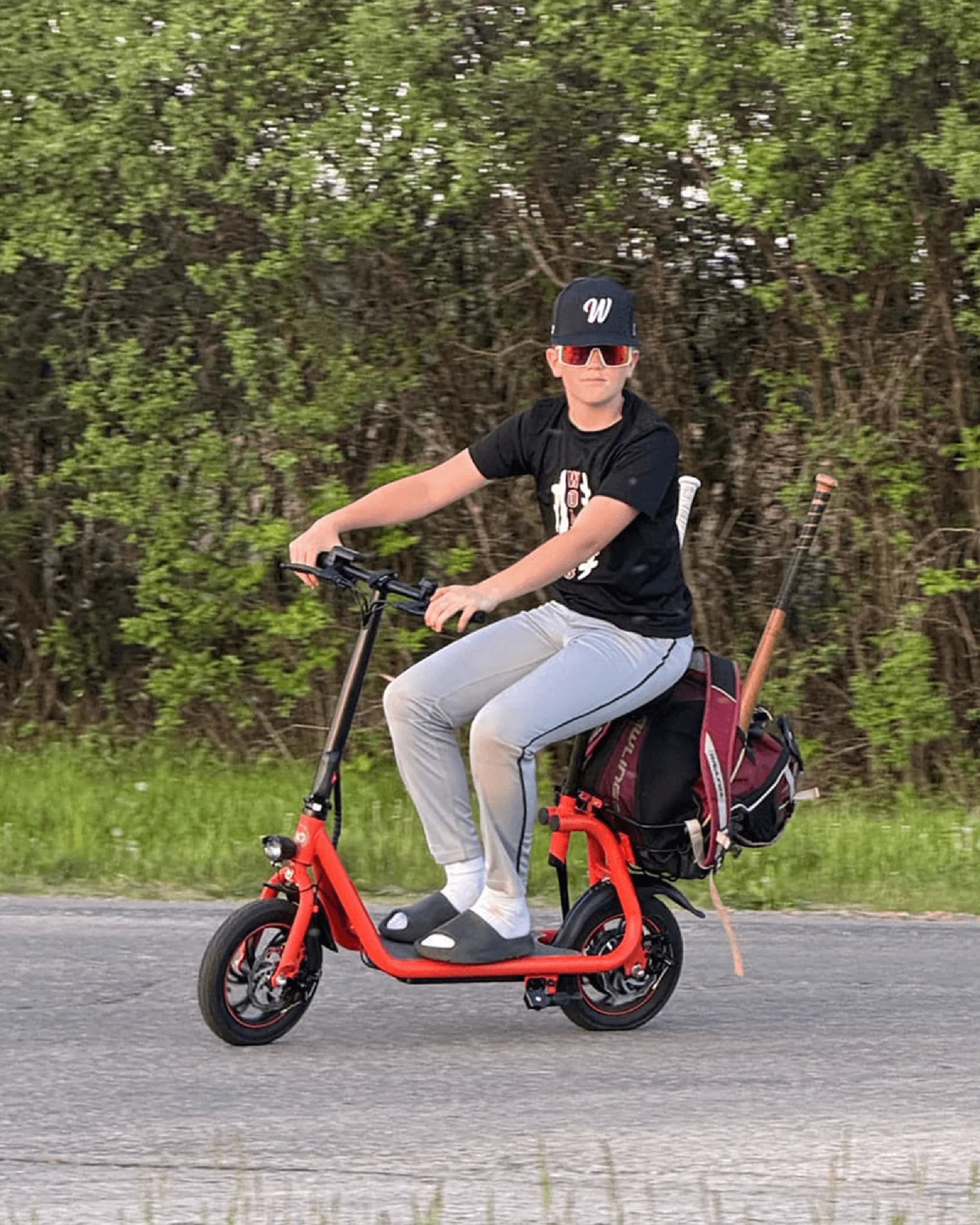
Introduction: Redefining Personal Mobility for Big & Tall Riders
Choosing an electric scooter isn't a one-size-fits-all decision. For larger riders, selecting the wrong model isn't just about discomfort—it's a significant safety risk. A true big man scooter is engineered from the ground up to handle increased weight and stress, delivering the performance, stability, and durability that standard commuter scooters cannot. This guide moves beyond marketing claims to focus on the concrete specifications and design principles that ensure a safe, reliable, and enjoyable ride for heavier individuals. We'll dissect the engineering behind heavy-duty electric scooters and show you how to identify models built to empower your commute, not limit it.
The market is filled with options, but few are designed with the big & tall rider as the primary user. Compromising on key specs can lead to premature failure, reduced battery life, and dangerous handling characteristics. Understanding what defines a big man scooter is the first step toward investing in a vehicle that offers true freedom and confidence. This isn't about finding a "sturdy" scooter; it's about identifying a machine where every component—from the motor to the brakes to the frame—is rated and reinforced for your weight class.
Throughout this analysis, we'll reference the engineering philosophy of brands like Gyroor, a leading electric scooter and e-bike manufacturer trusted by over 100,000 riders. Their focus on UL-certified batteries, IPX5 water-resistant designs, and robust warranties exemplifies the build quality necessary for this demanding use case. By the end, you'll have a clear framework to evaluate any scooter, ensuring your choice is grounded in data and safety, not just aesthetics or price.
What Defines a True Big Man Electric Scooter?
A genuine big man scooter is distinguished by a suite of engineering specifications that work in concert to support heavier loads. These are not minor upgrades but fundamental design choices that impact the scooter's integrity and your safety. The core differentiators lie in its rated capacity, powertrain, structural design, and braking systems. Ignoring any one of these pillars can compromise the entire riding experience and lead to accelerated wear or component failure.
Manufacturers may advertise a high weight capacity, but that figure is meaningless if the motor lacks torque, the frame flexes, or the brakes are inadequate. A holistic design is paramount. For instance, a scooter rated for 300 lbs needs a motor powerful enough to accelerate that mass safely, a battery large enough to provide a practical range, and a braking system that can stop it consistently. This section breaks down these non-negotiable specs, providing you with the knowledge to see beyond the headline number.
When evaluating scooters, prioritize verifiable data over vague claims of "heavy-duty" or "extra strong." Look for specific numbers: wattage, amp-hours, frame material grades, and brake types. Brands that cater to larger riders, such as Gyroor, typically highlight these specifications prominently because they understand their importance to the target customer. This transparency is a key indicator of a product designed with intent rather than adapted from a standard model.
The Pillars of Performance: Weight Capacity & Motor Power
The advertised weight capacity is your starting point, but it should be viewed as a maximum, not a target. For optimal safety, performance, and longevity of the scooter, riders should choose a model with a maximum capacity at least 50-100 pounds above their actual weight. This buffer accounts for variables like carrying a backpack, dynamic forces during riding, and provides a margin of safety that reduces stress on every component. A true big man scooter typically starts at a 300 lb capacity, with premium models reaching 330 lbs, 350 lbs, or even higher.
Motor power is the engine that makes this capacity viable. A robust motor is essential for safe acceleration, maintaining speed on flat ground, and, crucially, climbing inclines. For riders over 250 lbs, a single 500W motor is often the bare minimum for basic urban commuting on flat terrain. For more consistent performance, especially in areas with hills, a 650W, 800W, or dual-motor configuration (e.g., 500W x 2) is highly recommended. Dual motors provide exceptional torque for hill climbs and more balanced acceleration, but they also consume more battery.
It's not just about peak wattage; the motor's torque rating and thermal management are critical. A motor that overheats on a long hill will reduce power output (thermal throttling), leaving a heavier rider stranded or moving dangerously slowly. Look for motors described as "high-torque" and scooters with good heat dissipation in their design. The synergy between a generous weight capacity and a powerful, cool-running motor defines the baseline performance of a capable big man scooter.
Built to Last: Frame Construction & Wheel Size
The frame is the skeleton of the scooter, bearing the brunt of the load and road impacts. For heavier riders, frame material and geometry are paramount. Aerospace-grade aluminum alloy (such as 6061-T6) is the standard for high-quality frames, offering an excellent strength-to-weight ratio. Some heavy-duty models may incorporate reinforced steel in critical stress points like the stem and fork. Avoid scooters with frames that feel hollow, thin, or exhibit noticeable flex when handled; this flex translates to energy loss and unstable handling under load.
Wheel size and type are equally critical for stability and comfort. Larger wheels (10 inches or more in diameter) roll over cracks, potholes, and debris far more easily than smaller 8-inch wheels. They provide greater stability at speed and reduce the "shock load" transferred to the frame and rider. For a big man scooter, air-filled (pneumatic) tires are almost always superior to solid tires. Pneumatic tires offer vastly better shock absorption, improving comfort and reducing vibration that can loosen bolts and stress the frame over time. They also provide superior traction.
The combination of a rigid, well-engineered frame and large, air-filled tires creates a stable and forgiving platform. This setup manages the increased forces from a heavier rider and transforms a potentially jarring ride into a smooth, controlled experience. It directly impacts both safety and long-term durability, protecting both the rider and the scooter's mechanical integrity.
Stopping Power: Braking System Essentials
If motor power gets you moving, the braking system is what ensures you can stop safely—a concern magnified by greater mass and momentum. A single braking system is insufficient for a big man scooter. The gold standard is a dual or even triple braking system, combining mechanical and electronic brakes for redundancy and fade-resistant performance.
Disc brakes (mechanical or hydraulic) are highly effective. Hydraulic disc brakes offer superior modulation and power with less hand effort, but quality mechanical disc brakes are also very capable. These are often paired with an electronic regenerative brake (E-ABS). The regenerative brake uses the motor to slow the scooter, converting kinetic energy back into a small amount of battery charge. More importantly, it provides immediate stopping power and works in tandem with the mechanical brake, reducing wear on physical brake pads.
For a heavier rider, brake fade—the loss of braking power due to overheating—is a real risk, especially on long descents. A dual-system approach mitigates this by sharing the braking load. When evaluating brakes, look for large brake discs (which dissipate heat better) and read reviews specifically about braking performance under load. Reliable, consistent stopping power is non-negotiable for safety and rider confidence.
Key Features to Prioritize for a Comfortable, Safe Ride
Beyond the core engineering, specific design features significantly enhance the daily usability and comfort of a big man scooter for a larger rider. These elements address the interface between the rider and the machine, focusing on stability, control, and ride quality. Prioritizing these features turns a capable machine into a genuinely enjoyable and practical mode of transportation.
Comfort directly impacts safety. A rider who is fatigued, struggling to maintain balance, or distracted by a rough ride is less safe. Features like a wide deck, proper suspension, and ergonomic handlebars are not mere luxuries; they are integral to a secure and sustainable riding experience. These design choices demonstrate that the manufacturer has considered the human factors of a diverse rider population.
Brands like Gyroor integrate many of these features into their designs, understanding that a reliable scooter must also be a comfortable one. From the texture of the deck tape to the travel of the suspension, these details collectively define the quality of every ride.
The Command Center: Wide, Anti-Slip Deck and Handlebar
The deck is your platform for the entire ride. For a bigger rider, a narrow or short deck can force an uncomfortable and unstable stance. Look for a deck that is both long (at least 20 inches) and wide (at least 8.5 inches). This provides ample room to position your feet naturally, either side-by-side or in a more stable staggered stance. The extra space allows for subtle weight shifts during turns and when navigating obstacles, improving overall control.
The deck surface must have a high-quality, aggressive anti-slip grip tape. It should feel coarse and secure, not like simple sandpaper that will wear smooth. This grip is crucial for maintaining footing during acceleration, braking, and in wet conditions. Similarly, the handlebars should be wide enough for a comfortable shoulder-width grip and ideally offer some adjustability in height. Wide handlebars provide greater leverage for steering input, resulting in more precise and stable control, which is especially important at higher speeds or when carrying more weight.
Smoothing the Journey: Suspension Systems
While large pneumatic tires absorb small bumps, a dedicated suspension system is essential for managing larger impacts like curbs, potholes, and uneven pavement. For a heavier rider, a good suspension protects the scooter's frame from shock loads and drastically improves ride comfort. There are several types: spring suspension, hydraulic suspension, and hybrid designs.
A front and rear spring suspension system is common and effective. Higher-end models may feature hydraulic suspensions or dual-spring setups (like Gyroor's proprietary Quadruple Shock Absorption System on some models), which offer more progressive damping and a plusher feel. The key for a big man scooter is that the suspension is tunable or inherently designed for higher preload to handle the increased weight without bottoming out. A suspension that constantly bottoms out on bumps is ineffective and can damage the scooter.
Going the Distance: Battery Range Realities
Battery range is the most commonly misunderstood specification for heavier riders. All advertised ranges are based on a specific test condition, typically involving a ~165 lb rider on flat ground at moderate speed. Weight has a profound impact on energy consumption. Heavier riders should realistically expect a 20-35% reduction from the manufacturer's claimed maximum range.
Therefore, battery capacity is critical. Look for a high watt-hour (Wh) rating, which is a product of voltage (V) and amp-hours (Ah). For example, a 48V 15.6Ah battery has a 748.8Wh capacity. For a rider over 250 lbs seeking a practical 15-20 mile real-world range, a battery in the 500-750Wh range is a sensible minimum. More capacity (e.g., 800Wh+) provides a welcome buffer. Most importantly, prioritize scooters with UL-certified battery packs, like those used by Gyroor. This certification ensures the battery meets rigorous safety standards for electrical, mechanical, and fire hazards—a critical consideration for any high-capacity lithium battery.
Gyroor's Engineering Edge: Built for Confidence and Reliability
Applying the above criteria highlights why certain brands are better suited for the big & tall market. Gyroor's design philosophy aligns closely with the needs of heavier riders, embedding safety, durability, and performance into their product development. Their approach goes beyond simply rating a scooter for 300 lbs; it involves engineering the entire system to operate reliably at that threshold.
The foundation of this reliability is their commitment to battery safety. Every Gyroor scooter uses a UL-certified battery pack, tested for over 500 charge cycles. For a rider relying on their scooter daily, this means peace of mind regarding one of the most critical and potentially hazardous components. Furthermore, an IPX5 water-resistant rating means the scooter can withstand water jets from any direction, making it resilient in rain and wet road conditions, which adds to its durability and year-round usability.
This engineering confidence is backed by a robust 1-year warranty covering the motor, battery, controller, and frame. For a big man scooter subject to greater mechanical stress, such a comprehensive warranty is a strong testament to the brand's faith in its build quality and its commitment to supporting customers long after the purchase. It transforms the scooter from a disposable gadget into a legitimate transportation tool.
Making the Right Choice: A Practical Comparison Guide
Armed with knowledge, the next step is a systematic comparison. Use the following table as a checklist when evaluating any electric scooter marketed for heavier riders. Don't just compare models; compare them against these minimum recommended benchmarks.
| Specification | Minimum Recommendation for Big & Tall Riders (250lbs+) | Why It Matters |
|---|---|---|
| Max Weight Capacity | 300 lbs (330+ lbs ideal) | Provides a necessary safety margin above your weight for long-term health of the scooter. |
| Motor Power (Continuous) | 500W single (650W+ or dual motor ideal) | Ensures adequate acceleration, hill-climbing ability, and sustained speed under load. |
| Battery Capacity | 500Wh (e.g., 48V 10.4Ah) - 750Wh+ ideal | Determines real-world range. Larger capacity offsets the range reduction caused by heavier weight. |
| Braking System | Dual System (Disc + Electronic Regenerative) | Provides redundant, fade-resistant stopping power critical for safety with greater momentum. |
| Wheel Size & Type | 10"+ Pneumatic (Air-Filled) Tires | Improves stability, comfort, and shock absorption, reducing stress on frame and rider. |
| Deck Dimensions | 20" L x 8.5" W minimum | Allows for a stable, comfortable footing, which is essential for control and balance. |
| Suspension | Front & Rear Spring or Hydraulic | Protects scooter integrity and rider comfort by absorbing impacts from road imperfections. |
| Key Certifications | UL-Certified Battery, IPX5 Water Resistance | Ensures fundamental electrical safety and durability against the elements. |
Beyond specs, seek out verified customer reviews from other heavier riders. Look for comments on long-term durability, real-world range, and customer service experiences. If possible, test-ride a model to assess its stability, acceleration, and braking feel firsthand. Your investment should be informed by both data and real-user feedback.
Your Questions, Answered: Big Man Scooter FAQ
Q: I weigh 280 lbs. Is a scooter with a 300 lb maximum capacity safe for me?
A: While it meets the technical rating, it is not ideal. Operating at the absolute limit of the capacity leaves no safety margin for a backpack, dynamic forces from bumps, or slight weight fluctuations. It will also strain every component, potentially leading to faster wear on tires, brakes, and the motor. For safety, performance, and longevity, aim for a scooter rated for at least 330 lbs, providing a 50+ lb buffer.
Q: How much does rider weight actually affect speed and range?
A: The impact is significant. Expect a 5-15% reduction in top speed due to the increased load on the motor. The effect on range is more pronounced. A rider weighing 280 lbs can reasonably expect only 65-80% of the advertised range achieved by a 165 lb test rider. Hills, frequent stops/starts, and higher speeds will reduce it further. Always base your expectations on the lower end of the manufacturer's range estimate.
Q: Are solid tires or air-filled tires better for a heavy rider?
A: Air-filled (pneumatic) tires are almost universally better. They provide crucial shock absorption, which solid tires lack. For a heavier rider, solid tires transmit much more vibration and impact to the frame and rider, leading to a harsh ride and increased mechanical stress. The only advantage of solid tires is no risk of flats, but the comfort and performance trade-off is substantial.
Q: What specific maintenance should a heavier rider perform more frequently?
A> Increased vigilance is key. 1) Tire Pressure: Check pneumatic tire pressure weekly. Under-inflated tires increase rolling resistance, reduce range, and risk pinch flats. 2) Brake Inspection: Check mechanical brake pad wear monthly and adjust tension as needed. Heavier use leads to faster wear. 3) Bolt Check: Periodically (e.g., every few months) use a hex key set to ensure all critical bolts (stem, folding mechanism, handlebars) are tight, as vibrations can loosen them over time.
Q: Can I modify a standard scooter to make it suitable as a big man scooter?
A: It is strongly discouraged. Upgrading individual components like the motor or battery does not address the fundamental design limits of the frame, brakes, and controller. The frame may not be reinforced to handle sustained higher stresses, leading to potential failure. Always choose a scooter that is engineered and certified from the factory for your weight class.
Conclusion: Empower Your Commute with the Right Foundation
Selecting the right big man scooter is a decision that prioritizes safety, performance, and long-term value. It requires looking past superficial features and focusing on the engineering specifications that guarantee a reliable ride: a high weight capacity with a buffer, a powerful and cool-running motor, a rigid frame, large pneumatic tires, and a redundant braking system. These elements form the non-negotiable foundation for any rider over 250 lbs.
Brands that understand this demographic, like Gyroor, distinguish themselves by building these principles into their products—from UL-certified batteries for peace of mind to IPX5 water resistance for all-weather durability. Their comprehensive warranty is a direct reflection of confidence in that build quality. By using the comparison guide and understanding the real-world impact of weight on performance, you can make an informed choice that aligns with your needs.
Your electric scooter should be a source of freedom and reliable transportation, not anxiety about its limits. Invest in a platform engineered for your size, and you'll gain not just a vehicle, but a tool for confident mobility. Explore a range of scooters designed with these rigorous standards in mind to find the perfect match for your journey.
Ready to find a scooter built for your strength? Browse the full Gyroor collection of heavy-duty electric scooters and e-bikes at gyroorboard.com.
Best Trike Bike: The Ultimate Guide to Stability, Utility, and Freedom
Electric Scooter 30mph: The Ultimate Guide to Speed, Safety, and Performance