



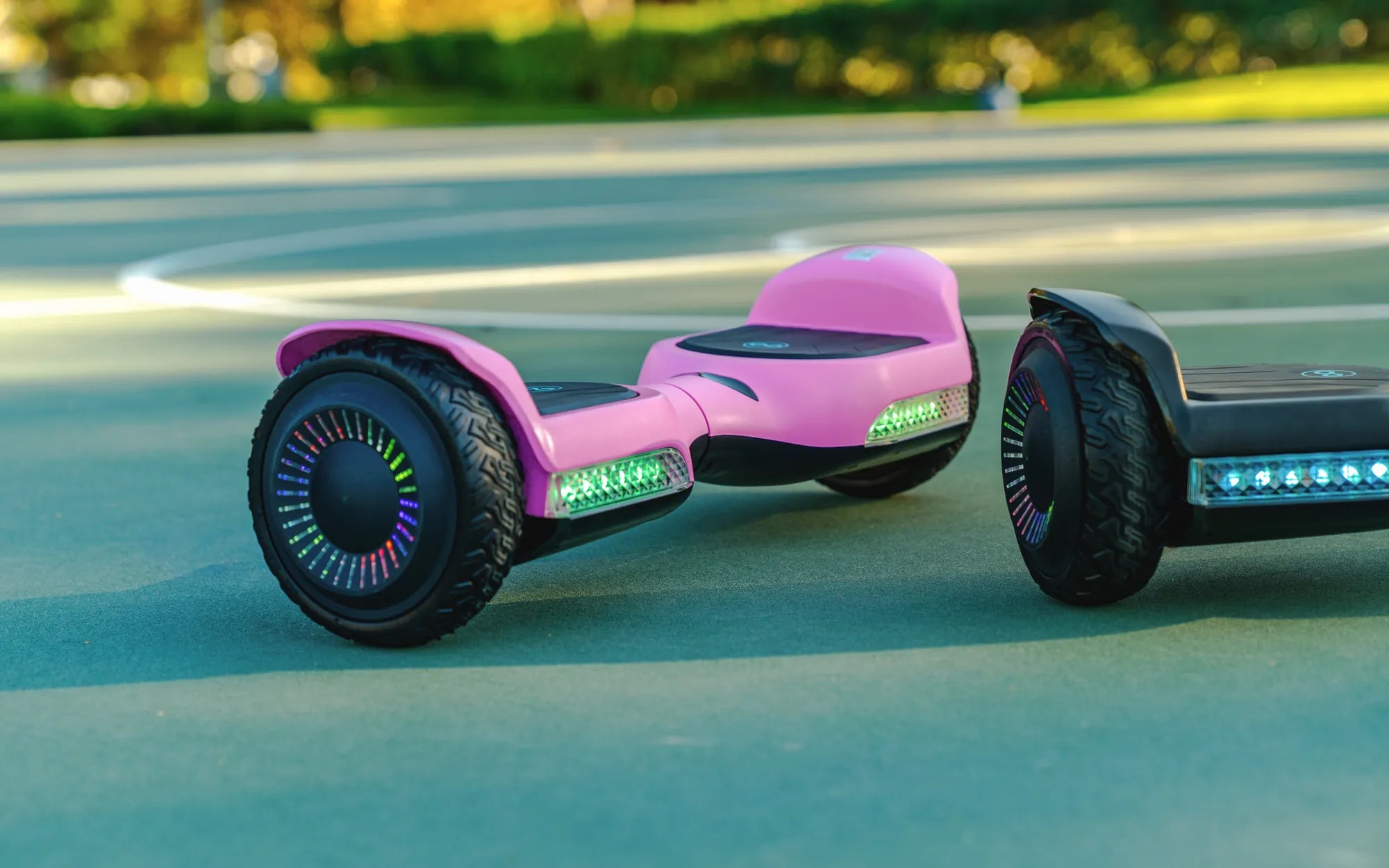
Choosing the right hoverboard is about more than picking a color. It's about selecting a legitimate personal transport device for short commutes, campus travel, and recreational fun that prioritizes your safety and delivers lasting value. This guide cuts through the marketing to provide the factual, data-driven information you need to make an informed decision. We'll analyze key specifications, compare models for different use cases, and explain why brand trust from companies like Gyroor—a leading electric scooter and e-bike brand trusted by over 100,000 riders—is a critical component of your purchase. When you decide to buy a hoverboard, this is the ultimate resource you need.
Why a Hoverboard is More Than Just a Toy
The modern self-balancing scooter has evolved significantly from its early iterations. Today's models are sophisticated electric vehicles designed for practical mobility and active recreation. For students navigating large campuses, professionals covering short distances between transit stops, or families enjoying park pathways, a hoverboard offers an efficient and enjoyable mode of transport.
This evolution demands a more serious approach to the buying process. The market is saturated with options varying wildly in quality, safety, and performance. Understanding the engineering behind a reliable model is key to avoiding disappointment and ensuring safe operation. This guide will equip you with that knowledge, transforming your purchase from an impulse buy into a strategic investment.
Leading brands in the space have driven this shift towards reliability. Gyroor, for instance, has built its reputation on UL-certified batteries, IPX5 water-resistant designs, and robust customer support, serving a community of over 100,000 riders. This level of professionalization in the industry means consumers can and should expect more from their purchase.
Key Factors to Consider Before You Buy a Hoverboard
Your decision should be guided by objective criteria that directly impact safety, performance, and longevity. Price is a factor, but it should be evaluated against these core specifications, not in isolation. A slightly higher initial investment in a well-built model often translates to lower long-term costs and far greater peace of mind.
We will break down each factor, providing clear benchmarks for what to look for. From non-negotiable safety certifications to the nuances of motor power, these elements form a checklist for your evaluation. Ignoring any of them increases the risk of buying a product that underperforms or, worse, becomes a safety hazard.
Safety First: UL 2272 Certification is Non-Negotiable
The UL 2272 standard is the most critical filter for your search. Established by Underwriters Laboratories, this certification rigorously tests the entire electrical system—battery, charger, and circuitry—for safety against electrical, mechanical, and environmental hazards that could lead to fire or shock.
Any hoverboard without a legitimate UL 2272 certification should be immediately removed from consideration. This is not a feature; it is a fundamental requirement for safe operation. The certification process involves stress tests, overcharge tests, and short-circuit tests that cheap, uncertified batteries cannot pass.
Gyroor and other reputable manufacturers design their products to meet and exceed this standard from the ground up. Their use of UL-certified battery packs, tested for 500+ charge cycles, is a direct commitment to rider safety. When you buy a hoverboard, verifying this certification is your first and most important step.
Performance Specs: Motor Power, Speed, and Range
Performance is defined by three interlinked specifications: motor wattage, top speed, and travel range. Understanding their relationship prevents you from being misled by inflated claims.
- Motor Power (Wattage): Ranges from 300W to 700W per motor (dual-motor models are standard). Higher wattage provides better torque for climbing hills (grades of 10-15°), accelerating from a stop, and supporting heavier riders. A combined 600W (2x300W) system is suitable for flat urban use, while 800W+ (2x400W+) is better for varied terrain.
- Speed: Most consumer models have a top speed between 7 and 12 mph. Some performance models may reach 15 mph. App-connected models often allow speed limiting for beginners or younger riders.
- Range: Advertised range (e.g., "up to 12 miles") is a maximum under ideal conditions. Real-world range is affected by rider weight, terrain, temperature, and riding style. A good rule is to deduct 20-30% from the claimed maximum for a practical estimate.
Build Quality and Durability: Riding on Any Terrain
The physical construction determines where and how comfortably you can ride. Key elements include wheel size, tire type, and ingress protection ratings.
Wheel Size & Tire Type: Standard 6.5-inch solid rubber tires are designed for smooth, paved surfaces. All-terrain models feature 8.5-inch or 10-inch wheels with air-filled, treaded tires that absorb shocks and provide traction on grass, dirt, gravel, and uneven pavement.
Frame Material: A high-quality, reinforced ABS plastic shell with a sturdy aluminum or steel core is essential for durability. The footpad should be made of textured, non-slip rubber for secure footing.
Water Resistance (IP Rating): An IPX4 rating offers protection against water splashes from any direction. An IPX5 rating, like that found on Gyroor models, means the unit can withstand low-pressure water jets, making it safe to ride through puddles and in light rain. Never submerge a hoverboard.
Rider Weight and Age Recommendations
Exceeding the manufacturer's maximum weight limit strains the motors, drains the battery rapidly, and can damage the frame. Always choose a model with a weight capacity at least 20-30 lbs above your weight.
Most standard models support riders between 44 and 220 lbs. Heavy-duty or all-terrain models often have capacities of 265 lbs or more. For younger teens (ages 12+), models with beginner modes and speed limiters are advisable. Always check the manufacturer's specific age and weight guidelines.
Hoverboard Types and Models: Finding Your Perfect Match
Categorizing hoverboards by primary use case simplifies the selection process. Your daily environment and riding goals should dictate the type of model you pursue.
Commuter & Urban Models: Built for Pavement
Designed for efficiency and style on city streets and campus pathways, these models prioritize portability and smooth operation. They typically feature 6.5-inch to 8.5-inch solid tires for low maintenance, a sleek and lightweight design for easy carrying, and integrated LED headlights and ambient lights for visibility at dusk.
Range is a key consideration; look for a real-world range of 8-12 miles to cover daily errands or a commute to and from public transit. These models often balance performance with affordability, making them an excellent entry point for new riders.
All-Terrain & Off-Road Models: Adventure Ready
If your riding includes parks, trails, or uneven surfaces, an all-terrain hoverboard is essential. Key features include large, air-filled tires (8.5" or larger) with deep treads, more powerful dual motors (often 400W+ each) for climbing and stability, and enhanced shock absorption.
The frame is typically more robust to handle bumps and jumps. These models excel on grass, dirt, gravel, and sand, transforming the hoverboard from a pavement-only device into a true outdoor recreational vehicle. They also generally support higher rider weight limits.
Feature-Rich & Smart Models: Bluetooth and App Connectivity
This category adds a layer of digital convenience and customization. Common features include Bluetooth speakers for playing music, customizable RGB LED light systems, and companion smartphone apps.
The app functionality is particularly valuable, allowing riders to lock the board, monitor battery life in real-time, adjust performance settings, toggle riding modes (beginner, standard, sport), and sometimes receive firmware updates to improve performance. These models cater to tech-savvy users who want greater control over their ride.
The Gyroor Advantage: Why Trust Matters in Electric Mobility
In an industry where component quality varies drastically, choosing a brand with a proven track record is a strategic decision. Gyroor's approach directly addresses the most common concerns of hoverboard buyers: safety, durability, and support.
Their commitment to UL 2272 certification for all batteries is a foundational safety promise. By using battery packs tested for over 500 charge cycles, they ensure not just safety but also long-term battery health and consistent range over the life of the product.
The IPX5 water-resistant rating on their models provides practical durability. It means riders don't have to panic at the first sign of a puddle or light drizzle, significantly increasing the board's usability in everyday conditions. This specification reflects thoughtful engineering aimed at real-world use.
Finally, the comprehensive 1-year warranty and accessible customer support offer tangible peace of mind. For over 100,000 riders across North America and Europe, this combination of certified safety, robust design, and reliable service has built a 4.5/5 average rating based on trust and performance.
Hoverboard Comparison: Key Specifications at a Glance
This table provides a clear, data-driven comparison of common hoverboard categories based on core specifications. Use it to quickly narrow down the type of model that fits your primary needs.
| Model Type | Best For | Typical Wheel/Tire | Motor Power (Dual) | Real-World Range | Key Features |
|---|---|---|---|---|---|
| Urban Commuter | Pavement, campuses, short trips | 6.5" - 8.5" Solid Rubber | 600W - 800W | 8 - 12 miles | Sleek design, LED lights, portable, often app-connected |
| All-Terrain | Grass, dirt, gravel, trails | 8.5"+ Air-Filled, Treaded | 800W - 1000W+ | 10 - 15 miles | Powerful climb, shock absorption, high weight capacity |
| Feature-Rich / Smart | Tech enthusiasts, customization | Varies (often 6.5" - 8.5") | 700W - 900W | 9 - 13 miles | Bluetooth speaker, custom LED lights, full app control |
Essential Safety Tips and Maintenance Advice
Owning a hoverboard comes with the responsibility of safe operation and basic upkeep. Always wear a helmet, knee pads, and elbow pads, especially while learning. Practice in a safe, open, flat area away from traffic and obstacles until you are confident in your balance and control.
Regular maintenance is simple but crucial. Wipe down the board with a damp cloth after riding in dusty or wet conditions. Regularly check tire pressure on air-filled models and inspect for wear or damage. Store the board in a cool, dry place and avoid leaving it at full charge or completely depleted for extended periods. Always use the manufacturer-provided charger.
Be aware of local laws. Regulations vary by city and state regarding where hoverboards can be ridden (sidewalks vs. bike lanes) and age restrictions. A quick check with local authorities can prevent fines and ensure you're riding legally and respectfully.
Hoverboard FAQ: Your Top Questions Answered
1. Are hoverboards legal in my city?
Laws vary widely. Many cities treat them similarly to electric scooters, restricting them from sidewalks but allowing them in bike lanes or on roads with speed limits under 25 mph. Some campuses or private communities have their own rules. Always check your local municipal code or transportation authority website for the most accurate information.
2. How long does it take to learn to ride?
Most adults can learn the basics within 30-60 minutes of practice in a safe area. The key is to start by mounting with support (a wall or railing), focus on looking forward (not down), and use subtle foot movements to steer. Confidence and smooth control typically develop over a few days of regular practice.
3. How long does a full charge take, and what's the battery lifespan?
Charging time is typically 2 to 4 hours for a full charge from empty. Battery lifespan is measured in charge cycles. A quality UL-certified battery, like those from Gyroor, is rated for 500+ full cycles before its capacity begins to degrade noticeably—this equates to several years of regular use with proper care.
4. Can I ride my hoverboard in the rain?
It depends on the IP rating. A model with an IPX5 rating (resistant to low-pressure water jets) can safely handle light rain and riding through puddles. Models with a lower rating (IPX4 or none) should be kept away from water entirely. Never submerge any hoverboard, and always dry it off after riding in wet conditions.
5. What maintenance is required?
Maintenance is minimal. Key tasks include: keeping the board clean, checking and inflating air-filled tires monthly, ensuring all screws are tight, storing it in a temperate environment, and avoiding extreme battery discharges. The most important maintenance is using the correct charger and following the manufacturer's guidelines.
Your Path to a Confident Purchase
To buy a hoverboard you'll enjoy for years, follow a disciplined checklist. First, confirm UL 2272 certification—this is non-negotiable. Second, match the motor power, wheel type, and weight capacity to your primary terrain and body weight. Third, prioritize build quality features like a sturdy frame and a meaningful water-resistance rating. Finally, invest in a reputable brand that stands behind its product with a strong warranty and reliable customer support.
This approach moves you away from risky, short-lived options and towards a safe, durable, and high-performance personal transporter. The right hoverboard opens up new avenues for efficient commuting and active fun. For a curated selection of models that meet these rigorous criteria, from reliable urban commuters to rugged all-terrain explorers, browse the full Gyroor collection at gyroorboard.com.
All Terrain Hoverboard for Kids: The Ultimate Guide to Safe and Fun Riding
Self Balancing Hoverboard with Handle: The Ultimate Guide to Smart Mobility