


Introduction: Navigating the Question of Toddlers and Scooters
Parents naturally seek engaging, active toys for their children, leading many to ask: can a 1 year old ride a scooter? The direct answer is nuanced. While a one-year-old cannot safely operate a traditional kick or electric scooter, specific types of wheeled ride-on toys can introduce motor skills under strict conditions. This guide will dissect toddler development, categorize scooter types by age appropriateness, and establish essential safety frameworks. You'll learn why developmental readiness trumps calendar age and how to build a foundation for future, safe riding.
Understanding the 1-Year-Old's Physical and Cognitive Landscape
A typical 12-month-old is mastering walking with a wide, unsteady gait. Gross motor skills are in early development, with abilities like squatting and climbing just emerging. Core strength and postural control are limited, making sustained balance on a narrow platform extremely challenging.
Cognitively, a one-year-old operates with a short attention span and minimal risk assessment. They cannot reliably follow multi-step instructions like "steer away from the curb" or understand cause-and-effect related to speed and stopping. This developmental stage prioritizes exploration through touch and movement in a secure, controlled environment.
The vestibular and proprioceptive systems, which govern balance and spatial awareness, are still maturing. Expecting a child at this stage to simultaneously balance, propel, and steer a two-wheeled object is developmentally inappropriate and poses significant fall risks. Safety must be anchored in their current capabilities, not aspirational milestones.
Therefore, the question can a 1 year old ride a scooter must be reframed. It's not about finding a scooter that fits a one-year-old, but identifying if any wheeled activity aligns with their demonstrated physical and cognitive abilities under constant, hands-on supervision.
Developmental Milestones: Prerequisites for Scooter Readiness
Certain foundational skills are non-negotiable precursors to any form of scootering. These milestones rarely consolidate before age two or three, clearly indicating why traditional scooters are unsuitable for one-year-olds.
Confident and Stable Walking: A child must walk smoothly without frequent falling before considering a standing scooter. This indicates sufficient leg strength, coordination, and vestibular development.
Ability to Steer a Push-Toy: Successfully maneuvering a four-wheeled walker or ride-on car demonstrates emerging understanding of cause-and-effect steering and spatial navigation.
Developed Protective Reflexes: The child should instinctively put hands out to break a fall, a reflex that becomes more consistent around age two.
Basic Instruction Following: Responding to simple commands like "stop," "wait," or "come here" is critical for maintaining safety in dynamic environments.
When these milestones are met, a child may be ready for a very basic, stable three-wheeled kick scooter—but this typically occurs around age three. For a one-year-old, none of these skills are fully developed, making the focus on pre-scooter activities paramount.
The Scooter Spectrum: From Ride-On Toys to Electric Models
Not all products called "scooters" are created equal. Understanding the categories is essential for age-appropriate selection.
Ride-On/Push Scooters (Sit-to-Scoot)
These are low-to-the-ground, three or four-wheeled toys where the child sits on a seat and propels themselves by pushing their feet against the ground. They have a wide wheelbase for extreme stability and often include a handlebar for steering. This category represents the only potentially appropriate wheeled option for a one-year-old, and only under direct, touch-distance supervision. They function more as mobile activity centers than true scooters.
Kick Scooters (2 or 3 Wheels)
These require the rider to stand on a deck, balance, and propel by kicking with one foot. Two-wheeled models demand significant balance and are for older children (5+). Three-wheeled models (often two wheels in front) offer more stability and are a common first scooter, but are recommended for ages 3 and up. They are not suitable for one-year-olds due to the required standing balance, coordination, and risk assessment.
Electric Scooters and E-Bikes
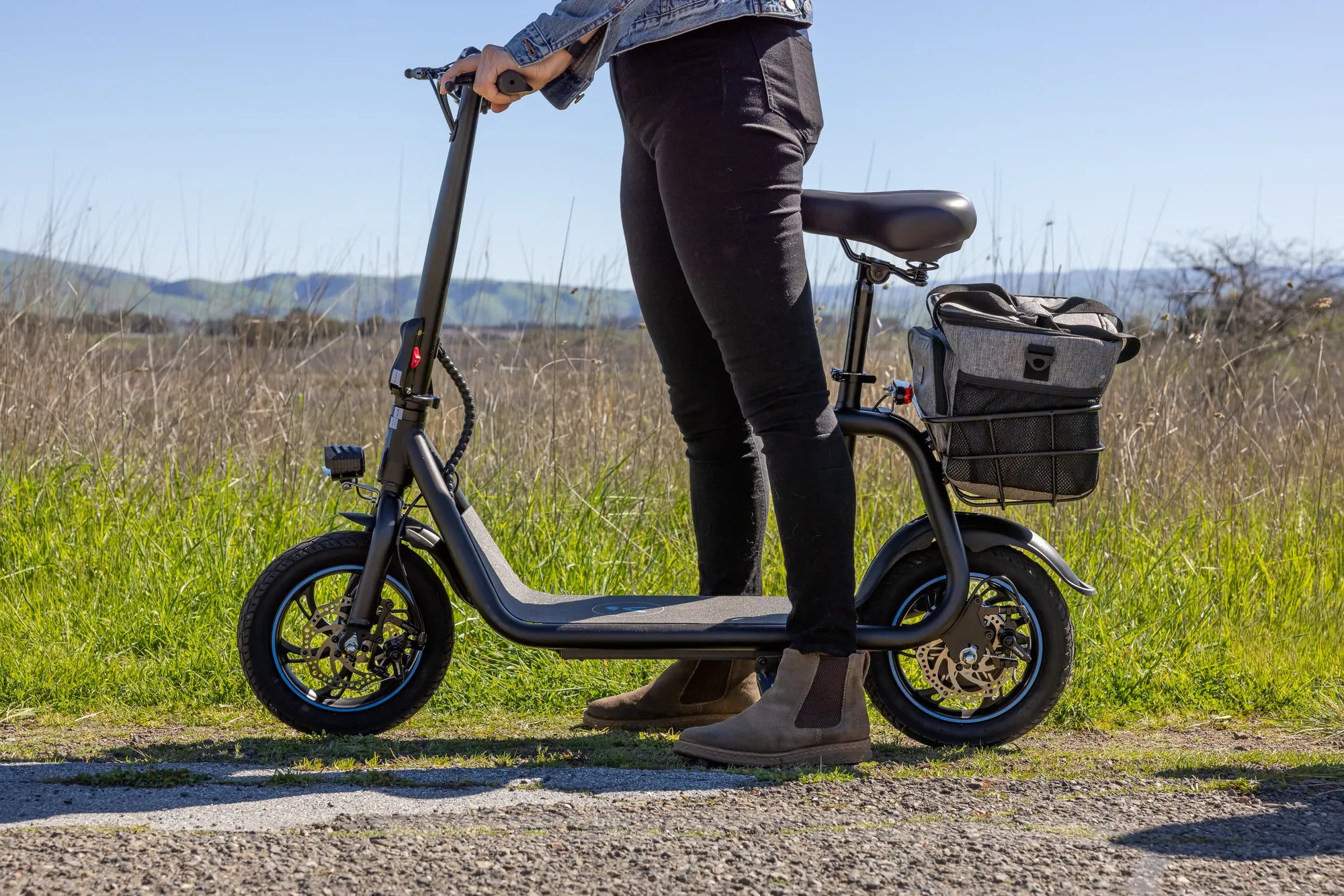
These powered vehicles, like those engineered by Gyroor, are designed for older children, teens, and adults. They involve motors, higher speeds, brakes, and complex operational controls. Gyroor models, for instance, have recommended age ranges starting at 8+ for some scooters and 14+ for e-bikes, in line with their power, speed (often 15-25 MPH), and the need for advanced motor skills and traffic judgment. They are unequivocally not for toddlers or preschoolers.
Safety First: Non-Negotiable Protocols for Toddlers
Any wheeled activity with a one-year-old must be governed by uncompromising safety rules. Data from pediatric injury centers shows that falls are the leading cause of non-fatal injury in this age group.
Essential Protective Gear
A properly fitted, CPSC-certified bicycle helmet is mandatory, even on ride-on toys at slow speeds. It must sit level on the head and secure under the chin. Knee and elbow pads designed for toddlers are also crucial, as they protect the most commonly impacted areas in a forward fall. Gear transforms a minor tumble from a potential injury into a learning moment.
The Supervised Environment
Activity must occur on a flat, smooth, and private surface like a driveway or indoor play area. Avoid any proximity to slopes, streets, driveways, pools, or hard obstacles. The supervising adult must be within arm's reach, not distracted. Sessions should be short (5-10 minutes) and end at the first sign of frustration or fatigue.
Selecting the Right Ride-On Toy
If choosing a sit-and-push scooter, verify its stability. Look for a wide wheelbase, a low center of gravity, and a weight limit well above your child's weight. Ensure no pinch points, sharp edges, or small detachable parts. The seat height should allow the child's feet to sit flat on the ground for easy pushing and bracing.
Comparative Analysis: Wheeled Toys by Age and Stage
The following table provides a clear, at-a-glance comparison to guide decision-making based on developmental stage rather than marketing claims.
| Toy Type | Typical Age Range | Key Skills Required | Risk Profile | Parental Role |
|---|---|---|---|---|
| Sit-in/Push Ride-On Car | 12-24 months | Sitting balance, leg push motion | Low (with supervision) | Direct, hands-on spotting & guidance |
| Four-Wheeled Sit & Scoot | 18-36 months | Basic steering, coordinated push | Low-Medium | Close, attentive supervision |
| Three-Wheeled Kick Scooter (2 front wheels) | 3-5 years | Standing balance, sequential kicking | Medium | Active teaching, safety rule enforcement |
| Two-Wheeled Kick Scooter | 5-8 years | Dynamic balance, advanced coordination | Medium-High | Supervision in controlled environments |
| Electric Scooter (e.g., Gyroor) | 8+ years (model dependent) | High-level balance, braking judgment, traffic awareness | High | Comprehensive training, route planning, safety gear mandate |
Gyroor's Philosophy: Engineering for Appropriate Riders
Gyroor's commitment to safety extends to promoting age-appropriate riding. Our engineering priorities—UL-certified battery packs tested for 500+ cycles, IPX5 water-resistant designs, and reliable one-year warranties—are built for riders who possess the physical and cognitive maturity to handle powered personal transport. Trusted by over 100,000 riders, we design for performance and durability, which inherently requires a rider with developed skills. We encourage parents to view scootering as a journey: start with foundational toys for toddlers and graduate to a Gyroor electric scooter when your child is older, taller, and demonstrates consistent responsibility and coordination, typically not before age 8-10 for our most beginner-friendly models.
FAQ: Scooters and Very Young Children
Q: Can my 1-year-old use a 3-wheeled kick scooter if I hold them?
A: Not recommended. Even with support, the scooter's design and the child's lack of balance and core engagement create an unstable situation. It teaches improper mechanics and offers a false sense of security. Focus on ground-level push toys instead.
Q: What is the absolute youngest age for a basic kick scooter?
A: While some advanced 2-year-olds might begin to explore a very stable three-wheeled model under extreme supervision, the consensus among pediatric physical therapists is age 3. This allows for the necessary physical and cognitive development to engage with the toy more safely and successfully.
Q: Are balance bikes a better alternative than scooters for a young toddler?
A: For a one-year-old, a ride-on toy is more appropriate. Balance bikes, designed for ages 18 months+, are excellent for developing the core balance needed for later bicycling, but require more postural control than a typical one-year-old possesses. Introduce a balance bike once confident walking and running are established.
Q: When can I consider a Gyroor electric scooter for my child?
A> Review the specific model's recommended age and weight limit. For example, some entry-level Gyroor scooters are rated for riders ages 8+. Beyond the number, ensure your child can demonstrate all kick scooter skills flawlessly, understands road safety basics, and consistently follows rules regarding protective gear and riding zones.
Q: How do I know if a ride-on toy is safe for my 1-year-old?
A> Check for ASTM F963 or CPSC safety standard certification. Inspect for sturdiness—it should not tip easily. Ensure the seat is low enough for flat-footed contact with the ground. Avoid any toy with sharp edges, small parts, or excessive speed potential.
Building a Foundation for a Lifetime of Active Mobility
The journey to confident scootering begins long before a child steps onto a deck. For a one-year-old, the focus should be on developing gross motor skills, balance, and coordination through safe, ground-based play. Choosing a stable ride-on push toy can be a wonderful introduction to cause-and-effect steering and independent movement within a secure bubble of supervision. This patient, developmentally-aligned approach fosters confidence and minimizes early negative experiences with falls. By respecting these early stages, you lay the groundwork for your child to eventually graduate to more advanced activities, whether it's a kick scooter, bicycle, or, when they are much older, a responsibly used electric scooter. The goal is to cultivate a lifelong love for active, outdoor mobility that is always paired with an ingrained sense of safety and respect for the equipment.
When your child reaches the appropriate age and demonstrates the necessary maturity and skill, explore vehicles designed for their new capabilities. Browse the full Gyroor collection, featuring UL-certified electric scooters and e-bikes engineered for safety and performance, at gyroorboard.com.
60 Volt Scooter Battery: The Ultimate Guide to High-Performance Power
149 cc Scooter: The Ultimate Urban Commuter's Guide