



Navigating the Rules for Young Riders
Parents and guardians often ask, can a kid ride a dirt bike on the road? The short answer is almost universally no, for a standard, unmodified dirt bike. The complete answer is a complex web of vehicle equipment laws, state-specific licensing requirements, and age restrictions that make it illegal and highly unsafe. This question touches on legal liability, parental responsibility, and the fundamental design differences between off-road and on-road vehicles.
Understanding these regulations is crucial not just for dirt bikes, but for all forms of youth mobility. While Gyroor specializes in UL-certified electric scooters and e-bikes, we believe comprehensive knowledge of transportation laws protects every family. This guide will dissect the legal landscape, explain why dirt bikes are built for trails, and highlight safer, legal alternatives for young adventurers.
You will learn the specific equipment a vehicle needs for street legality, how state laws treat minors operating motorized vehicles, and the realistic process of converting a dirt bike. We'll also cover the severe risks and liabilities of ignoring these laws. The goal is to ensure family fun is built on a foundation of safety and compliance, not legal jeopardy.
What Defines a "Dirt Bike" vs. a "Street-Legal Motorcycle"?
A dirt bike is engineered specifically for off-road use on unpaved terrain. Its design prioritizes lightweight frames, high ground clearance, aggressive knobby tires, and high-performance suspension. Critically, manufacturers omit the standard equipment required by state Departments of Motor Vehicles (DMVs) and federal regulations for lawful operation on public roads. This omission is intentional, defining its off-road-only status.
In contrast, a street-legal motorcycle, including dual-sport and adventure bikes, comes from the factory with a full complement of road-required features. These are not optional accessories but mandatory components for registration and licensing. The absence of even one can render the vehicle illegal for road use, regardless of the rider's age or license.
The key missing components on a typical dirt bike include a headlight with high and low beams, a brake-activated tail light, turn signals front and rear, rearview mirrors (usually one on each side), a horn audible from a specific distance, a speedometer, and a license plate mount with illumination. Furthermore, the tires must be DOT-approved for highway use, which most knobby dirt tires are not.
Beyond equipment, the bike must have a valid Manufacturer's Certificate of Origin (MCO) that allows for a street-legal title. Most dirt bikes have an MCO stating "For Off-Road Use Only," which immediately blocks standard registration. This legal and mechanical chasm between a dirt bike and a street-legal motorcycle is the primary reason the answer to 'can a kid ride a dirt bike on the road' is a definitive no in its stock form.
The Legal Landscape: State-by-State Rules for Minors and Vehicles
Even if a vehicle is street-legal, a child's ability to operate it on public roads is governed by strict state laws with no federal uniformity. These laws layer vehicle requirements with operator licensing and age restrictions, creating a high barrier for minors. Ignorance of these laws can result in fines, vehicle impoundment, and devastating liability in an accident.
First, the operator typically needs a valid driver's license with a motorcycle endorsement (often called an "M" endorsement). The minimum age for a learner's permit varies but is commonly 15 or 16. To get the M endorsement, a rider must pass a written test and a practical riding test, often waived upon completion of a Motorcycle Safety Foundation (MSF) course. Most states require riders under 18 to complete such a course.
Many states also have engine displacement (cc) or power restrictions for novice or young riders. For example, a minor with a learner's permit may be restricted to operating a motorcycle of 250cc or less. While some smaller-displacement dirt bikes might meet this cc limit, they still fail on the equipment requirements discussed earlier.
Furthermore, local county and city ordinances can impose additional restrictions, such as prohibitions on motorized vehicles on certain paths or stricter noise regulations that a modified dirt bike may not pass. The legal takeaway is clear: the path to legally riding any motorcycle on the road for a child is narrow, requires state certification, and is completely separate from making a dirt bike itself compliant.
Making a Dirt Bike Street Legal: Is It Possible and Practical?
Theoretically, it is possible to convert some dirt bike models for limited on-road use through a process called "dual-sport conversion" or "plating." However, this process is complex, costly, and often impractical, especially for a child's bike. It involves mechanical, electrical, and bureaucratic hurdles that vary dramatically by state, with states like California making it nearly impossible.
The conversion requires adding a full lighting kit (headlight, tail/brake light, turn signals), a horn, mirrors, a speedometer, and DOT-approved tires and wheels. This requires installing a stator rewinding or a high-output alternator to power the new electrical load, a wiring harness, and switches. The cost for quality parts and professional installation can easily exceed $1,000, often approaching the value of a used dirt bike.
After modification, the bike must pass a state vehicle inspection. You then take the inspection certificate, the bike's MCO, and proof of insurance to the DMV to apply for a title change and registration. Success is not guaranteed; the DMV can reject the application if the MCO states "Off-Road Only" or if the inspector deems the conversion insufficient.
For a child, this process is particularly ill-advised. The converted bike, while legal, retains its aggressive, lightweight dirt bike geometry, which can be twitchy and unstable at sustained road speeds compared to a true street motorcycle. Insurance for a modified, plated dirt bike ridden by a minor will be prohibitively expensive, if available at all. The effort and cost overwhelmingly favor simply purchasing a purpose-built, street-legal small-displacement motorcycle or exploring electric alternatives.
Safer Alternatives for Young Riders' On-Road Adventures
For families seeking legitimate on-road riding experiences for younger members, several legal and age-appropriate alternatives exist. These options provide the thrill of mobility without the legal and safety pitfalls of an illegal dirt bike conversion.
Electric Bicycles (E-Bikes): E-bikes are a fantastic gateway. Class 1 and Class 2 e-bikes (with max assisted speeds of 20 mph) are typically treated as bicycles under state law. This means no driver's license, registration, or insurance is required for riders, though age minimums often apply (e.g., 14+ in many states). They can be used on bike lanes and roads, offering a genuine sense of freedom. Brands like Gyroor offer robust, UL-certified e-bikes with reliable motors and batteries, designed for safety and durability.
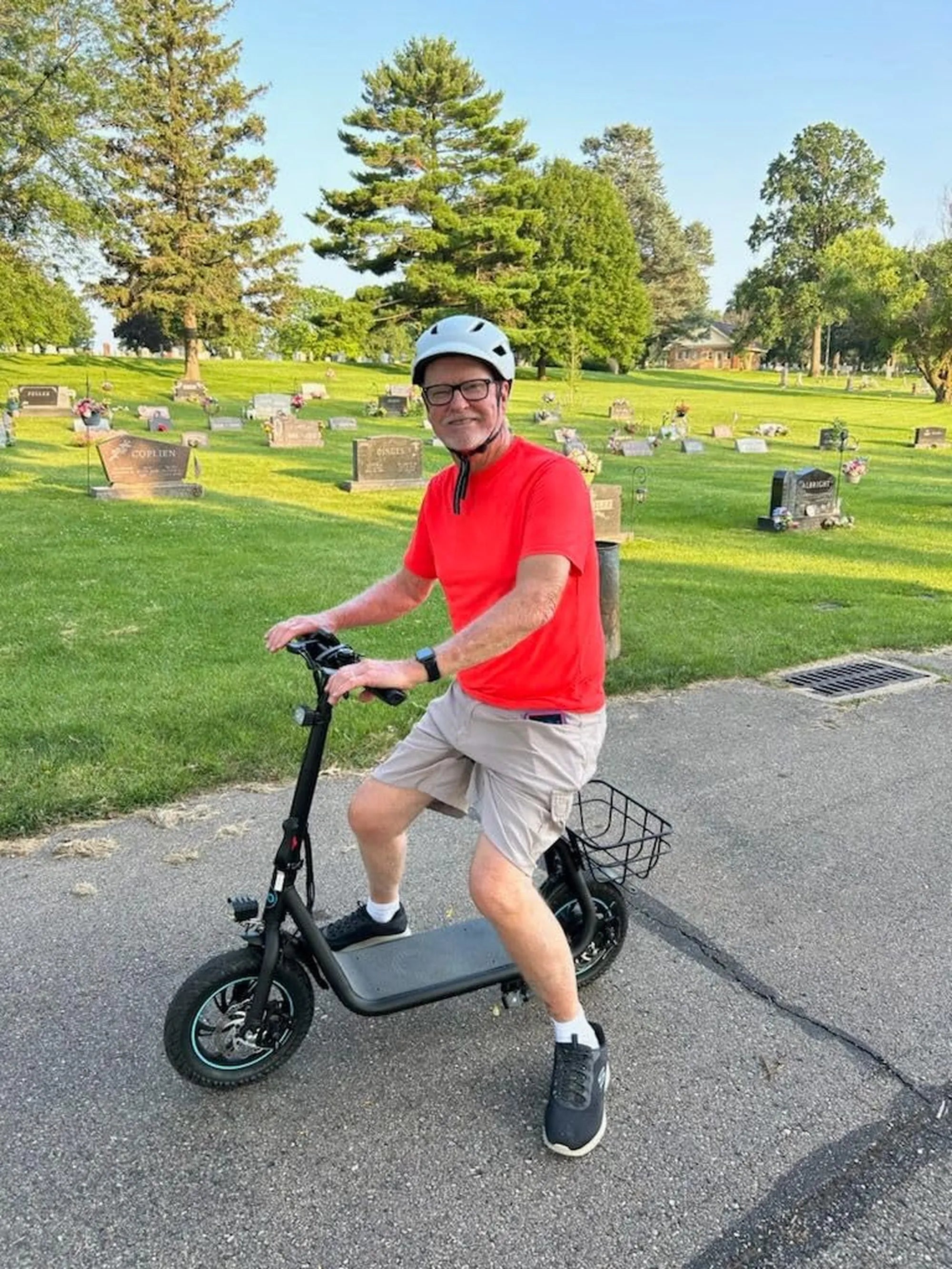
Electric Scooters: Similarly, electric kick scooters have defined legal status in most municipalities. While local laws vary, many allow riders aged 16+ to use them on bike lanes and streets with speed limits under a certain threshold. Gyroor's electric scooters, featuring IPX5 water resistance, UL-certified battery packs, and robust braking systems, provide a safe, fun, and legal alternative for teenage mobility without the need for a license.
Street-Legal Mini Bikes & Pit Bikes: Some manufacturers produce small-displacement motorcycles (like 50cc-125cc) that are fully street-legal from the factory. These include models from traditional motorcycle companies that come with all required equipment, a proper MCO, and are insurable. They are a legitimate, though license-required, option for teens who have obtained the proper permits and endorsements.
Dual-Sport Motorcycles: For the older teen with a full license, purpose-built dual-sport motorcycles (e.g., 250cc models) are designed from the ground up to be both capable off-road and fully compliant on-road. This is the correct and legal answer for someone wanting the dirt bike aesthetic and off-road capability with unambiguous street legality.
Critical Safety and Liability Considerations for Parents
Allowing a child to operate any motorized vehicle carries immense responsibility. The risks are magnified exponentially when the vehicle is not designed or legal for the environment. Understanding these risks is paramount to protecting your child and your family's financial future.
Safety Gear is Non-Negotiable: Even off-road, a DOT-approved full-face helmet, goggles, gloves, boots, and protective jacket/pants are essential. On-road, without a full cage or seatbelts, this gear is the only protection. Most states have mandatory helmet laws for minors on motorcycles.
Liability in an Accident: If a child riding an unregistered, uninsured dirt bike causes an accident or injures someone on a public road, the parent/guardian is personally liable for all damages. This includes vehicle repair, medical bills, lost wages, and pain and suffering. Homeowner's insurance policies often exclude coverage for motor vehicle accidents, especially involving illegal vehicles. The resulting lawsuits can be financially catastrophic.
Criminal and Civil Penalties: Beyond liability, parents can face criminal charges for negligence or contributing to the delinquency of a minor. The child can face charges for operating an unregistered vehicle, operating without a license, and other traffic violations. The bike will almost certainly be impounded.
Supervision and Training: Legal alternatives still require training. Enroll children in safety courses specific to their vehicle type. The MSF offers a "DirtBike School" for off-road skills. For e-bikes and e-scooters, practice in empty parking lots, teach hand signals, and instill defensive riding habits. Parental supervision is key until maturity and competence are demonstrated.
Comparison: Youth Off-Road vs. On-Road Legal Options
| Vehicle Type | Typical Age Minimum | License Required? | Road Legal? | Registration/Insurance | Best Use Case |
|---|---|---|---|---|---|
| Standard Dirt Bike | Varies (for off-road) | No (for private land) | No | No | Designated off-road trails & tracks |
| Converted "Dual-Sport" Dirt Bike | State motorcycle permit age (15-16+) | Yes (M endorsement) | Potentially, after state approval | Yes, both required | Highly impractical; not recommended for youth |
| Street-Legal Mini Motorcycle (e.g., 50cc) | State motorcycle permit age | Yes (often M endorsement or specific) | Yes | Yes, both required | Teens with full license/permits for local roads |
| Class 1/2 E-Bike (Gyroor, etc.) | Often 14+ | No | Yes, as a bicycle | No | Teens for commuting, bike paths, neighborhood roads |
| Electric Scooter (Gyroor, etc.) | Often 16+ (varies by city) | No | Yes, under local micro-mobility laws | No | Urban/suburban teens for short trips, bike lanes |
Frequently Asked Questions (FAQ)
Can a kid ride a dirt bike on the road if I supervise them?
No. Parental supervision does not override vehicle equipment laws or licensing requirements. A standard dirt bike lacks the legally mandated features for road use, and a child lacks the required license. Supervision is irrelevant to its illegality on public roads.
What about on a quiet rural road or in my neighborhood?
All public roads, including rural roads and residential streets, fall under state vehicle codes. The law does not distinguish based on traffic volume. Riding an unregistered, uninsured, non-compliant vehicle on any public road is illegal and a liability hazard.
My child has a motorcycle license. Can they ride a converted dirt bike now?
If the dirt bike has been fully, legally converted, inspected, titled, registered, and insured as an on-road motorcycle, and the child holds the correct license endorsement, then yes, it would be legal. However, as outlined, this conversion is a significant undertaking with uncertain results in many states.
Are electric dirt bikes different?
Electric dirt bikes face the exact same legal hurdles as gas-powered models. Their power source is irrelevant to the DMV. They still lack standard equipment like lights, mirrors, and signals. The question 'can a kid ride a dirt bike on the road' applies equally to electric off-road models, which are also designed for private land use only.
What are the penalties if my child is caught?
Penalties can include fines for the rider (or parent), impoundment of the bike, points on a future driver's license, and mandatory court appearances. In an accident, the civil liability for medical and property damage could reach hundreds of thousands of dollars, potentially not covered by any insurance policy.
Where can my child legally ride a dirt bike?
Legally, dirt bikes are for use on private property (with the landowner's permission) or on public lands specifically designated for off-highway vehicle (OHV) use, such as state-run OHV parks, national forests with OHV trails, and dedicated motocross tracks. Always check local regulations for specific area rules.
Prioritizing Safety and Legality for Family Fun
The pursuit of adventure for young riders should never come at the cost of safety or legal compliance. The evidence clearly shows that a standard dirt bike is an inappropriate and illegal choice for public roadways. The combination of missing critical safety equipment, stringent operator licensing laws, and grave financial liability creates an untenable risk for families.
Responsible parenting in this context means channeling a child's enthusiasm for riding into legal and age-appropriate avenues. The world of legal personal electric mobility, including e-bikes and e-scooters from trusted brands, offers incredible freedom for teens without the regulatory quagmire. For those dedicated to motorcycle riding, the path is clear: obtain the proper license and invest in a purpose-built, street-legal machine.
At Gyroor, our commitment is to provide families with safe, reliable, and legally unambiguous electric transportation. Our UL-certified e-bikes and scooters, backed by a 1-year warranty and trusted by over 100,000 riders, are engineered for real-world use where safety and performance meet. We believe fun and responsibility can, and must, go hand in hand.
Explore the full range of legal, exciting, and safe mobility options for every age. Browse the full Gyroor collection at gyroorboard.com to find the perfect vehicle for your family's next adventure, on the road, legally and confidently.
How Far Can an E-Bike Go: The Complete Range Guide
E Bike 300 lbs: The Ultimate Guide to High-Capacity Electric Bikes