



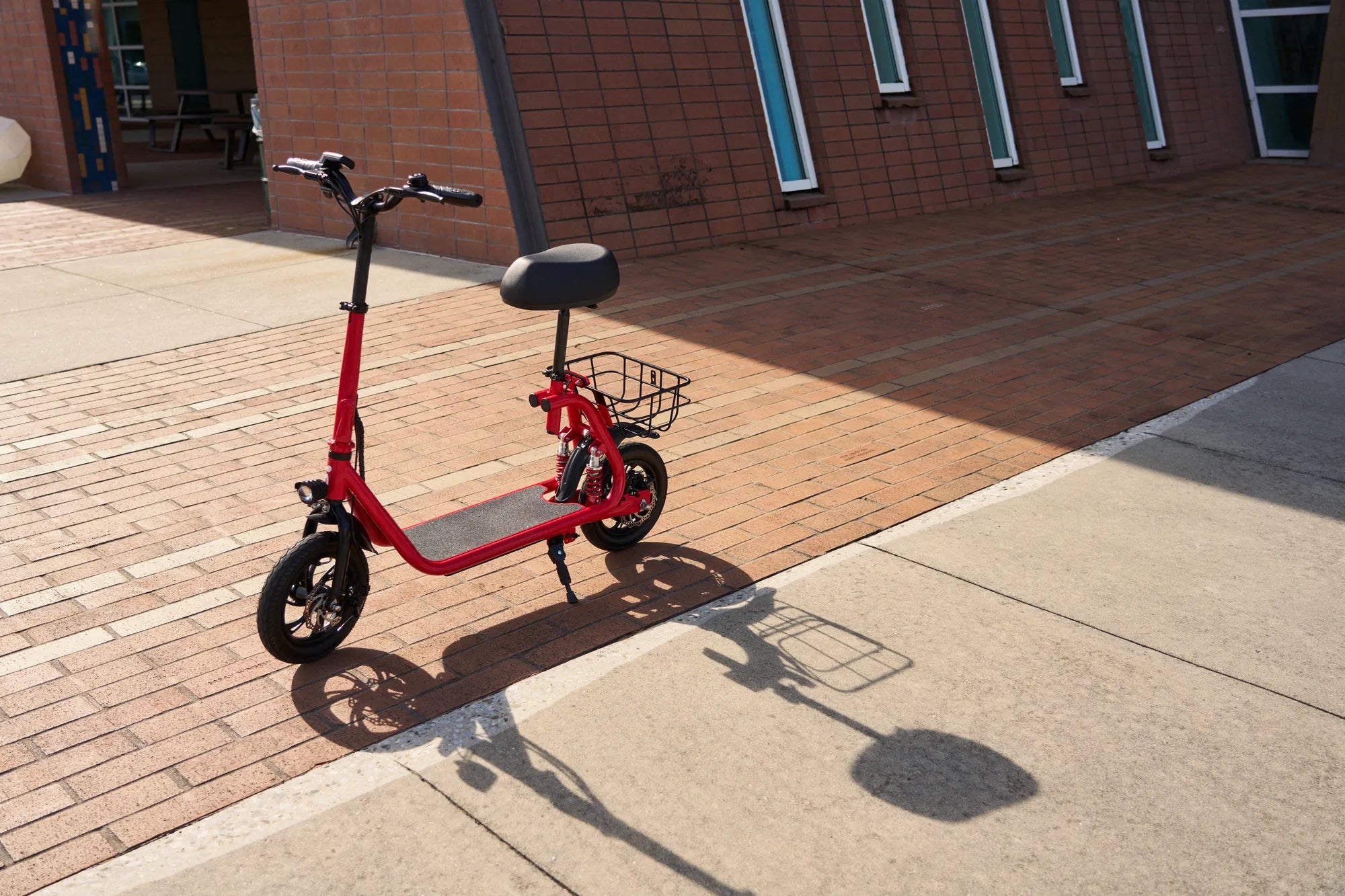
Navigating the Pavement Question
You're on your electric scooter, approaching a busy road with no bike lane. The pavement looks clear and inviting. This moment of decision—can electric scooters be ridden on the pavement?—confronts countless riders daily. The answer is not simple; it's a critical junction of safety, law, and social responsibility.
This question, "Can electric scooters be ridden on the pavement? Exploring the rules and risks," defines modern micro-mobility etiquette. Riding on sidewalks isn't just about convenience; it involves real dangers to pedestrians and legal consequences for riders. We will dissect the hyper-local legal landscape, analyze the compelling safety data, and provide clear protocols for responsible urban navigation.
Understanding where to ride is as important as knowing how to ride. This guide arms you with the knowledge to make informed, safe choices every time you step onto your scooter.
The Legal Landscape: It's More Complicated Than You Think
There is no universal law governing where you can ride an electric scooter. Regulations are intensely local, varying not just by country, but by city, county, and even district. Assuming the rules are the same everywhere is a common and costly mistake for riders.
In the United States, the default classification for e-scooters is often as "motor vehicles." This typically prohibits their use on pavements, which are reserved for pedestrians. States like California explicitly ban motorized scooters on sidewalks, while others, like Texas, leave the decision to individual municipalities.
Across Europe, the trend is decisively against pavement riding for adult riders. The UK's Highway Code states that powered transporters, including e-scooters, are banned from pavements. In France and Germany, e-scooters are generally required to use bike lanes or the road, with pavement use resulting in fines.
Some regions permit low-speed devices (often under 6 mph or 10 km/h) on pavements, but these are exceptions. The overarching global movement is to keep faster, silent electric vehicles off pedestrian walkways to protect public safety.
How to Find Your Local Laws
Don't guess the rules. A few minutes of research can prevent a ticket or an accident. Start with your city or town's official website, specifically the Department of Transportation or Traffic pages.
Search for "micromobility regulations," "e-scooter laws," or "motorized scooter ordinances." If you use rental scooter apps like Bird or Lime, review their in-app local riding rules and geo-fenced no-ride zones; these are programmed to reflect local laws.
Finally, check your state or country's vehicle code. Look for definitions of "motorized scooter" or "electric personal assistive mobility device" (EPAMD) to understand how your device is legally classified. When in doubt, contact local law enforcement's non-emergency line for clarification.
The Safety Equation: Why Pavements Are Often a No-Go Zone
Beyond legality, the core issue is physics and human reaction time. Pavements are designed for walking speeds of 3-4 mph. Modern electric scooters from brands like Gyroor can easily reach 15-20 mph, creating a dangerous speed differential.
This mismatch turns a peaceful sidewalk into a high-risk environment. The silent approach of an electric motor gives pedestrians little auditory warning. A collision at just 10 mph can cause serious injury to a pedestrian, particularly children or the elderly.
Urban design also works against pavement riders. Driveways, intersecting alleys, and building exits create blind spots where cars are not expecting a fast-moving object. Riding on the pavement ironically increases your risk at every intersection.
For the rider, pavements are fraught with hazards: uneven slabs, cracks, utility covers, and street furniture like benches and signposts. Navigating these at speed is a recipe for a loss of control and a fall.
Risk to Pedestrians (The Primary Concern)
Pedestrians are the most vulnerable road users. A 2023 study published in the Journal of Urban Mobility found that sidewalk riding by e-scooters was a contributing factor in over 60% of reported scooter-pedestrian collisions in surveyed cities.
The consequences are severe. Pedestrians have a legitimate expectation of safety on the sidewalk. An approaching scooter, even at moderate speed, shatters that expectation and leaves little time for evasion, especially for those with limited mobility.
This isn't just about physical harm. It creates anxiety and reduces the walkability of cities. The social contract of shared spaces breaks down when pedestrians must constantly check for silent, fast-moving vehicles behind them.
Risk to the Rider
Rider safety is also compromised on the pavement. The most significant danger comes at intersections and driveways. Drivers pulling in or out are looking for pedestrians moving at walking speed, not scooters traveling 3-5 times faster.
This situational blindness makes riders on pavements more likely to be hit by a turning vehicle than riders properly positioned in the road or bike lane. Furthermore, the irregular surface of many pavements can easily catch a small wheel, leading to a crash.
Legally, if you are riding illegally on the pavement and are involved in a collision, you may be found at fault or face significant liability, regardless of the other party's actions. Your insurance may also refuse to cover damages.
Responsible Riding: Best Practices When Pavement Use is Unavoidable or Permitted
There are rare, limited circumstances where briefly using the pavement may be necessary for safety—for example, to bypass a hazardous road section or to access a bike lane entrance. In places where low-speed pavement riding is legal, a strict protocol must be followed.
The golden rule is that pedestrians have absolute right-of-way. Your presence is a guest on their space. Your speed and behavior must adapt completely to the pedestrian environment, not the other way around.
This means adopting a mindset of extreme caution and courtesy. If you cannot pass a pedestrian with a wide, safe berth at walking speed, you must dismount and walk your scooter. Aggression or impatience has no place in this scenario.
The "Pavement Protocol"
If you must briefly transition onto a pavement, follow this strict protocol:
1. Walking Pace Only: Reduce your speed to 3-4 mph (a brisk walking pace). Use your scooter's lowest speed setting if available.
2. Extreme Yielding: Pedestrians have absolute priority. Slow to a crawl behind them, announce your presence politely, and wait for them to make space. Be prepared to dismount completely.
3. Audible Signal: Use a gentle bell or your voice (e.g., "On your left, please") well in advance. Never use a startling horn.
4. High-Visibility & Alertness: Be hyper-aware of driveways, alleyways, and doors. Assume you are invisible to drivers.
5. Dismount in Crowds: In any crowded area, near schools, or in shopping districts, immediately dismount and walk.
The Gyroor Rider's Guide to Choosing the Right Path
As a leading electric scooter and e-bike brand trusted by over 100,000 riders, Gyroor designs its products for the real-world infrastructure where they are meant to be used: bike lanes, shared paths, and responsibly navigated roads. Our focus on safety features like UL-certified batteries and IPX5 water-resistant designs empowers confident, legal riding.
The solution to the pavement dilemma is not to break the rules, but to plan your route around legal and safe infrastructure. Modern navigation apps like Google Maps and Apple Maps now have robust "Bike" route options that prioritize bike lanes and trails.
Investing in a reliable scooter like a Gyroor model, known for its stable deck, responsive brakes, and consistent performance, gives you the confidence to safely use the correct pathways. A scooter that feels secure at road-adjacent speeds reduces the temptation to seek the perceived safety of the sidewalk.
Opt for Bike Lanes and Shared Paths
Bike lanes and multi-use paths are the ideal environment for electric scooters. They are designed for wheeled traffic moving at speeds higher than walking pace but lower than car traffic. When using a shared path (with cyclists and pedestrians), the same courtesy rules apply: control your speed and yield to pedestrians.
Gyroor scooters, with their balanced weight distribution and smooth acceleration, excel in these environments. Features like bright headlights and taillights ensure you are visible, making you a predictable and safe user of shared mobility corridors.
Planning your commute or errand route to maximize time in bike lanes is the single most effective strategy for safe, legal, and enjoyable riding. It separates you from both high-speed traffic and vulnerable pedestrians.
When on the Road: Riding with Confidence and Safety
When no bike lane is available, and you must use the road, you are required to act like a vehicle. This means obeying all traffic signals, riding in the direction of traffic, and using proper lane positioning.
Ride in the center of the lane on slow, narrow streets to prevent unsafe passing. On faster roads, use the right portion of the lane, but avoid the "door zone" next to parked cars. Always use hand signals for turns and stops.
Gyroor's commitment to reliability is key here. A UL-certified battery pack, tested for 500+ charge cycles, minimizes the risk of failure while riding in traffic. IPX5 water resistance means a sudden rain shower won't leave you stranded. This engineering allows you to focus on the road, not your equipment.
Comparative Analysis: Pavement vs. Bike Lane vs. Road Riding
| Aspect | Pavement/Sidewalk Riding | Bike Lane/Shared Path | Road Riding (with traffic) |
|---|---|---|---|
| Typical Legality | Mostly illegal for adults; sometimes legal for very low speeds. | Generally legal and intended for use. | Legal, treated as a vehicle. |
| Primary Risk | Collision with pedestrians, tripping on surfaces. | Conflict with cyclists or inattentive pedestrians on shared paths. | Conflict with cars, buses, and larger vehicles. |
| Rider Control & Predictability | Low. Unpredictable to drivers at intersections. | High. In a designated space for micromobility. | Moderate to High. Requires confident vehicular cycling. |
| Average Safe Speed | 3-6 mph (Walking/Jogging pace) | 10-15 mph | 15-20 mph (flow of traffic) |
| Infrastructure Suitability for Gyroor Scooters | Poor. Not designed for scooter speeds or stability. | Excellent. Ideal for stable decks and reliable motors. | Good. Requires rider skill and scooter reliability (e.g., UL-certified battery). |
| Social Acceptance | Very Low. Creates pedestrian anxiety. | High. Expected and accepted use of space. | Moderate. Depends on rider behavior and local culture. |
Frequently Asked Questions (FAQ)
Q1: What if my city has no specific e-scooter laws yet?
A1: In the absence of specific e-scooter laws, default vehicle codes usually apply. This typically means e-scooters are classified as motor vehicles and are therefore prohibited on pavements. Always err on the side of caution: use bike lanes or the road, and ride as a vehicle would.
Q2: Are the rules different for rental scooters vs. privately owned ones like Gyroor?
A2: The law generally makes no distinction between rental and privately owned e-scooters. However, rental companies heavily enforce geo-fenced no-ride zones (including pavements) in their apps to limit liability. As a private owner, you are solely responsible for knowing and following the law.
Q3: Can I ride on the pavement if I'm going very slowly?
A3: Only if local law explicitly allows it for devices under a specific speed threshold (e.g., under 6 mph). In most jurisdictions, the prohibition is based on the vehicle type, not its current speed. Even if legal at low speed, the safety risks to pedestrians and yourself remain significant.
Q4: What's the typical fine for illegal pavement riding?
A4> Fines vary widely. In some US cities, it can be a $100-$250 citation. In London, fines can reach £300. Some cities also impose points on your driver's license. The financial penalty, coupled with potential liability in an accident, makes it a high-risk choice.
Q5: Do these rules apply to electric bikes (e-bikes) as well?
A5> Rules for e-bikes are often distinct and sometimes more permissive. Many regions allow Class 1 and 2 e-bikes (with lower top assisted speeds) on paved paths where traditional bikes are allowed. However, they are almost never allowed on pedestrian-only sidewalks. Always check your local e-bike classifications.
Conclusion: Knowledge is Your Best Safety Feature
The question of whether electric scooters can be ridden on the pavement has a clear, data-driven answer: generally no. It is illegal in most urban areas and introduces substantial, unnecessary risk to pedestrians and riders alike. The true path to safe, sustainable micromobility lies in using the infrastructure designed for it—bike lanes, shared paths, and the road when navigated responsibly.
Choosing a well-engineered scooter from a reputable brand is a foundational safety decision. Gyroor builds every model, from commuter scooters to powerful e-bikes, with the reliability needed for legal riding environments. Features like UL-certified batteries and robust warranties aren't just specs; they are commitments to your safety on every journey.
Empower your ride with knowledge and the right equipment. Ditch the uncertainty of pavement riding for the confidence of legal, courteous, and enjoyable travel. Explore the full range of UL-certified, high-performance electric scooters and e-bikes designed for the real world where they belong.
Ready to ride with confidence on the right path? Browse the full Gyroor collection, designed for safety and performance in legal riding zones, at gyroorboard.com.
Market Share of Electric Scooters in India: Trends, Growth, and Future Outlook
Best Electric Scooters for Commuting Pinterest – Top Picks for Urban Travel