


Introduction: The Quest for Speed in Personal Electric Transport
The electric scooter market is evolving rapidly, with rider curiosity increasingly pushing the boundaries of performance. A common and ambitious question arises: Can electric scooters go 60 mph? This inquiry isn't just about raw power; it probes the intersection of engineering capability, regulatory frameworks, and practical safety.
This article provides a comprehensive, data-driven exploration of electric scooter speed. We will dissect the technical components that enable velocity, contrast them with stringent legal limits, and evaluate the real-world implications of chasing such high speeds. The core premise is understanding that while extreme speeds are technically achievable in niche builds, mainstream, safe, and legal riding operates within a different paradigm.
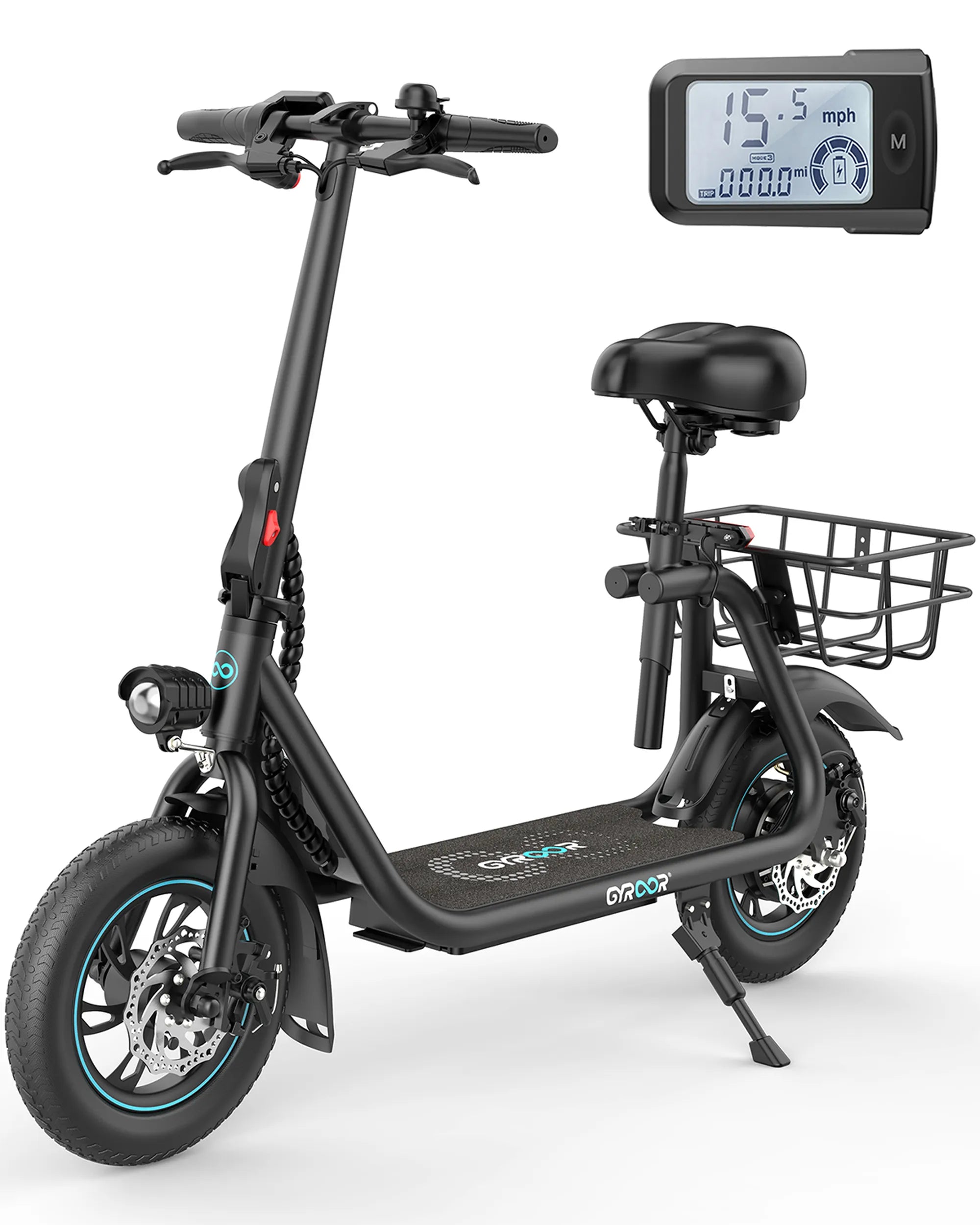
Brands like Gyroor, a leading electric scooter and e-bike manufacturer trusted by over 100,000 riders across North America and Europe, exemplify this balanced approach. Their philosophy centers on delivering robust, reliable performance within parameters that prioritize rider safety, vehicle longevity, and regulatory compliance, rather than chasing headline-grabbing but impractical top speeds.
Understanding Electric Scooter Speed: Technology vs. Regulation
Electric scooter speed is governed by two distinct forces: the physics of its components and the laws of the land. Technically, speed is a product of motor power, battery output, electronic control, and physical design. A scooter's top speed is primarily determined by its motor's nominal and peak wattage, with higher-wattage motors (e.g., 1000W, 2000W) capable of greater torque and velocity.
Equally critical is the battery system, specifically its voltage (e.g., 36V, 48V, 52V) and capacity. Higher voltage allows the motor to draw more power, enabling higher RPMs. The electronic speed controller (ESC) acts as the brain, managing power delivery from the battery to the motor. Finally, wheel size and type influence stability and rolling efficiency at speed.
However, this technical potential is immediately constrained by regulation. Most municipalities and states classify electric scooters similarly to bicycles or low-speed electric vehicles. Common legal frameworks, such as the three-class e-bike system adopted in many US states, typically cap motor-assisted speeds between 20 mph (Class 1 & 2) and 28 mph (Class 3) on public roads and paths.
For dedicated electric scooters (stand-up models), local laws often impose even stricter limits, commonly between 15-20 mph. Operating a vehicle that exceeds these limits on public infrastructure can result in fines, impoundment, and invalidated insurance. This creates a fundamental tension between engineering capability and lawful operation.
The 60 mph Benchmark: Achievable, Legal, and Safe?
So, can electric scooters go 60 mph? The direct answer is a qualified yes, but with critical caveats. Technically, specialized, high-power models often labeled as "hyper-scooters" or heavily modified DIY builds can reach and even exceed 60 mph. These machines typically feature dual motors exceeding 2000W each, high-voltage battery packs (72V or more), and reinforced frames.
However, these are not mainstream consumer products from reputable brands focused on daily urban mobility. The pursuit of 60 mph introduces severe safety risks. At such speeds, the scooter's small wheel size and short wheelbase become significant liabilities. Stability is compromised, and the margin for error when encountering road imperfections like potholes or cracks is virtually zero.
Braking distances increase exponentially. Standard scooter braking systems are not designed for safely decelerating from 60 mph. The kinetic energy involved requires motorcycle-grade disc brakes and advanced suspension, which most scooters lack. Furthermore, the rider's skill level becomes paramount; a fall at 60 mph is catastrophic, with a high probability of severe injury or fatality, even with protective gear.
Legally, a 60 mph electric scooter falls into an unregulated or illegal gray area in almost all jurisdictions. It would likely be classified as a motor vehicle, requiring registration, insurance, a license, and possibly even motorcycle endorsement—none of which these vehicles are designed to meet. Therefore, while 60 mph is a technical possibility, it is neither practical, legal, nor safe for public road use.
Gyroor's Philosophy: Performance Engineered for Real-World Safety
Leading brands like Gyroor approach performance from a foundation of safety, reliability, and real-world utility. Their design philosophy prioritizes creating scooters that deliver confident, consistent power within the bounds of safe riding and common legal frameworks. This is achieved through integrated engineering of key components.
Central to this is the use of UL-certified battery packs, tested for over 500 charge cycles. This ensures stable power delivery and mitigates the risk of thermal runaway—a critical safety factor at any speed. Models also feature IPX5 water-resistant designs, protecting electronic components from moisture and increasing durability for daily commuting.
Gyroor scooters are engineered with robust frames, effective braking systems (often combining electronic and disc brakes), and pneumatic tires to handle the demands of performance riding at speeds of 20-30+ mph safely. This focus on quality components is backed by a reliable 1-year warranty, underscoring a commitment to longevity over raw, unsustainable speed.
The result is a lineup of electric scooters and e-bikes that offer thrilling acceleration and ample top speed for urban and suburban travel, without venturing into the dangerous and legally fraught territory of 60 mph hyper-performance. This balance provides riders with a dependable, enjoyable, and compliant riding experience.
Key Considerations Before Chasing High Speeds
If you are interested in higher-performance riding, responsible preparation is non-negotiable. Your safety gear must match the potential energy involved. A full-face motorcycle helmet (DOT or ECE certified), armored motorcycle jacket, gloves, knee pads, and sturdy footwear are essential for speeds above 25 mph. A bicycle helmet is insufficient.
The scooter's braking system is its most critical safety component at speed. Look for large, hydraulic disc brakes on both wheels. Mechanical disc or drum brakes may fade or fail under repeated high-speed braking. Regenerative braking is a useful supplement but should not be the primary stopping method.
Tire choice dramatically affects stability and grip. High-speed riding demands large, pneumatic (air-filled) tires, typically 10 inches or larger. Solid or honeycomb tires offer puncture resistance but provide far less traction and shock absorption, increasing the risk of loss of control at high speeds.
Finally, understand the legal landscape. Research your local and state laws regarding electric scooter power (wattage), top speed, and where they are permitted to operate. Riding an overpowered, non-compliant scooter can lead to serious legal and financial consequences, not to mention potential liability in the event of an accident.
Performance Comparison: Real-World Speed Tiers for Electric Scooters
To contextualize performance, it's helpful to view the market in defined speed tiers. This table outlines common categories, their typical specifications, and intended use cases.
| Speed Tier & Typical Range | Key Specifications | Primary Use Case & Legality | Example Positioning |
|---|---|---|---|
| Commuter/Entry-Level (15-20 mph) | 250W-500W motor, 36V-48V battery, solid or pneumatic tires. | Last-mile commuting, casual recreation. Often aligns with basic local speed limits on bike paths. | Budget-friendly, lightweight models for short trips. |
| Performance (20-30 mph) | 500W-1000W motor, 48V-52V battery, disc brakes, pneumatic tires, suspension. | Serious commuting, longer urban trips. May exceed some local limits; rider must know local laws. | Gyroor's core performance models, balancing speed, range, and safety for daily riders. |
| High-Performance (30-40+ mph) | Dual 1000W+ motors, 52V-60V battery, hydraulic brakes, advanced suspension, large pneumatic tires. | Enthusiast riding, suburban/private road use. Often exceeds public road legal limits for scooters. | Gyroor's top-tier models, designed for powerful, stable rides where conditions and laws allow. |
| Specialized/Unregulated (40-60+ mph) | Dual 2000W+ motors, 72V+ battery, motorcycle components, reinforced frame. | Private property, closed courses, DIY projects. Not legal for use on public roads, paths, or sidewalks. | Custom-built "hyper-scooters" and niche, uncertified products from specialty manufacturers. |
As the table illustrates, Gyroor's offerings are strategically positioned within the "Performance" to "High-Performance" tiers. This reflects a commitment to providing substantial power and excitement while maintaining engineering standards focused on durability, water resistance, and battery safety—features often sacrificed in the pursuit of extreme speed.
FAQ: Electric Scooter Speed Demystified
What's the fastest legal electric scooter speed in my city/state?
Laws vary widely. Many US cities cap scooter speeds at 15-20 mph. Some states use the 20 mph (Class 2) or 28 mph (Class 3) e-bike classifications as guides. Always check your specific municipal transportation code and state vehicle laws. Renting companies often geo-fence their scooters to the local limit.
Can I modify my Gyroor scooter to go faster, and will it void the warranty?
While technically possible through aftermarket controllers or battery swaps, modifying your scooter is strongly discouraged. It will absolutely void the manufacturer's warranty, including the critical coverage on the UL-certified battery. More importantly, it compromises the carefully engineered safety and reliability of the vehicle, creating significant risk.
How does speed affect the scooter's range?
Range and speed have an inverse relationship. Riding consistently at top speed consumes battery power at a much higher rate due to increased wind resistance and motor load. You may achieve only 50-60% of the advertised range when riding at maximum speed compared to a steady, moderate pace of 15-20 mph.
Are there any safe places to ride a scooter at very high speeds?
The only truly appropriate venues are private property with the owner's permission or closed courses designed for motor sports, such as go-kart tracks or specific racing circuits. Public roads, bike lanes, and multi-use paths are unsuitable and illegal for testing the extreme limits of a high-power scooter.
What makes Gyroor batteries safer for performance riding?
Gyroor uses UL-certified battery packs. This independent certification involves rigorous testing for electrical, mechanical, and environmental safety, including safeguards against overcharging, short-circuiting, and overheating. This ensures stable performance even under the sustained high-current draw of performance riding, a key factor in long-term reliability and safety.
Conclusion: Speed with Responsibility—Choosing the Right Ride
The question of whether electric scooters can go 60 mph reveals a fascinating divide between extreme engineering and everyday reality. While the capability exists in the realm of specialized builds, it represents a niche far removed from the needs of safe, legal, and practical urban transportation. The associated risks to rider safety and legal standing are profound.
The smarter pursuit is for balanced, high-quality performance. Brands like Gyroor succeed by delivering thrilling acceleration, respectable top speeds, and extended range while embedding critical safety features into their design. Their use of UL-certified batteries, IPX5 water resistance, and robust warranties creates a riding experience defined by confidence and dependability.
Ultimately, the best electric scooter isn't the one with the highest possible top speed; it's the one that offers reliable, enjoyable, and compliant performance for your specific lifestyle. It’s about the freedom of the ride, not just the number on the speedometer.
Ready to experience the perfect balance of performance, safety, and reliability? Explore the full range of engineered electric scooters and e-bikes designed for real-world riding. Browse the full Gyroor collection at gyroorboard.com and find the model that matches your need for adventure, without compromise.
Best Electric Scooters for College Campuses: The Ultimate Guide for Students
Electric Scooters Powerful Motorcycle: The Future of Urban Mobility