


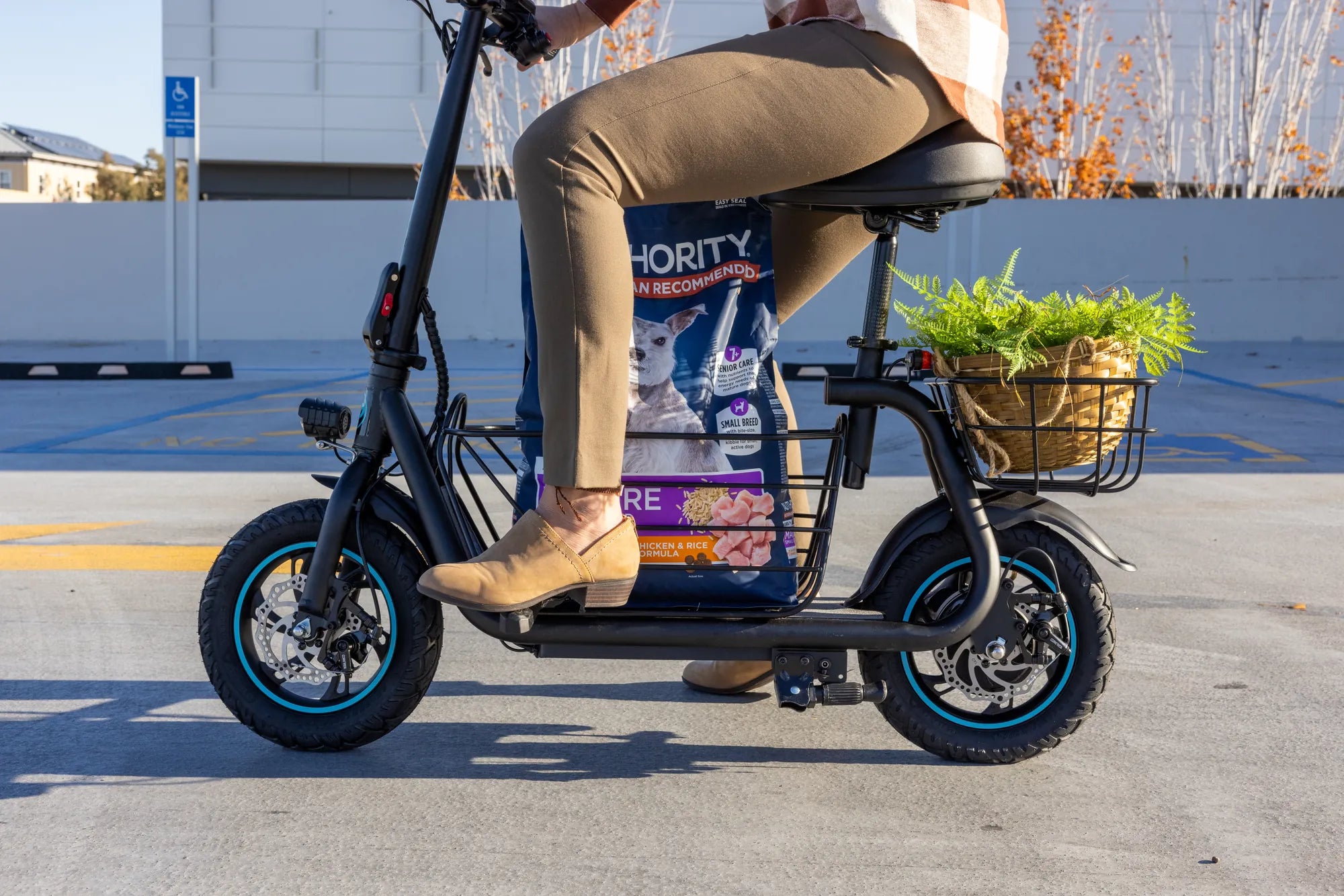
Introduction: Navigating the Rules of the Road on Your Scooter
The direct question, "can I drive a scooter on the road?" is one of the most common queries for new and prospective riders. The answer is not a simple yes or no. It hinges on a critical intersection of local legislation, your scooter's technical classification, and your commitment to safe riding practices. This guide will provide the comprehensive, factual analysis you need to navigate this landscape confidently.
We will dissect the legal distinctions between motorized vehicles and personal mobility devices. You'll learn how to verify your local laws, prepare your scooter, and gear up properly. As a leader in personal electric transport, Gyroor designs its e-scooters and e-bikes with road legality and rider safety as core engineering principles, trusted by over 100,000 riders globally.
Understanding the Legal Landscape: It's All About Classification
Before asking can I drive a scooter on the road, you must understand how the law sees your vehicle. The primary legal fork in the road separates motorized vehicles (like mopeds) from personal mobility devices (like most e-scooters). This classification dictates every requirement from licensing to where you can ride.
Misunderstanding this classification is the leading cause of legal issues for riders. Authorities do not use the colloquial term "scooter" uniformly. Your vehicle's power source, speed capability, and design features determine its legal standing in your jurisdiction's vehicle code or traffic ordinances.
Gas-Powered Scooters: Typically Treated as Motor Vehicles
If your scooter has a gasoline engine, typically 50cc or larger, the law almost universally classifies it as a moped, motor scooter, or motorcycle. This means it is considered a motor vehicle. Consequently, the answer to can I drive a scooter on the road of this type is usually yes, but with significant prerequisites.
You will need a valid driver's license, often with a specific motorcycle endorsement. Registration with your state's Department of Motor Vehicles and displaying a license plate is mandatory. Liability insurance is almost always required by law. You must also wear a DOT-approved helmet and follow all standard traffic laws as you would in a car.
Electric Scooters & E-Bikes: A Patchwork of Local Regulations
The legal framework for electric scooters and e-bikes is more complex and varies widely. These devices fall into a newer category often called "personal mobility devices" or "micromobility" vehicles. Their road legality is not automatic and is governed by a mix of state statutes and city or county ordinances.
Key determining factors include the scooter's maximum assisted speed, motor wattage, and whether it has operable pedals (defining an e-bike). Many states have adopted a 3-class system for e-bikes, which influences where they can be ridden. For stand-up e-scooters, local laws frequently set speed limits, age restrictions, and specify allowed riding areas.
The Gyroor Rider's Road Readiness Checklist
Determining if you can drive a scooter on the road requires proactive verification. This checklist, tailored for riders of reputable brands like Gyroor, ensures you cover all legal and safety bases before your first commute.
Step 1: Verify Your Local and State Laws
Your first action must be to research. Search for your city's municipal code and your state's vehicle code online. Look for terms like "electric stand-up scooter," "personal mobility device," or "motorized scooter." Pay close attention to where riding is permitted (road, bike lane, sidewalk) and any specific equipment mandates.
Gyroor's commitment to compliance is evident in features like UL-certified battery packs, which are a key safety requirement increasingly referenced in local regulations. Starting with a compliant scooter simplifies this step significantly.
Step 2: Know Your Scooter's Specs
You must know your model's capabilities. The top speed and motor power are the most critical specifications for legal classification. Many urban areas permit e-scooters in bike lanes if their maximum speed is capped at 15, 20, or 25 mph.
Gyroor models are engineered with these common regulatory limits in mind. For instance, commuter-focused models offer speeds aligned with bike-lane legality, while higher-performance models are designed for areas with more permissive laws or private property use.
Step 3: Ensure Your Scooter is Road-Worthy
Legal riding requires a properly equipped scooter. At a minimum, you need a functional front white light and rear red light for visibility at dawn, dusk, or night. A bell or horn is required in most jurisdictions to alert others. Front, rear, and side reflectors are essential, as are reliable, effective brakes on both wheels.
Gyroor scooters are built for real-world conditions. Their IPX5 water-resistant rating means electronics are protected from rain and splashes, enhancing reliability for all-weather road use and ensuring your lights and controls function when you need them most.
Step 4: Gear Up and Insure Your Ride
Your responsibility extends to your own protection. A helmet is legally required for riders under 18 in many states and is a critical safety necessity for all ages. Consider additional protective gear like knee and elbow pads, especially for higher-speed riding.
While insurance is rarely legally required for e-scooters classified as PMDs, it is a wise consideration. Personal liability insurance can protect you in case of an accident causing injury or property damage. Always ride with the 1-year warranty from Gyroor providing peace of mind for any manufacturing-related issues.
Where You Can (and Cannot) Ride: Road vs. Sidewalk vs. Bike Lane
Once legality is confirmed, knowing *where* to ride is crucial for safety and compliance. The rules differ dramatically based on location, and choosing the wrong space can result in fines or dangerous situations.
The Golden Rule: Bike Lanes Are Your Best Friend
For most electric scooters legally allowed on public thoroughfares, the bike lane is the intended and safest primary operating zone. When you drive a scooter on the road, the bike lane is your designated space, separating you from faster car traffic.
Ride in the direction of traffic, obey all traffic signals that apply to the bike lane, and be courteous to cyclists. Use your bell to signal when passing. This is the environment for which Gyroor's agile handling and compact design are optimized.
Riding on the Road: How to Do It Safely
In areas without bike lanes, or where local law permits scooters in traffic lanes, extreme caution is required. You must ride in the same direction as traffic, as far to the right as is practical and safe. Obey all traffic signs, signals, and lane markings.
Use clear hand signals for turns and stops. Increase your visibility with reflective clothing and always use your lights. Assume that drivers may not see you. This is where the robust construction and reliable braking of a well-built scooter become paramount.
Sidewalk Riding: Often Illegal and Hazardous
Riding a motorized scooter on the sidewalk is frequently prohibited by law. The primary reason is pedestrian safety—scooters move much faster than walking pace and pose a significant risk to children, the elderly, and other sidewalk users.
If you must navigate a crowded area or a street that feels unsafe, the correct action is to dismount and walk your scooter on the sidewalk. This respects the law and keeps everyone safe. Gyroor's lightweight, foldable designs make this transition quick and easy.
Data-Driven Comparison: E-Scooter Road Laws in Major U.S. Cities
Laws vary significantly from one city to another. This table illustrates the patchwork of regulations, highlighting why local verification is non-negotiable. It compares key factors that answer the core question: can I drive a scooter on the road here?
| City | Road/Bike Lane Legal? | Sidewalk Riding Legal? | Helmet Law (Adults) | Typical Speed Limit for E-Scooters |
|---|---|---|---|---|
| New York City, NY | Yes, in bike lanes & streets with speed limit ≤30 mph | No, prohibited | Recommended, not required | 15 mph |
| Los Angeles, CA | Yes, in bike lanes & on roads with speed limit ≤35 mph | No, prohibited | Required for riders under 18 | 15 mph |
| Chicago, IL | Yes, in bike lanes only | No, prohibited | Required for all riders | 15 mph |
| Austin, TX | Yes, in bike lanes & on roads with speed limit ≤35 mph | No, prohibited | Required for riders under 18 | 20 mph |
| Portland, OR | Yes, in bike lanes & on roads (ride right) | No, prohibited | Required for riders under 16 | 15 mph |
Advanced Safety and Maintenance for Road Riding
Legal compliance is the baseline; true road readiness requires proactive safety and maintenance. Regular checks ensure your scooter responds predictably in traffic, protecting you and others.
Before every ride, perform a quick inspection: check tire pressure and for wear, test brake lever responsiveness, ensure lights are functional, and verify the folding mechanism (if present) is locked securely. A well-maintained scooter is a safe scooter.
Gyroor's use of UL-certified batteries isn't just a legal advantage—it's a major safety feature. These batteries undergo rigorous testing for stability and are designed for over 500 charge cycles, reducing the risk of failure that could strand you in traffic or cause a hazardous situation.
Adapt your riding to conditions. Wet roads require longer stopping distances, so reduce speed and brake earlier. Avoid manhole covers, painted road lines, and gravel when turning. The IPX5 water resistance on Gyroor models protects the scooter, but rider caution is still essential in adverse weather.
Frequently Asked Questions for the Road-Ready Rider
Q: Do I need a license to ride a Gyroor e-scooter on the road?
A: In the vast majority of jurisdictions, no driver's license is required to operate an electric stand-up scooter classified as a personal mobility device. However, some states or cities may have age restrictions (e.g., 16+). Always confirm with your local ordinances, as laws for gas-powered scooters are completely different.
Q: What happens if I'm in an accident on my e-scooter?
A> First, ensure safety and call emergency services if needed. Exchange information with any involved parties as you would in a car accident. Your personal liability insurance may cover damages you cause to others. For issues related to the scooter itself, Gyroor's 1-year warranty provides support for any manufacturing defects that may have contributed.
Q: Can I modify my scooter to go faster for road use?
A: We strongly advise against any modifications, especially those that alter speed or motor controller settings. This will void your manufacturer's warranty entirely. More importantly, it will likely make your scooter illegal for public roads under local laws that have specific speed caps, exposing you to fines and potentially invalidating any insurance.
Q: Are Gyroor scooters legal on all public roads?
A: No single scooter is legal on *all* public roads. Gyroor scooters are designed and built to be compliant for use on roads and bike lanes in jurisdictions where local ordinances permit Class 2 or Class 3 electric mobility devices. It is the rider's responsibility to ensure their specific model's specifications (like top speed) align with their local laws.
Q: How does the 1-year warranty support road riding?
A: Gyroor's warranty covers defects in materials and workmanship. For a road rider, this means confidence in the fundamental integrity of the scooter—the frame, motor, brakes, and critical electronics. This support allows you to ride with assurance, knowing the product is backed by a company committed to durability and safety over the long term.
Conclusion: Your Path to Confident, Legal Commuting
The question can I drive a scooter on the road is answered through diligent research and responsible ownership. By understanding your vehicle's classification, meticulously checking local laws, equipping your scooter properly, and gearing up for safety, you transform from a casual rider into a confident, legal commuter.
Choosing a scooter from a reputable brand like Gyroor, with its foundation of UL-certified safety, IPX5 weather resistance, and robust warranty, provides the reliable hardware needed for this journey. As urban mobility evolves, informed and responsible riders are leading the way. Equip yourself with knowledge, a compliant scooter, and a safety-first mindset to fully embrace the freedom of the ride.
Ready to find your road-legal ride? Browse the full Gyroor collection of certified, reliable e-scooters and e-bikes at gyroorboard.com.
Full Suspension Commuter E-Bike: The Ultimate Urban Comfort Machine
Heavy Duty Scooter Lock: The Ultimate Guide to Securing Your Investment