

Introduction to Scooter Licensing: A Crucial First Step
Before you enjoy the freedom and convenience of a scooter, understanding local laws is non-negotiable. The direct answer to "can I drive a scooter without a license?" is complex and varies dramatically. It hinges entirely on two factors: the technical classification of your vehicle and the specific regulations of your city, county, and state.
As a leading electric mobility brand trusted by over 100,000 riders, Gyroor is committed to rider safety and legal compliance. This guide provides the factual framework you need to ride confidently and legally. We'll demystify scooter classifications, outline how to research your local laws, and explain why compliance protects both you and your investment.
Understanding the Types of "Scooters": It's All About Classification
Colloquially, many vehicles are called "scooters," but legally, they are distinct. Misunderstanding this classification is the primary reason riders face legal issues. The key differentiators are power source, maximum speed, design (presence of a seat), and how local legislation defines them.
Getting this right is the first and most critical step. Operating a vehicle classified as a motor vehicle without the proper license is illegal and can result in fines, impoundment, and liability. Let's break down the three main categories.
Electric Kick Scooters (e.g., Gyroor Commuter Models)
These are stand-up, personal mobility devices with a deck, handlebars, and electric motor. Typical models, like many in the Gyroor commuter line, have top speeds under 20 mph (32 km/h) and motors under 500W. In most U.S. jurisdictions, these are treated similarly to bicycles.
For these electric kick scooters, the answer to "can I drive a scooter without a license?" is often yes. They generally do not require a driver's license, vehicle registration, or insurance. However, riders must adhere to local micro-mobility ordinances which may mandate helmet use, set minimum age limits (often 16+), and restrict riding on sidewalks.
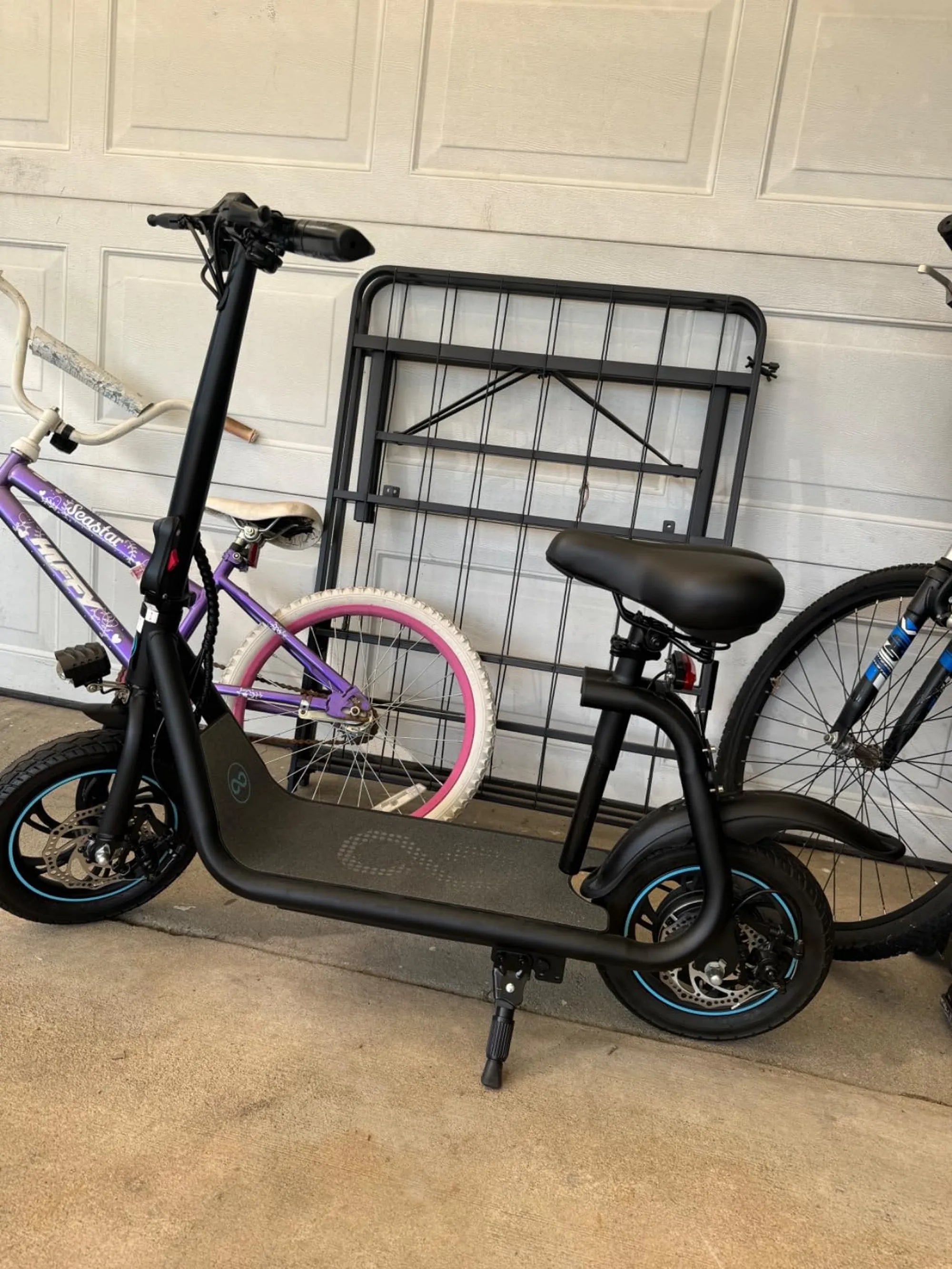
Electric Mopeds / Scooters (e.g., Gyroor Seated Models)
This category includes seated electric scooters, often with higher power (750W+) and speeds of 20-30 mph (32-48 km/h) or more. Their design and performance characteristics cause them to be classified as motorized bicycles or mopeds. This classification triggers different legal requirements.
For these e-mopeds, the answer is typically no, you cannot drive them without a license. Most states require at least a standard Class C driver's license. Many also require registration, a license plate, and sometimes specific liability insurance. Always verify with your state's DMV.
Gas-Powered Scooters and Motorcycles
All gas-powered scooters, from 50cc models upwards, are unequivocally classified as motor vehicles. They are subject to the full regulatory framework governing motorcycles. There is no legal gray area for these vehicles in any U.S. state or developed country.
Operating a gas-powered scooter always requires a valid motorcycle license (M endorsement) or a specific motor-driven cycle license, plus registration, insurance, and adherence to all traffic laws. Riding one without the proper license is a serious offense.
A State-by-State and Local Law Primer: Your Location Dictates the Rules
There is no single U.S. federal law governing electric scooters. The regulatory landscape is a patchwork of state statutes, county codes, and city ordinances. A scooter that is license-free in one city may be regulated as a motor vehicle in another just 50 miles away.
This variance makes personal research essential. Relying on general internet advice or a friend's experience in another state is a recipe for legal trouble. You must consult the primary sources for your specific location.
How to Research Your Local Regulations
Follow this systematic approach to find definitive answers for your area. First, visit your state's Department of Motor Vehicles (DMV) website. Search for terms like "motorized bicycle," "moped," "electric bicycle," or "personal mobility device." The DMV will outline state-level requirements for licensing and registration.
Second, search your city or county's official website for municipal codes. Look under "transportation" or "public works" for ordinances on "electric scooters" or "shared mobility." These local rules govern where you can ride (bike lanes vs. roads vs. sidewalks), helmet mandates, and age restrictions, even for license-free vehicles.
General Trends and Examples
While local laws differ, some trends emerge. Many states have adopted a three-class system for electric bicycles (which can influence e-scooter laws), where Class 1 and 2 (pedal-assist and throttle-assisted up to 20 mph) often do not require a license. For stand-up e-scooters, a common threshold is a motor under 750W and a top speed under 20 mph for license-free operation.
Contrasts are stark. In Portland, Oregon, certain electric kick scooters are legal on streets and bike lanes without a license. In contrast, some European countries like Germany require a license for any electric scooter with a speed over 12 mph (20 km/h). Always confirm the rules where you plan to ride.
Why Compliance Matters: Safety, Liability, and Protecting Your Investment
Complying with licensing laws is not just about avoiding tickets. It's a fundamental component of responsible ownership that impacts your safety, financial liability, and the validity of your product's warranty. Gyroor designs its scooters for safe, legal use, and operating outside those parameters carries significant risk.
Ignorance of the law is rarely accepted as an excuse by law enforcement or in a court of law. Taking the time to understand and follow regulations is the first step in being a safe rider.
Financial and Legal Risks
The immediate consequences of riding without a required license can be severe. You may face substantial fines, and your scooter can be impounded, incurring costly storage and release fees. More seriously, if you cause an accident while operating a vehicle illegally, you face severe personal liability.
Critically, using a Gyroor scooter in a manner that violates local law—such as modifying it to exceed legal speed limits or operating a model that requires a license without one—can void the comprehensive 1-year warranty. This leaves you solely responsible for any repair costs.
Safety and Insurance Considerations
The process of obtaining a driver's license ensures a baseline understanding of traffic laws, signs, and right-of-way—knowledge essential for safely navigating roads, even on a smaller vehicle. Riding without this knowledge increases accident risk.
For e-mopeds and similar vehicles where insurance is required or strongly recommended, proper licensing is a prerequisite. Insurance protects you from catastrophic financial loss in an accident. Gyroor’s commitment to safety, seen in its UL-certified battery packs and IPX5 water-resistant designs, is complemented by your responsibility to ride legally and insured.
Gyroor Models and Recommended Rider Pathways
With a clear understanding of classifications and laws, you can match the right Gyroor model to your local legal framework and intended use. Our product lineup caters to both license-free commuters and licensed riders seeking higher performance.
Choosing the correct model for your legal environment ensures you can enjoy your scooter with peace of mind, backed by full warranty support and optimized for your commute or adventure.
License-Free Riding: Ideal Gyroor Commuter Scooters
For urban commuters in areas with clear micro-mobility laws, Gyroor's electric kick scooter range is ideal. Models like the Gyroor S1 are designed for last-mile connectivity, featuring compact folding designs, motors under 500W, and speeds tailored for bike lane travel.
These scooters emphasize portability and practicality. Features like IPX5 water resistance ensure reliable performance in all weather, while UL-certified batteries guarantee safety. They are perfect for riders who need a convenient, eco-friendly alternative to cars and public transport, where local law permits.
Licensed Riding: Exploring Gyroor's High-Performance E-Mopeds
For riders with the proper license and endorsement, Gyroor's seated e-moped models offer expanded range, power, and comfort. These vehicles, with their higher-wattage motors and longer-range batteries, are designed for longer commutes or recreational trail use where permitted.
These models unlock greater utility but come with the responsibility of legal compliance. Riders must secure the required license, registration, and insurance. In return, they gain access to Gyroor's robust performance engineering and full 1-year warranty coverage for legal use.
Scooter Classification and Licensing Requirements: A Comparison Table
| Vehicle Type | Typical Power/Speed | License Required? | Registration/Insurance | Primary Use Case |
|---|---|---|---|---|
| Electric Kick Scooter | 250W-500W, under 20 mph | Usually NO (check local ordinances) | Almost never required | Short urban commutes, last-mile transport |
| Electric Moped (Seated E-Scooter) | 750W+, 20-30+ mph | YES (Standard Driver's License often required) | Often required for registration; insurance strongly recommended | Longer commutes, suburban travel |
| Gas-Powered Scooter (50cc+) | N/A, 30+ mph | YES (Motorcycle License/M Endorsement) | Registration and insurance mandatory | Primary motor vehicle replacement |
Frequently Asked Questions (FAQ)
Do I need a license for a 500W electric scooter?
It depends on its design and top speed. A 500W stand-up kick scooter capped at 19 mph likely does not require a license in many areas. However, a 500W seated scooter that can reach 25 mph will almost certainly be classified as a moped and require a driver's license. Always verify based on your specific model's capabilities and local law.
What happens if I get caught riding without a required license?
Penalties vary by jurisdiction but commonly include a substantial traffic ticket (fine). Law enforcement may impound your scooter until you can provide proof of license and pay release fees. If an accident occurs, you could be found at-fault automatically, face civil liability, and your auto insurance (if you have it) may deny coverage.
Does Gyroor provide legal guidance for my area?
As a manufacturer, Gyroor cannot provide legal advice. Laws change frequently and vary by location. We strongly urge riders to contact their local Department of Motor Vehicles (DMV) and city transportation department for authoritative, up-to-date regulations. Our US-based support team can provide detailed product specifications to aid your research.
Are there age restrictions for riding license-free electric scooters?
Yes, very commonly. Even where no license is required, many cities and states impose a minimum age, often 16 years old, for operating an electric scooter on public roads or bike lanes. Some areas may require riders under 18 to wear a helmet. These are separate from licensing laws and must be checked.
If I have a driver's license from another country, is it valid for a scooter?
This depends on your state's reciprocity agreements. Some states recognize valid foreign driver's licenses for a temporary period (e.g., 30-90 days for visitors). For long-term residents, you typically must obtain a state-issued driver's license. An International Driving Permit (IDP) alongside your foreign license may be helpful but is not a guarantee of legality. Contact your state DMV for a definitive answer.
Conclusion: Ride Smart, Ride Legal, Ride with Confidence
The freedom of scooter riding is best enjoyed on a foundation of knowledge and responsibility. The core takeaway is unequivocal: you must verify the local laws for your specific scooter type and location before you ride. Assuming you can drive a scooter without a license is a risk to your safety, finances, and warranty protection.
Gyroor stands as your partner in safe, enjoyable mobility. From our UL-certified battery packs and IPX5-rated designs to our comprehensive warranty, every product is built for reliable performance within legal frameworks. Choose the model that fits your legal riding profile, equip yourself with the right safety gear, and hit the road with confidence. Explore the full range of engineered-for-compliance electric scooters and e-bikes designed for every rider's journey.
Ready to find your perfect, legally-compliant ride? Browse the full Gyroor collection at gyroorboard.com.
ebike 20x4.0 fat tire 1000w hub motor rear wheel: The Ultimate All-Terrain Powerhouse
Portable Motor Scooter: The Ultimate Guide to Compact Urban Mobility