


Introduction: Understanding Mobility Scooter Road Legality
The question "can you drive a mobility scooter on the road?" is one of the most common and crucial for new and prospective owners. The answer is not a simple yes or no; it's a nuanced landscape defined by your specific scooter's classification, your local laws, and adherence to critical safety protocols. This definitive guide will provide you with the factual, data-driven knowledge needed to navigate public roads and pavements with confidence and legal compliance. You'll learn how to classify your scooter, understand location-specific rules, and implement essential safety practices.
Defining Your Mobility Scooter: Classifications and Key Differences
Legality hinges primarily on how your mobility scooter is officially classified. In most jurisdictions, including the UK and many parts of Europe, a formal system separates scooters based on their maximum speed and intended use. Understanding this is the first step in answering "can you drive a mobility scooter on the road?"
Class 2 Mobility Scooters are typically limited to a maximum speed of 4 mph (6.4 km/h). They are designed for use on pavements (sidewalks) and are not legally permitted on the road, except when crossing or where no pavement exists. They are not required to be registered, and the user does not need a license.
Class 3 Mobility Scooters can have a maximum speed of 8 mph (12.8 km/h). They are equipped for road use and are the only class where you can legally drive a mobility scooter on the road. They must be registered (often with a free license), feature specific safety equipment like lights, indicators, and a horn, and the user may need to be at least 14 or 16 years old. On pavements, their speed must be limited to 4 mph.
In the United States, regulations vary significantly by state, but the underlying principle is similar: faster scooters intended for road use must meet specific equipment standards, while slower models are considered pedestrian aids.
The Importance of Manufacturer Specifications
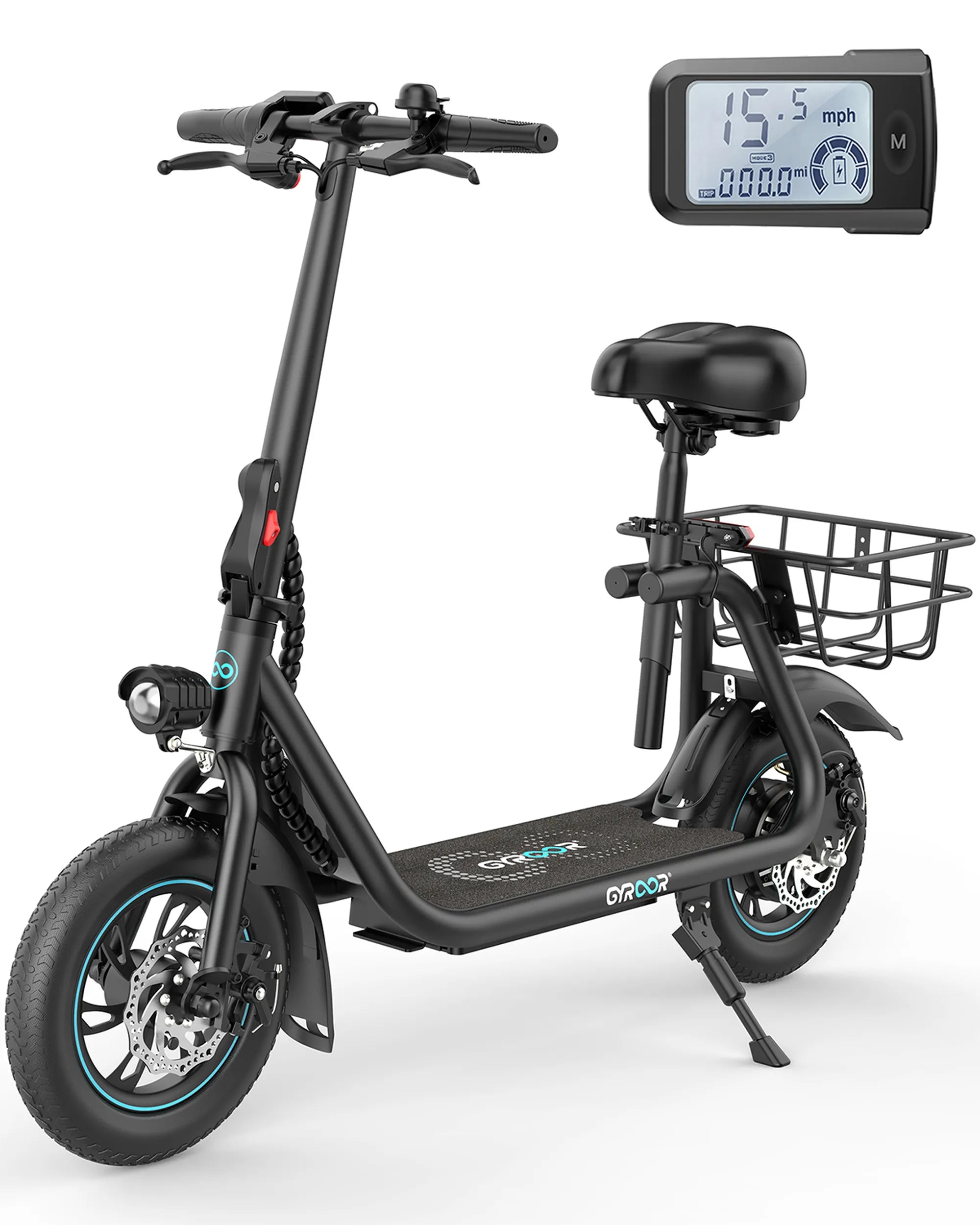
Your scooter's legal class is not a matter of preference; it is determined by its design and manufacturing specifications. The user manual and the model's technical sheet are the ultimate authorities. Before assuming you can drive your mobility scooter on the road, locate this documentation. The model number and listed maximum speed will clearly indicate its classification. Brands like Gyroor provide clear specifications for their electric mobility products, ensuring users understand the intended use case from the outset.
Navigating the Rules of the Road: A Location-Based Guide
Once you know your scooter's class, you must apply local laws. "Can you drive a mobility scooter on the road?" has different answers in London, Los Angeles, and Toronto. Always prioritize checking with your local Department of Motor Vehicles (DMV), transportation authority, or municipal government for the most current, precise regulations.
United Kingdom: The Class 2/3 system is law. Class 3 scooters are road-legal if registered with the DVLA (free), have a visible 'nil value' tax disc, and are used by someone aged 14+. They cannot be used on motorways, bus lanes, or cycle lanes.
United States: There is no federal law. Most states classify mobility scooters similarly to pedestrians. They are generally allowed on roads with speed limits under 25-35 mph when a sidewalk is absent, but specific lighting and reflector requirements apply. States like California have detailed vehicle code sections for "electric personal assistive mobility devices."
Canada: Rules are provincial. In Ontario, motorized mobility devices are allowed on roads where the speed limit is 50 km/h or less if there is no sidewalk. They must have a flag, lights, and reflectors. Alberta has similar provisions.
European Union: Regulations align with the UK model in spirit but vary by country. In Germany, for instance, small electric vehicles (including some mobility scooters) require insurance and a registration plate if they exceed 6 km/h.
Pavement (Sidewalk) vs. Road Use: When and Where
The general rule is clear: Class 2 scooters belong on the pavement, and Class 3 scooters may use the road. However, exceptions exist. A Class 2 user may need to briefly use the road to cross a street, navigate a section with no pavement, or pass an obstacle. In these cases, extreme caution is paramount.
When on the pavement, regardless of class, the rider is considered a pedestrian and must yield to foot traffic. Speed should be moderated to walking pace. On the road, a Class 3 scooter is a vehicle and must follow all applicable traffic laws, riding in the direction of traffic. The universal rule is courtesy and safety—always prioritize the safety of yourself and others.
Essential Safety Gear and Scooter Requirements for Road Use
If you are legally cleared to drive a mobility scooter on the road, your vehicle must be properly equipped. These are often legal requirements, not just suggestions.
- Lighting: Functional front white light and rear red light for use at night or in poor visibility.
- Reflectors: Red rear reflectors and amber side reflectors.
- Audible Warning Device: A horn, bell, or other effective warning instrument.
- Rear-View Mirrors: At least one mirror to monitor traffic behind you.
- Effective Brakes: Front and rear braking systems in good working order.
For the rider, high-visibility clothing (a vest or sash) is strongly recommended day and night. A safety helmet, while not always legally required for mobility scooters, is a critical piece of personal protective equipment that can prevent serious injury. Reliable brands prioritize safety; for example, Gyroor's electric scooters for adults feature UL-certified battery packs for fire safety, IPX5 water resistance for all-weather reliability, and robust braking systems—all foundational elements for safe road use.
Safety First: Best Practices for Confident Road Riding
Legality grants permission; safety ensures your journey. Adopting defensive riding techniques is non-negotiable for anyone who drives a mobility scooter on the road.
First, perform a pre-ride check. Ensure tires are inflated, lights work, and the battery has sufficient charge for your trip. Plan your route to use quieter roads with lower speed limits whenever possible. Avoid rush hour and inclement weather for your initial journeys.
Maintain situational awareness. Do not use headphones or a phone while riding. Scan the road ahead for hazards like potholes, drain covers, debris, and parked cars whose doors may open suddenly. Assume that drivers may not see you.
Mastering Road Positioning and Awareness
Your position on the road communicates your intentions and keeps you safe. Ride in the direction of traffic, as close to the curb or edge of the road as is practical and safe. Do not weave in and out of parked cars. On multi-lane roads, use the right-most lane (or left-most in countries that drive on the left).
Be particularly mindful of large vehicle blind spots. If you cannot see the driver's face in their side mirror, they cannot see you. Never linger beside a truck or bus. Make yourself as visible as possible by using your lights during the day and wearing high-vis gear.
Handling Intersections and Complex Traffic Scenarios
Intersections are high-risk areas. Where possible, use designated pedestrian crossings, dismounting and walking your scooter if that feels safer. When navigating as a vehicle, signal your intentions clearly and in advance.
At a stop sign or light, come to a complete stop. Make eye contact with drivers before proceeding. For left turns (right turns in left-driving countries), you may need to use a "box turn"—cross to the far side, re-orient, and wait for the next green light—if crossing multiple lanes of traffic feels unsafe. The key is to be predictable, patient, and proactive.
Mobility Scooter Types and Road Suitability Comparison
Choosing the right scooter for your intended use is critical. The table below compares common types against key criteria for road use.
| Type / Feature | Max Speed | Typical Range | Road Legal (Class 3) | Best For |
|---|---|---|---|---|
| Compact/Pavement (Class 2) | 4 mph (6 km/h) | 10-15 miles | No | Indoor/outdoor shopping, pavements only, easy transport. |
| Mid-Size 3-Wheel | 4-8 mph | 15-25 miles | Often Yes (check specs) | Pavements and road use, good stability, tighter turning. |
| Full-Size 4-Wheel (Class 3) | 8 mph (13 km/h) | 20-40 miles | Yes | Primary road use, longer distances, superior stability on varied terrain. |
| Heavy-Duty/All-Terrain | 8+ mph | 30+ miles | Yes (with proper equipment) | Rural roads, uneven surfaces, higher weight capacity. |
This data illustrates that if your primary goal is to drive a mobility scooter on the road, a Class 3 model—typically a mid-size or full-size scooter—is a mandatory starting point. Features like suspension, larger wheels, and higher-capacity batteries, as seen in premium models, further enhance road comfort and safety.
Legal and Insurance Implications for Road Users
Understanding the legal and financial responsibilities is part of answering "can you drive a mobility scooter on the road?".
In regions where registration is required (like for UK Class 3 scooters), it is a legal offense to use an unregistered scooter on the road. This can result in a fine. Furthermore, while a driver's license is not typically required, the user may need to meet a minimum age requirement and be capable of operating the vehicle safely.
Insurance is a critical consideration. Even if not legally required, third-party liability insurance is highly advisable. If you are involved in an accident that causes injury to a person or damage to property, you could be held personally liable. Insurance provides essential financial protection. Some home insurance policies may offer extension options, or specialized mobility scooter insurance is available.
Maintenance Checklist for Road-Worthy Reliability
A safe scooter is a well-maintained scooter. Regular checks are especially vital for road use, where mechanical failure can have serious consequences.
- Battery: Follow manufacturer charging guidelines. Use only the provided UL-certified charger. Store in a cool, dry place. Monitor for reduced range, which indicates aging.
- Tires: Check pressure monthly (for pneumatic tires). Inspect for cracks, wear, or embedded debris. Proper inflation affects stability and battery efficiency.
- Brakes: Test brake function before every ride. Listen for grinding noises and feel for reduced responsiveness, which signal the need for adjustment or pad replacement.
- Electricals: Weekly test of all lights, indicators, and the horn. Ensure connections are clean and tight.
- Frame & Connections: Periodically check for loose screws, bolts, or stem fittings. Ensure the seat is secure and all foldable parts lock firmly into place.
Adhering to a maintenance schedule not only ensures safety but also extends the lifespan of your investment. Brands that stand behind their products, like Gyroor with its reliable 1-year warranty, provide peace of mind that components are built to last.
Frequently Asked Questions (FAQ)
Do I need a license or insurance to drive my mobility scooter on the road?
A driver's license is usually not required for a Class 3/equivalent mobility scooter. However, registration with the relevant transport authority often is. Insurance, while not always a legal mandate, is strongly recommended for third-party liability protection in case of an accident.
Can I use my mobility scooter on dual carriageways or highways?
Almost universally, no. Mobility scooters are prohibited from high-speed roads like motorways, dual carriageways, highways, and interstate freeways. Their maximum speed is too low to mix safely with fast-moving traffic. Use alternative routes on local roads.
What should I do if I'm involved in an accident on the road?
First, ensure your safety and call emergency services if anyone is injured. Exchange details with any other involved parties (name, address, insurance information). Report the accident to the police, especially if there is injury or significant property damage. Notify your insurance provider as soon as possible. Document the scene with photos if you can.
Are there any age restrictions for operating a road-legal mobility scooter?
Yes, commonly. For Class 3 road-legal scooters in the UK, the user must be 14 or older. In other jurisdictions, the minimum age may be 16. There is no upper age limit, provided the user has the physical and cognitive ability to operate the scooter safely.
Can I carry a passenger or groceries on my road-legal scooter?
Mobility scooters are designed and tested for a single user and a maximum weight capacity. Carrying an additional passenger is unsafe and illegal, as it destabilizes the scooter and overloads its frame and brakes. For cargo, use only the designated basket or storage compartment, ensuring the load is secure and does not exceed the weight limit or obstruct your controls or visibility.
Conclusion: Empowering Your Journey with Knowledge and Caution
So, can you drive a mobility scooter on the road? The empowered answer is: it depends on your scooter's class and your local laws, but with the right equipment and knowledge, it is absolutely possible for many users. The journey to safe road use begins with verifying your scooter's specifications, researching your municipal regulations, and committing to proactive maintenance and defensive riding practices. Your mobility scooter is a tool for independence, and using it responsibly on public roads expands your horizons safely. For those seeking reliable, well-engineered personal electric mobility solutions designed with safety and performance in mind, explore the full range of options. Browse the full Gyroor collection at gyroorboard.com to find a scooter or e-bike that matches your lifestyle and mobility needs.
Is a Scooter Street Legal? The Definitive 2024 Guide
Can I Ride a Scooter on the Highway? Legality, Safety & Real-World Facts