

Introduction: The Allure of the Dirt Bike Commute
The question, can you ride a dirt bike to school, captures a powerful fantasy of freedom and fun. It promises an escape from the bus stop, a bypass of traffic, and a dose of adventure before first period. For students and parents considering this option, the appeal is understandable. However, the straightforward answer is almost universally no, and the reasons are rooted in complex layers of law, practicality, and safety.
This article will dissect every aspect of this query. We'll navigate the legal maze, examine the harsh realities of daily dirt bike commuting, and provide a clear, data-driven comparison with modern electric alternatives. As a brand trusted by over 100,000 riders, Gyroor understands the desire for exciting personal transport and offers solutions that are both thrilling and viable for the school run.
The Legal Landscape: Is It Even Allowed?
The primary barrier to riding a dirt bike to school is legal. Dirt bikes are designed and manufactured as Off-Highway Vehicles (OHVs). This means they typically lack the equipment required by the Department of Transportation (DOT) and state motor vehicle codes for lawful operation on public roads. Key missing components include standard headlights, taillights, brake lights, turn signals, a horn, rearview mirrors, and DOT-approved tires.
Some states offer a process to convert and register an off-road bike for on-road use, often termed "plating" a dirt bike. This process is notoriously difficult, expensive, and often impossible for many pure motocross models. It involves adding all required equipment, passing a state inspection, and obtaining a title, registration, and license plate. Even then, the rider must have a valid motorcycle license or learner's permit, which has age restrictions that often exclude younger high school students.
Local Ordinances and School Policies
Beyond state vehicle codes, local laws present a second, often insurmountable, hurdle. Municipal noise ordinances frequently prohibit excessively loud vehicles, a category that includes nearly all gas-powered dirt bikes. Police can and do issue citations for noise violations alone.
Most critically, individual school districts have explicit policies governing student transportation on campus. These policies almost always prohibit the operation or parking of motorized vehicles like dirt bikes, ATVs, and gas scooters on school grounds due to liability, safety, and noise concerns. This school-specific rule is the final nail in the coffin for the idea, rendering the state legality question moot.
Practical and Safety Considerations for the Student Rider
Setting legality aside, using a dirt bike as a daily school commuter is fraught with practical challenges. The first is safety gear. Proper dirt bike riding requires a full-face helmet, goggles, gloves, boots, and durable pants and jersey. This kit is incompatible with standard school attire and presents a major storage problem upon arrival.
Dirt bikes have minimal to no storage capacity. Carrying a backpack full of textbooks is awkward and can dangerously affect balance. Furthermore, riders are fully exposed to the elements—rain, cold, and wind—making for an uncomfortable and potentially unsafe ride to school. The aggressive, knobby tires designed for dirt perform poorly on wet pavement, increasing the risk of slipping.
The Maintenance and Cost Factor
Dirt bikes are high-maintenance machines. A gas-powered engine requires regular oil changes, air filter cleaning, chain adjustment and lubrication, and spark plug replacements. For a student, this means dedicating weekend time and significant money for parts and fluids, or paying a mechanic.
The fuel cost alone makes it an expensive commute compared to electric options. This contrasts sharply with the low-maintenance appeal of a Gyroor electric scooter, which requires little more than occasional tire pressure checks and brake adjustments, with "fuel" costs measured in cents per charge.
A Data-Driven Comparison: Dirt Bike vs. E-Scooter for School Commutes
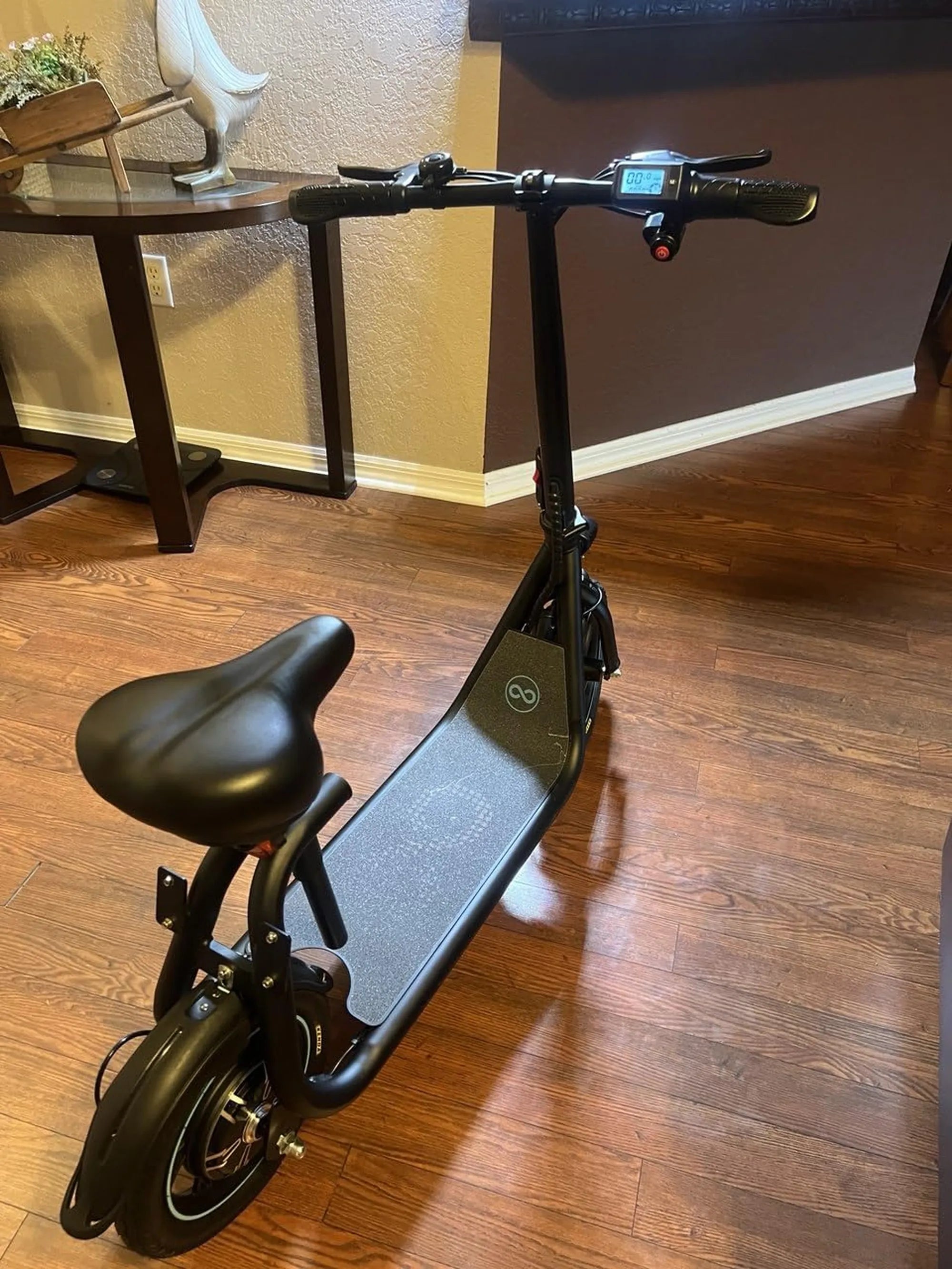
To move from theory to practical decision-making, a direct comparison is essential. The following table uses a typical 125cc gas dirt bike versus a Gyroor H5 electric scooter, a commuter-focused model, to highlight the key differences for a school commute.
| Commuter Factor | Traditional Dirt Bike | Gyroor E-Scooter (H5 Example) |
|---|---|---|
| Legality & Registration | Rarely street-legal; complex/expensive conversion required. Needs motorcycle license. | Governed by local e-bike/e-scooter laws (typically Class 2). No license needed in most areas for riders 16+. |
| Operating Cost (Per Mile) | High (Gasoline, frequent oil, filter, parts). | Very Low (Electricity, minimal maintenance). |
| Noise Level | Very Loud (85-110 dB). Violates noise ordinances and school policies. | Nearly Silent. School and neighborhood-friendly. |
| Cargo & Storage | Minimal to none. Backpack wearing is unsafe. | Stable deck for backpack; optional front basket available on some models. |
| Parking & Security | Requires heavy motorcycle lock. Highly conspicuous theft target. | Lightweight (approx. 40 lbs). Can be folded and carried inside classrooms or locked discreetly. |
| Safety Features | Knobby tires unsafe on wet pavement. Often lacks integrated lighting. | Puncture-resistant 10" air tires, integrated front & rear LED lights, electronic brake. |
| Weather Practicality | Exposed rider; engine sensitive to water ingress. | IPX5 water-resistant rating allows riding in light rain. Fenders protect rider. |
The Smart, School-Approved Alternative: Gyroor E-Scooters
For students seeking independence and fun without the legal quagmire and practical headaches, a modern electric scooter from Gyroor is the optimal solution. It captures the essence of personal, exciting transport while being designed for the real-world demands of an urban or suburban commute.
Models like the Gyroor Warrior or H5 series offer speeds suitable for neighborhood roads (up to 19-25 mph), ranges that easily cover typical school distances (18-28 miles per charge), and robust construction. The step-through design and wide deck provide a stable, confident riding posture, far more manageable than balancing a tall dirt bike at stop signs.
Built for the Real World: UL-Certified and Weather-Ready
Two features make Gyroor e-scooters stand out for the conscientious commuter and concerned parent. First, all Gyroor models use UL 2271 certified battery packs. This independent safety certification is a critical benchmark, ensuring the battery is rigorously tested for fire and electrical hazards. For schools and parents, this mitigates a major safety concern.
Second, the IPX5 water-resistant rating means the scooter's electrical components are protected against water jets from any direction. Riding through a puddle or getting caught in a light drizzle isn't a crisis, addressing a key practicality issue that plagues both dirt bikes and many inferior e-scooters.
Worry-Free Riding: The Gyroor Warranty and Support Promise
Reliability is non-negotiable for a daily commute. Gyroor backs its products with a comprehensive 1-year warranty and accessible US-based customer support. This commitment to rider satisfaction stands in stark contrast to the DIY, mechanic-dependent world of dirt bike ownership. For a student, it means focus stays on studies, not sudden repair bills or breakdowns.
Frequently Asked Questions (FAQ)
Can I make my dirt bike street-legal for school?
Technically possible in some states, but it's a complex, costly process involving adding DOT equipment, state inspections, registration, and insurance. Crucially, even if successful, local noise ordinances and specific school district policies will almost certainly still prohibit it on campus. The effort and expense rarely justify the outcome.
What about electric dirt bikes for commuting?
Electric dirt bikes solve the noise and fuel issues but retain the core problems: they are still primarily designed as off-road vehicles, often lack street-legal equipment, are heavy, have no storage, and are subject to the same school policy bans. A purpose-built commuter e-scooter like those from Gyroor is a more practical, legal, and affordable urban machine.
Are e-scooters allowed on my school campus?
Acceptance is growing rapidly. Because e-scooters are quiet, clean, and easy to store, many school administrations are more amenable to them than gas-powered vehicles. You must always check your specific school's student handbook or contact the administration for a definitive policy. Presenting information about their safety features (like UL certification) can help in discussions.
What age do you need to be to ride an e-scooter to school?
Age regulations vary by state and locality. Many areas set a minimum age of 16 for operating an electric scooter on public roads or bike lanes. Some have no age minimum for riding on sidewalks or in residential areas. Always verify your local laws. Gyroor designs its scooters for riders aged 16 and up, in alignment with common regulatory frameworks.
How do I secure my e-scooter at school?
The best security is to fold it and bring it inside, storing it in a locker room, classroom corner (with teacher permission), or school office. If outdoor locking is necessary, use a high-quality U-lock or heavy-duty chain lock through the frame to a fixed bike rack. Gyroor's lightweight design (compared to a bicycle or dirt bike) makes the carry-in option highly feasible.
Conclusion: Choosing the Right Ride for Your Education
The dream of riding a dirt bike to school crashes against the realities of law, logistics, and safety. While the spirit of adventure is commendable, the path is effectively blocked by regulations and impracticality. The modern electric scooter has emerged as the intelligent successor, offering legitimate freedom for students.
Brands like Gyroor have engineered this category with the commuter in mind: safe UL-certified batteries, weather-resistant builds, and reliable warranties. They provide the thrill of personal mobility in a package that respects community quiet, school rules, and a student's budget and time. For the student ready to commute with independence, the choice is clear.
Explore the range of reliable, school-ready e-scooters designed for the real world. Browse the full Gyroor collection at gyroorboard.com to find your perfect ride.
Chinese Dirt Bike 125cc: The Ultimate Guide to Value, Performance & Ownership
Make Dirt Bike Street Legal: The Complete 2024 Guide to Conversion