

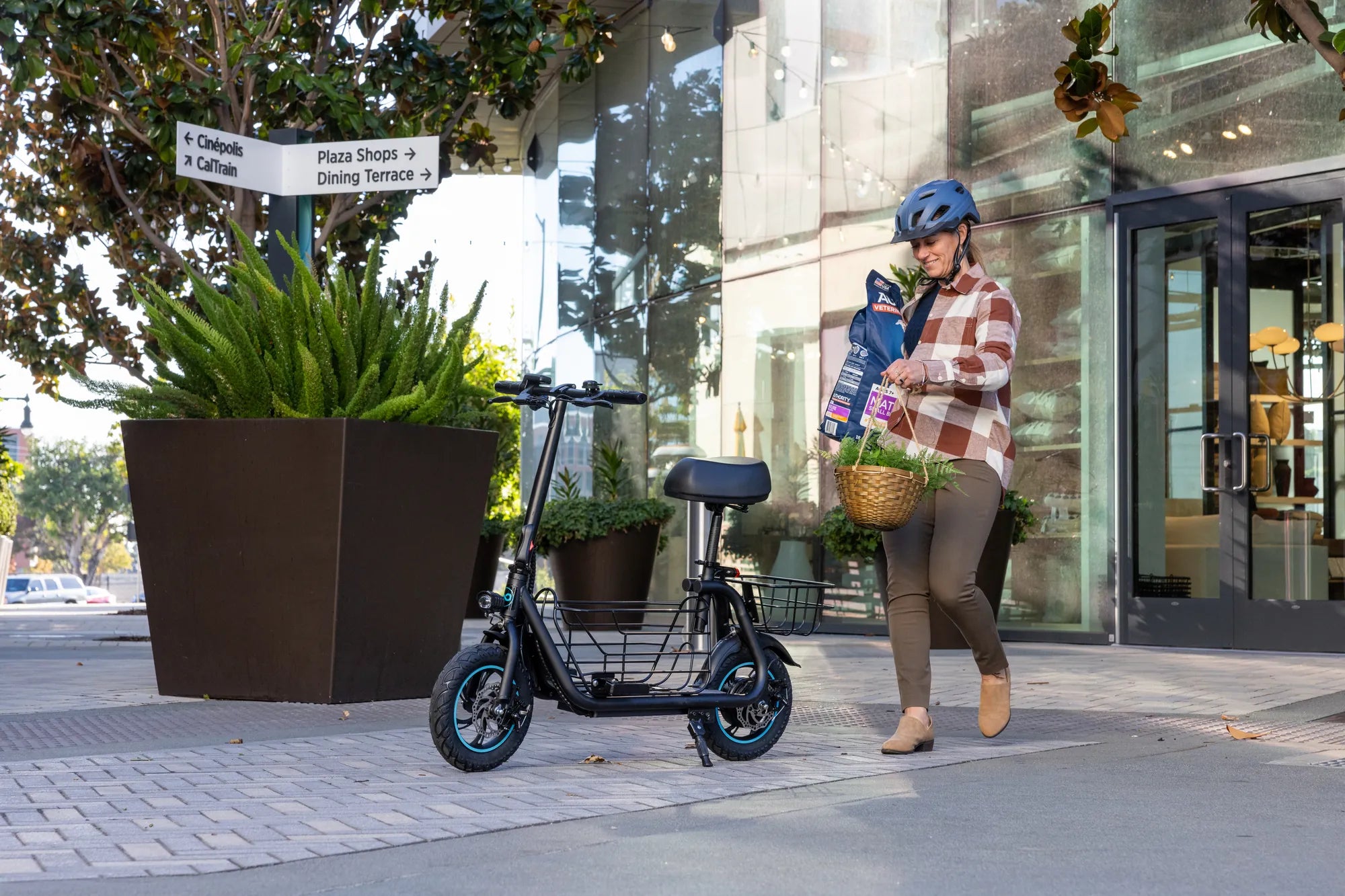
You want affordable urban mobility, but the term 'cheap motor scooter' hides a critical choice: buy the lowest sticker price and risk failure, or invest in value-driven engineering for reliable transportation. This guide cuts through the noise, providing a data-driven framework to evaluate budget scooters. You'll learn to identify hidden costs, prioritize non-negotiable safety features, and discover how reputable brands build durable, affordable options. We'll analyze total cost of ownership, compare key specifications, and outline exactly where to allocate your budget for maximum return on investment and peace of mind.
Defining "Cheap" in the Motor Scooter Market
The search for a cheap motor scooter typically begins with a price filter. However, intelligent purchasing requires separating 'low initial cost' from 'long-term value.' A truly economical scooter provides dependable service over years, not just months. The market is saturated with options under $500, but their construction and component quality vary dramatically.
Price segments generally break into three tiers. Ultra-budget scooters ($200-$350) often use generic, uncertified batteries and minimal warranty coverage. Mid-range value scooters ($350-$600), like several Gyroor models, incorporate critical safety certifications and better build materials. Performance scooters ($600+) offer premium features for longer commutes. For most urban riders, the value segment offers the optimal balance of affordability and assurance.
Initial purchase price is just one part of the equation. Total Cost of Ownership (TCO) includes potential repair costs, replacement parts, battery longevity, and even resale value. A scooter with a UL-certified battery and a 1-year comprehensive warranty may have a slightly higher upfront cost but significantly lower TCO. This approach prevents the 'false economy' of buying a scooter that fails prematurely.
Brand reputation becomes paramount in the budget category. Established brands like Gyroor, with over 100,000 riders globally, stake their reputation on reliability and customer support. They achieve lower prices through efficient design and scale, not by cutting corners on essential safety components. This foundation is crucial for understanding where true value lies.
The Hidden Costs and Risks of Ultra-Low-Priced Scooters
Choosing a scooter based solely on the lowest advertised price invites significant financial and safety risks. These products often achieve their low cost through compromised components and absent quality controls. The immediate savings can quickly evaporate with a single major component failure, leaving you with a useless frame and a need to repurchase.
Common failure points in poorly constructed scooters include fragile folding mechanisms, thin deck boards that crack, and cheap tires that puncture easily. Wiring harnesses are often minimally insulated and poorly routed, leading to shorts and electrical failures. These issues aren't just inconveniences; they can lead to sudden loss of power or control while riding.
The Battery Safety Imperative
The battery pack is the heart, most expensive component, and greatest potential hazard of any electric scooter. Ultra-cheap models frequently use cells from unverified sources with no safety certification. These batteries lack proper battery management systems (BMS) to prevent overcharging, overheating, and cell imbalance.
A UL 2271 certification, which all Gyroor batteries hold, signifies rigorous testing for electrical, mechanical, and environmental safety. This certification involves crush, shock, vibration, overcharge, and short-circuit tests. Investing in a scooter with a certified battery isn't a luxury; it's a fundamental safeguard against fire risk and ensures the pack will deliver its advertised cycle life (often 500+ charges for quality cells).
Warranty and Support: Your Financial Safety Net
A meaningful warranty is the manufacturer's confidence in its product. Many budget scooters offer only 30-90 days of coverage, or warranties that are notoriously difficult to claim. This leaves you fully liable for any defect after a very short period. A reputable 1-year warranty, like Gyroor's standard offering, acts as an insurance policy on your investment.
Comprehensive support includes accessible customer service, available replacement parts, and clear repair guidelines. Without this ecosystem, a broken throttle or faulty controller renders the entire scooter obsolete. The cost of sourcing and installing a proprietary part yourself often exceeds the scooter's original value, the definition of a poor investment.
Essential Features to Prioritize on a Budget
With a limited budget, strategic allocation is key. Focus your spending on features that impact durability, safety, and core performance. Compromise on luxuries, not on fundamentals. This approach ensures your scooter remains a viable transportation tool for its entire lifespan.
First, assess your primary use case. Is it a last-mile solution from a transit station (1-3 miles)? A full campus commute (3-5 miles)? Or longer urban errands (5-10 miles)? Matching the scooter's capability to your needs prevents overpaying for unused range or buying an underpowered model that strains on hills.
Build Quality and Water Resistance
The frame's construction determines overall ruggedness. Look for aluminum alloy frames over cheaper, heavier steel or brittle plastics. Check the weld quality at stress points like the stem and deck. A robust folding mechanism with a secure locking pin is non-negotiable for safety.
Water resistance is critical for real-world use. An IPX5 rating, standard on Gyroor scooters, means the scooter can withstand water jets from any direction. This protects against rain, puddles, and street spray. Scooters without a clear IP rating are highly vulnerable to water damage in the motor, battery compartment, and electronics, leading to costly failures.
Motor Power and Real-World Range
Motor wattage (e.g., 350W, 500W) indicates potential power, but torque is what gets you up hills. A 350W motor is sufficient for flat terrain; for moderate hills, 500W is recommended. Hub motors are standard for budget models, offering a good balance of efficiency and simplicity.
Range is the most frequently inflated spec. Manufacturers often cite 'ideal' range under perfect conditions. A more reliable estimate is to divide the battery's watt-hour (Wh) capacity by 20. For example, a 360Wh battery (36V 10Ah) will realistically deliver about 18 miles under average riding conditions, not the 25+ miles sometimes advertised. Always prioritize Wh capacity over vague 'mile' claims.
Gyroor's Value Proposition: Engineering Affordability
Gyroor demonstrates that affordability need not come at the expense of critical safety and performance standards. By leveraging efficient design, responsible component sourcing, and direct-to-consumer models, Gyroor integrates premium features into accessible price points. This philosophy centers on delivering reliable transportation, not just a low entry price.
The core of this value is the integration of non-negotiable safety features across the lineup. Every Gyroor scooter uses a UL-certified battery pack, features an IPX5 water-resistant rating, and is backed by a 1-year warranty. This triad provides a foundation of trust often missing in the budget segment. It represents a commitment to rider safety and product longevity that defines true value.
Model Spotlight: The Gyroor Z1
The Gyroor Z1 exemplifies the smart budget scooter. Priced in the value segment, it features a 500W peak motor capable of tackling 15-degree hills, a 360Wh UL-certified battery for a real-world 18-mile range, and a solid aluminum frame with an IPX5 rating. It includes practical features like a bright headlight, rear brake light, and dual braking (disc + e-brake).
This model is ideal for the urban commuter or college student needing a reliable, 5-10 mile daily range. It forgoes expensive extras like full suspension or a massive display but invests rigorously in the components that ensure safe, dependable operation day after day. It's a testament to focused engineering for a specific, common use case.
Comparison: No-Name Scooter vs. Value Brand
The table below contrasts a typical generic ultra-cheap scooter with a value-oriented model from a reputable brand like Gyroor, highlighting the long-term implications of each choice.
| Feature | Generic Ultra-Cheap Scooter | Value Brand Scooter (e.g., Gyroor) |
|---|---|---|
| Price Point | $250 - $300 | $400 - $500 |
| Battery Certification | None / Unverified | UL 2271 Certified |
| Warranty | 30-90 Days, Limited | 1 Year Comprehensive |
| Water Resistance | Not Rated / IPX4 at best | IPX5 Rated |
| Frame Build | Mixed Materials, Basic Welds | Aluminum Alloy, Reinforced |
| Real-World Range | 8-12 miles (from ~200Wh battery) | 15-20 miles (from ~360Wh battery) |
| Customer Support | Minimal, Email-only | Dedicated, Parts & Manuals Available |
| Likely Lifespan | 6-12 months before major issue | 2-3+ years with proper care |
| Total Cost of Ownership | High (Repairs/Replacement likely) | Low (Reliable, covered by warranty) |
Smart Buyer's Checklist Before You Purchase
Use this actionable list to evaluate any cheap motor scooter. Answering 'no' to any of the first four questions is a major red flag.
- Is the battery UL 2271, UL 2842, or CE certified? This is the single most important safety question.
- Is there a minimum 1-year warranty on the frame, battery, and motor? Read the warranty terms carefully.
- What is the IP rating for water resistance? IPX4 is a minimum; IPX5 is ideal for all-weather use.
- What is the battery capacity in Watt-hours (Wh)? Calculate realistic range (Wh / 20).
- What is the motor's continuous (not peak) wattage? This determines sustained hill-climbing ability.
- Are replacement parts (tires, tubes, chargers) readily available for purchase?
- What is the maximum rider weight capacity? Ensure it exceeds your weight with a margin.
- Does it have at least two independent braking systems? (e.g., disc + electronic or dual drum).
Finally, read independent customer reviews focusing on long-term ownership (6+ months). Look for patterns in complaints about specific components breaking. A few negative reviews are normal; consistent reports of the same failure are a clear warning sign.
Frequently Asked Questions (FAQ)
What is the cheapest reliable motor scooter brand?
Reliability in the budget segment is defined by safety certifications and warranty support. Brands like Gyroor, which maintain UL-certified batteries and strong warranties at price points around $400, represent the most reliable entry point. Avoid brands that cannot provide verifiable battery certification, regardless of price.
How much should I realistically spend on my first scooter?
Plan to invest $400-$600 for a new scooter that won't compromise on essential safety. This range typically includes the critical features: certified battery, proper water resistance, and a usable real-world range of 15+ miles. Spending less than $350 new almost guarantees significant compromises in battery safety and build quality.
Are used electric scooters a good way to save money?
Buying used can offer value but requires extreme caution. You must physically inspect the scooter. Check the battery's health (ask for a full charge and range test), inspect the frame for cracks or welds, test all brakes and lights, and ensure the folding mechanism is tight. Crucially, verify the battery brand and model to ensure it's from a reputable, certified source. The lack of a transferable warranty is a significant downside.
How long should a cheap motor scooter last?
A well-built budget scooter from a value brand, with proper maintenance, should provide reliable daily transportation for 2 to 3 years. The primary lifespan limiter is the battery, which will gradually lose capacity. A quality battery with 500+ charge cycles can last 2-3 years of daily use before needing replacement. Scooters with uncertified batteries often see dramatic performance drops within the first year.
What maintenance does a budget scooter require?
Regular maintenance is simple but vital. Keep tire pressure at the recommended PSI to improve range and prevent pinch flats. Regularly check and tighten bolts, especially on the stem and folding mechanisms. Clean the scooter with a damp cloth, avoiding direct water spray on charge ports. Store it in a dry place and avoid leaving the battery at 0% or 100% charge for extended periods. Brake pads should be inspected for wear every few months.
Investing in Mobility, Not Just a Product
The quest for a cheap motor scooter culminates in a single realization: the least expensive option is the one that works reliably, safely, and for years to come. By prioritizing certified safety features, robust construction, and reputable brand support, you transform your purchase from a disposable gadget into a legitimate tool for urban mobility. This mindset protects your investment, your safety, and your time.
Affordable innovation from brands committed to standards makes this possible. You can own a scooter with a UL-certified battery, water-resistant design, and a trustworthy warranty without a premium price tag. This is the new standard for value in personal electric transportation—where smart engineering meets accessible pricing.
Ready to explore a range of scooters built on this principle of value-driven reliability? Browse the full Gyroor collection, featuring detailed specifications and verified customer reviews, at gyroorboard.com. Find the model that matches your commute and ride with confidence.
700c Ebike: The Ultimate Guide to Speed, Efficiency, and Urban Mobility
72 Volt Ebike Kit: The Ultimate Guide to High-Voltage Conversion