

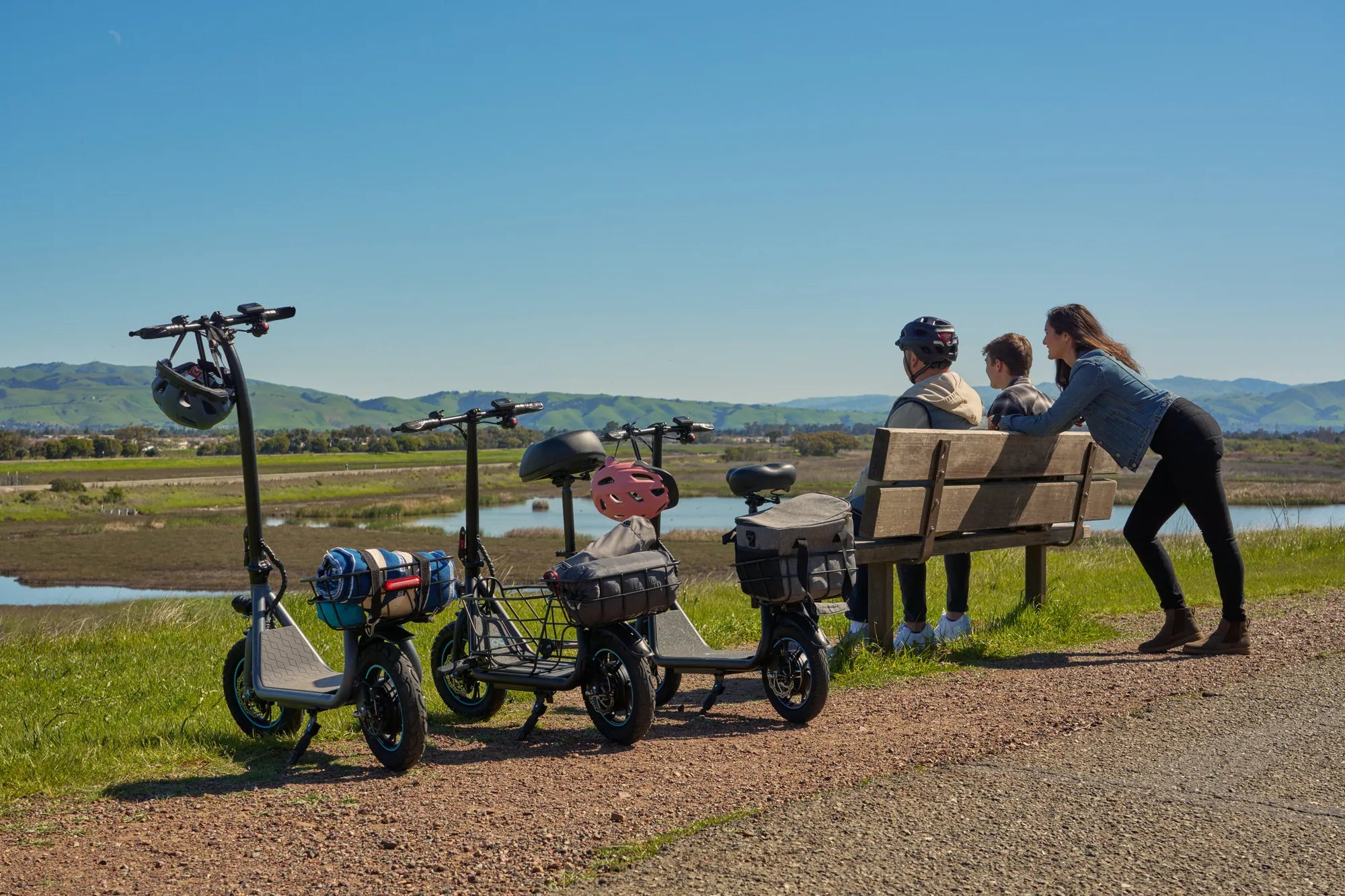
Introduction to E-Bike Classes: Navigating the Legal Landscape
Understanding the difference between a class 1 vs class 2 vs class 3 ebike is the first step to a safe, legal, and enjoyable riding experience. These classifications, established in U.S. federal law by the Consumer Product Safety Commission (CPSC), create a clear framework that defines an electric bicycle and distinguishes it from motor vehicles. The core distinctions hinge on two factors: the maximum assisted speed and the method of motor activation—specifically, whether the bike uses a throttle or requires pedaling.
This framework is not just technical jargon. It directly impacts where you can ride, whether you need a helmet or license, and which model best suits your lifestyle. Choosing the wrong class for your local trails or commute could result in fines or restricted access. This guide provides a data-driven breakdown of each class, empowering you to make an informed decision and ride with confidence.
Breaking Down the Three Classes: Features, Speed, and Operation
The three-tier e-bike classification system standardizes what was once a confusing market. Each class offers a distinct riding experience tailored to different needs, from leisurely trail rides to fast-paced urban commuting. Knowing the specifications is key to matching the technology with your intended use.
Federal law defines all three classes as "low-speed electric bicycles" with fully operable pedals. The motor must be under 750 watts (1 horsepower), though this is a federal maximum; some states may have lower power limits. The critical differentiators are top speed and throttle presence, which we will explore in detail for each class.
Class 1 E-Bikes: The Pedal-Assist Purist
A Class 1 e-bike provides motor assistance only when the rider is pedaling, a system known as pedal-assist or pedelec. The assistance seamlessly cuts off once the bike reaches a speed of 20 miles per hour. The rider can pedal faster than this, but the motor will not contribute beyond the 20 mph threshold.
This class is often called the "purist's" e-bike because it most closely mimics the feel of traditional cycling, just with a powerful boost. The requirement for pedaling means you are always an active participant, making it a favorite for fitness enthusiasts and those seeking a more natural ride. Their universal acceptance is a major advantage.
Class 1 models are typically permitted anywhere a traditional bicycle is allowed, including bike lanes, streets, and, crucially, most multi-use paths and natural surface trails. This makes them the most versatile choice for riders who split time between city streets and recreational trails where throttle-equipped bikes may be banned.
Class 2 E-Bikes: Throttle-Enabled Convenience
Class 2 e-bikes are defined by the inclusion of a throttle, typically a twist-grip or thumb lever, that can propel the bike without any pedaling. Like Class 1, the motor assistance is limited to a top speed of 20 miles per hour, whether using the throttle or a pedal-assist mode, which many Class 2 bikes also include.
The throttle offers unparalleled convenience. It allows for effortless starts from a stop, helpful when navigating intersections or steep inclines. It also provides a welcome break from pedaling, making e-biking accessible to a wider range of riders, including those with mobility concerns or those who simply want a more relaxed, scooter-like experience.
However, this convenience comes with a trade-off in access. Many natural surface trails, mountain bike paths, and some multi-use paved paths explicitly prohibit throttle-operated vehicles. Riders must check local regulations, as Class 2 e-bikes are often restricted to roads, bike lanes, and private property.
Class 3 E-Bikes: The Speed Pedelec
Class 3 e-bikes, or "speed pedelecs," offer a higher performance ceiling. They provide motor assistance only when pedaling (like Class 1) but with a maximum assisted speed of 28 miles per hour. This significant boost makes them powerful tools for longer commutes and keeping pace with urban traffic.
The increased speed comes with greater legal responsibility and common restrictions. Most states require riders to be at least 16 years old and mandate the use of a helmet. Furthermore, Class 3 e-bikes are frequently prohibited on bicycle and multi-use paths designed for lower-speed traffic; they are intended primarily for use in the street or bicycle lane.
Many Class 3 models include a speedometer as a federal requirement. They are engineered for efficiency and stability at higher speeds, often featuring more robust brakes and frames. For the road commuter seeking to minimize travel time without moving to a moped or motorcycle, a Class 3 e-bike is the optimal solution.
Data-Driven Comparison: Choosing Your Class
Selecting between a class 1 vs class 2 vs class 3 ebike requires aligning the bike's capabilities with your riding goals, physical environment, and local laws. The following table provides a clear, side-by-side comparison of the key attributes to guide your decision.
| Feature | Class 1 E-Bike | Class 2 E-Bike | Class 3 E-Bike |
|---|---|---|---|
| Max Assisted Speed | 20 mph | 20 mph | 28 mph |
| Throttle | No | Yes | No (Pedal-Assist Only) |
| Pedal-Assist | Yes | Often Included | Yes |
| Primary Use Areas | Trails, Paths, Roads | Roads, Bike Lanes | Roads, Bike Lanes |
| Typical Rider | Fitness, Trail, Commuter | Leisure, Commuter, Accessibility | Road Commuter, Speed |
| Common Age/Helmet Laws | Varies by state | Varies by state | Often 16+, Helmet Required |
For trail and path access, Class 1 is the undisputed champion. If your priority is ease of use and you'll primarily ride on streets, the Class 2 throttle offers significant convenience. For commuters covering longer distances on roads where speed is a priority for safety and efficiency, the Class 3 e-bike's 28 mph capability is a game-changer. Always cross-reference this with your municipal and state regulations.
The Gyroor Advantage: Safety and Performance Across Classes
Regardless of whether you choose a class 1, class 2, or class 3 ebike, core engineering principles determine long-term reliability and safety. Gyroor, a leading electric scooter and e-bike brand trusted by over 100,000 riders across North America and Europe, builds these principles into every model.
Battery safety is paramount. All Gyroor models utilize UL-certified battery packs, rigorously tested for over 500 charge cycles. This certification is a critical benchmark, ensuring protection against overheating, short-circuiting, and other failure modes, providing peace of mind whether you're on a slow trail ride or a fast commute.
Durability is engineered for real-world conditions. With IPX5 water-resistant designs, Gyroor e-bikes can handle wet roads and light rain, protecting vital electrical components. Coupled with a reliable 1-year comprehensive warranty, these features ensure that your investment is protected, letting you focus on the ride, not potential repairs.
Local Laws and Practical Considerations
The federal classification is a baseline, but state and local laws have the final say. It is imperative to research the specific regulations in your city and state before purchasing an e-bike. These laws can dictate helmet requirements, minimum age, insurance, registration, and, most importantly, where each class is permitted to operate.
For example, some states treat all three classes identically to bicycles, while others impose unique rules for Class 3. Many municipalities ban Class 2 and Class 3 e-bikes from paved multi-use paths frequented by pedestrians. Always check with your local parks department or transportation authority for the most current trail and path access rules.
Practical riding tips enhance safety and community relations. Use a bell or verbal cue when passing on paths. Obey all traffic signals and ride predictably. For Class 3 riders especially, investing in high-visibility clothing and high-quality lights is crucial. Regular maintenance of brakes and tires is non-negotiable for safety at any speed.
Frequently Asked Questions (FAQ)
Q: Can I modify or "derestrict" my e-bike to go faster than its class allows?
A: Modifying an e-bike to exceed its class speed limit is illegal. It reclassifies the vehicle as a motor vehicle, potentially requiring registration, insurance, and a license. More importantly, it voids the warranty, compromises frame and brake integrity not designed for higher speeds, and creates significant liability in the event of an accident.
Q: Do I need a license, registration, or insurance for any e-bike class?
A: Under federal law and in most states, operating a Class 1, 2, or 3 e-bike does not require a driver's license, vehicle registration, or insurance. However, a handful of states have unique requirements for Class 3 e-bikes, so verifying your local laws is essential.
Q: Which e-bike class is best for tackling steep hills?
A> Hill-climbing ability is more dependent on motor power (wattage), torque, and battery voltage than on class. A 750W Class 1 e-bike may climb a hill as well as a 750W Class 2 or 3. The difference is in *how* you climb: Class 1 and 3 require pedaling, while Class 2 can use the throttle for a purely motor-powered ascent.
Q: Can I take my e-bike on public transit like buses or trains?
A> Policies vary widely by transit authority. Many systems allow e-bikes but may have restrictions based on size, battery type, or peak hours. Folding e-bikes often have an advantage. Always check the specific rules of your local bus, train, or subway operator before your journey.
Q: How does the range differ between the classes?
A> Range is primarily determined by battery capacity (measured in Watt-hours), rider weight, terrain, and assist level. A Class 2 bike using only throttle will deplete its battery faster than a Class 1 bike on a low assist level over the same distance. A Class 3 bike ridden at 28 mph will also consume energy faster than a Class 1 at 20 mph.
Conclusion: Your Perfect Ride Awaits
The choice between a class 1 vs class 2 vs class 3 ebike fundamentally shapes your riding experience. Class 1 offers trail-friendly, fitness-oriented pedal-assist. Class 2 provides accessible, throttle-enabled convenience for streets. Class 3 delivers higher-speed capability for efficient road commuting. Your decision should be guided by where you plan to ride, your desired level of physical engagement, and a thorough review of local regulations.
Prioritizing safety and reliability is crucial no matter which class you select. Brands that invest in certified components, durable construction, and strong customer support, like Gyroor, ensure your e-bike is a dependable partner for years of adventure. Assess your needs, understand the laws, and choose the class that unlocks your ideal journey on two wheels.
Ready to explore models that match your chosen class with industry-leading safety features? Browse the full Gyroor collection at gyroorboard.com to find your perfect electric ride.
Best Ebike Value for Seniors: A Complete Guide to Safe, Comfortable Riding
Best Ebike for Short People: A Guide to Finding the Perfect Fit