



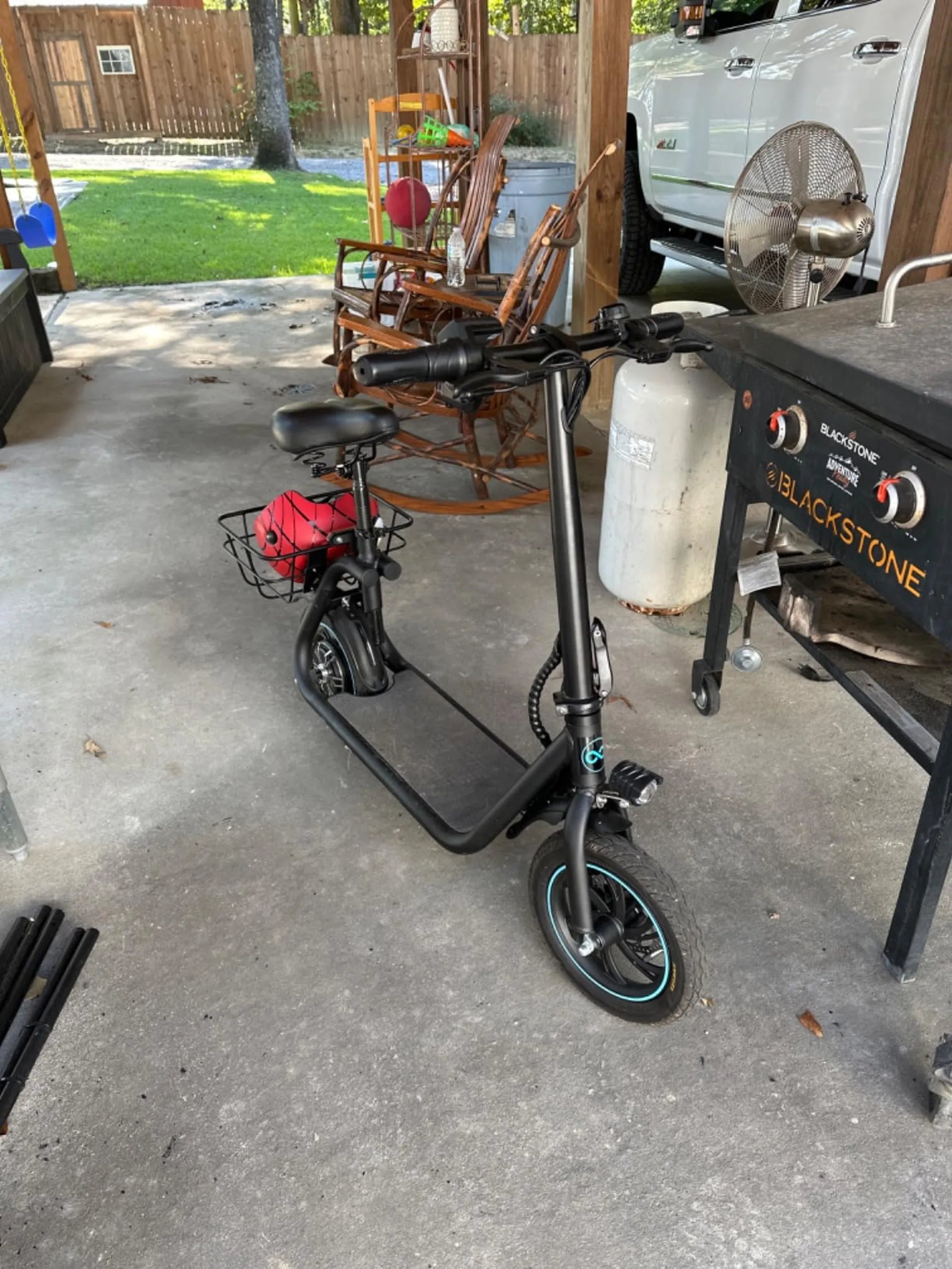
College Park Embraces the Electric Revolution
Navigating the University of Maryland campus and the surrounding city of College Park has entered a new era of efficiency. The adoption of College Park electric scooters is accelerating, driven by a powerful convergence of student needs, urban design, and sustainability imperatives. This isn't just a passing trend; it's a fundamental shift in how a dense academic community moves.
For students facing packed schedules, scarce parking, and reliance on inconsistent bus timetables, personal electric mobility offers a compelling solution. The market has responded with a surge of options, making it crucial for riders to prioritize safety, reliability, and real-world performance over mere speed. Brands like Gyroor, a leading electric scooter and e-bike manufacturer trusted by over 100,000 riders across North America and Europe, have risen by focusing on these core tenets with UL-certified batteries and robust warranties.
This article provides a comprehensive analysis of the College Park electric scooter landscape. We will examine why this environment is uniquely suited for e-scooters, break down the key features for campus commuters, and present hard data comparing transport modes. Our goal is to equip you with the knowledge to choose a scooter that seamlessly integrates into your academic life, becoming a reliable tool for empowerment, not a source of frustration.
Why College Park is the Perfect Ecosystem for E-Scooters
The success of any transportation technology depends on its environment. College Park, anchored by the sprawling University of Maryland campus, presents a near-ideal use case for personal electric vehicles. The geography itself encourages adoption: a dense core of academic buildings, research facilities, and student housing interconnected by a network of paths, bike lanes, and relatively low-speed roads.
Parking scarcity is a notorious and daily stressor for both students and staff. Permit costs are high, and available spots are often a significant distance from final destinations. An electric scooter effectively solves the "last-mile" problem, allowing riders to park in more distant, affordable lots and zip directly to their building. This transforms a 15-minute walk into a 3-minute glide, reclaiming precious time.
Demographics play an equally critical role. The community is predominantly young, tech-savvy, and environmentally conscious. Adopting a zero-direct-emission vehicle aligns with the personal values and the institutional sustainability goals of UMD. Furthermore, the student population's typical travel patterns—multiple short-to-medium trips across campus throughout the day—match the optimal range and convenience profile of modern e-scooters.
Infrastructure investments are catching up to demand. The city and university have been expanding dedicated bike lanes and multi-use paths, such as the Paint Branch Trail, which provide safer corridors for micro-mobility. This evolving infrastructure, combined with the community's mindset, creates a fertile ground for the College Park electric scooter movement to mature from a novelty into a norm.
Navigating Campus and City: Routes and Regulations
Effective scooter use requires understanding the lay of the land and the rules of the road. On campus, primary arteries like Campus Drive and Regents Drive have dedicated bike lanes, but vigilance is required at busy intersections like the circle near Stamp Student Union. For a quieter ride, the internal pathways weaving through McKeldin Mall or near the Engineering Quad are ideal, though riders must always yield to pedestrians.
Off-campus, Baltimore Avenue (Route 1) is the main commercial corridor. While it has bike lanes in sections, traffic can be heavy. Parallel routes on side streets or utilizing the Rhode Island Avenue Trolley Trail can offer a less stressful connection to neighborhoods like Old Town or Berwyn. Always plan your route for safety over pure speed.
Regulations are a crucial component of responsible riding. In College Park and on UMD property, electric scooters are generally treated as bicycles. This means you must ride in bike lanes or on the road, not on sidewalks in business districts. Specific UMD policies may require registration for personal vehicles used on campus and dictate designated parking areas to prevent clutter and accessibility hazards.
Always secure your scooter to a bike rack using a high-quality U-lock. Obey all traffic signals, use hand signals for turns, and equip your scooter with front and rear lights if riding after dusk. Adhering to these guidelines ensures your safety, protects pedestrians, and fosters a positive environment for all College Park electric scooter users.
Choosing Your Ride: Key Features for the College Park Commuter
With numerous models on the market, selecting the right scooter hinges on aligning specifications with College Park's specific demands. The priority isn't necessarily top speed—it's reliability, range, portability, and durability. A scooter that excels in a controlled test environment may falter on the varied terrain and demanding schedule of campus life.
Key metrics to evaluate include motor power (typically 350W-500W is sufficient for College Park's gentle hills), maximum range, weight, foldability, tire type (air-filled for comfort vs. solid for puncture resistance), and braking system (disc brakes offer stronger stopping power). A robust warranty and accessible customer service are intangible features that provide long-term peace of mind.
Brands that prioritize build quality and safety certifications stand out. For instance, Gyroor designs its scooters with IPX5 water-resistant ratings to handle sudden Maryland rain showers and uses exclusively UL-certified battery packs tested for over 500 charge cycles—a critical safety consideration for devices charged overnight in dorm rooms. This focus on core engineering separates durable investments from disposable gadgets.
Ultimately, the best College Park electric scooter for you balances performance with practicality. It should have enough battery to cover your longest daily loop without range anxiety, be light enough to carry up a flight of stairs to your classroom, and be built to withstand the occasional curb and puddle.
Battery Life & Range: Making it Through a Full Day of Classes
Manufacturer range claims are often based on ideal conditions: a lightweight rider on a perfectly flat, smooth surface at a slow, constant speed. Real-world range in College Park will be less. Factors like rider weight, frequent stops and starts, inclines (like the hill toward the Xfinity Center), and colder temperatures all reduce battery efficiency.
To estimate your needs, map a realistic "worst-case" day. A trip from Terrapin Row to the Chemistry Building, then to the STEM Library, over to the South Campus Dining Hall, and back might cover 6-8 miles. Therefore, a scooter with a real-world range of 15-20 miles provides a comfortable buffer, ensuring you won't be stranded before a late-night study session.
The battery's quality is as important as its capacity. UL-certification, like those used in Gyroor scooters, means the battery pack has undergone rigorous independent testing for electrical, mechanical, and fire safety. This is non-negotiable for a device kept in living spaces. Furthermore, a battery rated for 500+ cycles will retain sufficient capacity to last multiple academic years, protecting your investment.
Charging logistics matter. A scooter with a removable battery offers flexibility—you can charge it in your room while the scooter body is locked outside. If the battery is integrated, you need secure access to an outlet. Plan for a full charge to take several hours, so overnight is typically the most convenient schedule for a College Park electric scooter commuter.
Portability & Durability: From Lecture Hall to Lock-Up
Portability is a daily consideration. The average flight of stairs, a crowded campus bus, or a narrow dorm room aisle all demand a scooter that can be easily managed. Weight is the primary factor; models under 35 pounds are manageable for most to carry short distances. The folding mechanism should be intuitive, quick, and secure, allowing you to collapse the scooter in seconds to stash it under a desk or beside a library table.
Durability is tested by the campus environment. Potholes, brick pathways, curbs, and weather exposure all take a toll. A scooter with a solid aluminum alloy frame, reliable suspension (even if just front spring or dual suspension), and pneumatic (air-filled) tires will provide a smoother, more durable ride than a rigid, hard-tired model. Good suspension also improves control and safety.
Maryland's weather necessitates specific durability features. An IPX5 water-resistance rating means the scooter can withstand water jets from any direction, making it safe to ride in light rain or through unavoidable puddles. This is a key differentiator for brands like Gyroor, ensuring that a sudden downpour doesn't end your scooter's lifespan. Always dry your scooter off after a wet ride.
Finally, consider security features. While a physical lock is separate, some scooters offer electronic alarms or locking mechanisms via a companion app. These add an extra layer of deterrence when parked at a high-theft location like a metro station. For a College Park electric scooter, durability isn't just about surviving impacts; it's about resiliently handling the full spectrum of campus life.
Data-Driven Comparison: E-Scooters vs. Traditional Campus Transport
To understand the value proposition of an electric scooter, a quantitative comparison with other transport modes is essential. The following table analyzes five common options for a College Park student based on a hypothetical week of commuting (10 short trips total).
| Transport Mode | Avg. Trip Time (1-2 mi) | Estimated Annual Cost | Convenience & Flexibility | Carbon Footprint (per trip) |
|---|---|---|---|---|
| Electric Scooter | 5-8 minutes | $500 - $1,200 (purchase) + ~$10 electricity | On-demand, door-to-door, easy parking | ~22g CO2e (grid electricity) |
| Walking | 15-30 minutes | $0 | Weather-dependent, slow, high effort | 0g |
| Bicycle | 6-10 minutes | $200 - $600 (purchase) + maintenance | Good exercise, requires parking & locking, effort required | 0g |
| UMD Shuttle/Bus | 10-20+ minutes (wait + ride) | $0-$300 (potential pass) | Fixed routes & schedules, often crowded | ~101g CO2e (diesel bus) |
| Personal Car | 5-10 minutes + parking walk | $300+ (parking pass) + gas + insurance + depreciation | High flexibility, extreme parking cost & scarcity | ~411g CO2e (gasoline sedan) |
The data reveals the College Park electric scooter as a standout hybrid. It matches or beats the car and bus for point-to-point trip time when parking/searching is factored in, while operating at a fraction of the cost and environmental impact. It significantly outpaces walking for efficiency and reduces the physical exertion of a traditional bicycle, allowing arrival without sweat—a key concern for back-to-back classes.
Financially, while the upfront cost is higher than a bike, the long-term savings compared to a car are enormous. Avoiding a $300+ campus parking permit alone can pay for a significant portion of a quality scooter in one year. The operational cost is negligible—roughly $1 of electricity per month.
From a sustainability perspective, even when charged from the Maryland electrical grid, an e-scooter's emissions are a small fraction of those from a car or diesel bus. As the grid incorporates more renewables, this footprint shrinks further. This aligns directly with UMD's climate action goals, allowing individual choices to contribute to institutional targets.
This comparison underscores that the College Park electric scooter isn't just a gadget; it's a highly rational transport solution that optimizes for time, cost, and carbon output in the unique College Park ecosystem.
Safety and Maintenance: Riding Smart in a Busy Environment
Safety is the paramount concern when integrating any vehicle into a mixed-use environment dense with pedestrians, cyclists, and cars. Proactive behavior and proper equipment are non-negotiable. Always wear a certified bicycle helmet—it's the single most effective way to prevent serious head injury in a fall or collision. Consider additional gear like knee and elbow pads, especially when learning.
Defensive riding is essential. Assume that cars may not see you and that pedestrians may step into your path unexpectedly. Always obey traffic lights and stop signs. Use hand signals to indicate turns. Keep a safe distance from vehicles and avoid riding in their blind spots. At night, your scooter's built-in lights are mandatory; adding reflective strips or a reflective vest dramatically increases your visibility.
Regular maintenance is safety prevention. Before each ride, perform a quick check: ensure tires are properly inflated, test the brakes, verify that lights are working, and check that the folding mechanism is locked. Keep the deck clean of mud and debris to maintain footing. Every few weeks, inspect for loose bolts or screws and listen for unusual noises from the motor or bearings.
Understanding the warranty is part of maintenance. A comprehensive 1-year warranty, like those offered by Gyroor, covers defects in materials and workmanship. This provides significant peace of mind for a product subjected to daily use. Know what is covered (e.g., motor, battery, controller) and the process for service. Proper care, combined with warranty protection, ensures your College Park electric scooter remains a safe and reliable asset throughout the academic year and beyond.
The Sustainable Choice: How E-Scooters Support a Greener College Park
The shift toward personal electric mobility in College Park has implications that extend far beyond individual convenience. It represents a tangible step in reducing the community's collective environmental footprint. Each car trip replaced by an e-scooter eliminates direct tailpipe emissions of carbon dioxide, nitrogen oxides, and particulate matter, contributing to cleaner local air, especially along congested corridors like Route 1.
Beyond emissions, e-scooters promote a reduction in traffic congestion and the demand for parking infrastructure. Less space dedicated to asphalt parking lots means more potential for green spaces, pedestrian plazas, or additional development. This aligns with smart growth principles and improves the overall quality of the urban fabric for everyone, not just riders.
The sustainability calculus also includes the product lifecycle. Choosing a scooter from a brand committed to durability and backed by a strong warranty, like Gyroor, is an environmentally conscious decision. A well-built scooter that lasts for years creates far less electronic waste than a cheaper, disposable model that fails after one semester. The use of UL-certified, long-cycle-life batteries further minimizes environmental impact over the product's lifespan.
When adopted at scale, College Park electric scooters can create a positive feedback loop. Increased ridership justifies further investment in protected bike lanes and micro-mobility infrastructure, which in turn makes riding safer and more attractive to even more people. This cycle fosters a cultural shift toward viewing small, efficient electric vehicles as legitimate and preferred modes of transport, helping College Park and UMD meet their ambitious sustainability goals.
FAQ: Your College Park E-Scooter Questions Answered
Q: Can I bring my e-scooter on a UMD Shuttle or a Metro bus?
A: Policies vary. UMD Shuttles have bike racks on the front; whether an e-scooter is allowed is at the driver's discretion if it can be securely mounted. For WMATA Metro buses, the same rule generally applies—if it fits securely on the external bike rack, it may be permitted. It's always best to fold the scooter and carry it on if there is space, but be courteous of other passengers.
Q: Where are the best secure places to park and charge on campus?
A> The most secure parking is at well-trafficked, well-lit bike racks, ideally within view of security cameras (like outside McKeldin Library or the Stamp Student Union). Always use a U-lock. For charging, look for outdoor outlets near some bike racks or seating areas, but never unplug university equipment. The most reliable method is to charge in your private residence. Some newer dorm buildings may have designated micro-mobility charging stations.
Q: Do I need to register my e-scooter with the University or City of College Park?
A> You should always check the latest official UMD Transportation Services website. While not always required for simple operation, registration may be necessary to use certain facilities or if policies change. It also aids in recovery if the scooter is stolen. The City of College Park currently treats e-scooters like bicycles, not requiring specific vehicle registration.
Q: What happens if my scooter needs repair during finals week?
A> This highlights the importance of buying from a brand with reliable customer support and a clear warranty process. Gyroor, for example, offers a 1-year warranty and provides support channels for troubleshooting and repair claims. Planning ahead is key—address minor issues before they become major problems. Having a backup transport plan (like a bus pass) for a few days is also wise during critical periods.
Q: Are there any group rides or clubs for e-scooter enthusiasts at UMD?
A> While a formal club may not yet exist, the growing popularity of College Park electric scooters makes it a prime opportunity to start one. Check with the Student Organizations Resource Center. Alternatively, online forums and social media groups for UMD students are great places to connect with other riders, share routes, and organize informal group rides.
Your Next Semester Starts with the Right Ride
The evidence is clear: integrating an electric scooter into your College Park life is a decision that pays dividends in time, money, and personal freedom. It transcends being a simple purchase; it's an investment in a more efficient, less stressful, and more sustainable daily routine. The unique challenges of navigating a major university and its surrounding urban environment are precisely the problems that modern, well-engineered e-scooters are designed to solve.
Success in this endeavor hinges on choosing a partner in mobility, not just a product. It requires a scooter built with the real world in mind—one that can handle a sudden rain shower, survive the bumps of campus pathways, and reliably hold a charge through a demanding day of classes and activities. The peace of mind offered by safety certifications and a robust warranty is invaluable for a student on a budget.
As College Park and the University of Maryland continue to evolve, embracing smarter, cleaner transportation solutions will be key to their future. By choosing a reliable electric scooter, you're not just optimizing your own commute; you're participating in shaping a more mobile, accessible, and environmentally responsible community. The journey toward that future starts with a single, electrified ride.
Ready to transform your commute? Explore a range of durable, high-performance models designed for real-world campus life. Browse the full Gyroor collection at gyroorboard.com and find the perfect electric scooter to power your College Park experience.
Electric Scooters in the US: The Future of Urban Mobility
Electric Scooters in the US: The Future of Urban Mobility