


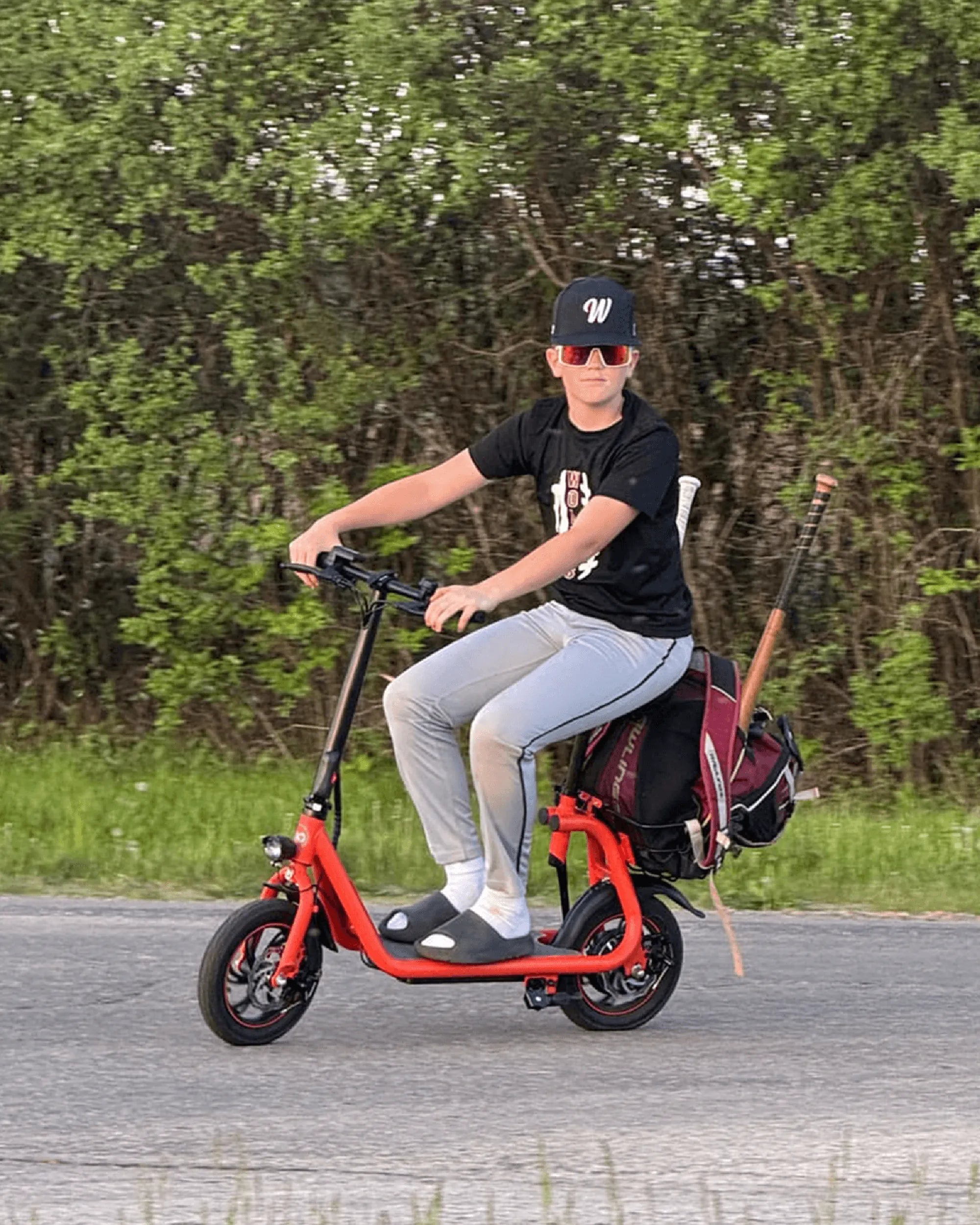
Choosing the right mobility aid is a critical decision that directly impacts independence, safety, and quality of life. The core difference between a scooter and a power wheelchair is not merely about appearance; it's a fundamental distinction in engineering, intended user, and medical necessity. This guide provides a detailed, data-driven comparison to help you understand which device—a mobility scooter or a power wheelchair—is the appropriate solution based on your physical capabilities, daily environment, and long-term needs. We will dissect the technologies, analyze key decision factors, and provide clear guidance to empower your choice.
Understanding Mobility Solutions: A Functional Overview
Both mobility scooters and power wheelchairs serve the essential purpose of enhancing personal mobility for those with walking difficulties. However, they are engineered for distinctly different user profiles and use cases. The choice hinges on a precise evaluation of the individual's physical strength, postural stability, endurance, and the primary environments where the device will be used.
Mobility scooters are often selected by individuals who retain significant upper body strength and the ability to stand, pivot, and transfer independently. They are designed for episodic use, such as running errands or navigating large outdoor spaces. In contrast, power wheelchairs are complex medical devices designed for users who require full-time seated mobility, often with customized seating for postural support and pressure relief.
Understanding this functional divide is the first step. A scooter may offer a sense of active, car-like steering for someone with arthritis, while a power wheelchair provides essential, minute-to-minute mobility for someone with a spinal cord injury. The decision should never be based on cost or aesthetics alone but on a rigorous assessment of need.
This overview frames the subsequent deep dive into specifications. It establishes that while both provide freedom, the path to that freedom—via a scooter's handlebars or a wheelchair's joystick—is dictated by the user's physical reality. The goal is to match the technology to the person, not the other way around.
Defining the Core Technologies: Scooters vs. Power Wheelchairs
A mobility scooter is an electric-powered vehicle with a long, flat deck, a seat mounted on a column, and handlebars for steering (a tiller). The user operates it by turning the handlebars to direct the front wheel(s) and using thumb levers or a twist-grip to control speed and braking. Its design is modular; batteries are often removable for charging, and some models can be disassembled for transport.
The scooter's architecture prioritizes stability over compactness. It typically has three or four wheels, with a larger base and a longer wheelbase. This design is excellent for straight-line travel and gentle turns on paved surfaces but requires more space for maneuvering. The seat usually swivels for easier transfers but does not offer the deep customization of a medical wheelchair seat.
A power wheelchair, or electric wheelchair, is a medical mobility device controlled almost exclusively by a proportional joystick mounted on the armrest. Its base is compact, with drive wheels that can often rotate in place, enabling a zero-turn radius. The seating system is integral, designed for prolonged use and frequently customizable with tilt, recline, and specialized cushions.
The power wheelchair's technology is integrated and non-modular. The batteries are built-in, and the device functions as a single unit. Its control system is highly adaptable, with options for chin controls, sip-and-puff systems, or head arrays for users with limited hand function. This makes it a viable solution for a much wider range of physical disabilities than a scooter.
Primary Use Case & User Profile
The ideal mobility scooter user is someone with good trunk stability, arm strength, and hand coordination. They can typically stand and walk short distances, allowing them to transfer on and off the scooter seat independently. Common user profiles include individuals with conditions like osteoarthritis, chronic pain, respiratory issues, or general fatigue that limits walking endurance.
These users benefit from a scooter for activities like shopping, visiting parks, or attending community events. The scooter extends their range beyond what a walker or manual wheelchair would allow, but it is not designed for all-day, continuous use within a confined home environment. It is a tool for specific mobility tasks.
The power wheelchair user profile is defined by a greater level of mobility impairment. This includes individuals with significant weakness in the upper or lower body, poor trunk control, or conditions that make operating a tiller steering mechanism unsafe or impossible. Users with spinal cord injuries, advanced MS, cerebral palsy, or muscular dystrophy often require a power wheelchair.
For this user, the power wheelchair is not just for outings; it is their primary means of mobility indoors and out. It provides the postural support and pressure management necessary for health and comfort over many hours. The difference between scooter and power wheelchair is stark here: one is for supplemental mobility, the other for essential, full-time mobility.
Design & Maneuverability: Form Follows Function
Mobility scooter design favors open environments. Their longer frame and front-wheel steering create a wider turning circle. Navigating a narrow hallway, a cramped bathroom, or making a sharp turn in a kitchen can be challenging or impossible with a full-size scooter. They excel on sidewalks, in malls, and on other paved surfaces.
Portable or travel scooters offer more compact designs, but this often comes at the expense of stability, range, and comfort. The need for a larger footprint is the trade-off for the scooter's inherent stability and capacity for larger batteries, which provide longer range—often 15-30 miles per charge.
Power wheelchair design is optimized for tight spaces. With rear or mid-wheel drive and the ability to pivot the drive wheels, a power wheelchair can navigate doorways, turn around in small rooms, and maneuver up to tables and desks with precision. This makes it the undisputed choice for full-time indoor use.
While some heavy-duty power wheelchairs are built for outdoor terrain, their primary advantage is indoor agility. Their compact footprint is a direct response to the need to function within the built environment of a home or workplace. The difference between scooter and power wheelchair maneuverability is a key deciding factor for indoor independence.
Control Systems & Ease of Operation
Mobility scooter operation requires bilateral hand and arm function. The user must grip the handlebars to steer while simultaneously using a thumb or finger to press a lever for acceleration. This requires coordination, grip strength, and a range of motion in the shoulders and elbows. It is an active, engaged form of control.
This system is intuitive for many, mimicking bicycle or car steering. However, for individuals with arthritis, tremors, or weakness in one arm, it can be difficult or unsafe. The controls are generally not adaptable; what you see is what you get.
Power wheelchair control is centralized on a programmable joystick. Operation requires only minimal finger, wrist, or hand movement to dictate direction and speed proportionally. This drastically reduces fatigue and strain. The sophistication lies in its adaptability; the joystick can be repositioned, and the control parameters can be fine-tuned for sensitivity.
For users without hand function, the control system can be entirely reconfigured. Alternatives include chin joysticks, sip-and-puff systems (using breath control), or head arrays. This level of adaptability is what classifies the power wheelchair as a medical device, making mobility possible for those who could not operate a scooter.
Key Decision Factors: Choosing What's Right for You
Selecting between a mobility scooter and a power wheelchair involves evaluating several concrete factors. This decision matrix moves beyond generalities to practical considerations. The following table provides a side-by-side comparison of the critical attributes.
| Factor | Mobility Scooter | Power Wheelchair |
|---|---|---|
| Primary User Ability | Good upper body strength, balance, ability to transfer stand/walk short distances. | Limited upper/lower body strength, poor trunk control, inability to stand/transfer independently. |
| Best Use Environment | Outdoors, open indoor spaces (malls, warehouses). | Indoors, tight spaces, complex home layouts. |
| Maneuverability | Wider turning radius. Requires more space. | Zero-turn radius. Superior in tight quarters. |
| Control Mechanism | Handlebar tiller steering with thumb/finger controls. | Proportional joystick (adaptable for chin/sip-and-puff). |
| Seating & Posture | Basic swivel seat. Limited adjustability. | Integrated, customizable medical seat. Options for tilt, recline, pressure relief. |
| Portability & Transport | Often disassemblable for car trunk. Lighter models available. | Heavy. Requires wheelchair van with lift or ramp for transport. |
| Typical Range | Longer (15-30 miles). Larger battery capacity. | Moderate (10-20 miles). Varies with seating functions. |
| Cost & Insurance | Consumer product. Usually out-of-pocket. Rarely covered. | Durable Medical Equipment (DME). Often covered by Medicare/Medicaid/private insurance if medically necessary. |
This table highlights the clear trade-offs. The difference between scooter and power wheelchair is evident across every category, guiding users toward the device that matches their specific circumstances.
Physical Ability & Medical Necessity
The single most important factor is your physical capacity. A consultation with a physical or occupational therapist is not just recommended; it is essential. They can perform a clinical assessment of your strength, range of motion, sitting balance, and transfer ability.
If you can stand and pivot to transfer, have the grip strength to operate a tiller, and can sit upright without support for the duration of your trip, a scooter may be viable. It is crucial to be honest about fatigue levels; what is possible for a 10-minute test may not be sustainable for a 2-hour outing.
If you cannot transfer independently, have poor trunk control requiring lateral or posterior support, or lack the hand function for a tiller, a power wheelchair is likely a medical necessity. The therapist's report will be the foundational document required for insurance funding, justifying the need for a power wheelchair over a simpler, less expensive scooter.
Conditions like progressive diseases also require foresight. Choosing a scooter for a condition that is expected to worsen may lead to needing a power wheelchair in a short time, resulting in double the expense. Sometimes, starting with the more supportive device is the most cost-effective and safe long-term strategy.
Environment & Daily Activities
Map out your daily life. Where do you need to go? What are the physical constraints of your home? Measure doorways, hallway widths, and turning spaces in kitchens and bathrooms. For primarily indoor mobility, especially in older homes with narrow passages, a power wheelchair's compact design is almost always superior.
If your primary goal is to walk the dog in your suburban neighborhood, visit the local park, or cruise through a large supermarket, a scooter's design is advantageous. Its larger wheels and longer base provide a smoother ride over sidewalk cracks and minor imperfections. The open design also makes it easier to carry items on the deck or in a basket.
Consider community access. Will you need to use public transportation? While both devices can be used on accessible buses, a power wheelchair user typically remains seated in the device, while a scooter user may need to transfer to a bus seat, with the scooter secured in the wheelchair space. This, again, comes back to transfer ability.
The difference between scooter and power wheelchair suitability becomes clear when analyzing activity patterns. A hybrid lifestyle might seem to call for a scooter, but if getting through your own home is a struggle, the power wheelchair must take priority, with outdoor range addressed through vehicle transport.
Portability & Transport
Transporting a mobility scooter is a common consideration. Many mid-size and all travel scooters are designed to disassemble into 2-4 pieces (seat, battery, frame sections) that can be lifted into a car trunk or backseat. The heaviest piece is typically 30-50 pounds. This allows for spontaneous travel without a specialized vehicle.
Power wheelchairs are not designed for disassembly. They are transported as a complete unit. Even a lightweight power wheelchair can weigh over 100 pounds without the battery. Transport almost universally requires a wheelchair-accessible van or SUV equipped with a lift or a ramp. This represents a significant additional investment and planning for any trip.
This factor is decisive for individuals who travel frequently by personal car or who do not have access to a wheelchair van. The scooter's transportability can mean the difference between going out and staying home. However, if the user cannot drive or always travels with an aide who can manage a van, this advantage diminishes.
It's a balance: the scooter offers easier transport but less indoor utility. The power wheelchair offers superior indoor mobility but complicates transport. Your lifestyle and support network will determine which trade-off is acceptable.
Cost & Insurance Coverage
This is where the difference between scooter and power wheelchair is most pronounced financially. A quality mobility scooter from a reputable brand typically costs between $1,000 and $3,500. It is generally purchased as a consumer product, similar to an electric bicycle. Payment is usually out-of-pocket.
Health insurance, including Medicare, rarely covers mobility scooters. They are often classified as "convenience items" rather than medically necessary equipment. There may be very limited exceptions with extensive documentation proving a scooter is the only option for in-home mobility, but this is uncommon.
A power wheelchair is classified as Durable Medical Equipment (DME). When prescribed by a doctor as medically necessary for in-home mobility, it can be covered by Medicare Part B, Medicaid, and most private insurance plans. The process is rigorous, requiring a face-to-face exam, a detailed written order, and a therapist's evaluation proving medical need.
Even with insurance, the user is often responsible for a 20% coinsurance. However, the covered amount for a complex rehab power wheelchair can be $5,000 to $30,000 or more. The out-of-pocket cost for a user with insurance may still be higher than buying a scooter outright, but the device itself is in a different class of technology and support.
Trusted Support in Mobility: Why Gyroor Stands Apart
When considering a mobility scooter, the brand's commitment to safety, reliability, and support is non-negotiable. Gyroor, a leading electric mobility brand trusted by over 100,000 riders, applies its rigorous engineering standards from the e-bike and e-scooter sectors to its mobility solutions. For users where a scooter is the right choice, this translates into unparalleled peace of mind.
Gyroor's core principles directly address the paramount concerns of mobility device users: battery safety, all-weather reliability, and long-term dependability. In a category where device failure can mean a loss of independence, these are not just features; they are essential safeguards.
UL-Certified Batteries: The Safety Benchmark
Every Gyroor mobility scooter uses UL-certified battery packs. This independent certification means the lithium-ion batteries have passed stringent tests for electrical, mechanical, and environmental safety, significantly reducing the risk of overheating or fire. These batteries are also rated for 500+ charge cycles, ensuring long-term performance and value.
For a mobility scooter user who relies on their device daily, battery safety is critical. The battery is the heart of the device, and a certified pack from a trusted manufacturer like those used by Gyroor provides confidence that this essential component meets the highest industry standards.
IPX5 Water Resistance: Built for Real-World Conditions
Life doesn't stop for a drizzle. Gyroor designs its mobility scooters with IPX5 water-resistant ratings. This means the electrical components are protected against low-pressure water jets from any direction, allowing you to navigate in rain or wet conditions without immediate concern for internal damage.
This engineering focus ensures reliability. Whether it's a surprise shower during an outdoor trip or splashes from a wet sidewalk, the scooter's core systems are shielded. This durability is a key part of creating a device that is a dependable tool for daily life, not a fair-weather accessory.
1-Year Warranty & Accessible Support
Gyroor backs its mobility scooters with a comprehensive 1-year warranty on the frame, motor, and electronic components, with a 6-month warranty on the battery. This commitment reflects confidence in their build quality. More importantly, they provide accessible customer service and support channels.
For a mobility aid user, timely support is crucial. Knowing you have a direct line to the manufacturer for troubleshooting or warranty service ensures that a technical issue doesn't strand you for long. This support structure is a vital part of the ownership experience, turning a product purchase into a long-term partnership for mobility.
Frequently Asked Questions (FAQ)
Can I use a mobility scooter if I have limited hand strength or arthritis?
Likely not. Operating a scooter's tiller requires a firm grip to steer and the ability to press a thumb lever consistently. If you have significant pain, weakness, or limited dexterity in your hands, this can be unsafe and painful. A power wheelchair with a sensitive, programmable joystick (potentially with a custom knob) is almost always a more suitable and safer option for limited hand strength.
Which device is better for all-day, indoor use at home?
A power wheelchair is unequivocally better for full-time indoor use. Its compact size, zero-turn radius, and ability to navigate standard doorways and tight spaces make it functional within a home. Furthermore, its customizable medical seating provides the postural support and pressure relief necessary for sitting comfortably and healthily for extended periods, which a scooter's basic seat cannot offer.
Will Medicare or my health insurance pay for a mobility scooter?
It is very rare. Medicare and most private insurers classify mobility scooters as "convenience items" for use outside the home and typically deny coverage. Coverage may only be considered in extremely limited circumstances where a scooter is deemed medically necessary for moving around *inside* the patient's home, and a power wheelchair cannot be used. You should plan to purchase a scooter out-of-pocket.
Can a power wheelchair be used outdoors as effectively as a scooter?
It depends on the model. Standard indoor/outdoor power wheelchairs can handle sidewalks, ramps, and firm surfaces. However, for extended outdoor use on rougher terrain, grass, or gravel, a dedicated outdoor or all-terrain power wheelchair with larger tires and more torque is needed. Scooters often have greater ground clearance and a longer range, making them better suited for dedicated long-distance outdoor adventures on paved paths.
What is the main difference between scooter and power wheelchair in terms of learning to drive?
Scooter controls are more intuitive for most new users, mimicking a bicycle. However, they require more physical effort and coordination to steer and control speed simultaneously. Power wheelchair joystick control has a steeper initial learning curve to achieve precision but requires far less physical strength and effort once mastered. Therapists often provide training for power wheelchair use due to its complexity and medical nature.
Conclusion: Empowering Your Journey to Independence
The journey to choosing the right mobility aid is deeply personal. The essential difference between a scooter and a power wheelchair lies in their core design philosophy: one is for active, supplemental mobility, and the other is for essential, full-time support. Your unique combination of physical ability, daily environment, and lifestyle will point clearly toward one path.
Begin with a professional medical assessment. Use the data and comparisons in this guide to inform your discussions with your doctor and therapist. Whether you determine that a robust, safety-focused mobility scooter meets your needs for outdoor freedom, or that a medically prescribed power wheelchair is necessary for your in-home independence, the goal is the same: to reclaim your autonomy.
If a mobility scooter aligns with your profile, choosing a brand that prioritizes safety and reliability is paramount. Gyroor's commitment to UL-certified batteries, water-resistant design, and strong warranty support provides the confidence you need to explore your world. Your mobility is fundamental—ensure the technology that supports it is built to the highest standards.
Ready to explore mobility scooter options engineered for safety and performance? Browse the full Gyroor collection and find the model that fits your active lifestyle at gyroorboard.com.
18 mph Scooter: The Optimal Speed for Urban Commuting & Practical Mobility
Moped Scooter for Adults Nearby: Your Ultimate Local Buying & Riding Guide