



Introduction: The Real Cost of Entry into the Dirt Bike World
Understanding the dirt bike average price is the first step toward owning your dream machine, but it's rarely the final cost. The sticker price you see online or at a dealership is just the tip of the financial iceberg. Prices fluctuate dramatically based on a complex matrix of factors: new versus used, intended riding style, engine displacement, brand prestige, and regional market conditions.
This guide will demystify the pricing landscape. We'll move beyond a single number to explore the entire spectrum, from budget-friendly pit bikes to professional-grade motocross weapons. You'll learn not just what to pay upfront, but how to budget for the total cost of ownership, including essential safety gear, maintenance, and transportation.
Whether you're a parent buying a first bike for a child, an adult rediscovering the sport, or an enthusiast looking to upgrade, a clear financial picture is essential. The dirt bike average price for a new model suitable for a beginner often falls between $4,000 and $7,000, but that's merely an entry point into a much broader conversation.
By the end of this guide, you'll be equipped to navigate the market confidently, avoid common financial pitfalls, and make a purchase decision that aligns with your skills, goals, and wallet. Let's dive into the numbers.
Breaking Down the Dirt Bike Price Spectrum: From Pit Bikes to Pro Machines
The market for new dirt bikes is segmented into distinct tiers, each defined by performance, technology, and, consequently, price. Engine size (measured in cubic centimeters, or cc) is a primary driver, but suspension quality, frame materials, and electronic components play equally important roles.
Japanese manufacturers like Honda, Yamaha, Kawasaki, and Suzuki have long dominated the entry and mid-level segments with a reputation for reliability and lower maintenance costs. European brands, notably KTM and Husqvarna, command a premium for their high-performance components, lightweight chassis, and cutting-edge technology, often placing them in the upper echelons of the price range.
It's crucial to match the bike to the rider's skill level. An overly powerful bike is not only more expensive but can be dangerous for a novice. Conversely, an advanced rider will be frustrated by a bike that lacks performance. The dirt bike average price you should target depends entirely on where you fit on this spectrum.
The following sections will detail the three primary tiers for new machines. Remember, these are Manufacturer's Suggested Retail Prices (MSRP); dealer fees, freight, and setup can add $500 to $1,000 to the out-the-door cost.
The Entry-Level Arena: $3,000 to $6,500
This tier is home to beginner bikes and reliable trail machines. Engines typically range from 110cc to 250cc. These are often four-stroke, single-cylinder engines prized for their tractable power delivery and easier maintenance. Models like the Honda CRF125F, Yamaha TT-R125LE, and Kawasaki KLX140G are staples here.
You can expect solid, durable components without the high-end adjustability of more expensive bikes. Suspension is basic but functional for learning and casual trail riding. The build quality from major manufacturers is excellent, ensuring these bikes can withstand the learning curve. The dirt bike average price for a new adult-oriented entry-level bike, such as a 250cc trail model, clusters around the $5,500 mark.
This is also the category for smaller "pit bikes" and mid-size bikes for younger teens. The value proposition is immense: a low-stress introduction to the sport with minimal mechanical complexity and widely available, affordable parts.
The Mid-Range Performance Tier: $6,500 to $9,500
Stepping into this bracket means accessing bikes designed for more serious trail riding, cross-country, and entry-level motocross. Engine sizes commonly span from 250cc to 450cc. This includes high-performance four-strokes and competitive two-strokes like the Yamaha YZ250.
The price increase buys significant upgrades: more sophisticated suspension systems with adjustable compression and rebound damping, stronger brakes, lighter frames, and more powerful engines with advanced fuel injection and engine management systems. Bikes like the Honda CRF250RX, KTM 350 XC-F, and Husqvarna FE 350s are quintessential mid-range performers.
These machines demand more from the rider in terms of skill and maintenance. They are closer to race-ready but are still often plated for trail use. For the advancing rider who spends most weekends on the trails or at the local track, this tier represents the best balance of performance and daily usability.
The Premium & Professional Grade: $10,000 and Beyond
At the summit are the purebred race bikes and limited-edition models. Think factory-level KTM 450 SX-F, Honda CRF450R Works Edition, or specialized cross-country machines from GasGas. The dirt bike average price is irrelevant here; these are bespoke instruments built for competition.
Costs skyrocket due to exotic materials like titanium and carbon fiber components, hand-assembled engines with blueprinted internals, championship-winning suspension setups (e.g., KYB PSF2 or WP XACT Pro), and the latest electronic aids like traction control and launch control mapped to multiple ride modes.
Ownership at this level is as much about passion and peak performance as it is about transportation. Maintenance intervals are shorter, parts are more expensive, and the bikes are less forgiving. This tier is reserved for expert riders and professional racers where every fraction of a second counts.
The Smart Alternative: Navigating the Used Dirt Bike Market
For most riders, the used market offers the most practical path to ownership. Depreciation is steepest in the first few years, allowing you to acquire a nearly-new bike for significantly less than MSRP. A realistic dirt bike average price for a used model in good condition spans from $2,500 to $6,000, depending on age, model, and maintenance history.
The key advantage is value. A bike that was $8,500 new can often be found for $5,500 after two or three years. Furthermore, the previous owner may have already added valuable aftermarket parts like skid plates, handguards, or an upgraded exhaust system—extras you get for free.
The trade-off is risk. Without a warranty, you inherit any existing or latent mechanical issues. A thorough inspection is non-negotiable. The used market requires more homework, patience, and mechanical knowledge (or a knowledgeable friend) to avoid buying someone else's problem.
Online platforms, dedicated dirt bike forums, and local dealerships with certified pre-owned programs are the best places to search. A certified pre-owned bike from a dealer, while more expensive than a private sale, often comes with a limited warranty and a professional inspection, offering peace of mind.
What to Expect at Different Used Price Points
$1,500 - $3,000: This range typically includes older models (10+ years), smaller displacement bikes (125cc-250cc), or projects needing work. You might find a well-used but running late-2000s trail bike. Expect to spend on immediate maintenance like tires, chain/sprockets, and brake pads.
$3,000 - $5,000: The sweet spot for many buyers. Here you'll find 3-7 year old bikes in good condition from reputable brands. This could be a previous-generation 450cc motocross bike or a well-equipped 350cc enduro model. The bike should be largely ready to ride with recent maintenance documented.
$5,000+: Enters the realm of low-hour, nearly-new machines. For over $5,000, you should expect a bike that's only 1-3 years old with minimal wear, owned by an enthusiast who maintained it meticulously. It may still have some original tire tread left.
The Essential Pre-Purchase Inspection Checklist
Never buy a used dirt bike sight-unseen. Arrange an in-person inspection and insist on a cold start. Here is your critical checklist:
- Frame & Subframe: Check for cracks, repairs, or bends, especially around welds and engine mounts.
- Engine & Transmission: Listen for unusual knocks or rattles. The engine should start easily and idle smoothly. Test all gears; shifting should be crisp and not jump out of gear.
- Suspension: Look for oil leaking from fork seals or the shock body. Compress the forks and shock; they should rebound smoothly without sticking.
- Wheels & Bearings: Lift each wheel and check for side-to-side play (indicating worn wheel bearings). Spin the wheels to ensure they are true (not bent).
- Drive Components: Inspect the chain for rust, stiff links, and excessive slack. Check sprocket teeth for a hooked or sharpened appearance, which means they are worn out.
- Service History: Ask for receipts. Regular oil changes, air filter cleanings, and valve adjustment records are golden.
Beyond the Sticker Shock: The True Cost of Dirt Bike Ownership
The purchase price is merely the admission fee. Responsible ownership requires budgeting for safety, maintenance, and logistics. Failing to account for these costs is the number one mistake new buyers make. Let's break down the essential ongoing investments.
Mandatory Gear & Safety Equipment
This is non-negotiable. Proper gear is your primary defense against serious injury. Budget a minimum of $800 to $1,500 for a quality head-to-toe setup for a new rider.
- Helmet (DOT/SNELL Certified): $200 - $600. The most important piece. Never buy used.
- Boots (MX-Specific): $150 - $500. Ankle support and protection are critical.
- Goggles & Tear-Offs: $50 - $150. Multiple lenses for different light conditions.
- Gloves, Jersey, and Pants: $150 - $300.
- Chest Protector/Roost Deflector: $100 - $250.
- Knee/Elbow Guards: $80 - $200.
Consider this gear part of the bike's purchase price. It is as essential as fuel.
Recurring Maintenance & Operational Costs
Dirt bikes are high-performance machines that require consistent care. Maintenance costs vary between two-stroke and four-stroke engines, with modern four-strokes generally having higher top-end rebuild costs.
| Item | Frequency | Estimated Cost |
|---|---|---|
| High-Octane Fuel | Every Ride | $15 - $25 per tank |
| Engine Oil & Filter Change | Every 10-15 hours | $50 - $100 |
| Air Filter Cleaning/Oiling | Every 1-2 rides | $10 (cleaner/oil) |
| Rear Tire | Every 30-50 hours | $100 - $150 + installation |
| Chain & Sprocket Set | Every 60-100 hours | $150 - $300 |
| Brake Pads | As needed | $40 - $80 per set |
| Top-End Rebuild (4-Stroke) | Every 80-150 hours | $500 - $1,500+ |
| Top-End Rebuild (2-Stroke) | Every 50-100 hours | $200 - $400 |
Learning basic maintenance like oil changes and air filter service will save hundreds of dollars annually.
Transportation & Storage Considerations
You need a way to get your bike to the trails. A pickup truck, van, or trailer is essential. Factor in the cost of a loading ramp ($100-$200) and high-quality tie-down straps ($50-$100). Secure, dry storage is also critical. If you lack a garage, a sturdy shed or storage unit is an additional monthly expense to prevent theft and weather damage.
New vs. Used Dirt Bikes: A Detailed Comparison
Your choice between new and used fundamentally shapes your financial outlay and ownership experience. Here’s a side-by-side analysis to guide your decision.
| Consideration | New Dirt Bike | Used Dirt Bike |
|---|---|---|
| Upfront Cost | High (MSRP + fees) | Significantly Lower (30-50% less) |
| Warranty | Full factory warranty (1-2 years typical) | Usually "As-Is," no warranty |
| Condition & History | Perfect, zero hours, known history | Variable, unknown abuse or maintenance |
| Technology | Latest models with newest features | Previous-generation tech |
| Depreciation | Loses value immediately and rapidly | Most depreciation already absorbed |
| Financing | Easily available through dealers | Difficult for private party sales |
| Peace of Mind | High | Low to Moderate (depends on inspection) |
| Best For | First-time buyers wanting zero hassle, enthusiasts wanting the latest tech, those with ample budget. | Budget-conscious buyers, mechanically inclined riders, those wanting more bike for their money. |
5 Critical Questions to Ask Before You Buy
Answer these questions honestly before spending any money.
1. What is my primary riding style? Tight woods trails, open desert, motocross tracks, or dual-sport? Each discipline has bikes optimized for it. A motocross bike will be miserable on a long, rocky trail, and vice-versa.
2. What is my total first-year budget? Tally the bike cost, all safety gear, basic tools, transportation, and a $500-$1,000 maintenance fund. This is your true starting number.
3. How important is local dealer support? If you're not a mechanic, buying a brand with a nearby dealer for parts and service is wise. For used bikes, research parts availability online.
4. (For used) Why is the seller selling? The answer can be revealing. "Upgrading" or "no time to ride" are better than vague answers. Be wary of sellers in a hurry.
5. Have I factored in the "hidden" costs of my chosen bike? A high-strung 450cc four-stroke will cost more to rebuild than a 250cc two-stroke. A European bike may have pricier parts than a Japanese equivalent. Research model-specific ownership forums.
Frequently Asked Questions (FAQ)
Q: What is the actual dirt bike average price for a beginner?
A: For a new, adult-sized beginner trail bike (e.g., 250cc), expect to pay an average of $5,500 to $6,500 MSRP. Out-the-door costs with fees will be higher. A good used option can be found between $2,500 and $4,000.
Q: How much should I spend on my first dirt bike?
A: Spend only what your complete budget allows. It's smarter to buy a used $3,000 bike and have $1,500 left for gear and maintenance than to stretch your budget to $5,000 for a new bike and have nothing left for essentials.
Q: Are cheaper, off-brand dirt bikes a good value?
A: While tempting, brands without an established dealer network and parts pipeline often present a false economy. Reliability issues, difficulty sourcing parts, and low resale value can make them more expensive in the long run. Stick with established Japanese, European, or reputable American brands.
Q: How does engine size (cc) affect price?
A> Generally, price increases with engine size within a model line. A Honda CRF450R is more expensive than a CRF250R. However, a high-performance 250cc from a premium brand (like a KTM 250 SX-F) can cost more than a 450cc from a value-oriented brand.
Q: What ongoing cost surprises new owners the most?
A> The frequency and cost of tire replacement and the expensive, labor-intensive top-end rebuilds required on high-performance four-stroke engines. Many also underestimate the absolute necessity and cost of quality safety gear.
Exploring Electric Alternatives: The Gyroor Perspective on Off-Road Fun
While traditional gas-powered dirt bikes define the sport, the electric vehicle revolution has created compelling alternatives for specific use cases. As a leading electric scooter and e-bike brand trusted by over 100,000 riders, Gyroor understands the appeal of instant torque, low maintenance, and quiet operation.
Electric dirt bikes and high-powered electric scooters offer a unique proposition for backyard fun, pit bike applications, or riding where noise is a concern. They eliminate costs for gas, oil changes, and air filters. However, for extended trail rides or motocross, current battery technology limits range compared to a gas tank.
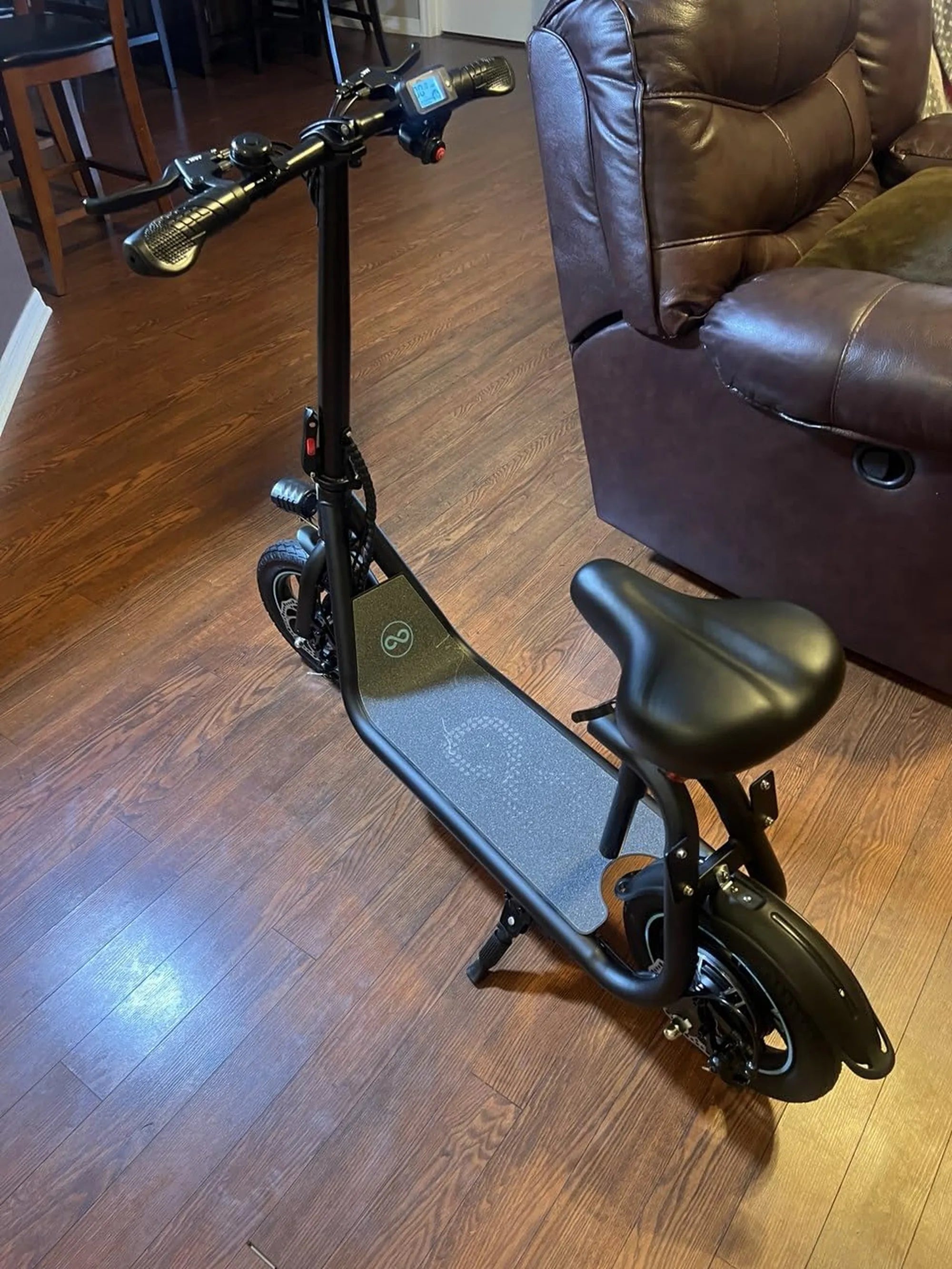
For urban and suburban riders seeking off-road capable electric thrills, Gyroor's lineup of robust electric scooters with IPX5 water-resistant designs and UL-certified battery packs offers a reliable and fun option. Their models feature suspension systems and pneumatic tires that can handle light trails, gravel paths, and uneven terrain, providing an accessible gateway to off-pavement exploration without the complexities of a combustion engine.
Whether your passion leads you to a traditional dirt bike or an electric vehicle, the principles remain the same: prioritize safety with proper gear, understand the total cost of ownership, and choose a machine that matches your environment and skill level. For those curious about electric power, you can browse the full Gyroor collection at gyroorboard.com to explore capable and reliable alternatives.
Conclusion: Your Path to the Trails Starts with Realistic Budgeting
The journey to dirt bike ownership is an exciting one, paved with dreams of open trails and adrenaline-filled moments. By now, you understand that the dirt bike average price is a flexible concept, a starting point for a much larger financial plan. Success lies in looking past the initial sticker price and building a comprehensive budget that includes the bike, non-negotiable safety gear, and predictable maintenance costs.
Arm yourself with the knowledge from this guide. Define your riding goals, inspect used bikes with a critical eye, and never compromise on protection. The right bike, purchased wisely, is not just an expense; it's an investment in adventure, skill development, and a vibrant community. The roar of the engine (or the hum of an electric motor) and the feeling of conquering a new trail are worth every penny of thoughtful planning.
Ready to start your search? Begin by auditing your total budget, then research models that fit your primary riding style. Visit dealerships, sit on bikes, and talk to experienced riders. The perfect machine is out there, waiting to be your key to a world of off-road freedom.
For riders also considering versatile, low-maintenance electric options for urban and light trail exploration, browse the full Gyroor collection at gyroorboard.com.
How Tall Is a 125 Dirt Bike? The Complete Seat Height & Fit Guide
Which Ebike Is Right for Me: The Ultimate 2024 Buyer's Guide