


Introduction to Street-Legal Dirt Bikes
Imagine a single vehicle that can carve through forest trails on Saturday and navigate city streets on Monday. This is the promise of a dirt bike that is street legal, a machine designed to bridge the gap between off-road exhilaration and on-road practicality. Officially categorized as dual-sport or adventure motorcycles, these bikes come equipped from the factory with the lighting, signals, and safety equipment required for public road registration.
The appeal is clear: unparalleled freedom and versatility. For riders, it eliminates the need for a truck and trailer, turning every commute into a potential adventure and unlocking a vast network of backroads and trails. This guide will demystify the legal landscape, compare the best available machines, and introduce the emerging electric alternatives, empowering you to make an informed choice for your two-wheeled journey.
The Legal Landscape: Making a Dirt Bike Street Legal
Navigating the regulations is the first critical step. In the United States, street legality is governed by a combination of federal and state laws. At the federal level, the Department of Transportation (DOT) sets equipment standards, while the Environmental Protection Agency (EPA) regulates emissions. A true dirt bike that is street legal from the factory meets both sets of standards and comes with a Manufacturer's Certificate of Origin (MCO) stating it is for on-highway use.
Converting a pure off-road motorcycle, like a motocross bike, is a complex and often costly process that varies wildly by state. Many states have closed loopholes that once allowed simple conversions, making a factory-built dual-sport the most straightforward and reliable path to legality. The core principle is that the motorcycle must be safe, identifiable, and compliant for shared road use.
Key Equipment for Compliance
To be registered for the street, a motorcycle must have specific, often DOT or SAE-certified, equipment permanently installed. This includes a headlight with high and low beams, a taillight and brake light, front and rear turn signals, a horn, at least one rearview mirror, and DOT-approved tires with sufficient tread depth. The exhaust system must have a street-legal stamp and meet sound and emissions regulations.
Furthermore, the bike must have a properly assigned 17-digit Vehicle Identification Number (VIN) on its frame. This VIN is crucial for titling and registration. Attempting to add this equipment to an off-road bike not only requires significant mechanical skill but may still not satisfy your local Department of Motor Vehicles (DMV), which has the final say.
Top Contenders: Factory-Built Street-Legal Dirt Bikes
The market for factory-built dual-sport motorcycles is rich with options, segmented largely by engine size and intended use. These bikes are engineered from the ground up to handle both terrains, though each model strikes a different balance between off-road aggression and on-road comfort. Understanding these categories is key to finding a dirt bike that is street legal and matches your riding style.
From lightweight beginners' machines to high-performance enduros and long-distance adventure tourers, there is a model for nearly every rider. We will focus on the two most popular segments for true dirt-focused riding: the lightweight 250-400cc class and the performance-oriented 450-500cc+ class.
Lightweight & Agile: The 250-400cc Class
This category is the sweet spot for new dual-sport riders, technical trail enthusiasts, and urban commuters. Bikes like the Honda CRF300L, Kawasaki KLX230 S, and Yamaha WR250R are renowned for their manageable power, light weight, and low seat height. Their single-cylinder engines provide ample torque for trail riding while remaining fuel-efficient and easy to maintain.
The primary advantage here is agility. A lighter bike is less taxing to ride off-road, easier to pick up after a fall, and more nimble in traffic. These models often feature softer, more compliant suspension tuned for comfort over varied surfaces rather than pure motocross performance. They represent the most accessible and practical entry into owning a versatile dirt bike that is street legal.
Performance Powerhouses: The 450-500cc+ Class
For riders whose priority is off-road performance, bikes like the KTM 500 EXC-F, Husqvarna FE 501s, and Honda CRF450RL are the pinnacle. These are essentially street-legal versions of competition enduro bikes. They offer explosive power, premium suspension components, and minimal weight, making them capable of tackling the most demanding terrain.
This performance comes with compromises. The maintenance intervals are significantly shorter than those of their lightweight counterparts, often requiring oil changes and valve checks every 15-30 hours of operation. The ride on pavement can be firm and buzzy, and the focus on weight savings can mean less comfort for long highway stints. These are specialist tools for the rider who demands race-bred capability from their street-legal platform.
The Gyroor Perspective: Electric Dirt Bikes & Urban Mobility
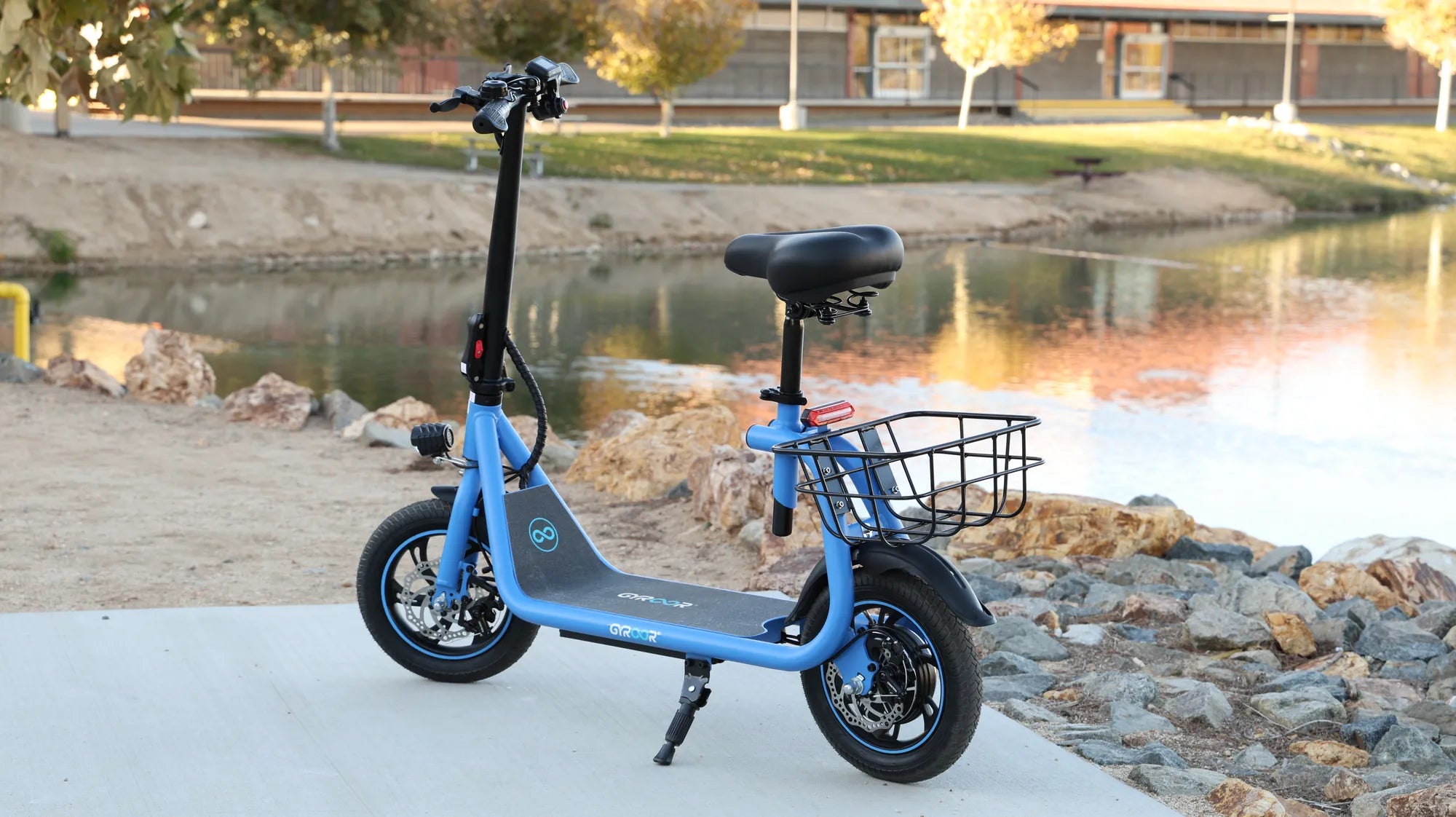
The definition of a dirt bike that is street legal is evolving with the rise of electric power. In this segment, "street legal" often refers to a different vehicle classification, such as a Class 2 electric bicycle or a low-speed electric motorcycle (e-moped), which are subject to their own, often simpler, regulations. Gyroor, a leading electric scooter and e-bike brand trusted by over 100,000 riders, brings its expertise in durable, UL-certified electric powertrains to the realm of adventurous riding.
Electric models fill a unique niche, particularly for urban and suburban explorers. They offer a distinct set of advantages that address common pain points associated with traditional gas-powered dual-sports, opening up new possibilities for mixed-terrain mobility.
Why Consider an Electric Option?
Electric dirt bikes and high-power e-bikes deliver instant, silent torque from zero RPM, providing thrilling acceleration and precise control on trails. They require almost no routine maintenance—no oil changes, air filters, or complex valve adjustments. Perhaps most importantly, they produce zero emissions and minimal noise, making them ideal for riding in noise-sensitive areas or communities.
From a regulatory standpoint, a powerful electric bicycle like those in Gyroor's lineup may be ridden on streets and bike paths without registration, insurance, or a motorcycle license in many jurisdictions, provided it meets local e-bike class specifications (typically capped at 20-28 mph). This significantly lowers the barrier to entry for legal, off-road-capable fun.
Gyroor's Commitment to Safe, Durable Exploration
For an adventurous rider, reliability and safety are paramount, especially when venturing off the beaten path. Gyroor's design philosophy directly supports this need. All models utilize UL-certified battery packs, tested for over 500 charge cycles, ensuring stable power delivery and reducing the risk of failure far from home. An IPX5 water-resistant rating means the electronics can withstand rain, puddles, and mud without issue.
This ruggedness, backed by a comprehensive 1-year warranty, provides the peace of mind necessary for demanding use. Whether using a Gyroor electric bike for trail exploration, mixed-terrain commuting, or recreational fun, riders benefit from a platform built for real-world durability, aligning with the core desire for freedom that defines the search for a capable dirt bike that is street legal.
Choosing Your Machine: A Practical Comparison
Selecting the right bike requires a honest assessment of your primary use case, budget, and local laws. The following table provides a high-level comparison between traditional gas-powered dual-sports and modern electric alternatives to guide your decision.
| Factor | Gas-Powered Dual-Sport | Electric Dirt Bike / E-Bike |
|---|---|---|
| Upfront Cost | $$$ to $$$$ ($5,000 - $12,000+) | $ to $$$ ($1,500 - $6,000+) |
| Maintenance | Moderate to High (oil, filters, valves) | Very Low (brakes, tires, occasional checks) |
| Top Speed / Range | High (80+ mph, 100-200 mi range) | Moderate (20-45 mph, 20-60 mi range) |
| Registration & License | Motorcycle title, plate, and license required. | Often classified as e-bike/e-moped; may need only a driver's license or none. |
| Ideal Use Case | Long-distance adventure, highway travel, aggressive off-road riding. | Local trails, urban/suburban commuting, recreational riding, noise-sensitive areas. |
Critical Action: Before purchasing any bike, especially with the intent of making it street legal, contact your local DMV or law enforcement agency. Verify the exact titling, plating, and equipment requirements for your state. This due diligence is the most important step in ensuring your chosen dirt bike that is street legal truly is.
Frequently Asked Questions (FAQ)
Q: Can I make my Yamaha YZ450F motocross bike street legal?
A> While conversion kits exist, making a pure off-road competition bike like a YZ450F fully street legal is extremely difficult in most states. It often requires a bonded title, extensive equipment additions, and may still fail emissions or inspection. It is generally not recommended; a factory dual-sport is a more reliable choice.
Q: What is the cheapest street-legal dirt bike?
A> New, the Kawasaki KLX230 S and Honda CRF250F (in some markets) are among the most affordable. In the electric space, capable off-road e-bikes start at a lower price point. The true "cheapest" option is often a used, older dual-sport like a Suzuki DR200S or a Honda CRF230L.
Q: Do I need a motorcycle license for a street-legal dirt bike?
A> Yes. Any gas-powered motorcycle with a title and license plate requires a motorcycle endorsement (M endorsement) on your driver's license in all 50 states. For electric models classified as e-bikes, only a standard driver's license or no license is needed, but laws vary. Always check local regulations.
Q: How does an electric dirt bike like Gyroor's models handle highway speeds?
A> Most electric models designed as e-bikes or low-power electric motorcycles are not intended for sustained highway travel. Their top speeds typically range from 20-45 mph, making them ideal for city streets, country roads, and trails. For highway commuting, a traditional gas-powered dual-sport or a registered electric motorcycle (like a Zero FX) is necessary.
Q: What are the insurance costs for a dual-sport bike?
A> Insurance is generally very affordable for dual-sports, especially compared to sport bikes. Liability-only coverage can be as low as $100-$300 per year. Factors like your age, location, driving record, and the bike's engine size will affect the final premium.
Conclusion: Your Passport to Two-Wheeled Freedom
A street-legal dirt bike represents the ultimate expression of vehicular freedom, dissolving the boundary between destination and journey. Whether you choose the established performance of a gas-powered dual-sport or the innovative, low-hassle appeal of a robust electric model, you are investing in a key to unlocked exploration. The simplest route to this freedom remains a factory-built machine designed for both worlds from the start.
For riders whose adventures are centered on local trails, suburban exploration, and quiet, emission-free riding, the electric category offers a compelling and accessible alternative. Brands like Gyroor are at the forefront, providing the durable, safe, and reliable technology that makes this new kind of exploration possible. Define your primary mission, research your local laws thoroughly, and choose the machine that best turns your riding dreams into daily reality.
Ready to explore a new kind of electric-powered adventure? Browse the full Gyroor collection of durable, UL-certified electric scooters and e-bikes at gyroorboard.com to find your perfect ride for the road less traveled.
Best Legal Ebike: A 2024 Guide to Compliant & High-Performance Rides
Best Legal Ebike: A 2024 Guide to Compliant & High-Performance Rides