



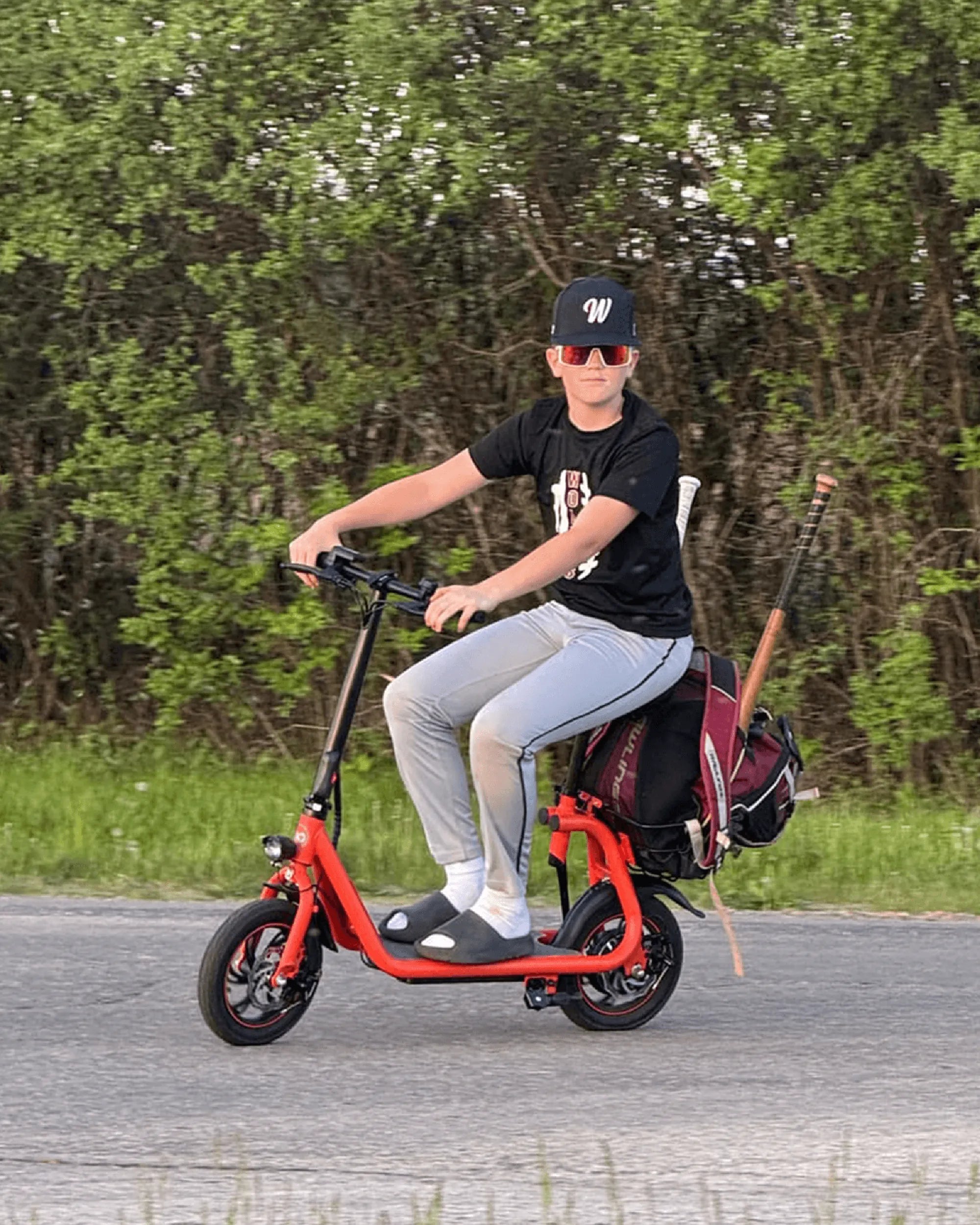
Navigating Wet Weather on Two Wheels
Can you ride your electric scooter in the rain? It's one of the most common questions from new and experienced riders alike. The short answer is: it depends on your scooter's build and your approach to safety. Not all electric scooters are created equal when it comes to handling moisture.
This guide provides the definitive, data-driven facts you need. We'll demystify water resistance ratings, outline critical safety protocols, and detail maintenance must-dos. The goal is to equip you with knowledge, not just a simple yes or no.
As a leader in personal electric transport, Gyroor designs its scooters with real-world conditions in mind. Understanding how and when electric scooters work in the rain is key to maximizing your ride's lifespan and ensuring your safety every time you head out.
Understanding Water Resistance: The IP Rating System Explained
The key to answering "Do electric scooters work in the rain?" lies in a universal standard: the Ingress Protection (IP) code. This two-digit rating, like IP54 or IPX5, precisely defines a product's protection against solids and liquids.
The first digit indicates protection against solid particles like dust (0-6). The second digit, which is paramount for rain, indicates protection against liquids (0-9). An 'X' means the product isn't rated for that type of ingress.
For electric scooters, common liquid protection ratings include IPX4 and IPX5. IPX4 means the scooter is protected against water splashes from any direction. IPX5, a standard for many robust models, signifies protection against water jets from a nozzle.
It's critical to check your scooter's manual for its specific IP rating. A lack of a rating often means the scooter has no certified water protection and should be kept completely dry. Knowing this rating is your first step in assessing wet-weather capability.
What Gyroor's IPX5 Rating Really Means for Riders
Gyroor equips its electric scooters with a minimum IPX5 water resistance rating. This is a deliberate engineering choice for all-weather readiness. The '5' in IPX5 means the scooter's electrical components are sealed against water jets projected by a 6.3mm nozzle from any direction.
In practical terms, an IPX5-rated Gyroor scooter is built to handle sustained, light to moderate rain and road spray. The protection covers the motor, battery compartment, and control electronics. This allows riders to confidently commute or run errands in drizzly conditions.
It's a significant brand differentiator focused on reliability. This rating is achieved through sealed cable glands, waterproof gaskets at critical junctions, and conformal coating on circuit boards. It's a core part of ensuring electric scooters work in the rain for daily users.
However, IPX5 is not a guarantee against all water. It defines protection under specific test conditions. Real-world factors like water pressure, duration of exposure, and temperature can vary, which is why rider judgment remains essential.
Practical Safety: How to Ride an E-Scooter Safely in the Rain
Water resistance is about the scooter's durability; safety is about the rider's actions. Even with an IPX5-rated scooter, riding in the rain demands a fundamentally different approach. Your primary enemies are reduced traction and visibility.
First, reduce your speed significantly. Wet surfaces drastically increase stopping distances. A safe speed allows more time to react to obstacles, potholes, or sudden stops from vehicles. Assume every surface is slicker than it looks.
Increase your following distance from vehicles and other riders. Use your brakes earlier and more gently, favoring the electronic brake if available, as wet rims can reduce mechanical brake performance. Avoid sudden acceleration or sharp turns that can cause wheel slip.
Be hyper-aware of road hazards. Painted lines, metal manhole covers, and tar strips become extremely slippery when wet. Actively avoid them when possible. Always use your front and rear lights, not just to see but to be seen by drivers in poor visibility.
Essential Pre- and Post-Ride Wet Weather Checks
Responsible ownership means adapting your maintenance routine for wet conditions. A simple pre-ride check can prevent accidents. Start with tire pressure and tread; under-inflated or bald tires are a major hazard in the rain.
Test your brakes while stationary to ensure they engage smoothly. Check that your front and rear lights are fully functional, as they are crucial for visibility. Ensure the deck surface is clean and free of mud or debris that could make your footing unstable.
After riding in the rain, proper care is non-negotiable. Never put a wet scooter directly on a charger. First, power it off. Use a dry towel to wipe down the entire scooter, focusing on the handlebars, stem, deck, and wheels.
Pay special attention to the brake discs or drum areas to prevent corrosion. Gently dry around charging ports and any seams. Finally, store the scooter in a dry, room-temperature environment to allow any residual moisture to evaporate overnight.
Limitations and Risks: When Not to Ride Your Electric Scooter
Understanding the limits is as important as knowing the capabilities. No consumer electric scooter is waterproof or submersible. Pushing beyond these limits risks immediate scooter failure and serious personal injury.
Do not ride in heavy rain, thunderstorms, or through deep puddles and flooded streets. Water depth above the bottom of the deck can submerge critical components, overwhelming even IPX5 seals. This can lead to short circuits, motor damage, and controller failure.
Avoid riding in freezing rain or on icy surfaces. The risk of a catastrophic loss of traction is extremely high. Furthermore, water ingress that later freezes inside components can cause physical damage as it expands.
The risks extend beyond the scooter. Riding in poor visibility makes you harder for drivers to see. Wet brakes may not perform optimally. The combination of these factors means that sometimes, the smartest decision is to wait for the weather to clear or choose alternative transport.
Battery Care and Longevity in Damp Conditions
The battery is the heart and most expensive component of your e-scooter. Gyroor uses UL-certified lithium-ion battery packs with robust safety seals. These packs are designed for reliability over 500+ charge cycles, but they require proper care.
The golden rule: never charge a wet or damp scooter. Moisture in the charging port can cause a short circuit during the charging process, potentially damaging the battery, charger, or both. Always allow the scooter to air-dry completely for several hours before plugging it in.
Consistently riding in very damp conditions and not properly drying the scooter can lead to long-term issues like corrosion on electrical contacts and connectors. This corrosion can increase resistance, cause voltage drops, and lead to erratic performance or component failure over time.
Storing your scooter in a damp environment like a cold garage can also promote condensation inside the battery case. For long-term battery health, store your scooter in a dry, climate-controlled space, especially after riding in the rain.
Gyroor's Warranty and Support: What's Covered?
Gyroor backs its products with a comprehensive 1-year warranty, a testament to its confidence in their build quality. This warranty covers defects in materials and workmanship under normal use conditions as defined in the user manual.
It's crucial to understand that the warranty does not cover damage resulting from misuse or neglect. This includes water damage incurred from riding through deep standing water, submerging the scooter, or charging it while wet—activities that exceed the specified IPX5 protection.
The warranty is designed to protect you against manufacturing flaws, not accidents or intentional abuse. If you experience an issue, Gyroor's customer support team, based in the US, can help troubleshoot problems and guide you through the warranty process if applicable.
This structure incentivizes proper care. By following the guidelines in this article—riding within the scooter's rated capabilities and performing simple post-ride maintenance—you keep your warranty intact and ensure you get the longest possible life from your investment.
Comparing Scooter Water Resistance and Key Features
Not all scooters handle moisture the same. The table below compares general scooter types based on their typical IP ratings and suitability for wet weather, highlighting how a brand like Gyroor positions its products for reliability.
| Scooter Type / Feature | Typical IP Rating | Suitability for Rain | Key Considerations |
|---|---|---|---|
| Budget / Toy-Grade Scooters | No rating or IPX4 | Low. Avoid rain. | Minimal sealing. Risk of immediate water damage. |
| Standard Commuter Scooters | IPX4 | Low to Moderate. Light drizzle only. | Protected against splashes, not sustained rain. Rider caution paramount. |
| Robust Commuter Scooters (e.g., Gyroor) | IPX5 | Moderate. Light to steady rain. | Built for all-weather commuting. Can handle road spray and rain showers with proper care. |
| High-Performance / Off-Road Scooters | IPX5 to IPX6 | Moderate to High. | Often have enhanced sealing. Can handle heavier conditions but still not submersible. |
This comparison shows that when asking if electric scooters work in the rain, the model you choose dictates the answer. Investing in a scooter with a meaningful water resistance rating is investing in versatility and durability.
Smart Riding for All Seasons
The question of whether electric scooters work in the rain has a nuanced answer. With a properly rated scooter like those from Gyroor and informed, cautious riding practices, you can confidently navigate wet weather. The core principles are knowing your scooter's IP rating, adapting your riding style for reduced traction, and committing to simple post-ride care.
Technology like IPX5 water resistance provides a strong foundation, but rider responsibility builds the complete picture. Avoiding extreme conditions, never charging a wet scooter, and performing basic maintenance will protect both your safety and your scooter's longevity.
By choosing a reliable brand focused on real-world durability, you gain a versatile tool for daily transportation. You can plan your commute or errands without being immediately thwarted by a forecast of light rain. Embrace the freedom, but always respect the conditions.
Ready for a scooter built to handle the elements? Explore Gyroor's range of IPX5 water-resistant electric scooters and e-bikes, engineered with UL-certified batteries and backed by dedicated support. Browse the full Gyroor collection at gyroorboard.com to find your perfect all-weather ride.
Frequently Asked Questions (FAQ)
Q: Can I ride my Gyroor scooter in a downpour or thunderstorm?
A: It is strongly discouraged. While IPX5 rated for rain, torrential downpours, hail, or lightning present multiple dangers. Visibility is near zero, traction is severely compromised, and there is a risk of lightning strike. The scooter's protection can be overwhelmed, and your personal safety is at extreme risk. Seek shelter immediately.
Q: What should I do if my scooter gets caught in an unexpected heavy rainstorm?
A: First, find a safe place to stop and power off the scooter if possible. Once you are indoors, dry the scooter thoroughly with an absorbent towel, focusing on the deck, brakes, and handlebars. Place it in a dry, room-temperature area away from direct heat sources. Let it air-dry for at least 6-8 hours, or overnight, before attempting to turn it on or charge it.
Q: Is the UL-certified battery safe if the scooter's exterior gets wet?
A: Yes, the battery pack itself is well-sealed within its enclosure as part of the IPX5 rating. The primary risks from exterior moisture are to electrical connections, the motor, and the controller. However, safety is paramount: you must never charge the scooter while any part of it, especially the charging port, is damp to the touch.
Q: Does the 1-year warranty cover water damage from riding in the rain?
A: The warranty covers defects in materials and workmanship. Damage resulting from riding in conditions that exceed the scooter's IPX5 rating specification—such as riding through deep puddles, submerged components, or in a torrential storm—is considered misuse and is not covered. Proper use in rainy conditions as outlined in the manual is expected.
Q: How do I clean my electric scooter after riding on wet, muddy roads?
A> After the scooter is completely dry, use a damp cloth (not wet) with mild soap to wipe down the frame, deck, and wheels. Avoid spraying water directly at the scooter, especially near seams, the charging port, or the display. Never use a pressure washer or hose. Ensure the scooter is completely dry again before storage or use.
Electric Scooters for 300 lbs: The Ultimate Heavy-Duty Guide
Electric Scooters Market: Trends, Growth, and Future Outlook