



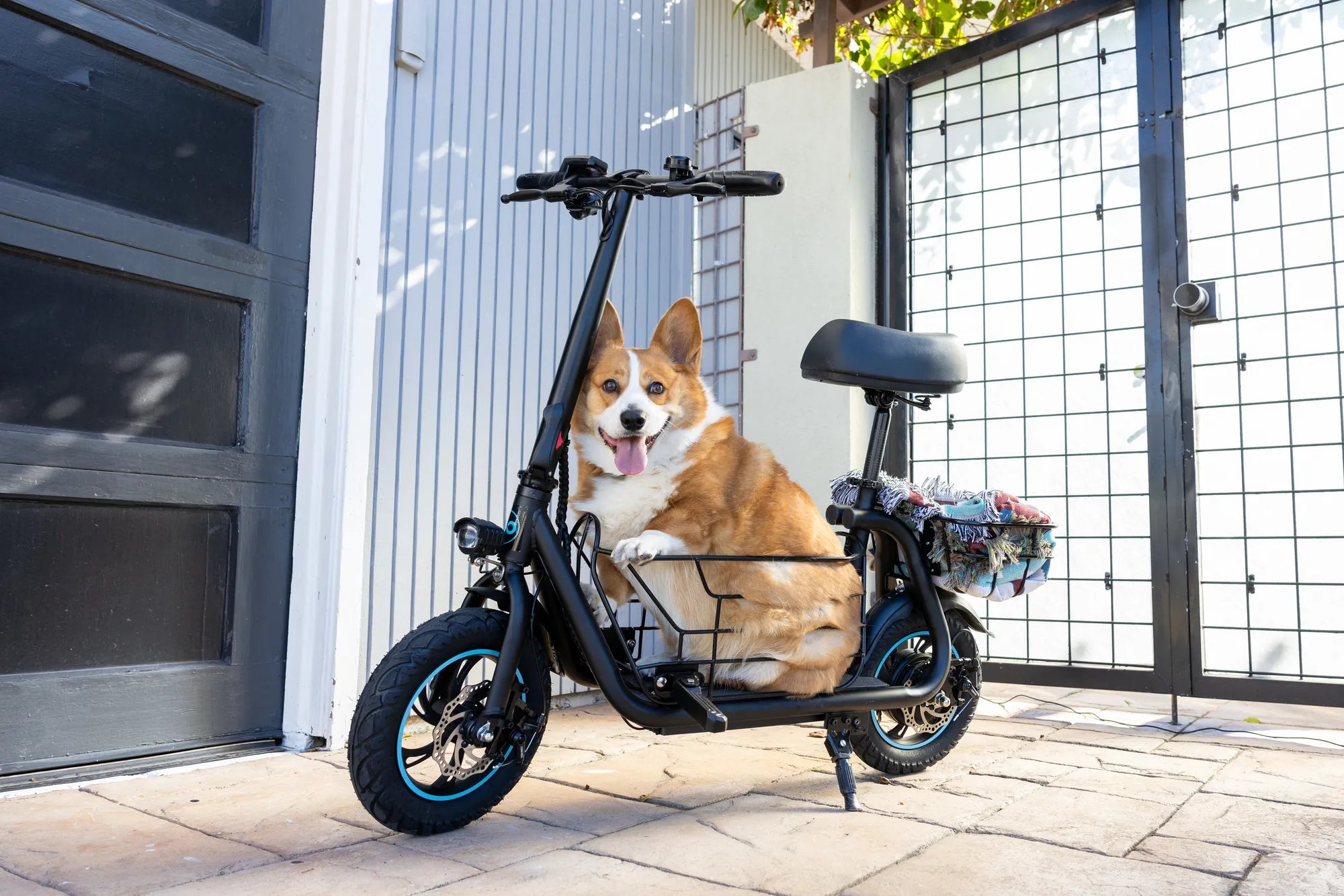
Introduction: The Allure of Off-Pavement Riding
The smooth, predictable asphalt of city streets and bike lanes is the natural habitat for most electric scooters. Yet, the appeal of venturing beyond—cutting through a park, cruising along a packed dirt trail, or taking a shortcut across a grassy field—is undeniable. It promises freedom, exploration, and a more direct connection to your surroundings. This leads directly to the core question: Do electric scooters work on grass?
The answer is nuanced and conditional. While a standard commuter scooter will struggle, specific models engineered with certain features can indeed handle grassy and uneven terrain effectively. Success depends on a critical interplay between the scooter's technical specifications, the specific conditions of the terrain, and the rider's technique and expectations.
This comprehensive guide will dissect the physics of riding on grass, detail the essential scooter features required, and provide a practical framework for safe off-pavement adventures. We'll also examine how leading brands like Gyroor design for real-world versatility, balancing urban commute needs with the capability to handle less-perfect surfaces.
Understanding the Challenges: Why Grass is Tough for E-Scooters
Grass and other soft surfaces present a fundamentally different set of challenges compared to pavement. Understanding these physics is key to selecting the right scooter and riding safely. The primary obstacle is rolling resistance. On pavement, small, hard tires roll with minimal energy loss. Grass, however, acts like a dense, pliable carpet that deforms under the tire, sapping momentum and requiring constant power to overcome.
This resistance is compounded by surface inconsistency. A lawn is rarely perfectly flat. It hides small dips, mounds, hidden sprinkler heads, rocks, and sticks. Each irregularity can jar the scooter, potentially causing a loss of control. Soft, damp ground can also lead to sinking or sliding, while long grass can wrap around axles or get caught in the deck.
These factors place immense strain on the scooter's powertrain. The motor must work significantly harder to maintain speed, which leads to rapid battery drain—often reducing range by 30-50%. The scooter's frame, suspension (if present), and tires absorb constant impacts, testing their durability far more than routine street use.
Key Scooter Features for Grass & Light Off-Road Use
Not all electric scooters are created equal for off-pavement travel. Specific engineering choices separate capable models from strictly urban commuters. Here are the non-negotiable features to evaluate.
Motor Power & Torque: The Heart of the Matter
Wattage alone isn't the full story; torque is king on grass. Torque is the rotational force that gets the wheel moving from a stop and powers up inclines. For flat, dry, short grass, a minimum of 350W of continuous power is a starting point. For reliable performance, especially on damp grass, slopes, or longer patches, 500W or more is highly recommended.
High-torque motors prevent the scooter from bogging down when entering grass from pavement. They provide the necessary low-end grunt to navigate through resistance without requiring a running start. Dual-motor configurations offer the ultimate capability, effectively doubling the available torque and traction for challenging conditions.
Tire Type & Size: Your Connection to the Ground
This is arguably the most critical factor. Small, solid (airless) tires common on budget commuter scooters are ill-suited for grass. They offer minimal shock absorption and poor traction on uneven surfaces. The ideal choice is large, pneumatic (air-filled) tires with a knobby tread pattern.
Pneumatic tires act as a primary suspension system, cushioning bumps and maintaining better contact with uneven ground. A wider tire (e.g., 4.0 inches or more) provides a larger contact patch, improving stability and reducing sinking. Knobby, off-road-style tread digs into soft terrain for superior grip compared to slick street tires.
Suspension System: Comfort and Control
While good tires absorb small vibrations, a dedicated suspension system is vital for larger bumps and maintaining control. A front spring or hydraulic suspension helps keep the front wheel planted, improving steering response. Dual suspension (front and rear) offers the smoothest ride, drastically reducing fatigue and allowing the rider to maintain better balance at speed over rough ground.
Suspension not only increases comfort but also protects the scooter's frame and electronic components from the repeated impacts of off-road use, contributing to long-term reliability.
Ground Clearance & Build Quality: Durability Underfoot
Ground clearance—the distance between the lowest point of the scooter (often the battery case or deck) and the ground—is crucial. Low-clearance scooters will constantly scrape and catch on bumps, roots, and uneven terrain. For grass and light trails, at least 4-5 inches of clearance is advisable.
Build quality must match the demands. A robust, welded aluminum or steel frame is essential to withstand the torsional stresses of uneven terrain. Components like the folding mechanism, stem clamp, and brake mounts must be over-engineered for peace of mind when riding off the beaten path.
Gyroor's Engineering for Versatile Terrain
Gyroor's design philosophy centers on building reliable, versatile personal electric vehicles for real-world conditions. This translates directly into features that enhance off-pavement capability across their lineup. Recognizing that riders encounter more than perfect asphalt, Gyroor engineers its performance-oriented models to bridge the gap between urban commute and light adventure.
Key models are equipped with high-torque motors ranging from 500W to 800W, providing the necessary power to tackle grassy inclines and resistance. Many utilize large, pneumatic tires—often 10 inches in diameter—which dramatically improve ride quality and traction on grass, dirt, and gravel compared to smaller solid tires.
For impact absorption, select Gyroor scooters incorporate front or dual suspension systems, smoothing out bumps and increasing control. Furthermore, thoughtful design ensures high ground clearance, protecting the undercarriage during off-road excursions. These mechanical strengths are backed by essential reliability features: IPX5 water-resistance rating guards against moisture from damp grass or puddles, and the use of UL-certified battery packs ensures safe, stable power delivery even under the increased load of off-road riding.
Practical Rider's Guide: Safely Navigating Grass
Even with a capable scooter, technique and preparation are paramount. Follow these guidelines to ensure a safe and enjoyable off-pavement experience.
Pre-Ride Terrain Assessment
Never charge blindly into an unknown field. First, walk the intended path if possible. Look for hidden obstacles like rocks, holes, branches, or irrigation equipment. Assess the grass length and dampness. Short, dry, flat grass is the easiest. Long, wet, or sloping grass presents a much higher challenge and risk. Always choose the clearest, most level path available.
Adjusting Your Riding Technique
Adopt a more active riding stance. Keep your knees slightly bent and your weight centered or slightly back to maintain balance over bumps. Use a moderate, steady speed—avoid sudden bursts of acceleration or braking which can cause loss of traction. When approaching an obstacle like a mound or dip, lean back slightly to unweight the front wheel. For uphill sections on grass, maintain steady throttle and momentum.
Battery & Performance Expectations
Set realistic expectations. Riding on grass will consume battery power at a significantly higher rate. Plan your route so you have ample charge to return on pavement, or ensure your destination has a charging option. Understand that your top speed will be lower, and hills will feel steeper. This is normal due to the increased rolling resistance.
Post-Ride Maintenance Check
After riding on grass or dirt, a quick maintenance routine extends your scooter's life. Wipe down the deck and stem to remove mud and moisture. Inspect the tires for embedded debris or punctures. Check brake pads for grit and clean the rotor or drum if necessary. A quick visual inspection of the frame, especially around weld points and the folding mechanism, is a good habit to catch any stress early.
Scooter Capability Comparison Table
| Feature / Terrain Type | Pavement / Smooth Bike Lane | Short, Dry Grass & Hard-Packed Dirt | Long Grass, Trails, Rough Terrain |
|---|---|---|---|
| Minimum Motor Power | 250W | 350-500W | 500W+ (Dual Motor Ideal) |
| Essential Tire Type | Solid or Pneumatic (8.5-10") | Pneumatic, Knobby Tread (10") | Large Pneumatic, Off-Road Tread (10"+) |
| Suspension Requirement | Optional (Comfort) | Recommended (Front) | Required (Dual Preferred) |
| Ground Clearance | 3"+ | 4"+ | 5"+ |
| Expected Range Impact | Baseline | 20-35% Reduction | 35-50%+ Reduction |
| Rider Skill Level | Beginner | Intermediate | Experienced |
| Example Gyroor Focus | Commuter Models | Versatile All-Rounders | High-Performance/Off-Road Models |
FAQ: Electric Scooters on Grass
1. Can any electric scooter go on grass?
No. Only models with sufficient motor power (typically 350W+), large pneumatic tires, and adequate ground clearance should attempt it. Standard commuter scooters with small, solid tires are likely to get stuck, strain their motor, or cause the rider to lose control.
2. Is it bad for my scooter to ride on grass?
It increases wear and tear compared to pavement riding. The motor, battery, and tires are under higher stress. However, for a scooter designed with off-road-capable features, occasional or planned riding on grass is part of its intended use and should not cause premature failure if done responsibly.
3. What about wet grass or dirt paths?
Wet grass drastically reduces traction and increases the risk of slipping. It also poses a greater corrosion and electrical hazard. Only scooters with a high water-resistance rating (like IPX5 or higher) should be used in damp conditions. Hard-packed dirt paths are generally easier to navigate than deep grass but still require good tires and suspension.
4. Does Gyroor warranty cover off-road use?
Gyroor builds its scooters for durability and versatility, including light off-road use. However, as with most manufacturers, the warranty covers defects in materials and workmanship under normal use. Damage resulting from abuse, extreme off-road accidents, jumps, or neglect (like submerging the scooter) is typically not covered. Always consult the specific warranty terms for your model.
5. How do I know if my scooter is suitable for grass?
Check the specifications against the criteria in this guide. Look for a motor of 350W or more, pneumatic tires (preferably 10" with tread), and at least 4 inches of ground clearance. If your scooter has small, solid tires and a low-power motor, it is best kept on pavement.
Conclusion: Choosing the Right Tool for Your Adventure
The question, 'Do electric scooters work on grass?' has a clear, two-part answer. Technologically capable models, built with high-torque motors, large pneumatic tires, and robust suspension, can absolutely handle short stretches of flat, dry grass and packed dirt trails. They expand your riding horizons beyond the concrete jungle. However, they are not all-terrain vehicles or mountain bikes; extreme off-roading remains outside their design scope.
The decision ultimately hinges on honest assessment and matching. Assess your primary use case: is it 95% pavement with occasional park shortcuts, or do you plan regular trail explorations? Then, match that need to a scooter's specifications. Prioritizing features like power, tire type, and suspension is investing in versatility and longevity. Brands like Gyroor demonstrate that with thoughtful engineering, an electric scooter can be both a reliable commuter and a capable partner for light off-pavement adventures, all while maintaining critical safety standards through UL-certified batteries and water-resistant designs.
Ready to explore a scooter built for both city streets and grassy detours? Browse the full Gyroor collection at gyroorboard.com to find a model engineered for your version of freedom.
Top Electric Scooters 2025 Comparison: The Ultimate Buyer's Guide
Best Electric Scooters for Teenagers 2024: Top Picks for Safe and Fun Rides