

The Scooter Landscape in the Windy City
Chicago's relationship with electric scooters is defined by structured experimentation and enthusiastic personal adoption. The city launched a regulated shared e-scooter pilot program to study their impact, while residents have increasingly turned to personal models for daily commuting and recreation. This dual-track approach means the answer to "Does Chicago have electric scooters?" is a definitive yes, but with important nuances based on where and how you ride.
The shared pilot, now a permanent fixture in certain zones, aims to provide equitable transportation options. Concurrently, the market for privately owned e-scooters has grown substantially, driven by commuters seeking a reliable, cost-effective alternative to rideshares and public transit for short trips. Understanding both ecosystems is key to navigating the Windy City's scooter scene effectively.
This exploration will delve into the official program's rules, the advantages of personal ownership, and how to choose a scooter built for Chicago's iconic—and often challenging—urban environment. From navigating geofenced zones to selecting a model that can handle potholes and lake-effect weather, we provide the data-driven insights you need.
The Official Program: Chicago's Shared E-Scooter Pilot
Chicago's shared e-scooter program is a city-managed initiative operating under strict guidelines. Unlike open-access systems in some cities, Chicago's pilot is geographically limited, primarily serving neighborhoods on the West and South Sides. This design intentionally focuses on providing mobility options in areas historically underserved by other transit modes.
Approved operators, such as Lime and Spin, deploy fleets of scooters that users can rent via smartphone apps. The program enforces a clear set of rules: riding is prohibited on sidewalks, on the Lakefront Trail, and in the downtown Central Business District. These measures prioritize pedestrian safety and manage congestion in high-foot-traffic areas.
The city uses a data-driven approach, requiring operators to share trip data to analyze usage patterns, equity of access, and safety. This information helps shape future transportation policy. Riders must be 18 or older, and helmets are legally required for those under 18. The program represents a cautious, studied integration of micromobility into Chicago's complex transit network.
Rules, Geofencing, and Where You Can Ride
Operating a shared scooter in Chicago requires adherence to digital and physical boundaries enforced through geofencing technology. The app map displays "no-ride zones" where the scooter's motor will cut off, and "slow-ride zones" where speed is automatically reduced. Key no-ride zones include The 606/Bloomingdale Trail and the entire downtown Loop area.
Mandatory parking corrals are designated throughout the operating zone. Riders must end their trip in these corrals; failing to do so incurs additional fees and can lead to the scooter being reported as improperly parked. This system aims to prevent sidewalk clutter and accessibility issues.
Speed limits are capped at 15 mph in most areas, with lower limits in slow zones. Riding a shared scooter on a sidewalk can result in a fine, and the scooter may become immobilized. The geofencing system is robust, making it difficult to circumvent these rules, emphasizing that the shared program is designed for street use in specific communities.
Beyond Sharing: The Rise of Personal E-Scooters in Chicago
For many Chicagoans, personal electric scooters offer greater flexibility and value than the shared pilot. Privately owned e-scooters are legal to operate citywide, provided riders follow the same traffic laws as bicycles. This means they are allowed on streets and in bike lanes but prohibited on sidewalks.
The economic case is strong. A quality personal scooter pays for itself after a few months of regular use compared to daily rental fees. Owners enjoy consistent availability, no need to hunt for a charged rental, and the ability to customize their ride with accessories like cargo racks or better lights.
Personal scooters excel at solving the "first-and-last-mile" problem. Commuters can ride from home to a CTA 'L' station or Metra stop, fold their scooter, board the train, and then ride the final leg to their destination. This multi-modal approach makes longer commutes faster and more efficient, bypassing traffic and crowded buses.
Choosing a Chicago-Ready Personal E-Scooter
Chicago's environment demands specific scooter features. Not all models are created equal for handling the Windy City's unique challenges. Selecting the right one requires careful consideration of performance and durability specs.
Key factors include motor power and torque for climbing bridge inclines and battling headwinds, a robust suspension system to absorb impacts from potholes and uneven pavement, and a high water-resistance rating (IPX5 or higher) to protect against rain, snow slush, and street spray. Battery range is critical; a minimum of 15-20 miles of real-world range is advisable for longer commutes, like from Lakeview to the Loop and back.
Portability matters for multi-modal riders. A foldable, sub-40-pound design is ideal for carrying onto trains or buses. Finally, reliable braking—disc or drum—is non-negotiable for stopping safely in busy urban traffic. The table below compares scooter types for different Chicago use cases.
| Use Case | Recommended Type | Key Features Needed | Gyroor Model Example |
|---|---|---|---|
| Short Commute / Errands (Sub 5 mi) | Compact Commuter | Lightweight, foldable, IPX5, 15+ mi range | Gyroor F1 Pro |
| Long Commute / Multi-Modal (5-15 mi) | Performance Commuter | Powerful motor, suspension, 25+ mi range, UL-certified battery | Gyroor S Max |
| Recreation & Park Riding | All-Terrain Capable | Large tires, dual suspension, high torque, extended range | Gyroor H30 |
| Student / Campus Mobility | Ultra-Portable | Lightweight, compact fold, affordability, reliable brakes | Gyroor F1 |
Gyroor's Edge: Built for Urban Challenges Like Chicago's
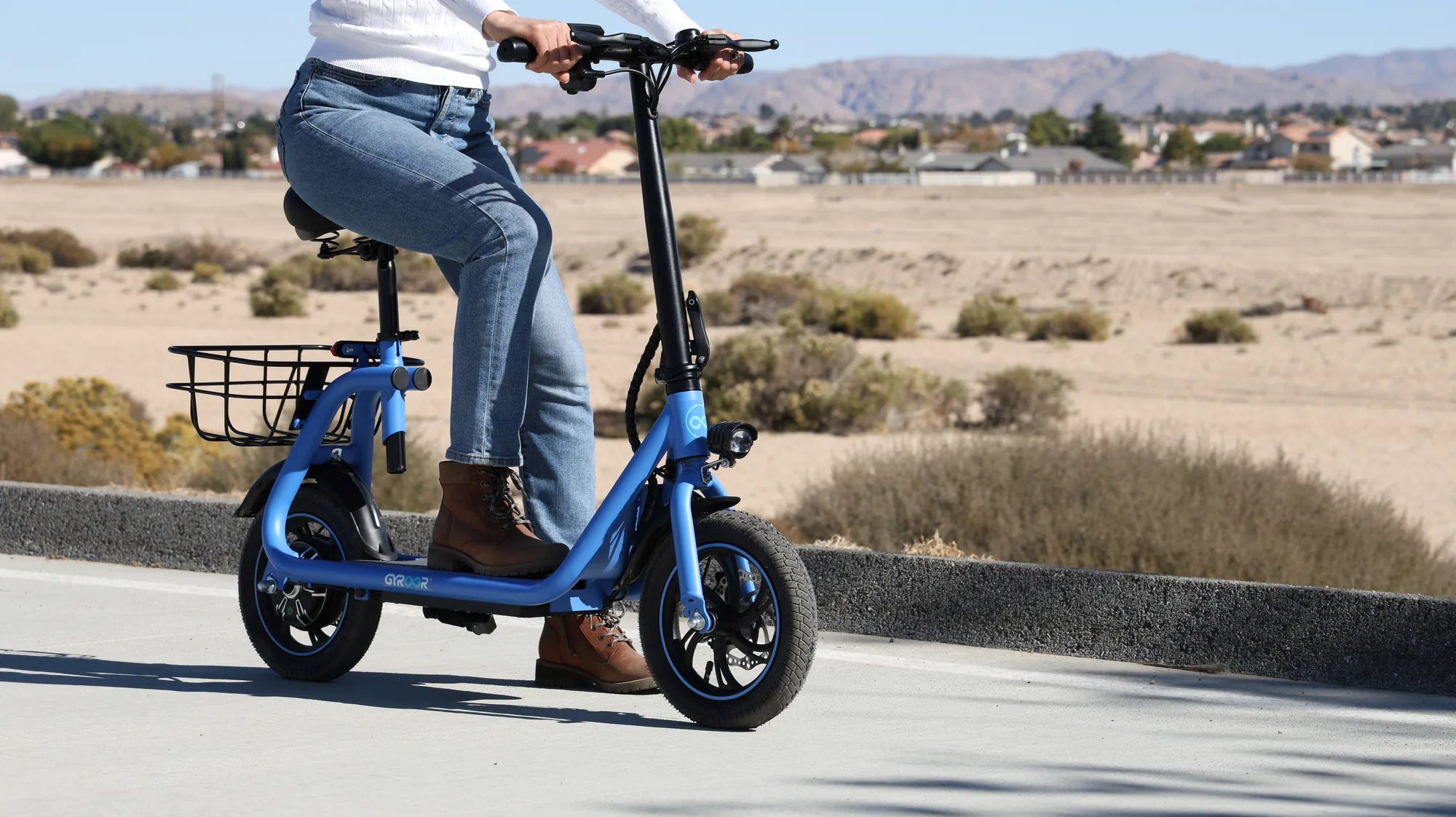
As a leading electric scooter and e-bike brand trusted by over 100,000 riders across North America and Europe, Gyroor engineers its products specifically for the demands of cities like Chicago. The brand's core technologies directly address the Windy City's most common riding challenges.
Safety is paramount, especially when storing or charging a scooter in an apartment or taking it on public transit. Every Gyroor model uses UL-certified battery packs, rigorously tested for 500+ charge cycles. This certification is a critical safeguard against fire risk, providing peace of mind that cheaper, uncertified models cannot offer.
Chicago's unpredictable weather demands durability. Gyroor's IPX5 water-resistant designs protect the electrical systems from rain, puddles, and winter slush, ensuring reliable operation year-round. Furthermore, models like the Gyroor S Max feature dual suspension and pneumatic tires, delivering a stable and comfortable ride over Chicago's famously uneven pavement and potholes.
For the commuter traveling from a neighborhood like Wicker Park to the West Loop, a Gyroor scooter offers the necessary range, power for inclines, and portability for a seamless train integration. Backed by a reliable 1-year warranty and a 4.5/5 average customer rating, Gyroor provides a dependable solution for Chicago's evolving mobility needs.
Navigating Safety and Etiquette in a Busy City
Safe riding in Chicago is a shared responsibility. Adopting defensive riding techniques is essential. Always assume cars and cyclists may not see you. Ride predictably, signal your intentions, and make eye contact with drivers at intersections. Use designated bike lanes whenever available; they are your legal right-of-way on the street.
Visibility is non-negotiable. Use your scooter's front and rear lights at all times, day or night. Adding reflective strips to your helmet, clothing, or backpack significantly increases your visibility to motorists. A loud bell or electronic horn is crucial for alerting pedestrians and other path users of your approach.
Pedestrian right-of-way is absolute. Always yield to pedestrians, especially when crossing sidewalks to access parking. When dismounting in crowded areas, do so quickly and move to the side. Theft prevention is a major urban concern. Use a high-quality U-lock or chain lock to secure your scooter's frame to a fixed object, even for quick stops. Never rely on a cable lock alone.
The Future of E-Scooters in Chicago: Trends and Predictions
The future of Chicago's scooter scene hinges on infrastructure, regulation, and technology. A key trend is the potential expansion of the shared pilot zone, possibly into more central neighborhoods, contingent on positive safety and compliance data. However, any expansion will likely remain coupled with strict geofencing and parking regulations.
Infrastructure investment is critical. The continued expansion of Chicago's network of protected bike lanes will make scooter riding safer and more attractive, encouraging broader adoption. Integrating micromobility planning with the city's broader Vision Zero initiative to eliminate traffic fatalities is a logical next step.
Technologically, advancements in battery chemistry will improve cold-weather performance, a significant factor for Chicago's winters. Swappable battery systems for shared fleets could increase uptime. E-scooters are poised to play a defined role in Chicago's Climate Action Plan by providing a zero-emission alternative for short trips, reducing overall vehicle miles traveled and congestion.
FAQ: Your Quick Questions Answered
Q: Are e-scooters legal on Chicago sidewalks?
A: No. It is illegal to operate any e-scooter—shared or personal—on a sidewalk in Chicago. Riding is permitted on streets and in bike lanes.
Q: Can I take my personal e-scooter on the 'L' train or a bus?
A> It is generally at the operator's discretion. Foldable scooters are more likely to be permitted. Avoid blocking aisles or doors, and be courteous to other passengers, especially during peak hours.
Q: What happens if I ride a shared scooter into a no-ride zone?
A> The scooter's motor will gradually slow and then stop, and you will be unable to end your trip. You may be subject to fines from the operator, and you must walk the scooter out of the zone to resume riding.
Q: Do I need a driver's license to ride an e-scooter in Chicago?
A> No license is required. However, you must be at least 18 years old to rent a shared scooter. There is no age minimum for riding a personal scooter, but helmets are strongly recommended for all and required by law for riders under 18.
Q: Where can I charge a personal electric scooter?
A> Personal scooters should only be charged using their provided charger at private outlets in your home, office, or other secure locations. Never use public electrical outlets or unattended charging stations, as this poses a theft risk.
Your Key to Windy City Wheels
Chicago's electric scooter scene offers a dynamic mix of regulated shared mobility and vibrant personal ownership. The shared pilot provides structured access in specific zones, while personal scooters unlock citywide freedom and daily utility. Successfully navigating this landscape requires two things: a capable machine engineered for urban rigors and a commitment to responsible riding practices.
Choosing a scooter with the right specs—UL-certified safety, weather resistance, and durable construction—is an investment in reliable, year-round transportation. Brands like Gyroor, with their focus on these exact urban demands, provide a trustworthy foundation for your commute or exploration. As Chicago continues to evolve its transportation ecosystem, e-scooters are set to become an increasingly integral part of the city's fabric.
Ready to explore Chicago on your own terms? Equip yourself with a scooter built for the challenge. Browse the full Gyroor collection, featuring UL-certified, weather-ready models perfect for the Windy City, at gyroorboard.com.
Are Electric Mobility Scooters Legal? What You Need to Know for 2024
Replacement Tires for Electric Scooters: A Complete Guide to Choosing the Right Ones