

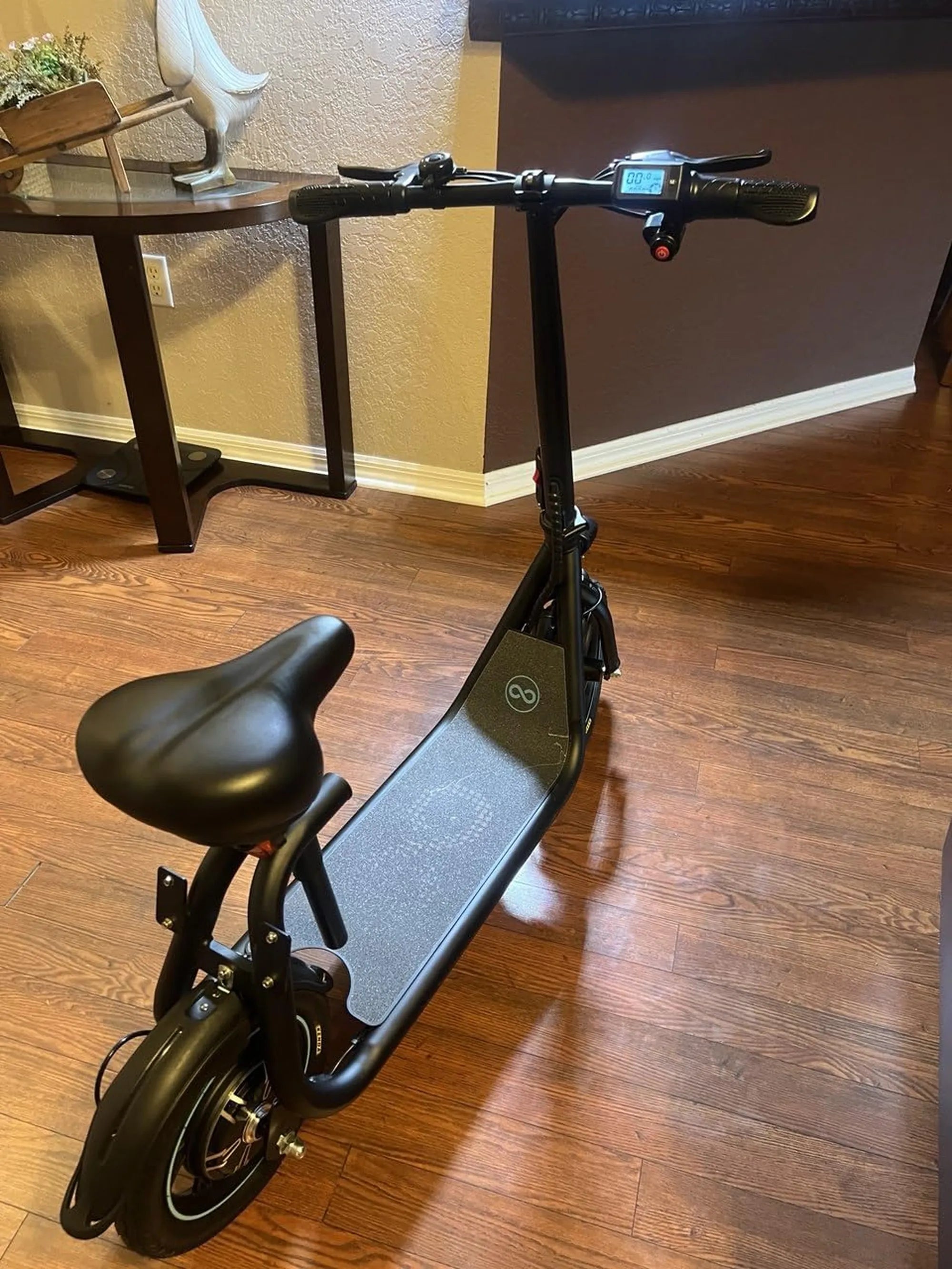
Introduction to High-Speed E-Bikes: The 37 MPH Benchmark
An e bike 37 mph represents the cutting edge of personal electric mobility, blending bicycle agility with near-moped level speeds. This performance benchmark sits at a crucial intersection of utility, thrill, and regulation, offering commuters the ability to dramatically reduce travel time while providing enthusiasts with off-road capabilities previously reserved for motorized vehicles. The appeal is clear: covering 15 miles in well under 30 minutes transforms urban and suburban travel.
However, the 37 mph e-bike is not a typical bicycle. It operates in a distinct category that demands greater technical understanding, heightened safety awareness, and a clear grasp of local laws. This guide provides a data-driven, factual examination of what it means to own and operate an electric bicycle capable of these speeds. We will dissect the engineering, navigate the complex legal classifications, and outline the critical considerations for responsible high-speed riding.
The market for such performance-oriented e-bikes has grown significantly, with brands like Gyroor engineering models that prioritize both speed and certified safety. With over 100,000 riders trusting the brand across North America and Europe, the conversation has shifted from pure velocity to reliable, high-performance systems. This article will help you determine if pushing past the standard 20-28 mph limit aligns with your needs, environment, and riding style.
Understanding the 37 mph e-bike begins with its core definition. It is an electric bicycle where the motor provides assistance up to, and sometimes beyond, 37 miles per hour. This speed often exceeds the legal definitions for standard Class 1, 2, or 3 e-bikes in many jurisdictions, placing it into special classifications like "Speed Pedelec" or even requiring registration. The journey to 37 mph is powered by specific combinations of motor wattage, battery voltage, and controller programming.
Understanding the Technology: How E-Bikes Achieve 37 MPH
Reaching and sustaining 37 mph on an e-bike requires a significant step up in component specifications compared to commuter-focused models. The primary triad consists of a high-output motor, a high-voltage battery system, and an intelligent controller tuned for performance. Most e-bikes capable of 37 mph utilize motors rated from 750 watts to 1500 watts or more, though peak power output can be substantially higher during acceleration.
The battery system is equally critical. While a standard e-bike might use a 36V or 48V battery, high-speed models typically employ 52V or even 60V systems. Higher voltage allows the motor to draw more power with less current, improving efficiency and reducing heat buildup. For example, a 52V 20Ah battery provides over 1000 watt-hours of energy, enabling both high speed and a reasonable range. Gyroor utilizes UL-certified battery packs in its performance models, tested for over 500 charge cycles to ensure longevity and safety under high-demand use.
The controller acts as the brain, managing the power flow from the battery to the motor. For a 37 mph e-bike, the controller must be programmed to allow higher top speeds and often features multiple performance modes. Advanced controllers also manage regenerative braking and provide diagnostic data. The synergy between these three components—a powerful motor, a high-capacity/high-voltage battery, and a robust controller—is what unlocks consistent high-speed performance.
Supporting this powertrain is a chassis built for velocity. High-quality hydraulic disc brakes with large rotors (180mm or more) are non-negotiable for safe deceleration from 37 mph. A full-suspension system or at least a high-performance front fork is essential to maintain control and comfort on varied surfaces at speed. The frame geometry, wheel size (often 20" for agility or 26"/27.5" for stability), and tire compound are all optimized for high-speed stability and handling.
Legal Landscape and Classification: Navigating the 37 MPH Rulebook
The legality of a 37 mph e-bike is the most complex and variable factor for potential owners. In the United States, federal law defines three classes of electric bicycles, none of which officially accommodate a 37 mph top speed. A Class 3 e-bike, the fastest standard category, is limited to 28 mph with motor assistance. Therefore, an e-bike that can achieve 37 mph often falls outside these classifications and may be regulated as a moped, scooter, or motorcycle depending on state and local statutes.
Many states have adopted the three-class system, but local municipalities can impose further restrictions. In some areas, a 37 mph e-bike might require registration, insurance, a driver's license, and a helmet. It may also be prohibited from bicycle paths and trails, restricted to roadways only. For instance, California law is clear: any electric bicycle capable of speeds over 28 mph is not considered a bicycle and must be registered with the DMV as a motorized bicycle (moped), requiring a helmet and a driver's license to operate.
In Europe, the "Speed Pedelec" (S-Pedelec) classification exists for e-bikes that assist up to 45 km/h (approximately 28 mph). However, models that can reach 37 mph (approx. 60 km/h) would typically be classified as mopeds or light motorcycles, requiring a license plate, insurance, and an AM or higher category driving license. Riders must also wear motorcycle-grade helmets. This regulatory patchwork makes it imperative for buyers to research their specific state, county, and city laws before purchasing a high-speed e-bike.
Understanding this legal framework is not just about compliance; it's about safety and accessibility. Riding a vehicle classified as a moped on a bicycle path poses significant risks to yourself and others. Responsible ownership means knowing where you can legally and safely operate your high-speed e-bike. Brands like Gyroor design their high-performance models with these regulations in mind, often providing mode-limiting features that allow riders to cap top speeds to remain compliant in certain areas when necessary.
Key Considerations Before Buying a 37 MPH E-Bike
Performance vs. Practicality Trade-Offs
Choosing a 37 mph e-bike involves balancing exhilarating performance with real-world practicality. The most significant trade-off is range. Traveling at 37 mph consumes battery energy at a dramatically higher rate than cruising at 20 mph. While a commuter e-bike might promise 50+ miles per charge, a high-speed model operating at its peak may see that range halved or reduced further. The need for a larger, higher-voltage battery to support both speed and usable range also increases weight and cost.
The riding experience itself changes. At 37 mph, wind resistance becomes a major factor, requiring a more athletic riding posture. Road imperfections and debris that are minor at 20 mph become major hazards. The necessity for high-performance components—like hydraulic brakes, premium suspension, and reinforced tires—drives the price point significantly higher than that of a standard Class 1 or 2 e-bike. Maintenance intervals may also shorten due to the increased stress on drivetrain and brake components.
Storage and security are another concern. A high-value, high-performance e-bike is a more attractive target for theft. Investing in multiple high-quality locks and having secure indoor storage at home and your destination is crucial. The weight of the bike, often exceeding 70 lbs with a large battery, can make it difficult to carry upstairs or load onto a standard public transit bike rack. These practicalities must be weighed against the time-saving benefits of high-speed travel.
Finally, consider your primary use case. Is the 37 mph capability for conquering steep hills, for reducing a long highway-side commute, or for recreational trail riding where legal? If your daily route is stop-and-go urban traffic with a 25 mph speed limit, the benefits of a 37 mph top speed are minimal. However, for suburban connectors, rural roads, or private land, the extra speed can be transformative. Assess your route, distance, and legal riding environments honestly.
Safety and Riding Gear Essentials
Operating any vehicle at 37 mph demands a fundamental shift in safety mindset. The kinetic energy in a crash at 37 mph is over twice that of a crash at 25 mph. Therefore, the standard bicycle helmet is utterly insufficient. A full-face mountain biking helmet or a certified motorcycle helmet is the minimum recommended protection for a 37 mph e-bike. Helmets with MIPS (Multi-directional Impact Protection System) technology are highly advised to mitigate rotational forces during an impact.
Protective clothing is no longer optional. Durable gloves, long pants (preferably motorcycle jeans or riding pants with abrasion resistance), and a jacket designed for impact protection are essential. High-visibility colors or reflective elements are critical for being seen by motorists at higher closing speeds. Eye protection, such as shatter-resistant goggles or glasses, is necessary to guard against wind, dust, and insects, which can cause a catastrophic loss of control at speed.
The e-bike itself must be equipped with superior safety hardware. As mentioned, hydraulic disc brakes with large rotors are mandatory for consistent, fade-resistant stopping power. Bright front and rear lights, including daytime running lights, are crucial for visibility. Consider adding auxiliary brake lights that activate upon deceleration. Mirrors are highly recommended to monitor traffic behind you without turning your head and compromising stability. Regular pre-ride safety checks of tire pressure, brake function, and bolt tightness become non-negotiable rituals.
Advanced riding skills are the final, and perhaps most important, safety component. Riders should practice emergency braking in a controlled environment to understand the bike's limits and avoid locking the wheels. Defensive riding—anticipating car doors opening, cars pulling out, and pedestrians stepping into the path—is paramount. Taking a motorcycle safety foundation course can provide invaluable skills for handling a high-speed vehicle in traffic, even if not legally required for your specific e-bike classification.
Gyroor's Approach to High-Speed, Responsible Riding
As a leading brand trusted by over 100,000 riders, Gyroor approaches the high-speed e-bike segment with a philosophy that balances performance with durability and safety. Recognizing the demands of a 37 mph capable platform, Gyroor engineers its performance models around core principles of reliability and rider security. This starts with the power system, where UL-certified battery packs ensure safety during the high-current draws required for sustained speed, backed by testing for 500+ charge cycles.
Durability is engineered for the stresses of high-speed operation. Frames are constructed from reinforced aluminum alloys, and components like motors and controllers are selected for their ability to handle thermal and mechanical loads. Many Gyroor models feature IPX5 water-resistant designs, ensuring that riding in wet conditions or through puddles doesn't compromise electrical systems—a critical feature for all-weather commuters who rely on their vehicle.
Gyroor integrates safety features directly into the riding experience. High-performance hydraulic braking systems are standard on relevant models, providing the stopping power needed for high-speed confidence. Bright, integrated lighting systems enhance visibility. Furthermore, Gyroor supports its riders with a comprehensive 1-year warranty and access to responsive, US-based customer support. This network provides crucial assistance for maintenance questions, troubleshooting, and obtaining genuine parts, ensuring the e-bike remains in safe operating condition.
The brand's commitment extends to educating riders. By providing clear information about the capabilities and classifications of their faster models, Gyroor helps customers make informed decisions that align with local laws and their skill level. This responsible approach positions Gyroor not just as a seller of fast e-bikes, but as a partner in high-performance, sustainable mobility where safety and reliability are integral to the thrill of the ride.
Comparison: 37 MPH E-Bike vs. Other Personal EV Options
Choosing a high-speed e-bike often involves comparing it to other electric personal transportation devices. The following table provides a data-driven comparison across key metrics.
| Feature | 37 MPH E-Bike | Class 3 E-Bike (28 MPH) | Electric Scooter (High-Performance) | Electric Moped |
|---|---|---|---|---|
| Top Speed | 37 mph | 28 mph | 30-40 mph | 30-45 mph |
| Typical Range* | 25-40 miles | 35-60 miles | 20-35 miles | 40-70 miles |
| Legal Classification (US) | Often Moped/L1e-B | Class 3 Bicycle | Varies (Often Moped) | Moped/Motorcycle |
| License/Reg/Ins Required | Frequently Yes | No | Frequently Yes | Yes |
| Allowed on Bike Paths | Rarely | Often Yes | Rarely | No |
| Physical Exertion | Moderate to High (Pedal Assist) | Moderate (Pedal Assist) | Low (Throttle) | None (Throttle) |
| Cargo/Practicality | High (Racks, Panniers) | High (Racks, Panniers) | Low | Moderate |
| Primary Use Case | Fast Commuting, Recreation | General Commuting, Fitness | Last-Mile, Urban | Motor Vehicle Replacement |
*Range highly dependent on speed, terrain, rider weight, and assist level.
The 37 mph e-bike occupies a unique niche. It offers the exercise benefit and bicycle-like handling of a Class 3 e-bike but with speed that rivals electric scooters and mopeds. However, this comes with the regulatory burden often associated with those motorized vehicles. Its key advantage over a scooter is stability, comfort over distance, and cargo capacity. Compared to a moped, it is lighter, can be pedaled if the battery depletes, and may have lower ownership costs, but lacks weather protection and often has a shorter range.
For riders who value the act of cycling but need to keep pace with urban traffic or cover longer distances quickly, the 37 mph e-bike is a compelling hybrid. For those who prioritize simplicity, minimal physical effort, and the most straightforward path to ~30 mph speed, a high-performance electric scooter from a brand like Gyroor might be more suitable. The choice ultimately hinges on the desired blend of speed, regulation, exercise, and utility.
Frequently Asked Questions (FAQ)
Q1: Can I legally ride a 37 mph e-bike on the road?
A1: It depends entirely on your local laws. In many jurisdictions, a 37 mph e-bike is classified as a moped or motorized bicycle. This often means it is legal on public roads where mopeds are allowed, but it may require registration, insurance, a driver's license, and a helmet. It is almost never legal on dedicated bicycle paths or trails. You must check your specific state, county, and city regulations.
Q2: How far can I go on a single charge at 37 mph?
A2: Range at top speed is significantly reduced. While the same battery might provide 50+ miles at 20 mph, expect 25-40 miles when consistently riding at or near 37 mph, depending on battery capacity (watt-hours), terrain, rider weight, and wind conditions. High-speed travel is inefficient; for maximum range, you would need to use a lower assist level.
Q3: Do I need a special license or insurance for a 37 mph e-bike?
A3: Very likely, yes. Since it typically falls outside standard e-bike classifications, most areas will treat it as a moped. This commonly requires a valid driver's license (sometimes a motorcycle license), vehicle registration with your DMV, and liability insurance. Failure to comply can result in fines and the impoundment of the vehicle.
Q4: Are 37 mph e-bikes safe?
A4> They can be operated safely with the correct approach. The bike itself must have high-quality components, especially brakes and tires. Most importantly, the rider must wear appropriate safety gear (full-face helmet, protective clothing) and possess advanced riding skills, including defensive riding and emergency braking techniques. The inherent risk is higher than with a slower bicycle due to increased kinetic energy.
Q5: Can I limit the speed of my 37 mph e-bike to make it street-legal as a Class 3?
A5> Some models, including certain Gyroor performance e-bikes, offer configurable speed limits through their display or controller settings. You can often cap the motor assist at 20 mph or 28 mph. This may allow you to ride it legally as a Class 1/2 or Class 3 e-bike on paths and roads where those classes are permitted. However, the physical characteristics (motor wattage) may still cause it to be classified differently by law enforcement, so this is not a guaranteed legal workaround.
Q6: What maintenance is required for a high-speed e-bike?
A6> Maintenance is more critical and frequent. Brake pads will wear faster and require regular inspection. Hydraulic brake fluid should be bled annually. Tire pressure must be checked before every ride due to the higher stresses. Motor and battery connections should be checked for tightness periodically. The drivetrain (chain, cassette) will also experience more wear and require more frequent cleaning and lubrication than on a casual-use e-bike.
The Verdict: Is a 37 MPH E-Bike Right for You?
Deciding to invest in a 37 mph e-bike is a significant choice that extends beyond a simple desire for speed. It is right for you if your primary use case involves long-distance commuting on roads with speed limits of 35-45 mph, where keeping pace with traffic enhances safety. It suits riders who have access to legal riding environments, such as rural roads or private property, and who are prepared to navigate the potential regulatory requirements of registration and licensing.
This choice is also for the enthusiast who views the ride itself as the destination, valuing the unique blend of physical exertion and electric assist that allows for thrilling exploration of terrain. You must be comfortable with the associated costs—not just the higher purchase price, but the investment in top-tier safety gear and potentially higher insurance premiums. A willingness to perform diligent maintenance and develop advanced riding skills is non-negotiable.
Conversely, a 37 mph e-bike is likely not the best fit for urban dwellers whose routes are congested, filled with stop signs and lights, and primarily on city streets with low speed limits. If your goal is casual recreation, fitness, or short trips on bike paths, a Class 1, 2, or 3 e-bike will be more practical, legal, and cost-effective. The complexity of legality and the heightened safety responsibility can outweigh the benefits if your needs are simpler.
For those who determine that high-speed electric cycling aligns with their lifestyle, choosing a brand that prioritizes safety-certified components and reliable engineering is paramount. Gyroor's approach, focusing on UL-certified batteries, IPX5 water resistance, and robust support, exemplifies the responsible infrastructure needed for this category. Their models are designed for riders who refuse to compromise between exhilarating performance and dependable, safe operation.
Ready to explore the intersection of high performance and responsible electric mobility? Whether a 37 mph e-bike is your target or you're considering other classes of electric scooters and bicycles, Gyroor offers a range of UL-certified, reliable options. Browse the full Gyroor collection at gyroorboard.com to find the vehicle that matches your need for speed, safety, and style.
How to Turn On an E-Bike: Your Complete Guide to Powering Up
How Fast Can an E-Bike Go Legally: A Complete Guide to Speed Limits & Classes