

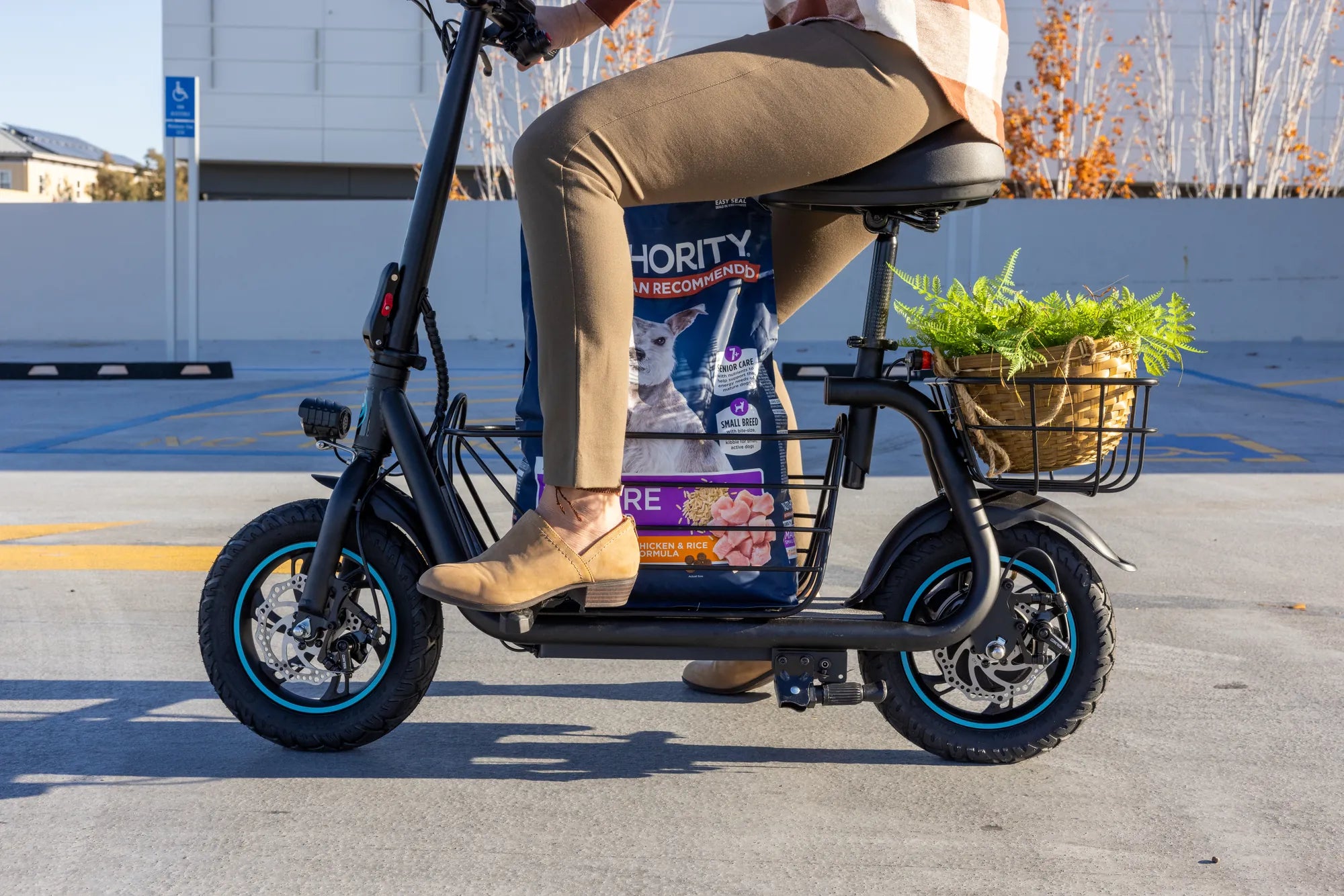
Introduction to E-Bikes for Teenagers
Choosing the right e-bike for a teenager is about more than just picking a cool-looking ride. It's about selecting a tool for responsible independence, safe transportation, and healthy outdoor activity. An e-bike for a teenager must balance capability with appropriate limits, durability with style, and fun with fundamental safety. This guide provides the data-driven framework families need to make an informed decision.
The market offers numerous options, but not all are suitable for younger riders. Key differentiators include motor power, battery safety, frame construction, and integrated safety features. A well-chosen e-bike can transform a teen's commute to school, provide a means to visit friends, and encourage exploration of local trails, all while building confidence and responsibility.
Brands like Gyroor, a leading electric scooter and e-bike brand trusted by over 100,000 riders across North America and Europe, design with these principles in mind. Their focus on UL-certified batteries, IPX5 water-resistant designs, and reliable warranties provides a foundation of safety that families can trust. This guide will reference such benchmarks to help you evaluate any e-bike for a teenager.
We will explore key considerations from safety and fit to style and technology. You'll learn how to interpret specifications, understand local regulations, and instill responsible riding habits. The goal is to empower your teen with mobility while giving you, as a parent, crucial peace of mind.
Key Considerations When Choosing a Teen E-Bike
Selecting an e-bike for a teenager requires moving beyond aesthetics to evaluate core specifications and intended use. The primary factors are safety, appropriate size and power, real-world range, and overall build quality. These elements determine not just the riding experience but also the long-term value and safety of the investment.
First, define the primary use case. Will the e-bike be for daily school commutes on paved roads, weekend trail adventures, or a mix of both? The answer directly influences the ideal style, tire choice, and necessary features like suspension or cargo racks. A commuter e-bike for a teenager has different requirements than a mountain e-bike.
Second, consider the growth factor. A teen may quickly outgrow a poorly sized frame. Look for models with adjustable seat posts and handlebars that can accommodate a growing rider over several years. The bike should fit the teen now, with room for adjustment, not be something they will 'grow into' uncomfortably.
Finally, balance capability with responsibility. An overpowered e-bike can be dangerous for an inexperienced rider. Adhering to local class definitions (Class 1 or 2) for speed and assist limits is crucial. The right e-bike for a teenager provides helpful assistance without encouraging excessive speed or risky behavior.
Safety and Build Quality First
Safety is the non-negotiable foundation. It begins with the frame: robust aluminum or steel construction that can withstand the rigors of teen use. Look for welded joints that are smooth and consistent, indicating quality manufacturing. A shaky frame is a safety hazard.
The braking system is paramount. Dual mechanical disc brakes offer reliable, all-weather stopping power superior to traditional rim brakes. For an e-bike for a teenager, consistent braking performance is essential for navigating traffic, intersections, and unexpected obstacles. Hydraulic disc brakes offer even greater modulation and control.
Integrated safety features are a must. This includes bright front and rear LED lights for visibility, not just as accessories. Reflectors on wheels and pedals are vital for low-light conditions. A loud, electronic horn or bell is necessary for alerting pedestrians and other cyclists.
Battery safety cannot be overstated. Insist on a battery pack with UL certification, like those used by Gyroor. This independent certification means the battery has passed rigorous tests for electrical, mechanical, and fire safety. An IPX5 water-resistance rating, another Gyroor standard, protects the electrical components from rain and splashes, ensuring reliable operation.
Finding the Right Fit: Size and Power
Correct frame size is critical for control and comfort. A bike that is too large is unwieldy and dangerous; one that is too small is inefficient and uncomfortable. Most manufacturers provide size charts based on rider height and inseam. The teen should be able to stand over the top tube with about 1-2 inches of clearance.
Motor power for a teen rider should be appropriate. A 250W to 350W hub or mid-drive motor is typically sufficient for flat to moderately hilly terrain, providing assist up to 20 mph (Class 1 or 2). This offers a significant boost over pedaling alone without being excessive. More powerful 500W motors are better suited for older teens or those in very hilly areas, but local laws may restrict their use.
Speed limits are often governed by law. In the U.S., Class 1 (pedal-assist up to 20 mph) and Class 2 (throttle-assist up to 20 mph) e-bikes are generally allowed wherever traditional bicycles are, with no license required. It is imperative to check your specific state and local regulations, as they can vary. Teaching your teen to respect these limits is part of responsible ownership.
The weight of the e-bike itself matters. A lighter bike (under 50 lbs) is easier for a teen to maneuver, lift onto a bike rack, or carry up stairs if necessary. While batteries and motors add weight, advanced frame materials help keep it manageable.
Battery Life and Real-World Range
Battery capacity, measured in Watt-hours (Wh), determines range. A common capacity for a teen e-bike is between 300Wh and 500Wh. Do not confuse voltage (V) alone with capacity; a 36V 10Ah battery is 360Wh (36 x 10 = 360). Higher Wh generally means longer range.
Advertised range is an ideal maximum. Real-world range for an e-bike for a teenager is affected by rider weight, terrain, wind, tire pressure, and the level of pedal assist used. Using a high assist level or throttle frequently will drain the battery faster. A realistic expectation is 20-40 miles per charge for typical use.
Consider the teen's daily needs. A 5-mile round trip to school with a 360Wh battery leaves a huge safety margin. For longer weekend adventures, planning for a round-trip within 50-70% of the max range is wise. Gyroor's UL-certified batteries are rated for 500+ charge cycles, meaning years of reliable service with proper care.
Charging safety and convenience are key. The battery should be removable for charging in a safe, dry location away from extreme temperatures. A charger with automatic shut-off prevents overcharging. Teaching your teen to never leave the battery charging unattended for extended periods is a critical safety habit.
Top E-Bike Styles for Teen Riders
Different e-bike styles cater to different riding preferences and environments. Choosing the right style enhances safety and enjoyment by matching the bike's design to its primary use. The main categories for teens are versatile commuters, adventure-ready mountain bikes, and compact specialty models.
Each style has distinct geometry, components, and features. A commuter bike prioritizes comfort and practicality, while a mountain bike focuses on durability and suspension. Understanding these differences helps narrow the search for the perfect e-bike for a teenager.
The following table compares the three primary styles across key attributes:
| Feature | Hybrid/City E-Bike | Hardtail Mountain E-Bike | Fat Tire / Folding E-Bike |
|---|---|---|---|
| Best For | Paved roads, school commutes, urban errands | Trails, parks, off-road adventures | Sand/snow, beach paths, compact storage |
| Riding Position | Upright, comfortable | Forward-leaning, athletic | Upright, stable |
| Tires | Smooth or lightly treaded, 1.5-2 inches | Knobby, aggressive tread, 2+ inches | Extra wide (3.5-4+ inches) |
| Key Features | Fenders, rear rack, integrated lights | Front suspension fork, disc brakes, durable frame | High flotation, unique look / Hinged frame, quick folds |
| Considerations | Less suitable for rough terrain | Heavier, less efficient on pavement | Slower on pavement, heavier / Smaller wheels less stable at speed |
Versatile Commuters: Hybrid and City E-Bikes
Hybrid and city e-bikes are the most practical choice for the majority of teenage riders. They are designed for efficiency and comfort on paved surfaces. The upright riding position offers good visibility in traffic and is easy on the back and shoulders, perfect for a backpack-laden school commute.
These models often come with essential practical features. Full-length fenders keep water and dirt off the rider's clothes. A rear cargo rack allows for carrying a backpack, books, or a small load of groceries. Integrated lighting systems, powered by the main battery, ensure the rider is always visible.
The tires are typically smooth or lightly treaded, reducing rolling resistance on asphalt. This makes pedaling easier and extends battery range. For a teenager using an e-bike primarily on roads and bike paths, this style offers the best blend of safety, comfort, and utility.
Brands like Gyroor incorporate these practical elements into designs that also appeal to a younger aesthetic, avoiding a purely utilitarian look. The focus is on creating a reliable e-bike for a teenager that is both a practical tool and a source of pride.
Adventure-Ready: Mountain and Off-Road E-Bikes
For the teen drawn to trails, parks, and off-pavement exploration, a hardtail mountain e-bike (with front suspension only) is an excellent choice. The front suspension fork absorbs impacts from roots and rocks, providing greater control and comfort on uneven terrain. This builds confidence when riding off-road.
These bikes feature aggressive, knobby tires that provide traction on loose dirt, gravel, and mud. The frames are built to be more robust, with geometry designed for handling slopes and technical sections. Powerful disc brakes are essential for controlled descents.
It is vital to pair this type of e-bike for a teenager with proper safety gear and education. A full-face helmet is not necessary for most trails, but a quality mountain biking helmet, gloves, and knee/elbow pads are highly recommended for off-road riding. Teaching trail etiquette—yielding to hikers, not skidding turns—is also part of responsible ownership.
Motor placement matters. Mid-drive motors, which power the bike through the chain and gears, are often preferred for mountain e-bikes as they provide better weight distribution and leverage on steep hills, working in tandem with the bike's gears.
Compact and Cool: Fat Tire and Folding E-Bikes
Fat tire e-bikes, with their extremely wide tires (often 4 inches or more), offer unique benefits. The large contact patch provides incredible stability and traction on soft surfaces like sand, snow, and mud. They have a distinctive, bold look that many teens find appealing.
However, there are trade-offs. The high rolling resistance of fat tires makes them less efficient on paved roads, reducing battery range for a given distance. They are also generally heavier. This style is best for a teen who will primarily ride on beaches, snow, or very loose trails, or who values the unique style and ultra-plush ride above efficiency.
Folding e-bikes solve a different problem: space and multi-modal transport. A folding e-bike for a teenager can be a great solution for small apartments, dorm rooms, or homes with limited garage space. They can be easily taken on public transit or stored in a car trunk.
The folding mechanism must be robust and secure. The smaller wheels (often 16-20 inches) can make the ride feel less stable at higher speeds compared to full-sized bikes. They are ideal for the teen who needs ultimate storage convenience or who combines biking with bus or train trips.
Smart Features and Teen-Friendly Tech
Modern e-bikes incorporate technology that enhances safety, security, and the user experience. For a tech-savvy teenager, these features can make the e-bike more intuitive and engaging to use, while providing parents with valuable tools for oversight and peace of mind.
These features should simplify, not complicate, the riding experience. Overly complex interfaces can be distracting. The best tech integrations are those that work seamlessly in the background to keep the rider safe, secure, and informed.
From clear displays to anti-theft systems, the right technology adds a layer of functionality that makes an e-bike for a teenager a smarter investment. It bridges the gap between a simple bicycle and a modern mobility device that a digital-native generation can appreciate.
Intuitive Controls and Display
The control interface is the primary point of interaction. A backlit LCD display is essential, showing clear, large digits for speed, battery level (as a percentage, not just bars), assist level, and trip distance. It should be readable in direct sunlight and at night.
The control pad should be within easy thumb reach on the handlebar. Simple buttons to increase/decrease assist level and turn the lights on/off are ideal. Some systems offer walk-assist mode, which helps push the bike up steep hills—a useful feature.
Bluetooth connectivity and companion smartphone apps are becoming common. For a teen's e-bike, a basic app that allows ride stat tracking (route, distance, calories) can be motivating. More advanced apps may allow parents to set speed limits or geo-fences, though these features should be used to educate rather than solely to restrict.
The pedal-assist system (PAS) should feel natural. A torque sensor, which measures how hard the rider is pedaling and provides proportional assist, feels more like an extension of the rider's effort compared to a basic cadence sensor, which provides assist based only on whether the pedals are moving. A torque sensor offers a smoother, more intuitive ride.
Connectivity and Security
E-bike theft is a serious concern. Integrated security features are a strong deterrent. A built-in wheel lock that immobilizes the rear wheel is a good first step. More advanced systems include motion-sensor alarms that emit a loud siren if the bike is disturbed.
GPS tracking is a game-changer for security and peace of mind. Some e-bikes have integrated GPS modules that allow the bike's location to be tracked via an app. This can help recover a stolen bike and also allows parents to see a teen's general location during a ride (with the teen's knowledge and agreement, as a safety measure).
Key-based or PIN-code power activation adds another layer. Without the correct key or code, the motor cannot be engaged, making the bike less attractive to thieves. Teaching your teen to always use a high-quality U-lock through the frame and rear wheel, in addition to any integrated locks, is non-negotiable.
These tech features, from Gyroor's reliable systems to other reputable brands, add value by protecting a significant investment and helping manage the risks associated with a teen's increased independence.
Building Responsible Riding Habits
The safest e-bike is operated by a responsible, educated rider. Purchasing the e-bike is only the first step. Establishing clear rules, practicing safety skills, and teaching basic maintenance are essential to ensure a positive and safe experience. This education is as important as any product feature.
Set expectations before the first ride. Discuss where the e-bike can be ridden, curfew times for riding, passenger policies (typically no passengers on standard e-bikes), and the mandatory use of safety gear. A written agreement can be a useful tool for clarity.
Practice in a safe, controlled environment like an empty parking lot. Have your teen practice starting, stopping, turning, using the brakes (especially the front brake), and looking over their shoulder without swerving. Confidence in handling reduces panic in real-world situations.
Lead by example. If you ride with your teen, follow all the same rules you set for them. Respect traffic laws, wear your helmet, and use hand signals. This reinforces that safety is a universal priority, not just a rule for kids.
Gear Up: The Non-Negotiable Safety Kit
A properly fitted helmet is an absolute mandate. It must be certified by CPSC (U.S.) or a similar standards body. Replace it after any significant impact, even if no damage is visible. The helmet should sit level on the head, with the strap snug under the chin.
High-visibility clothing is crucial, especially at dawn, dusk, or night. A reflective vest or jacket, and reflective ankle bands, make a rider far more visible to drivers. Bright colors during the day also help.
Protective gloves improve grip and protect hands in a fall. Closed-toe, sturdy shoes (not flip-flops or sandals) are essential for safe pedaling and foot placement. Eye protection, like sunglasses or clear safety glasses, shields eyes from bugs, dust, and wind.
Frame this gear not as optional but as part of the essential riding uniform, just as a football player wouldn't take the field without pads. For an e-bike for a teenager, this kit is the primary safety system.
Rules of the Road and Trail Etiquette
Teens must know and obey all local traffic laws for bicycles. This includes riding in the same direction as traffic, stopping at stop signs and red lights, and using hand signals for turns and stops. They should ride predictably, in a straight line, and avoid weaving between parked cars.
On shared-use paths, etiquette is key. Announce yourself politely when passing pedestrians ("On your left!"), pass at a safe speed, and yield to those on foot. Music headphones should be avoided or used at very low volume so ambient traffic noise can be heard.
Discuss specific hazardous scenarios: the "door zone" next to parked cars, blind intersections, and large vehicles' blind spots. Teach defensive riding: assume drivers do not see you and be prepared to react. Riding an e-bike for a teenager comes with the responsibility to be a predictable and courteous road user.
Finally, establish a "no phone while riding" rule. Texting, calling, or browsing while operating an e-bike is as dangerous as doing so while driving a car.
Maintenance 101 for Teen Owners
Basic maintenance ensures safety and prolongs the bike's life. Teach your teen the "ABC Quick Check" before every ride: Air (check tire pressure), Brakes (squeeze levers to ensure they engage), and Chain (check it's clean and lubricated).
Tire pressure is critical. Under-inflated tires increase rolling resistance (draining the battery) and risk pinch flats. Check the sidewall for the recommended PSI and use a gauge weekly. Inspect tires for embedded glass or excessive wear.
Brake pads wear down. Show your teen how to visually check pad thickness. Squealing or reduced braking power means they need inspection. Keep the chain clean and lightly lubricated with bike-specific lubricant; a dry or rusty chain damages the drivetrain.
For the battery, establish a charging routine. Avoid draining it to 0% or leaving it at 100% for weeks. For storage, a 50-80% charge is ideal. Store the bike and battery in a dry, temperature-stable place. Performing these simple checks empowers the teen as an owner and prevents minor issues from becoming major failures.
Conclusion: Empowering Independence the Right Way
An e-bike for a teenager represents a significant step toward independence, but it must be approached with careful planning and education. The right choice combines a well-built, appropriately sized machine from a reputable brand with a commitment to safety gear and responsible riding practices. This powerful combination fosters freedom, fitness, and fun while managing risk.
Brands that prioritize foundational safety, like Gyroor with their UL-certified batteries, IPX5 water resistance, and robust 1-year warranty, provide a trustworthy platform for this journey. Their commitment to quality, trusted by over 100,000 riders, means families can focus on the experience, not worry about fundamental product reliability.
The investment goes beyond the bike itself. It's an investment in your teen's confidence, responsibility, and connection to their community. The skills learned—maintenance, navigation, traffic awareness—are lifelong. The e-bike becomes a tool for exploration, not just transportation.
Ready to explore models that match these safety and performance criteria? Browse the full Gyroor collection at gyroorboard.com to find an e-bike designed for real-world reliability, helping your teen ride with confidence and you to rest easier.
Frequently Asked Questions (FAQ)
Q: What is the best e-bike for a 14-year-old?
A: The best e-bike for a 14-year-old prioritizes fit, safety, and appropriate power. Look for a small or medium frame that fits their current height with slight room to grow, a motor in the 250W-350W range (Class 1 or 2), and essential safety features like dual disc brakes and lights. A hybrid/city style is often the most versatile first choice for paved roads and paths.
Q: Are e-bikes safe for teenagers?
A> Yes, when key conditions are met. Safety depends on 1) Choosing a well-constructed e-bike with quality brakes, lights, and a UL-certified battery; 2) Ensuring the bike is the correct size for the rider; 3) The teen consistently wearing a certified helmet and other safety gear; and 4) The teen receiving education on traffic laws, riding etiquette, and basic bike handling skills.
Q: What are the legal age and license requirements for a teen e-bike?
A> Laws vary significantly by state and country. In many U.S. states, there is no minimum age or license requirement for Class 1 and Class 2 e-bikes (pedal-assist or throttle up to 20 mph). However, some states, like Oregon, have a minimum age of 16. A few states require a driver's permit or license. It is the rider's responsibility to know and follow ALL local regulations, which should be verified with your city or state transportation authority.
Q: How far can a teen e-bike go on one charge?
A> Real-world range depends on battery capacity (Watt-hours), rider weight, terrain, wind, and assist level use. A typical e-bike for a teenager with a 360Wh battery may achieve 20-35 miles per charge under mixed conditions. For a daily 5-mile school commute, this allows multiple trips between charges. Always plan trips with a range buffer of at least 25%.
Q: Why is a UL-certified battery important for a teen's e-bike?
A> A UL certification (from Underwriters Laboratories) is the gold standard for electrical fire safety. It means the battery pack has passed independent, rigorous testing for overcharge protection, short-circuit prevention, and mechanical durability. For an e-bike used by a teenager, often charged in a home or garage, this certification drastically reduces the risk of battery-related fire hazards. It is a non-negotiable safety feature.
Q: Can a teenager do basic maintenance on their e-bike?
A> Absolutely, and they should be taught to do so. Teens can and should learn to perform the ABC Quick Check (Air, Brakes, Chain), clean and lubricate the chain, check tire pressure, ensure bolts are tight, and properly clean the bike. More complex tasks like brake adjustments or electrical issues should be left to a professional or a knowledgeable adult. Regular maintenance is a key part of responsible ownership.
Commuter Mountain Bike: The Ultimate Guide to a Do-It-All Ride
Do I Need a Motorcycle License for a Dirt Bike? The Definitive Guide