


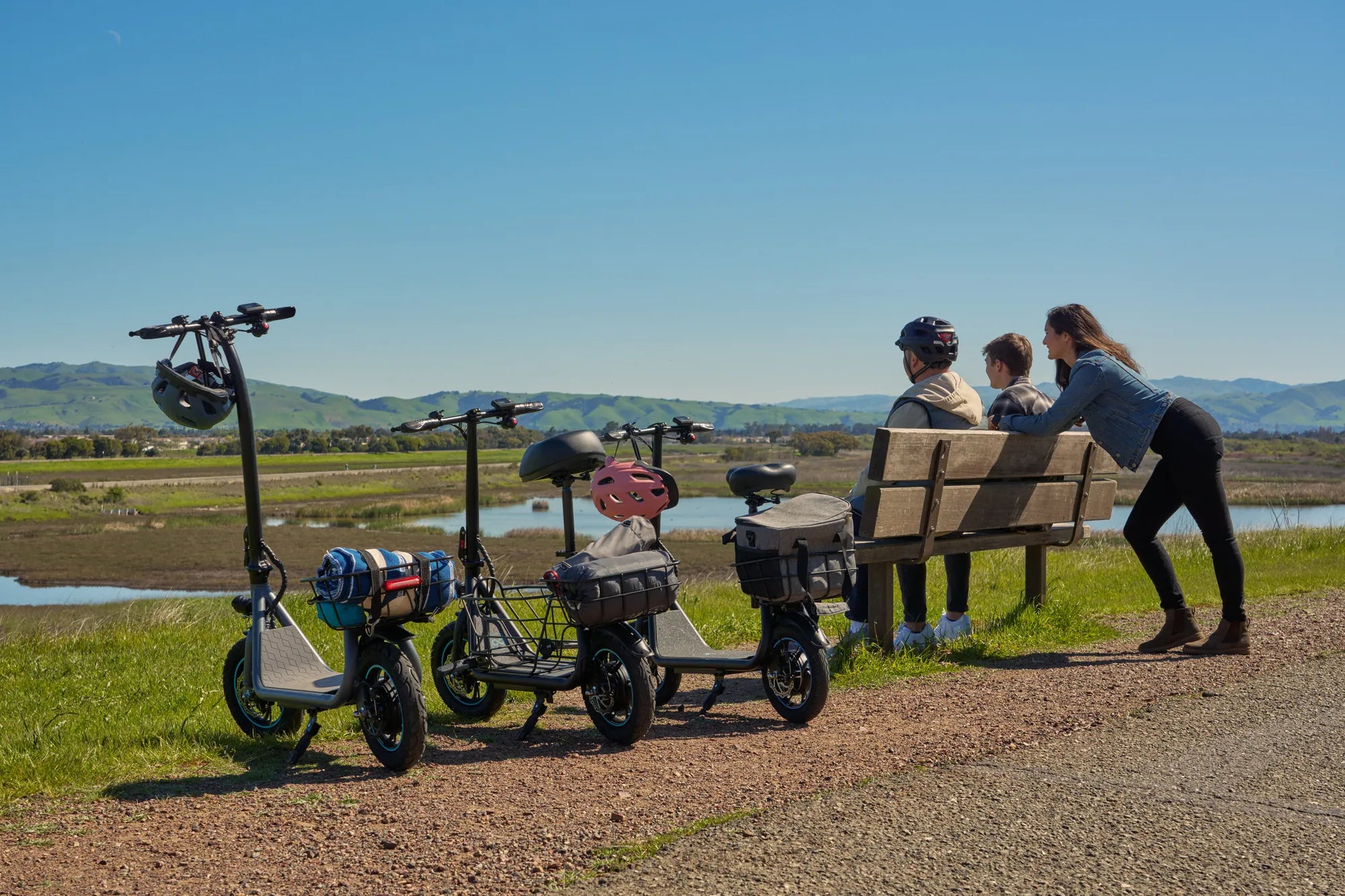
Introduction to the 250W E-Bike Category
The ebike 250 represents the sweet spot in electric bicycle design, balancing assistive power with widespread legal compliance. Defined by its 250-watt nominal motor output, this category is engineered for pedal-assisted riding, not throttle-only propulsion. It sits at the foundation of electric mobility, offering a natural boost that makes cycling less strenuous without transforming the experience into a moped-like ride. For millions in North America and Europe, the ebike 250 is the gateway to efficient, eco-friendly transportation that integrates seamlessly into existing bike infrastructure and regulations.
You will learn what defines this class, its core benefits for urban and recreational riders, and the critical features that separate a high-quality, durable model from a subpar one. We will provide clear performance expectations, compare it to more powerful options, and answer the most pressing questions to help you make an informed decision. This guide is designed for anyone considering an electric bike for daily commuting, errands, or fitness, who values reliability, safety, and hassle-free ownership over raw, unregulated speed.
Why Choose a 250W Electric Bike? Key Benefits
The decision to choose a ebike 250 is often driven by a combination of legal, practical, and experiential factors. Its primary advantage is universal acceptance. In the United States, a 250W motor typically falls under Class 1 e-bike regulations (pedal-assist up to 20 mph), allowing it to be used anywhere a traditional bicycle is permitted. In the European Union, it aligns perfectly with EPAC (Electrically Power Assisted Cycle) standards, requiring no license, registration, or insurance. This legal clarity removes a significant barrier to entry and daily use.
Beyond legality, the 250W electric bike excels in efficiency and range. The modest motor power draws less energy from the battery, enabling longer distances per charge compared to a more powerful motor used under similar conditions. This creates a perfect synergy for commuters who need reliable, predictable range. Furthermore, the riding experience is notably natural. The assistance feels like a constant tailwind, amplifying your pedaling effort without overwhelming it. This makes it ideal for riders who enjoy cycling but seek help with hills, headwinds, or arriving at their destination without excessive sweat.
Urban Commuting and Daily Errands
For the urban dweller, the ebike 250 is a transformative tool. It turns a 5-mile commute from a workout into a pleasant, efficient journey. The motor provides just enough boost to accelerate swiftly from traffic lights, maintain a steady pace in bike lanes, and tackle the inevitable overpass or moderate hill. This capability makes combining cycling with public transport—a practice known as multi-modal commuting—effortless. You can ride to the train station, fold your e-bike (if it's a foldable model), and continue your trip without worrying about complex vehicle regulations.
Running errands becomes simpler and more enjoyable. The electric assist means you can carry groceries or a laptop without dreading the ride home. Brands like Gyroor design their commuter-focused models with practical features like integrated racks, lights, and fenders, making the 250W electric bike a true car replacement for short to medium-distance urban trips. By staying in bike lanes and obeying standard bicycle rules, you often bypass traffic congestion entirely.
Eco-Conscious and Cost-Effective Transportation
Choosing a ebike 250 is a direct investment in personal and environmental economics. From an ecological standpoint, it displaces carbon-intensive car trips for journeys under 10 miles, which constitute a massive portion of urban traffic. The operational energy cost is minuscule; charging a standard e-bike battery costs mere cents per charge, compared to dollars for fuel. This reduction in fossil fuel dependence contributes directly to cleaner air and quieter, more livable cities.
Financially, the savings are substantial after the initial purchase. There are no fuel costs, minimal maintenance expenses compared to a car, and no parking fees in most areas. Insurance and registration costs are typically nonexistent. When you select a model from a brand with a strong warranty like Gyroor's 1-year comprehensive coverage, you also protect your investment against unforeseen defects, ensuring long-term value. The 250W electric bike is not a toy but a practical transportation asset that pays for itself over time.
Critical Features to Look for in a Reliable 250W E-Bike
The motor wattage is just one part of the equation. The quality of components surrounding that motor determines the safety, durability, and satisfaction of your ride. A discerning buyer should evaluate several key features beyond the marketing headline of "250W." Prioritizing these elements ensures you get a vehicle built to last, not just a cheap motor on a flimsy frame.
First, examine the frame material and construction. Aluminum alloy frames offer an excellent balance of lightness, strength, and corrosion resistance. Look for clean welding and a geometry that suits your riding style—upright for comfort, or more aggressive for efficiency. The components—brakes, gears, and tires—should be from reputable manufacturers. Mechanical disc brakes or quality V-brakes are essential for reliable stopping power in all weather conditions.
Motor Type and Placement (Hub vs. Mid-Drive)
In the ebike 250 category, you will predominantly encounter hub motors, though some premium models may feature mid-drive systems. A hub motor is integrated into the center of the front or rear wheel. It's a simple, cost-effective design that provides direct power to the wheel. Rear-hub motors offer better traction, while front-hub motors can create a simpler bike design. They are generally low-maintenance but can affect the bike's weight distribution.
A mid-drive motor is positioned at the bike's crank and pedals. It leverages the bicycle's existing gears, making it exceptionally efficient, especially on hills. For a 250W electric bike, a mid-drive motor can make the limited power feel more potent and natural, as it multiplies torque through the gearing. However, it is often more expensive and can put more strain on the chain and drivetrain. For most urban flat to rolling terrain, a well-designed hub motor from a trusted brand is perfectly adequate and reliable.
Battery Safety, Certification, and Range
This is the most critical safety component. Never compromise on battery quality. Insist on a battery pack that is UL-certified (or has an equivalent regional safety certification like CE). UL certification involves rigorous testing for electrical, mechanical, and fire safety. Brands that prioritize safety, like Gyroor, use UL-certified lithium-ion cells in their battery packs, which are tested for over 500 charge cycles while maintaining performance and safety integrity.
Range is determined by battery capacity, measured in Watt-hours (Wh). A typical ebike 250 might have a battery between 360Wh and 500Wh. Real-world range is influenced by rider weight, terrain, wind, assist level, and tire pressure. As a rule of thumb, you can expect 1.5 to 3 miles per 10Wh of capacity. Therefore, a 400Wh battery could provide 25-50 miles of range. Always check the manufacturer's tested range and understand the conditions under which it was achieved.
Build Quality, Warranty, and Water Resistance
A robust warranty is a direct reflection of a manufacturer's confidence in their product. A comprehensive warranty should cover the frame, motor, battery, and controller for a significant period. Gyroor, for example, offers a reliable 1-year warranty on its e-bikes, providing peace of mind against manufacturing defects. This is a key indicator of a brand that stands behind its engineering and customer service.
Water resistance is crucial for a vehicle meant for daily use. Look for an IP rating. An IPX5 rating, common on quality commuter e-bikes, means the electrical components are protected against low-pressure water jets from any direction. This allows you to ride confidently in the rain or through puddles without fear of immediate damage. Combined with quality seals and corrosion-resistant materials, this feature ensures your 250W electric bike remains a dependable companion through various seasons.
Performance Expectations: Speed, Hill Climbing, and Range Data
Setting realistic expectations is vital to enjoying your ebike 250. Its performance is best described as "assistive" rather than "powerful." The motor is designed to complement your pedaling, not replace it. In regions with a 20 mph (32 km/h) assist limit, the motor will provide increasing support until you reach that speed, after which you are riding on your own power. The sensation is smooth and natural, allowing for a good average speed in city environments without breaking a sweat.
Hill climbing capability is a common question. A 250W motor can handle moderate hills effectively, especially if the bike has a wide range of gears. The key is rider contribution; you will need to pedal and likely shift to a lower gear. On a 5-7% grade, a 250W electric bike will make the climb feel like a gentle slope. For sustained, very steep hills (over 10%), progress will be slower, and a rider's fitness and weight become more significant factors. It is excellent for rolling urban terrain but not intended for mountain trails.
Range data should be interpreted with variables in mind. Using the example of a 400Wh battery:
- Eco/ Low Assist Mode (Minimal Assist): Could achieve 40-50+ miles.
- Standard/ Medium Assist Mode (Balanced): Will typically deliver 30-40 miles.
- High/ Turbo Assist Mode (Maximum Assist): Will likely provide 20-30 miles.
Comparison with Higher-Wattage E-Bikes (500W, 750W)
Understanding where the ebike 250 fits relative to more powerful models helps clarify its ideal use case. The choice is not about "better" but about "right for your needs." The following table outlines key differences.
| Feature | 250W E-Bike | 500W-750W E-Bike |
|---|---|---|
| Primary Legal Classification | Class 1 (US), EPAC (EU). Treated as a bicycle. | Often Class 2 or 3 (US). May have throttle. Can be restricted in some EU areas. |
| Intended Terrain | Paved roads, bike paths, moderate hills. | More versatile; better for steeper hills, light off-road. |
| Top Assisted Speed | Typically 20 mph (32 km/h). | Class 3: Up to 28 mph (45 km/h). |
| Torque & Acceleration | Modest, assistive. Good for steady pace. | More immediate, powerful. Faster acceleration from stops. |
| Battery Drain & Range | Slower drain, generally longer range per Wh. | Faster drain under hard use, potentially shorter range. |
| Ideal Rider Profile | Urban commuter, recreational rider, those prioritizing legal simplicity. | Rider needing more power for hills/cargo, those in less restrictive areas. |
As shown, the 250W electric bike is the choice for hassle-free, legal compliance and efficient commuting. Higher-wattage bikes offer more raw power for challenging terrain or faster speeds but often come with regulatory complexities and greater energy consumption.
Safety, Maintenance, and Best Practices
Owning a ebike 250 comes with the responsibility of safe operation and basic maintenance. Always wear a helmet, use front and rear lights (even during the day), and follow all local traffic laws for bicycles. Be predictable in your movements and use hand signals. The quiet nature of e-bikes means pedestrians may not hear you, so use a bell or your voice when passing.
Regular maintenance is straightforward but essential. Keep tires inflated to the recommended PSI to maximize range and prevent flats. Check brake pads for wear and ensure brakes are properly adjusted. Keep the chain clean and lubricated. After riding in wet conditions, wipe down the bike to prevent corrosion. Store the bike and its battery in a dry, temperate place, and avoid leaving the battery fully depleted or at 100% charge for extended periods to prolong its lifespan.
Most importantly, only use the charger provided by the manufacturer. Charging a lithium-ion battery with an incorrect charger is a major fire hazard. The UL-certified batteries and chargers supplied by brands like Gyroor are engineered to work together safely, incorporating protections against overcharging, short circuits, and overheating.
Frequently Asked Questions About 250W E-Bikes
Q1: Do I need a license, registration, or insurance for a 250W e-bike?
A: In virtually all of the United States (following the 3-class system) and the European Union, no. A pedal-assist ebike 250 that cuts off at 20 mph (32 km/h) is legally considered a bicycle. You do not need a driver's license, vehicle registration, or specific insurance to own or operate one on roads and paths where bicycles are allowed.
Q2: Can a 250W e-bike truly handle hills, or will I have to pedal hard?
A: It can handle hills effectively, but your pedaling effort is part of the equation. On moderate hills (up to around a 7% grade), the motor will provide significant assistance, making it feel much easier than a standard bike. On very steep hills, you will need to pedal with more effort and use a low gear. It makes hills manageable, not effortless.
Q3: How far can I realistically ride on a single charge?
A: With a quality 400-500Wh battery, most riders can expect a realistic range of 25 to 50 miles on a single charge. This depends heavily on the factors discussed: assist level, terrain, rider weight, wind, and tire pressure. Using a lower assist level on flat sections can dramatically extend your range.
Q4: Are 250W e-bikes suitable for heavier riders?
A: Yes, but with caveats. Manufacturers specify a maximum weight limit (often 220-265 lbs / 100-120 kg including cargo). It is crucial to stay within this limit for safety and performance. A heavier rider will experience reduced range and hill-climbing performance compared to a lighter rider on the same bike, as the motor works harder. The bike will still function well on flats and gentle slopes.
Q5: How long does the battery last before needing replacement?
A: A high-quality lithium-ion battery, like the UL-certified packs used by Gyroor, is typically rated for 500+ full charge cycles while retaining at least 80% of its original capacity. With typical use (a partial charge every few days), this can translate to 3-5 years of reliable service before you may notice a significant reduction in range. Proper care (avoiding extreme temperatures, not fully draining it) extends its life.
Is a 250W E-Bike the Right Choice for You?
If your primary goal is a legal, efficient, and enjoyable vehicle for city commuting, running errands, or recreational rides on paved paths, a ebike 250 is an outstanding choice. It removes the largest barriers to electric bike adoption—regulatory confusion and range anxiety—while providing a genuinely useful boost that enhances cycling. It is the embodiment of practical, sustainable urban transport.
Your investment should be directed toward a model that prioritizes the fundamentals: a UL-certified battery for safety, a robust warranty for protection, and quality components for durability. Brands that have built a reputation on these principles, like Gyroor with its trusted 1-year warranty and IPX5-rated designs, offer peace of mind that your e-bike is a reliable tool, not a disposable gadget. The 250W electric bike proves that smart, regulated design focused on rider safety and real-world utility creates the most accessible and satisfying electric mobility experience.
Ready to experience the perfect balance of assistive power and everyday practicality? Explore a range of reliable, well-engineered options designed for the urban rider. Browse the full Gyroor collection at gyroorboard.com to find the model that fits your commute and lifestyle.
100cc Dirt Bike Price: A Complete Buyer's Guide for 2024
Best Folding Ebike Under 1000: The Ultimate 2024 Value Guide