

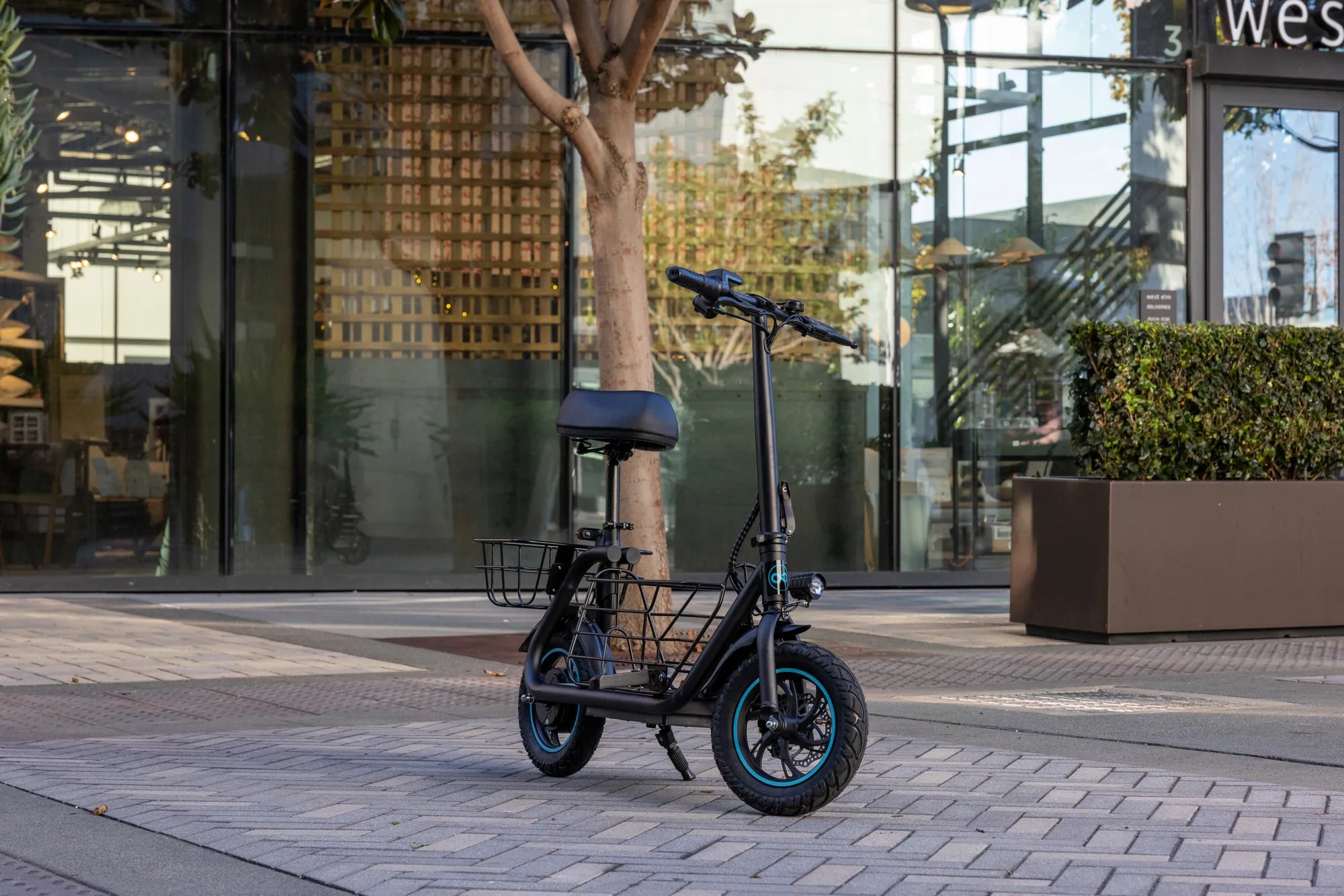
Introduction to E-Bike Battery Performance
An e-bike is only as good as its battery. This single component dictates how far you can travel, how powerfully you can climb, and ultimately, how much enjoyment you derive from every ride. To navigate the complex specifications, you need a reliable map: the ebike battery chart. This guide will decode every critical metric, from voltage to watt-hours, transforming you from a confused shopper into an informed rider. You will learn to estimate your true range, identify markers of quality and safety, and understand the long-term value of your investment, ensuring your next e-bike meets your expectations for years.
Decoding the E-Bike Battery Specification Chart
Every e-bike battery comes with a label or a spec sheet listing a series of numbers and acronyms. These aren't just marketing jargon; they are the precise engineering blueprint of your bike's power source. Understanding this ebike battery chart is the first step to making a smart purchase. The core specifications revolve around three interconnected units: Voltage (V), Amp-Hours (Ah), and Watt-Hours (Wh). Each tells a different part of the story about performance and capacity.
Voltage (V): The Power Pressure
Think of voltage as the electrical pressure or force pushing current through your e-bike's motor. A higher voltage system can deliver more power, resulting in better acceleration, stronger hill-climbing torque, and often a higher top speed. Common e-bike battery voltages are 36V, 48V, and 52V. A 36V system is typical for entry-level or lighter commuter bikes, while 48V has become the standard for most performance-oriented commuter and hybrid models. A 52V system offers a noticeable boost in power and efficiency, often found on premium or high-performance e-bikes. The voltage is a key determinant of how powerful your ride feels.
Amp-Hours (Ah): The Fuel Tank Capacity
If voltage is the pressure, amp-hours (Ah) represent the size of the fuel tank. It measures the battery's charge capacity, indicating how much current it can deliver over time. A simple analogy: a 10Ah battery can theoretically deliver 10 amps of current for one hour, or 5 amps for two hours. In practical terms, a higher Ah rating generally means a longer potential range, all else being equal. However, Ah alone is not a perfect comparison between different batteries, as it must be considered alongside voltage to understand the total energy available.
Watt-Hours (Wh): The True Measure of Total Energy
This is the most critical number on the ebike battery chart. Watt-hours (Wh) are calculated by multiplying Voltage (V) by Amp-Hours (Ah): Wh = V x Ah. This figure represents the total amount of energy stored in the battery pack. It is the universal metric for comparing energy capacity across any battery, regardless of its specific V and Ah configuration. For example, a 36V 20Ah battery (720Wh) and a 48V 15Ah battery (720Wh) contain the same total energy. Regulatory bodies often require Wh ratings, and it is the single best number for estimating real-world range.
Practical Application: Using the Chart to Estimate Your Range
Knowing your battery's watt-hour rating is the key to unlocking realistic range expectations. Manufacturer claims can be optimistic, based on ideal conditions. By using a simple formula and understanding consumption factors, you can predict your own mileage with much greater accuracy. This process demystifies the ebike battery chart and turns it into a practical planning tool for your daily commute or weekend adventures.
The Range Estimation Formula
The fundamental calculation is straightforward: Estimated Range (miles) = Battery Watt-Hours (Wh) / Average Consumption (Wh/mile). The variable is your average consumption, which depends heavily on how you ride. On flat ground with minimal pedal assist (Eco mode), a typical e-bike might consume 10-15 Wh per mile. Using moderate assist (Normal mode) might increase that to 15-25 Wh/mile. At full throttle or maximum assist (Sport mode), especially on hills or with heavy cargo, consumption can jump to 25-40 Wh/mile or more. Rider weight, wind, tire pressure, and temperature also play significant roles.
Gyroor Data Point: Real-World Range Examples
Let's apply this using Gyroor's lineup as a reference. A Gyroor commuter e-bike equipped with a high-quality 48V 15Ah battery has a 720Wh pack. In Eco mode (approx. 15 Wh/mile), a rider could expect a range of up to 48 miles. Switching to Normal mode (approx. 20 Wh/mile) would bring that down to about 36 miles. For a more powerful off-road style Gyroor model using max assist on hilly terrain (approx. 30 Wh/mile), the same battery would provide around 24 miles of range. This illustrates why the ebike battery chart's Wh number is so valuable—it allows for personalized, realistic planning.
Beyond the Basics: Key Chart Factors for Long-Term Value
While V, Ah, and Wh are the headline specs, several other details on a comprehensive ebike battery chart are crucial for safety, durability, and total cost of ownership. Overlooking these can lead to premature failure, safety hazards, or disappointing performance in real-world conditions.
Battery Chemistry & Cell Quality: The Foundation of Safety
Virtually all modern e-bikes use Lithium-ion chemistry, but not all Li-ion cells are created equal. The chart should specify the cell type or manufacturer. Reputable brands use high-quality, name-brand cells from manufacturers like LG, Samsung, or Panasonic. Gyroor ensures safety and longevity by exclusively using UL-certified lithium-ion battery packs. This certification means the battery has passed rigorous independent testing for electrical, mechanical, and fire safety—a non-negotiable benchmark that should be a priority for every rider.
Charge Cycles & Warranty: Understanding Your Investment
A charge cycle is defined as using 100% of the battery's capacity, which can happen over multiple charges. A battery rated for 500 cycles to 80% capacity will, after that many full cycles, still hold about 80% of its original charge. Higher-quality cells can endure 800-1000+ cycles. This directly links to the battery's lifespan and your long-term cost. This is why the warranty is critical. A strong warranty, like Gyroor's 1-year comprehensive warranty, protects this major investment and reflects the brand's confidence in its battery's durability and the quality of its cells.
Environmental Ratings: Resilience for the Real World
An e-bike battery must withstand the elements. The Ingress Protection (IP) rating on the chart indicates its resistance to dust and water. The first digit is for solids (dust), the second for liquids (water). An IPX5 rating, standard on all Gyroor models, means the battery is protected against water jets from any direction. This IPX5 water-resistant rating is essential for commuters who might encounter rain, road spray, or puddles, ensuring the battery's internal electronics remain safe and functional.
Comparative Analysis: Reading Between the Lines of Battery Charts
When comparing e-bikes, you must look beyond isolated specs. A brand might advertise a very high Ah number but pair it with a low voltage, or use unbranded cells to hit a price point. A savvy rider uses the full ebike battery chart to perform a true comparison.
Scenario: 48V 20Ah vs. 52V 15Ah
At first glance, a 48V 20Ah battery seems larger than a 52V 15Ah one. But calculate the Wh: 48V * 20Ah = 960Wh, while 52V * 15Ah = 780Wh. The 48V pack actually has more total energy. However, the 52V system will likely deliver more peak power and higher efficiency, potentially making the bike feel more responsive. The critical question becomes: what is the cell quality inside each pack? A 960Wh pack made with low-grade cells may degrade faster and be less safe than a 780Wh pack with premium, UL-certified cells. The chart should inform this deeper investigation.
| Specification | Battery A (48V 20Ah) | Battery B (52V 15Ah) | Key Insight |
|---|---|---|---|
| Total Energy (Wh) | 960 Wh | 780 Wh | Battery A has ~23% more total energy. |
| Peak Power Potential | High | Very High | Battery B's higher voltage can deliver more instantaneous power. |
| Typical Range (Normal Mode) | ~38-48 miles | ~31-39 miles | Based on 20-25 Wh/mile consumption. |
| Critical Factor | Cell Quality & Price | System Efficiency & Performance | A's high Ah may indicate cost-cutting on cells. B's design prioritizes performance. |
E-Bike Battery FAQ
1. How can I maximize the lifespan of my battery?
Follow the 20-80% rule when possible: avoid regularly draining it to 0% or charging to 100% for daily use. Store it in a cool, dry place (ideally between 50°F-77°F). Use only the manufacturer-provided charger. For long-term storage, leave the charge at around 50-60%.
2. Does a higher voltage battery require a special charger?
Yes, absolutely. Always use the charger specifically designed for your battery's voltage (e.g., a 48V charger for a 48V battery). Using an incorrect charger can damage the battery, pose a fire risk, and void the warranty.
3. What does "motor wattage" have to do with my battery chart?
Motor wattage (e.g., 500W) is the power output the motor can handle. Your battery must supply this power. A higher-wattage motor will draw energy faster, increasing Wh/mile consumption and reducing range. The battery's voltage and capacity must be appropriately sized to support the motor's demands efficiently.
4. How do temperature and rider weight affect the numbers on the chart?
Cold temperatures (below 40°F/4°C) temporarily reduce battery capacity and can shorten range by 20-30%. Heat can accelerate long-term degradation. Rider weight (plus cargo) directly increases the energy required to move. A heavier rider will have a higher Wh/mile consumption, directly reducing the estimated range from the chart's baseline.
5. What does a "smart" or "Bluetooth" battery mean on the chart?
This indicates the battery has a Battery Management System (BMS) with connectivity. It allows you to monitor detailed stats like cell health, charge cycles, and real-time voltage via a smartphone app, adding a layer of diagnostics and control.
Conclusion: Empowering Your Ride with Knowledge
An ebike battery chart is far more than a list of technical specifications; it is a clear window into the performance, safety, and longevity you can expect from your e-bike. By focusing on Watt-Hours for range, insisting on UL-certified battery packs for safety, valuing a strong warranty, and understanding the importance of ratings like IPX5 water-resistance, you make an investment in reliable, enjoyable mobility. This knowledge empowers you to choose a brand that prioritizes these fundamentals. For e-bikes and scooters built with these quality principles from the ground up, explore the full range of durable, high-performance options. Browse the full Gyroor collection at gyroorboard.com and find the ride engineered for lasting satisfaction.
Fastest Ebike Motor: Power, Limits, and Real-World Performance Explained
Electric Mobility Tricycle for Adults: The Ultimate Guide to Stable, Practical E-Transport