

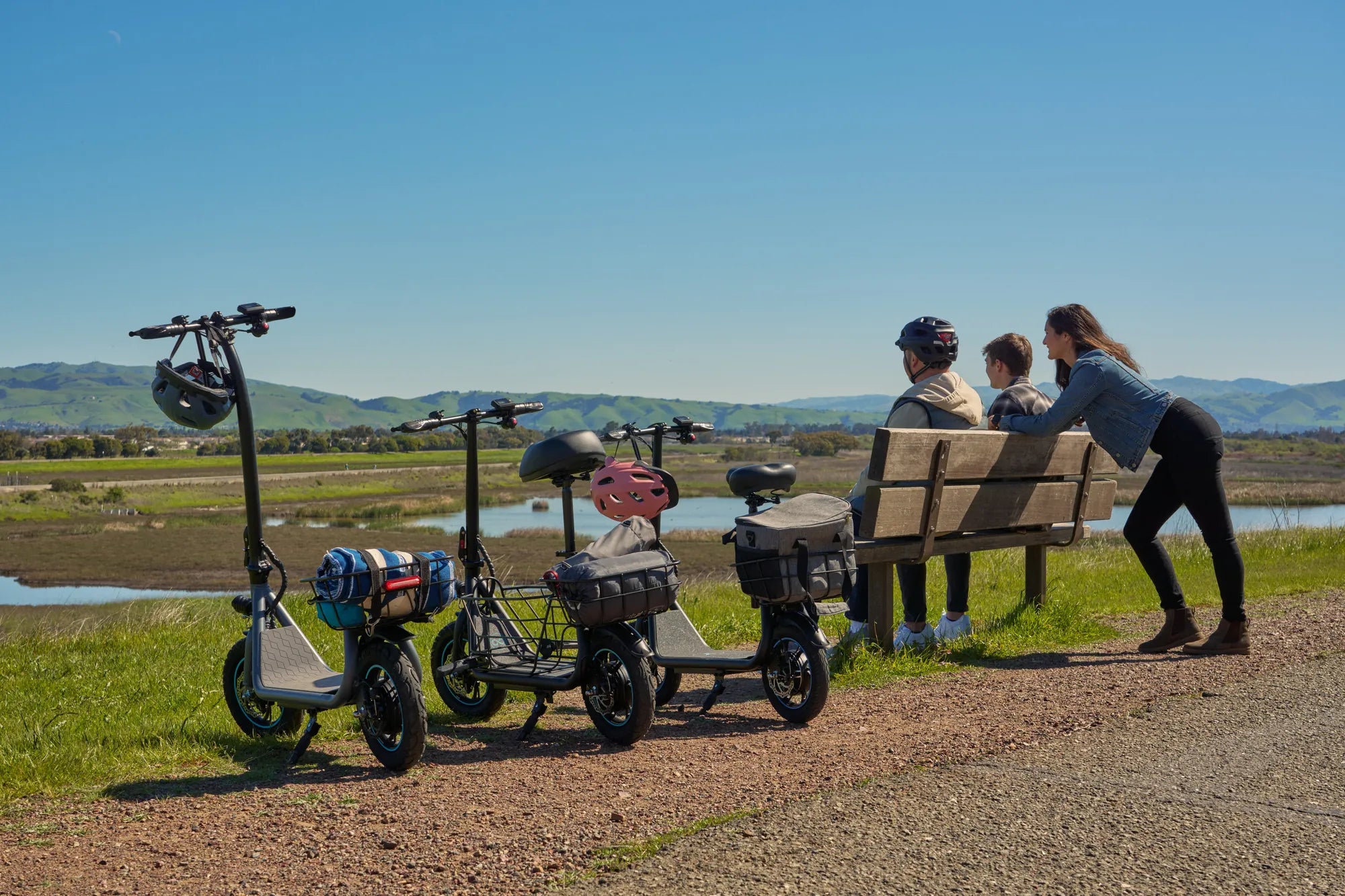
Introduction: The Family Adventure Revolution
Forget crowded minivans and stressful parking. The modern family adventure is being redefined on two wheels. An ebike for family travels is no longer a niche concept but a practical, exhilarating tool for bonding, fitness, and eco-friendly exploration. This shift moves families from passive passengers to active participants in their journeys, turning routine errands and weekend outings into shared experiences.
The core appeal lies in accessibility. Electric assist bridges fitness gaps, allowing parents and children of varying abilities to ride together without exhaustion. It extends your range, making a trip to the local ice cream shop, library, or park a viable car-free adventure. Choosing the right ebike for family travels is the first step toward building a new tradition of exploration.
This guide is designed to help families navigate this exciting transition. We'll dissect the essential features, compare configurations, and provide a roadmap for your first outing. As a brand trusted by over 100,000 riders across North America and Europe, Gyroor engineers its e-bikes with the reliability and safety features that families demand for peace of mind on every journey.
What Makes an E-Bike Ideal for Family Travel?
Not all e-bikes are created equal for family duty. A performance-oriented mountain e-bike or a sleek commuter model often lacks the foundational requirements for carrying precious cargo. The ideal family e-bike prioritizes a specific blend of stability, safety, comfort, and versatility over raw speed or minimalist design.
These bikes must handle dynamic loads—a child on a seat, groceries in a basket, or the weight of a trailer. This demands a robust frame, a powerful motor with ample torque, and a high-capacity battery. Comfort is paramount for both the primary rider and passengers, necessitating thoughtful geometry, suspension, and seating.
Ultimately, the perfect ebike for family travels is a tool that feels secure and inspires confidence. It should disappear into the background, becoming a reliable extension of your family's desire to explore, rather than a source of anxiety or mechanical concern.
Key Feature 1: Power and Range for the Whole Crew
Motor power and battery capacity are the most critical technical specifications for a family e-bike. A motor in the 500W to 750W range provides the necessary torque to start smoothly from a stop with extra weight, climb gentle hills without strain, and maintain a comfortable pace. Underpowered motors can lead to sluggish performance and premature battery drain.
Battery capacity, measured in watt-hours (Wh), dictates your adventure radius. When calculating needed range, consider the combined weight of riders, passengers, and gear, plus factors like terrain and wind. A battery with 500Wh or more is a strong starting point for family use, ensuring you won't be left pedaling a very heavy bike home without assistance.
For families, battery safety is as important as capacity. Gyroor utilizes UL-certified battery packs in its e-bikes, a crucial standard that involves rigorous testing for electrical, mechanical, and fire safety. This certification offers indispensable peace of mind when children are onboard.
Key Feature 2: Built for Comfort and Stability
A stable, comfortable ride keeps everyone happy. Frame design is the first consideration. Step-through frames are invaluable for families, allowing easy mounting and dismounting even when a child seat is installed or you're wearing a backpack. The geometry should feel balanced, not twitchy, especially at lower speeds.
Suspension smooths out bumps from cracked pavement or gravel paths. A front suspension fork is highly beneficial, while some premium family e-bikes offer full suspension for ultimate comfort on varied terrain. Tire choice also impacts stability; wider tires (2.2 inches or more) provide more cushioning and a confident grip.
Adjustability extends the bike's usability. An adjustable stem and seatpost allow one bike to be comfortably ridden by different-sized adults. For the longest journeys, consider adding a suspension seatpost or a more plush saddle to prevent fatigue for the primary rider.
Key Feature 3: Safety as a Non-Negotiable Priority
Safety features on a family e-bike are non-negotiable. The braking system must be robust and reliable. Hydraulic disc brakes offer superior stopping power and modulation compared to mechanical discs or rim brakes, performing consistently in wet conditions—a key advantage for unpredictable family outings.
Visibility is paramount. Integrated lighting systems, including a bright headlight, taillight, and brake lights, are essential for being seen by motorists. Some models feature automatic brake light activation. A loud, easy-to-use bell or horn is crucial for alerting pedestrians and other cyclists on shared paths.
These built-in features must be complemented by rider education and proper gear. Helmets are mandatory for every family member, regardless of age or where they are riding (in a seat or trailer). Establishing and practicing clear family riding rules forms the behavioral foundation for safe adventures.
Choosing Your Family E-Bike Setup: A Practical Guide
Selecting the right configuration depends on your children's ages, the number of kids, your cargo needs, and your budget. There is no single best solution, but a clear understanding of the options will lead you to the perfect setup for your crew. The goal is to match the equipment to your family's current stage while considering a year or two of growth.
Each option presents a different riding experience, from the conversational cargo bike to the train-like flexibility of a trailer. Consider not just the purchase, but the storage space required and the ease of daily use. A bike that's cumbersome to maneuver in a garage may see less use than a more adaptable setup.
The following breakdown of the three primary configurations will help you visualize your family's future on wheels. Remember, the best ebike for family travels is the one you will use consistently and confidently.
Option 1: Cargo E-Bikes for Young Families
Cargo e-bikes are the minivans of the cycling world, purpose-built to carry substantial loads. The most common styles are long-tail bikes, with an extended rear rack, and front-loading bikes (aka bakfiets or box bikes) with a large cargo bin between the handlebars and front wheel. These are ideal for families with one or two young children.
Long-tail bikes often accommodate two child seats directly on the rear deck and have integrated running boards for older kids to stand on. They maintain a familiar bicycle riding feel but with a longer wheelbase for stability. Front-loaders offer a unique advantage: the children ride in front, allowing for easy conversation and supervision.
These bikes boast high weight capacities, often 400-450 lbs total, including rider, passengers, and cargo. They are fantastic for school runs, grocery shopping, and weekend adventures. However, their size and weight can make them challenging to store and transport if you need to use a car rack.
Option 2: Trailers and Tag-Alongs
This is the most versatile and accessible entry point into family e-biking. You can convert a standard commuter or hybrid e-bike—like many in Gyroor's lineup—into a family hauler with a simple hitch attachment. Trailers are enclosed pods that carry one or two young children, protecting them from the elements and road debris.
Tag-alongs (or trail-a-bikes) are single-wheeled half-bikes that attach to the seatpost of an adult bike, turning it into a tandem. They are perfect for children aged approximately 4 to 9 who can pedal but lack the stamina or skill for long, independent rides. The child contributes to propulsion but the adult controls steering and braking.
The primary advantage of this setup is flexibility. You can detach the trailer or tag-along and use the e-bike for solo commuting. The main drawbacks are the added length, which affects maneuverability, and for trailers, the fact that the children are out of your immediate line of sight.
Option 3: Tandem and Multi-Passenger E-Bikes
For families with older children or teens, tandem e-bikes offer a unique shared-activity experience. These bikes are built for two (or more) riders to pedal in sync, with electric assist making coordination easier and hills less daunting. It's a fantastic way to cover longer distances together that might be challenging on separate bikes.
Some multi-passenger e-bikes feature side-by-side seating or even three-wheeled designs for ultimate stability. These are less common but can be excellent for families where one rider may have balance concerns. They promote constant conversation and shared effort.
Considerations include significant storage space requirements and the learning curve of riding in tandem. They are less practical for quick errands but excel for dedicated family bike tours or recreational trail riding where the goal is the shared journey itself.
The Gyroor Advantage: Engineered for Family Trust
When your children are onboard, the margin for error shrinks to zero. Family purchases demand a higher standard of reliability, safety, and support. Gyroor's design philosophy directly addresses the core concerns of parents, transforming technical specifications into tangible peace of mind. This commitment is reflected in their 4.5/5 average customer rating from a community of over 100,000 riders.
Choosing an e-bike from a brand with this pedigree means investing in a vehicle engineered for the real world of family life—spontaneous rain showers, accidental bumps, and the long-term wear of joyful, frequent use. It’s about selecting a partner for adventure, not just a product.
The following pillars of the Gyroor advantage illustrate how thoughtful engineering creates a foundation of trust for every family journey.
UL-Certified Battery: Your Family's Safety Assurance
The battery is the heart of an e-bike and its most critical safety component. UL certification is the gold standard, indicating the battery pack has passed independent, rigorous tests for electrical safety, mechanical integrity, and fire risk. For a family e-bike, this is not a premium feature; it is a mandatory one.
Gyroor's use of UL-certified batteries means each cell and the complete pack assembly are designed to prevent overcharging, short-circuiting, and thermal runaway. These packs are tested for durability through hundreds of charge cycles, ensuring consistent performance over years of use. This certification is your assurance that the power source between your legs is as safe as modern technology can make it.
Built to Withstand the Journey: IPX5 Water Resistance
Family adventures don't pause for a light drizzle, and puddles are an irresistible target for young riders. IPX5 water resistance rating means the e-bike's electrical components—controller, display, motor connections—are protected against water jets from any direction. This guards against splashes from wet roads, light rain, and the occasional spilled water bottle.
This engineering resilience ensures reliability. It prevents corrosion and electrical faults that can strand a family far from home. When evaluating an ebike for family travels, this specification is a key indicator of overall build quality and durability, signaling a product designed for real-world conditions, not just fair-weather cruising.
Peace of Mind on Every Ride: The 1-Year Comprehensive Warranty
A comprehensive warranty is the safety net for your investment. Gyroor's 1-year warranty on the frame, motor, battery, and electronic components provides clear, long-term support. For families, this translates to confidence: if a component doesn't meet its performance standards, it will be repaired or replaced.
This warranty, backed by accessible customer support, removes the fear of a major, unexpected repair bill during the critical first year of ownership. It allows families to focus on creating memories, secure in the knowledge that their e-bike is supported by the brand that built it. This commitment to post-purchase care is a hallmark of a company that stands behind its products.
Planning Your First Family E-Bike Adventure
A successful first outing sets a positive tone for all future adventures. It's less about distance and more about fun, safety, and establishing good habits. The goal is to return home with everyone eager to go again. Careful preparation is the key to transforming potential chaos into a smooth, enjoyable experience.
Start with a modest goal: a 30-45 minute loop to a park, a cafe, or even just around a quiet neighborhood. Choose a time when children are well-rested and fed. The focus should be on the experience of riding together, not achieving a destination. This phased approach builds confidence and skill for everyone involved.
Follow this three-step plan to ensure your maiden voyage is a triumph.
Pre-Ride Checklist: Gear and Preparation
Never skip the pre-ride check. First, ensure all riders have a properly fitted helmet. Then, conduct a quick mechanical inspection of the e-bike: check tire pressure, test brake lever function, ensure the headlight and taillight are working, and verify the battery is charged. If using a trailer or tag-along, double-check the hitch connection.
Pack a small bag with essentials: water for everyone, high-energy snacks, a basic multi-tool, a tire repair kit or spare tube, a small first-aid kit, and a phone. For longer rides, consider sunscreen and a light jacket. Having these items on hand turns minor inconveniences into simple pauses rather than trip-ending emergencies.
Route Planning for Fun and Safety
Scout your route in advance using apps like Google Maps (set to bicycle view), TrailLink, or local cycling advocacy maps. Prioritize protected bike lanes, paved multi-use trails, and quiet residential streets with low traffic volume. Avoid busy arterial roads for your initial trips.
Plan for attractions or stopping points every 15-20 minutes. A playground, a scenic overlook, or a spot for a snack break gives children something to look forward to and breaks the ride into manageable segments. Always have a bail-out option—a shorter path home—in case little ones get tired sooner than expected.
Establishing Family Riding Rules
Before you roll out, have a family huddle to review the rules. Key rules include: the lead adult sets the pace, everyone stays in line behind them, use hand signals for stops and turns, keep a safe distance from the bike in front, and always stop at intersections. Designate one adult as the "sweep" to ride at the back.
Practice communication. Teach children to call out "slowing" or "stopping." For younger kids in trailers or seats, explain they need to keep hands and feet inside. Making it a game—"Who can be the best safety scout?"—can help with engagement. Consistent reinforcement of these rules builds a culture of safe riding.
Family E-Bike Configuration Comparison
The table below provides a clear, data-driven comparison of the three primary family e-bike setups to help you make an informed decision.
| Configuration | Best For Families With... | Key Advantages | Key Considerations | Approx. Cost Range |
|---|---|---|---|---|
| Cargo E-Bike | Young children (1-6 yrs), multiple kids, daily errands | High integrated capacity, easy supervision (front-loader), stable, car-replacement potential | Large storage footprint, heaviest option, highest initial investment | $2,500 - $6,000+ |
| Trailer/Tag-Along | Mixed ages, 1-2 young kids, existing e-bike owners | Maximum flexibility, lower entry cost, protects from elements (trailer), detachable for solo use | Added length affects handling, child out of direct sight (trailer), extra setup step | $200 - $800 (add-on) |
| Tandem/Multi-Passenger | Older children/teens (8+), shared activity focus, touring | Promotes teamwork, covers longer distances together, unique bonding experience | Steep learning curve, very large storage needs, less practical for utility trips | $3,000 - $5,000+ |
Frequently Asked Questions (FAQs)
Q: What age can a child ride on or with an e-bike?
A: Laws vary by region, but general safety guidelines provide a framework. Child seats (rear-mounted) typically require a child to be at least 12 months old and able to sit upright unsupported, wearing a helmet. Trailers often have a similar age minimum. Tag-along bikes are suitable for children approximately 4-6 years and older who can follow basic instructions and pedal. Always check your local regulations for specific age and helmet laws.
Q: How do I maintain an e-bike used by the whole family?
A> A simple, consistent routine is best. Wipe down the frame after messy rides. Check tire pressure weekly; under-inflated tires increase rolling resistance and wear. Listen for and address brake squeal; have hydraulic brakes bled annually. Keep the chain clean and lubricated. For the battery, avoid full discharges; store it in a cool, dry place (ideally between 50-77°F). Schedule a professional tune-up at a qualified shop once or twice a year.
Q: Are family e-bikes allowed on all bike trails?
A> Trail access rules are highly localized. Most paved multi-use trails permit Class 1 and Class 2 e-bikes (pedal-assist and throttle-assist up to 20 mph). However, some natural surface trails may restrict all e-bikes or those above a certain wattage (e.g., 750W). Cargo bikes and bikes with trailers may have additional length restrictions. Always check the specific rules for the trail or park system you plan to visit before heading out.
Q: What is the real-world range I can expect on a family e-bike?
A> Manufacturer range estimates are based on ideal conditions: a single lightweight rider on flat ground. For family travel, you must factor in the total weight (rider + passengers + cargo), terrain, wind, and assist level usage. As a practical rule, expect 50-70% of the advertised maximum range. For example, a bike rated for 40 miles might reliably achieve 20-28 miles on a mixed-terrain family trip. Planning shorter loops and charging after each use eliminates range anxiety.
Q: Can I test ride a Gyroor e-bike configured for my family?
A> The best way to experience an ebike for family travels is a loaded test ride. Visit Gyroor's website to locate authorized dealers or inquire about demo opportunities. When you go, bring your usual cargo (child seats, etc.) if possible, or use provided weights to simulate the load. Pay attention to the bike's stability at low speed, the smoothness of the motor engagement, and the overall comfort. Always verify the total system weight capacity to ensure it meets your family's needs.
Pedaling Towards New Memories
The journey toward a car-lite family life begins with a single pedal stroke. An ebike for family travels is more than a vehicle; it's a catalyst for healthier routines, deeper connections, and a tangible lesson in sustainable living for your children. The shared effort of a ride, the discoveries made along a new path, and the freedom of wind in your faces create irreplaceable memories.
Success hinges on choosing a reliable foundation. Prioritize safety certifications like UL for the battery, robust construction with weather resistance, and a brand that offers strong warranty support. Start with short, fun adventures to build skills and confidence. The world opens up in a new way when explored at the pace of a bicycle, where conversation flows easily and the journey itself is the destination.
Your family's next adventure awaits on two wheels. Explore the full range of durable, family-ready e-bikes engineered for safety and reliability. Browse the full Gyroor collection at gyroorboard.com and find the perfect electric companion for your crew's journey ahead.
How Fast Is a 125cc Dirt Bike? Top Speed & Performance Guide
150cc Dirt Bike Nearby: Your Complete Local & Online Buying Guide