

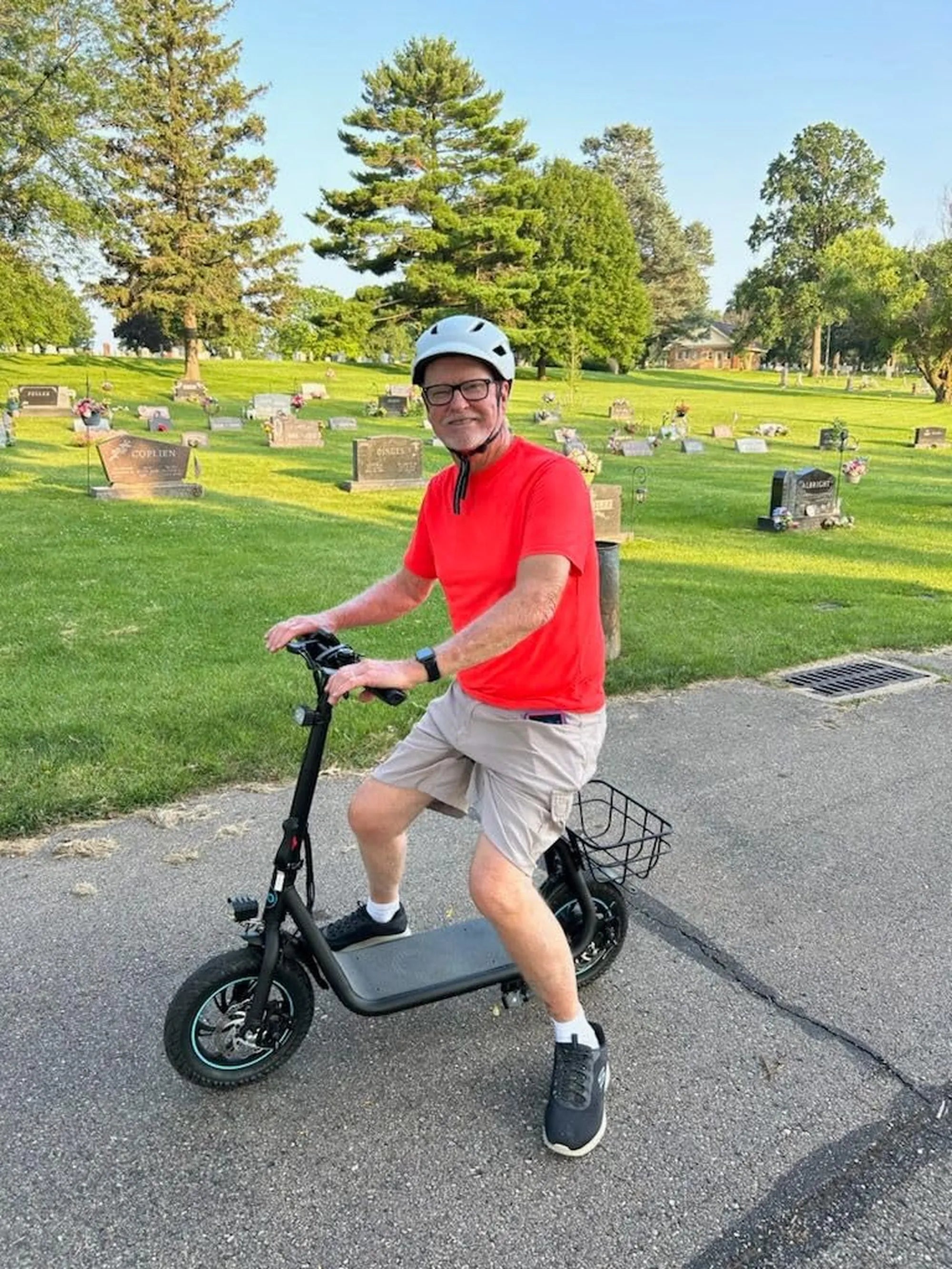
Navigating Los Angeles demands a transportation revolution. For residents tired of soul-crushing traffic on the 405, elusive and expensive parking, and the sheer sprawl of the basin, the ebike Los Angeles movement offers a powerful, practical, and exhilarating solution. An electric bike transforms miles of congested asphalt into an accessible, efficient, and enjoyable journey. This guide is your definitive resource for embracing two-wheeled electric mobility in LA. We'll dissect the best e-bike types for our hills and beaches, outline the critical features for durability and safety, break down the real costs and benefits, and provide a actionable checklist so you can join over 100,000 riders across North America and Europe who trust brands like Gyroor for reliable, UL-certified electric transportation built for urban resilience.
Why Los Angeles is the Perfect City for the E-Bike Revolution
Los Angeles presents a unique set of transportation challenges that e-bikes are uniquely equipped to solve. The city's infamous traffic congestion costs commuters nearly 100 hours annually in delays. Simultaneously, its vast network of bike lanes, beach paths, and mild climate year-round creates an ideal, if underutilized, infrastructure for cycling. The ebike Los Angeles trend bridges this gap by adding electric assist to conquer distance and topography.
E-bikes democratize travel across LA's diverse neighborhoods. They make a commute from Silver Lake to Downtown or from Santa Monica to Venice Beach not only feasible but pleasant. The electric motor flattens hills, provides a boost against headwinds, and allows riders to arrive at their destination without being drenched in sweat. This practical advantage is fueling a massive shift in how Angelenos view local travel.
Beyond individual convenience, e-bikes contribute to a larger cultural and environmental shift. They reduce single-occupancy vehicle trips, easing traffic and parking pressure. In a city committed to sustainability goals, e-bikes offer a tangible way for residents to cut their carbon footprint. The rise of e-bikes also fosters a stronger sense of community and connection to the city's streets and neighborhoods, something lost when isolated in a car.
Finally, the economic argument is compelling. With the average cost of car ownership in LA exceeding $10,000 per year when factoring in payments, insurance, fuel, maintenance, and parking, an e-bike represents a fraction of that cost. For many, an e-bike can replace a second car or eliminate the need for costly ride-share trips for short to medium-distance errands and commutes, making the ebike Los Angeles choice a financially smart one.
Understanding E-Bike Classes: California and LA Law Compliance
Before purchasing, you must understand the three-class system governing e-bikes in California, which Los Angeles follows. This classification determines where you can legally ride. All classes require functional pedals and limit the motor's power to 750 watts (1 horsepower).
Class 1: Pedal-Assist Only. The motor provides assistance only when you are pedaling and ceases at 20 mph. These are permitted anywhere a traditional bicycle is allowed, including bike lanes, paths, and streets. They are ideal for riders who want a natural cycling feel with a boost and for use on multi-use paths like the beach bike path.
Class 2: Throttle-Assist. These e-bikes can be propelled by a throttle without pedaling, but the motor also stops assisting at 20 mph. They offer maximum flexibility, especially from a standstill in traffic. Their legal access is generally the same as Class 1, but some specific multi-use paths may restrict throttle-only operation, so local signage must be observed.
Class 3: Speed Pedal-Assist. The motor provides assistance only when pedaling but ceases at a higher speed of 28 mph. Riders must be 16 or older, and helmets are mandatory. Class 3 e-bikes are typically not allowed on designated bike paths or trails separated from traffic unless explicitly posted. They are best for commuters using city streets who need to keep pace with traffic.
In Los Angeles, you do not need a driver's license, vehicle registration, or insurance to operate any of these classes. However, wearing a helmet is required by state law for all riders under 18 and for all riders of Class 3 e-bikes. Understanding these classes is the first step to a safe and legal ebike Los Angeles experience.
Choosing the Right E-Bike Type for Los Angeles Terrain
LA's geography is incredibly varied, from flat beach communities to steep canyon roads. Matching your e-bike to your primary use case is essential for satisfaction and performance.
Commuter & City E-Bikes
Designed for daily urban travel, these models prioritize comfort, practicality, and reliability. Key features include an upright riding position, integrated lights (front and rear), fenders to guard against street spray, and rear racks for cargo. A mid-drive or robust hub motor with at least 500W of power is recommended for handling moderate hills like those in Koreatown or Echo Park. These e-bikes are perfect for the rider replacing car trips for work, groceries, and errands across the city's grid.
Off-Road & Adventure E-Bikes
For those looking to explore the Santa Monica Mountains, Griffith Park fire roads, or the trails above Altadena, an off-road e-bike (e-MTB) is essential. They feature full or front suspension, wide, knobby tires for traction, and high-torque motors (often 750W+) to climb steep, loose terrain. Hydraulic disc brakes are a must for controlled descents. This type turns LA's extensive backyard wilderness into a accessible playground.
Folding & Compact E-Bikes
The ultimate solution for multi-modal commuters and those with limited storage. A quality folding e-bike can be taken on Metro buses and trains during peak hours, stored under a desk, or kept in a small apartment. Look for models with a reliable locking hinge, a weight under 55 lbs for manageability, and solid performance despite a smaller wheel size. They are invaluable for combining cycling with LA's public transit system.
Cargo & Utility E-Bikes
A growing segment in family-centric and commercial areas. These e-bikes feature extended frames or large front/rear cargo areas to carry children, groceries, or even tools for work. With powerful motors and batteries to handle the extra weight, they are a genuine car replacement for local logistics in neighborhoods like Culver City or Highland Park.
Key Features to Prioritize for Los Angeles Riding Conditions
Not all e-bikes are created equal for the demands of LA. Prioritize these features to ensure your investment is safe, durable, and capable.
Motor Power and Torque for Hill Climbing: LA's hills are legendary. A motor's wattage (e.g., 500W, 750W) is less important than its torque (measured in Newton-meters, Nm). For consistent hill climbing in areas like Silver Lake or Pacific Palisades, seek a motor with at least 65 Nm of torque. Mid-drive motors often excel here as they leverage the bike's gears, but high-torque hub motors can also perform well.
Battery Range, Safety, and Real-World Testing: Manufacturers advertise range under ideal conditions. In LA, factor in hills, stop-and-go traffic, and frequent acceleration. If your commute is 15 miles round-trip, seek a bike with a advertised range of 35+ miles. Most critically, insist on a UL 2271 or UL 2849 certified battery pack, like those used by Gyroor. This certification is the gold standard for safety, ensuring protection against fire risk—a non-negotiable for apartment or home charging.
Durability and Weather Resistance: While LA is dry, morning dew, sprinkler overspray, beach humidity, and occasional rain are realities. A water-resistance rating of at least IPX5 is crucial for protecting electrical components. Gyroor designs its e-bikes and scooters to this standard for resilience. Additionally, look for a robust frame construction, quality weld points, and corrosion-resistant components to handle vibration from our sometimes-rough roads.
Safety and Control Systems: Reliable braking is paramount. Hydraulic disc brakes offer the best stopping power and modulation, especially on steep descents. Integrated, bright LED lights (always-on or with an auto-sensor) are vital for visibility in LA traffic. A loud, electronic horn or bell is also a key communication tool. These features form the essential safety triad for any urban ebike Los Angeles rider.
The Practical Benefits: Cost, Convenience, and Community
Switching to an e-bike delivers measurable advantages that improve daily life in Los Angeles.
Cost Savings Analysis: The financial benefit is stark. Compare the upfront cost of a quality e-bike ($1,500-$3,500) to annual car ownership. The average monthly car payment alone often exceeds the total cost of an e-bike. Eliminate expenses for gas ($150+/month), parking (easily $100+/month in many areas), insurance, and frequent maintenance. Over five years, the savings can amount to tens of thousands of dollars, funding the e-bike purchase many times over.
Commuting Efficiency and Time Savings: For distances under 10 miles, an e-bike is often the fastest mode of transportation during rush hour. A commute from Downtown to Santa Monica can take over an hour by car but be consistently under 45 minutes by e-bike using the bike lane on Venice Blvd. E-bikes also provide door-to-door travel without the hunt for parking, adding further time savings and reducing daily stress.
Health and Environmental Impact: E-bikes provide assisted exercise, encouraging riders who might not consider a traditional bike due to fitness or hills. Studies show e-bike riders get more frequent moderate physical activity. Environmentally, replacing car trips with e-bike travel can reduce an individual's transportation carbon emissions by over 50%. In a region battling air quality issues, this collective shift has a real impact.
Rediscovering Los Angeles: An e-bike changes your relationship with the city. It unlocks access to the LA River Bike Path, the Strand, hidden staircases, and vibrant neighborhood business districts in a way a car cannot. It fosters spontaneity and connection, turning errands into adventures and commutes into opportunities for exploration and engagement with the community.
E-Bike Comparison: Matching Models to LA Lifestyles
| E-Bike Type | Best For LA Neighborhoods/Areas | Key Features to Look For | Gyroor Value Proposition |
|---|---|---|---|
| City Commuter | Downtown, Westside, Koreatown, Hollywood | Upright geometry, integrated lights & fenders, 500W+ motor, 50+ mi range, cargo racks | Durable IPX5 construction, UL-certified batteries for safe apartment charging, reliable warranty for daily use. |
| Off-Road/Adventure | Santa Monica Mtns, Griffith Park, Altadena, Topanga | Full suspension, 750W high-torque motor, hydraulic brakes, knobby tires, 70+ Nm torque | Robust motor systems designed for sustained power on inclines, built to handle varied terrain reliably. |
| Folding Compact | Multi-modal (Metro), Beach Cities, Small Apartments | Sub-55 lb weight, compact fold, 10-15 sec fold time, 350W+ motor, 30+ mi range | Engineered for portability without sacrificing core performance or the safety standards of larger models. |
| Cargo/Utility | Family errands in Culver City, Silver Lake; Commercial use | Longtail or front-load design, 750W+ motor, enhanced battery, child/cargo accessories, torque sensor | Focus on stability and power delivery under load, with safety certifications paramount for carrying precious cargo. |
Your LA E-Bike Buyer's Checklist
Use this actionable list when shopping to ensure you get the right e-bike for Los Angeles.
- Test Ride for Fit and Feel: Always test ride on a surface similar to LA streets. Assess comfort, handling, and the intuitiveness of the controls.
- Verify Real Hill-Climb Ability: If possible, find a local incline to test. The motor should provide smooth, consistent power without excessive strain or noise.
- Confirm UL Certification for the Battery & System: Ask for documentation. This is the most critical safety feature. Gyroor uses UL-certified battery packs as a standard.
- Check the Water-Resistance Rating (IP Code): Ensure a rating of IPX5 or higher for protection against water jets from any direction.
- Scrutinize the Warranty: Look for a comprehensive warranty covering the frame (2+ years), motor (2+ years), and battery (1-2 years). A strong warranty reflects manufacturer confidence.
- Plan for Security: Factor in the cost of a high-quality U-lock (e.g., Kryptonite New York Grade) or a heavy-duty chain lock. Theft is a reality in LA.
- Understand Local Service Support: Identify where you can get repairs or maintenance. Brands with a network of service centers or clear mail-in support, like Gyroor's reliable service framework, provide long-term peace of mind.
Frequently Asked Questions for LA E-Bike Riders
Q: Do I need a license or registration to ride an e-bike in Los Angeles?
A: No. For Class 1, 2, and 3 e-bikes as defined by California law, you do not need a driver's license, vehicle registration, or insurance to operate.
Q: Where am I allowed to ride my e-bike? Can I use bike lanes and paths?
A: Class 1 and 2 e-bikes are generally allowed anywhere a traditional bicycle is permitted, including bike lanes and most multi-use paths (like the beach path). Class 3 e-bikes are typically restricted from bike paths and must be ridden in the street or in designated Class 3 bike lanes. Always observe local signage.
Q: How do I secure my e-bike from theft in LA?
A> Use a high-quality U-lock (preferably two different types of locks) to secure the frame and rear wheel to a fixed, immovable object. Always lock it, even for quick stops. Consider removing the battery if possible. Register your bike on Bike Index or Project 529. For high-risk areas, a GPS tracker is a wise investment.
Q: Are there any e-bike purchase incentives or rebates for LA residents?
A: Yes. The California Air Resources Board (CARB) has offered statewide e-bike rebate programs, and the Los Angeles Department of Water and Power (LADWP) has periodically offered incentives. Check the state's and utility's websites for current programs, as they are often income-qualified and can provide significant savings.
Q: What's the most important maintenance task for an e-bike in LA's dry, dusty climate?
A: Regular cleaning and lubrication of the drivetrain (chain, cassette). Dust and grit act as abrasives, accelerating wear. Wipe down the chain after rides in dry conditions and apply a appropriate lubricant regularly. Also, keep tire pressures at the recommended level to prevent flats from "pinch" punctures on potholes.
Q: Can I ride my e-bike on the sidewalk in Los Angeles?
A: Los Angeles Municipal Code generally prohibits anyone over the age of 13 from riding a bicycle (including e-bikes) on sidewalks. Riding on the sidewalk is dangerous for pedestrians and is illegal unless specifically designated as a shared path. You must ride in the street, in a bike lane, or on a designated bike path.
Join the Movement: Reclaim Your LA Commute and Explore Anew
The evidence is clear: choosing an ebike Los Angeles lifestyle is a decision that pays dividends in time, money, health, and sheer enjoyment of the city. It's a practical solution to LA's most persistent problems and a key to unlocking its hidden gems. As you make your choice, prioritize safety through certified components, durability through robust construction, and performance through thoughtful engineering. These are the principles that guide brands committed to the long-term success of riders, such as Gyroor, with its focus on UL-certified batteries, IPX5 water-resistant designs, and comprehensive warranty support for over 100,000 riders. Your journey toward a smarter, more connected, and sustainable way to navigate Los Angeles starts with the right electric bike. Discover the models built to handle everything this city throws at you and begin writing your next chapter of LA mobility today.
Ready to transform your Los Angeles commute and adventures? Browse the full Gyroor collection of durable, safety-certified e-bikes and scooters designed for urban life at gyroorboard.com.
300cc Dirt Bike Top Speed: Real-World Numbers & Performance Explained
Dirt Bike Under $700: A Realistic Buyer's Guide for 2024