



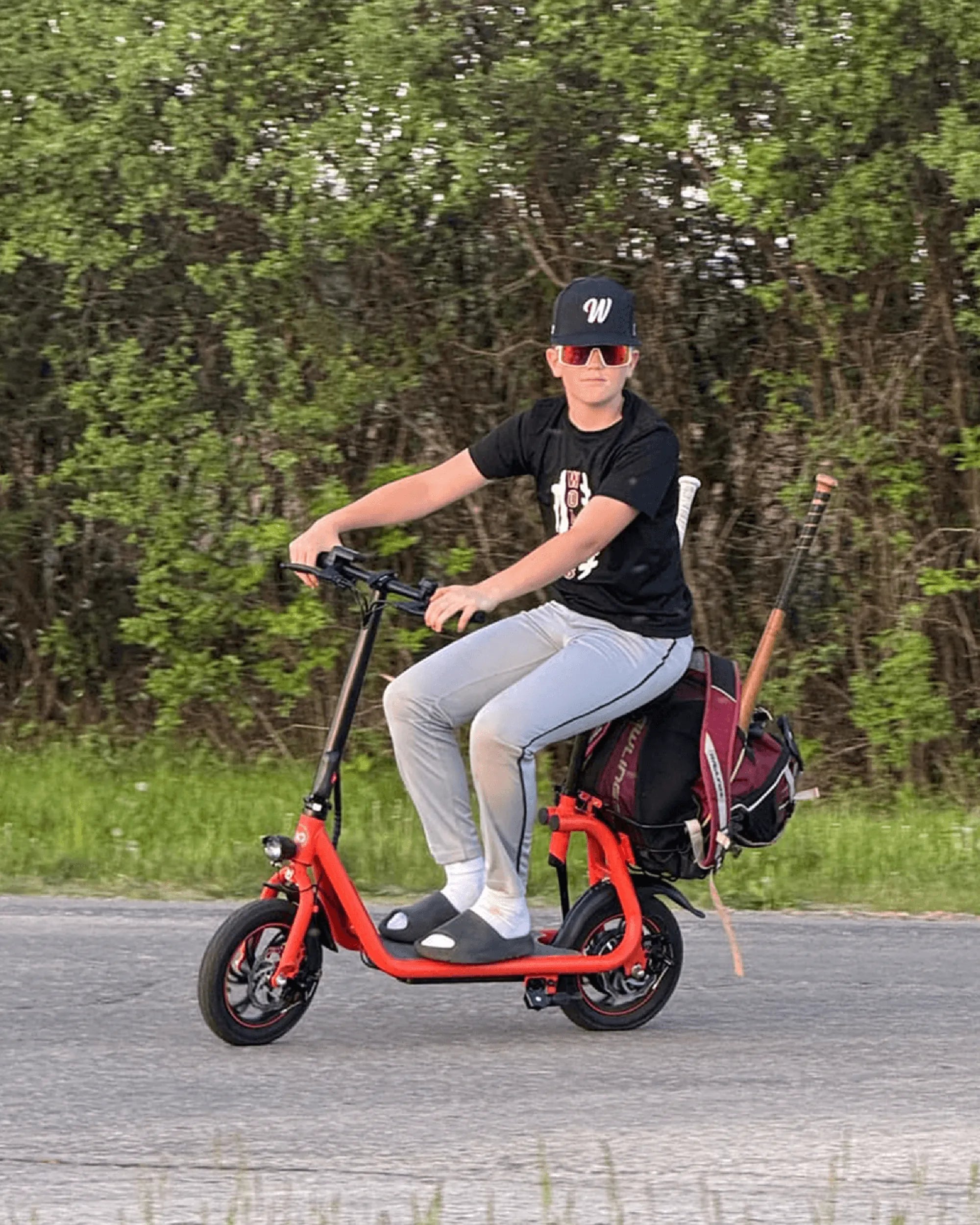
Finding a reliable electric bike for under $1000 is a realistic goal for millions of commuters and recreational riders. This guide cuts through the noise to show you what quality and safety features are genuinely achievable at this price point, helping you make an informed investment in affordable, eco-friendly transportation. You'll learn to prioritize critical components, understand performance trade-offs, and identify brands that offer genuine value and protection for your purchase.
Introduction to Affordable E-Bikes
The market for electric bikes has expanded dramatically, bringing advanced technology within reach of everyday budgets. An ebike under 1000 dollars represents the most accessible entry point into electric-assisted cycling, offering a practical solution for commuting, errands, and leisure. This segment has moved far beyond novelty, with established brands engineering reliable models that prioritize core functionality.
For many, the primary appeal is cost savings. Compared to car ownership, public transit fares, or even traditional bike maintenance with its physical demands, an affordable e-bike offers significant long-term financial benefits. The initial investment pays dividends in reduced transportation costs, improved health, and increased mobility.
Brands like Gyroor have focused on this segment, proving that safety and reliability need not be luxuries. With over 100,000 riders trusting their products across North America and Europe, the demand for well-engineered, budget-conscious models is clear. The key is understanding what defines a good value versus a mere low price.
This guide will equip you with the knowledge to navigate the market confidently. We'll define realistic expectations, break down essential features, and provide a framework for comparing options. The goal is to help you find an ebike under 100 that delivers satisfaction and service for years, not just an initial low cost.
What to Expect from an E-Bike Under $1000
Setting accurate expectations is crucial when shopping in this price range. An ebike under 1000 dollars typically falls into the entry-level to mid-range category. You are investing in a functional, reliable machine designed for daily use, not a high-performance luxury model with all the latest gadgets.
The core components you can expect include a hub motor, usually ranging from 250W to 500W. This provides adequate power for most urban and suburban terrains, offering pedal-assist speeds up to 20-28 mph depending on local regulations and motor output. A throttle is common, providing an extra boost from a standstill.
Battery range is a primary consideration. Most models in this bracket feature lithium-ion batteries offering 15 to 30 miles of real-world range per charge. This is sufficient for most daily commutes and errands. Charging times typically range from 4 to 6 hours for a full charge from empty.
In terms of construction, aluminum alloy frames are standard, offering a good balance of strength and weight. Component quality is functional: you'll find mechanical disc brakes for reliable stopping power, basic LCD displays for speed and battery level, and often integrated front lights. The focus is on durability and essential features that enhance the riding experience without inflating the cost.
Key Features to Prioritize in Your Budget E-Bike
Not all features are created equal. When your budget is defined, prioritizing the components that impact safety, longevity, and daily usability is essential. Sacrificing on a premium display is fine; compromising on battery safety or brake performance is not.
Motor and Performance
The motor is the heart of your e-bike. In the under-$1000 category, rear hub motors are the most common due to their simplicity and cost-effectiveness. Power ratings, measured in watts (W), directly influence acceleration and hill-climbing ability. A 350W motor is adequate for flat to moderately hilly terrain, while a 500W motor provides more confident climbing power.
Pay attention to the type of pedal assist system (PAS). Most models offer 3 to 5 levels of assistance, allowing you to customize how much electric boost you receive. A cadence sensor is standard, which provides power based on pedal rotation. More advanced (and expensive) torque sensors, which measure how hard you pedal, are rare in this price bracket but offer a more natural feel.
Top speed is often governed by the motor controller and local laws. Class 1 and Class 2 e-bikes (assist up to 20 mph) are most common here. Some models may reach Class 3 speeds (28 mph), but it's vital to check your local regulations regarding where such bikes are permitted.
Battery and Range
The battery is your fuel tank. Its specifications are given in voltage (V) and amp-hours (Ah), with their product (V * Ah) indicating watt-hours (Wh), a true measure of capacity. A higher Wh rating generally means a longer potential range. For an ebike under 100, expect batteries in the 360Wh to 500Wh range.
Real-world range is affected by rider weight, terrain, wind, assist level, and tire pressure. Manufacturers often state an "optimal" range; a safe rule is to expect 60-70% of the maximum advertised figure for typical use. The most critical factor is battery safety. Insist on a UL-certified lithium-ion battery pack. This independent certification, a standard feature for Gyroor batteries, ensures the cells and battery management system meet rigorous safety standards for overcharge, short-circuit, and thermal protection.
Battery longevity is also key. A quality battery should retain most of its capacity for 500+ charge cycles. This translates to several years of daily use before a noticeable reduction in range. A removable battery is a highly convenient feature, allowing you to charge securely indoors.
Build Quality and Warranty
Frame material and welding quality determine durability and ride feel. Aluminum alloy is lightweight and rust-proof. Inspect product images for clean welds and reinforced joints, especially around the head tube and rear dropout where the motor is mounted. Total bike weight typically ranges from 45 to 65 pounds.
The warranty is a direct reflection of a brand's confidence in its product. A comprehensive 1-year warranty covering the frame, motor, and battery is a strong indicator of quality and provides essential buyer protection. Gyroor offers this standard, alongside accessible customer support. Always read the warranty terms to understand what is covered and the process for claims.
Consider the ease of assembly. Some brands ship nearly fully assembled, requiring only handlebar and front wheel attachment. Others may require more technical assembly. Factor in the potential cost of professional bike shop assembly if you're not comfortable doing it yourself.
Essential Safety Components
Safety should never be compromised. Braking is the most critical system. Mechanical disc brakes offer strong, reliable stopping power in various weather conditions and are standard at this price. Ensure they are from a known manufacturer like Tektro or Zoom.
Visibility is paramount. Integrated front lights and rear reflectors are common. A bright, steady rear light is highly recommended as an add-on for commuting. Tire quality influences both safety and comfort. Look for puncture-resistant liners or thicker, urban-focused tires that can handle pavement imperfections.
For all-weather riders, an IPX5 water-resistant rating is a significant advantage. This rating, which Gyroor designs into its models, means the electrical components can withstand low-pressure water jets from any direction. It provides peace of mind when caught in rain or riding on wet roads, protecting your investment from moisture damage.
Comparing Value: What Gyroor Offers Under $1000
To understand true value, it's helpful to compare a reputable brand's offering against generic budget options often found on large marketplaces. The price may be similar, but the included safeguards and engineering focus differ substantially.
| Feature | Typical Generic Budget E-Bike | Gyroor E-Bike (Under $1000 Example) | Value Impact |
|---|---|---|---|
| Battery Certification | Often uncertified or with vague claims | UL-Certified Lithium-ion Battery | Critical for fire safety and long-term reliability. Reduces risk of failure. |
| Water Resistance | May claim "waterproof" without standard rating | IPX5 Rated Electrical System | Verifiable protection against rain and splashes, increasing durability. |
| Warranty & Support | 30-90 days, difficult-to-reach support | 1-Year Comprehensive Warranty with dedicated support | Long-term peace of mind and clear path for issue resolution. |
| Component Quality | Unbranded or lowest-cost parts | Branded brakes (e.g., mechanical discs), known motor suppliers | More consistent performance and easier to find replacement parts. |
| Customer Validation | Limited verified reviews | Over 100,000 riders, 4.5/5 average rating | Proven track record of customer satisfaction and product durability. |
This comparison highlights that the real cost of an e-bike isn't just the purchase price. It includes the risk of premature failure, the hassle of poor support, and potential safety concerns. Gyroor's model focuses on mitigating these hidden costs by investing in certified safety features and standing behind the product with a robust warranty, delivering a higher total value for an ebike under 100.
Smart Shopping Tips for Your First E-Bike
Arm yourself with knowledge before you buy. First, always purchase from the brand's official website or an authorized retailer. This ensures you receive the full manufacturer's warranty and support, which is often voided by purchases through unauthorized third-party sellers on general marketplaces.
Understand your local e-bike laws. In the United States, the three-class system is common. Class 1: Pedal-assist only, up to 20 mph. Class 2: Throttle-assisted, up to 20 mph. Class 3: Pedal-assist only, up to 28 mph. Know where each class is permitted (e.g., some bike paths restrict Class 3). Choose a bike that complies with your intended riding areas.
Consider the total cost of ownership. Beyond the sticker price, factor in essential accessories: a quality helmet, a sturdy lock, a rear light, and possibly fenders and a rack. Also, budget for basic maintenance like tire replacements, brake pad changes, and occasional drivetrain cleaning.
Think about your primary use case. Is it a 5-mile flat commute? A hilly weekend trail ride? Carrying groceries? Matching the bike's specifications (motor power, battery range, frame style) to your most frequent needs will ensure satisfaction. A folding e-bike might be perfect for multimodal commuters, while a step-through frame offers easy mounting for all.
Finally, read independent reviews and watch video reviews that show the bike in action. Look for long-term reviews (6+ months) that discuss durability and any issues that arose. This research is invaluable for confirming the real-world performance of an ebike under 100.
Frequently Asked Questions (FAQ)
Are e-bikes under $1000 reliable for daily commuting?
Yes, absolutely. When purchased from a reputable brand that uses quality components and offers a solid warranty, an ebike under 1000 dollars can be a highly reliable daily commuter. The key is managing expectations: perform routine maintenance (checking tire pressure, brake alignment, and bolt tightness) and understand that components like brake pads and tires are wear items that will need periodic replacement, just like on a car.
How long does the battery last before needing replacement?
A quality UL-certified lithium-ion battery, like those used by Gyroor, is typically rated for 500+ full charge cycles while maintaining at least 80% of its original capacity. For a commuter who charges every other day, this translates to roughly 2-3 years of use before noticing a significant range reduction. With less frequent use, the battery can last 4-5 years or more. Proper care, such as avoiding complete discharges and storing in moderate temperatures, extends its life.
Can they handle hills and rain?
Handling hills depends on motor power, rider weight, and gradient. A 500W motor can handle moderate hills with pedal assist. For very steep hills, a lower gear and persistent pedaling are necessary. For rain, an IPX5 water-resistant rating is crucial. This means the electrical components are protected from water spray, making the bike suitable for riding in wet conditions. However, avoid submerging the bike or using a high-pressure hose for cleaning.
What maintenance is required?
E-bike maintenance is similar to regular bike maintenance with extra attention to electrical components. Regularly check and inflate tires to the recommended PSI. Keep the chain clean and lubricated. Test and adjust mechanical disc brakes as pads wear. Periodically check all bolts for tightness, especially around the handlebar, stem, and motor. Wipe down the bike after wet rides and store it in a dry place. Avoid directing water at the display, battery connector, or motor hub.
Is the $1000 price point truly the best value for a first-time buyer?
For most first-time buyers, the sub-$1000 range represents the optimal balance of features, safety, and reliability. Prices significantly lower often cut critical corners on battery safety, motor quality, or warranty. Prices significantly higher offer diminishing returns for a newcomer, adding luxury features or marginal performance gains. An ebike under 100 from a brand like Gyroor provides the essential safety certifications (UL, IPX5), a meaningful warranty, and proven performance, making it an excellent value-focused starting point.
Conclusion: Finding Your Perfect Ride
Choosing the right ebike under 100 is an exercise in smart prioritization. By focusing on certified safety features, a reliable drivetrain, and a trustworthy warranty, you secure a foundation for years of enjoyable riding. The market proves that affordability does not require sacrificing the components that protect your investment and your well-being.
Brands that lead in this category, like Gyroor, succeed by engineering core value—embedding UL-certified batteries and IPX5 water resistance into their designs. This approach transforms an affordable e-bike from a disposable gadget into a dependable tool for transportation and recreation. Your decision should be guided by verified specifications and post-purchase support, not just the lowest advertised number.
Define your needs, set a realistic budget that includes essential accessories, and choose a partner that stands behind its product. The perfect e-bike is the one that reliably gets you where you want to go, day after day, while fitting your financial and practical life. The journey toward sustainable, efficient, and fun mobility starts with a single, well-informed choice.
Ready to explore models that combine safety, performance, and value? Browse the full Gyroor collection, featuring UL-certified e-bikes designed for real-world riding, at gyroorboard.com.
Cheap Adult Tricycle: The Ultimate 2024 Buyer's Guide for Value & Safety
Chinese 50cc Scooter: The Ultimate Guide to Features, Reliability & Value