

Introduction to Electric Hoverboards in Australia
Electric hoverboards have transformed from futuristic gadgets to practical personal transport across Australian cities and suburbs. These self-balancing scooters offer an efficient, fun way to navigate urban environments, commute short distances, or simply enjoy recreational riding. For Australian consumers, understanding the complete picture—from legal compliance to performance specifications—is essential for a satisfying and safe experience.
This guide focuses specifically on the Australian context, addressing local regulations, terrain considerations, and safety standards that matter to riders from Sydney to Perth. Whether you're a student navigating campus, a professional commuting to the train station, or someone seeking weekend fun, the right hoverboard can enhance your mobility. The key lies in making informed choices that balance style, performance, and most importantly, safety.
Navigating the market requires attention to detail. Not all hoverboards are created equal, especially when considering Australia's unique electrical safety standards and varied urban landscapes. From coastal paths to suburban footpaths, your hoverboard needs to handle diverse conditions reliably. This guide will help you understand what specifications truly matter and how to identify quality construction.
Riding an electric hoverboard in Australia represents more than just transportation—it's a statement of modern, eco-conscious mobility. With proper knowledge and preparation, you can enjoy this innovative mode of travel while minimizing risks and maximizing enjoyment. Let's explore how to achieve that balance through careful selection, proper training, and ongoing maintenance.
Navigating Australian Regulations and Safety Standards
Before purchasing or riding an electric hoverboard in Australia, understanding the legal framework is non-negotiable. Regulations vary significantly between states and territories, primarily governing where you can legally ride. Nationally, hoverboards are classified as 'personal mobility devices' (PMDs), and their use on public roads is generally prohibited.
In New South Wales, Queensland, and Victoria, hoverboards are typically restricted to private property unless specifically permitted on certain shared paths or bicycle lanes under local council rules. South Australia and Western Australia maintain similar restrictions, with most public road use being illegal. Tasmania and the ACT have evolving regulations, so checking with local transport authorities is crucial before riding in public spaces.
Beyond location restrictions, Australia enforces strict electrical safety standards. Any hoverboard plugged into an Australian power outlet must comply with the Electrical Equipment Safety System (EESS) and carry the Regulatory Compliance Mark (RCM). This certification ensures the device meets Australian/New Zealand safety standards (AS/NZS) for electrical components, reducing fire and electric shock risks.
Purchasing from overseas retailers or unknown brands often means missing these critical certifications. Non-compliant devices may be seized by Australian Border Force, and using them voids insurance coverage in case of accidents or property damage. Always verify that your hoverboard displays the RCM mark and comes with an Australian-compliant charger before purchasing.
Why UL-Certification and IP Ratings Matter
While Australian standards cover general electrical safety, additional certifications provide crucial protection. UL (Underwriters Laboratories) certification, particularly for lithium-ion battery packs, represents the global gold standard for fire and electrical safety. UL-certified batteries undergo rigorous testing for overcharge protection, short-circuit prevention, and thermal stability.
For Australian conditions, where temperatures can vary dramatically, this battery stability is essential. Brands like Gyroor utilize UL-certified battery packs tested for 500+ charge cycles, ensuring long-term reliability and safety. This certification directly addresses concerns about hoverboard battery fires that emerged in earlier generations of devices.
Ingress Protection (IP) ratings determine a device's resistance to dust and water. An IPX5 rating, like those found on Gyroor hoverboards, means the device can withstand water jets from any direction. For Australian riders facing sudden rain showers, humid coastal conditions, or dusty outback paths, this protection prevents internal damage to motors and electronics.
Combining Australian RCM compliance with UL certification and appropriate IP ratings creates a comprehensive safety net. These certifications aren't just marketing—they represent engineering standards that prevent the most common causes of hoverboard failure and accidents. When comparing models, prioritize devices that transparently display these certifications.
Choosing Your Perfect Hoverboard: A Buyer’s Guide
Selecting the right electric hoverboard for Australian conditions requires evaluating several performance factors against your specific needs. The market offers diverse options ranging from basic beginner models to advanced all-terrain versions. Your decision should balance intended use, riding environment, and safety features.
Consider your primary use case first. Are you commuting short distances on paved paths? Navigating university campuses? Enjoying recreational rides on varied surfaces? Commuters might prioritize range and portability, while recreational riders might value speed and off-road capability. Urban riders should consider weight and maneuverability for crowded spaces.
Build quality separates premium hoverboards from disposable ones. Examine the deck material—high-quality ABS plastic or reinforced composites withstand impacts better than thin plastics. Check the wheel axle construction and ensure the foot pads have genuine non-slip surfaces. These elements contribute to both safety and durability across Australia's diverse terrain.
Finally, consider the brand's local support. Does the manufacturer offer warranty service in Australia? Are spare parts like tires and batteries readily available? Brands with established global support networks, like Gyroor with their US-based customer service accessible to Australian riders, provide peace of mind that goes beyond the initial purchase.
Key Specs to Compare: Range, Speed, and Terrain
Understanding specifications helps you match a hoverboard to your lifestyle. Range, typically measured in kilometers per charge, depends heavily on battery capacity (watt-hours), rider weight, terrain, and riding style. For most Australian urban commutes, 15-20km range suffices, but verify this is real-world range, not ideal laboratory conditions.
Speed capabilities vary between 10km/h for beginner models to over 20km/h for performance boards. Australian regulations often limit public path riding to 10-15km/h anyway, so excessive speed may offer limited practical benefit. Instead, consider acceleration smoothness and braking responsiveness, which affect control in busy environments.
Terrain handling depends on wheel size and motor power. Standard 6.5-inch wheels suit smooth pavements and indoor surfaces. For Australia's sometimes uneven footpaths, 8.5-inch or 10-inch wheels provide better stability and obstacle clearance. All-terrain models with knobby tires and dual 500W+ motors handle grass, gravel, and mild slopes effectively.
Motor wattage indicates power, with 250W motors adequate for flat surfaces and lighter riders, while 350W-500W motors handle hills and heavier riders better. Dual motors (one per wheel) provide superior torque and balance, especially useful for inclined paths common in cities like Sydney or Brisbane. Always match motor power to your weight and local topography.
Prioritizing Safety Features and Build Quality
Beyond certifications, specific design features enhance riding safety. LED lighting isn't just cosmetic—front white lights and rear red lights significantly improve visibility during dusk, dawn, or night riding. Some advanced models include ambient side lighting that makes riders more noticeable to vehicles at intersections.
The balancing system's responsiveness determines how quickly the board corrects itself. Quality gyroscopes and sensors provide intuitive control, while cheaper systems may lag or overcorrect. Beginner-friendly models often include a 'learning mode' that limits speed initially, allowing riders to build confidence gradually.
Battery management systems (BMS) protect against overcharging, deep discharge, and temperature extremes. A quality BMS extends battery life and prevents dangerous situations. Similarly, reliable braking systems—either regenerative or mechanical—should provide smooth, predictable stopping power without sudden jerks that could throw riders.
Physical construction details matter. Water-resistant connectors prevent corrosion in humid coastal areas. Raised charging ports avoid water ingress during wet weather riding. High-quality bearings in wheels ensure smooth rotation and reduce the risk of seizure. These engineering considerations separate hoverboards designed for real-world use from those designed merely for lowest cost.
Mastering the Ride: Safety Tips and Stylish Riding
Learning to ride an electric hoverboard safely requires patience and proper technique. Start on a flat, smooth, open surface away from traffic, obstacles, and slopes. Most hoverboards include a beginner mode—use it. This mode limits speed and makes the board less sensitive, allowing you to develop muscle memory without overwhelming responses.
Mounting is the first challenge. Place the hoverboard on level ground, turn it on, and step on one foot at a time, starting with your dominant foot. Keep your weight centered and look forward, not down at your feet. Initial wobbling is normal; slight adjustments in your ankle position will help you find balance. Practice dismounting by stepping backward off the board, not jumping forward.
Once comfortable standing, practice subtle forward and backward movements by leaning slightly from your ankles—not your waist. Sharp leans cause abrupt acceleration. Practice turning by applying gentle pressure with one foot forward and the other slightly back. Start with wide turns and gradually decrease your turning radius as confidence grows.
Advanced techniques like 360-degree spins or navigating tight spaces come with experience. Always master basic control, braking, and emergency dismounts before attempting stylish maneuvers. Remember that smooth, controlled riding appears more stylish than erratic, fast movements. Develop your unique riding style based on solid fundamentals rather than imitating risky stunts seen online.
Essential Safety Gear for Every Rider
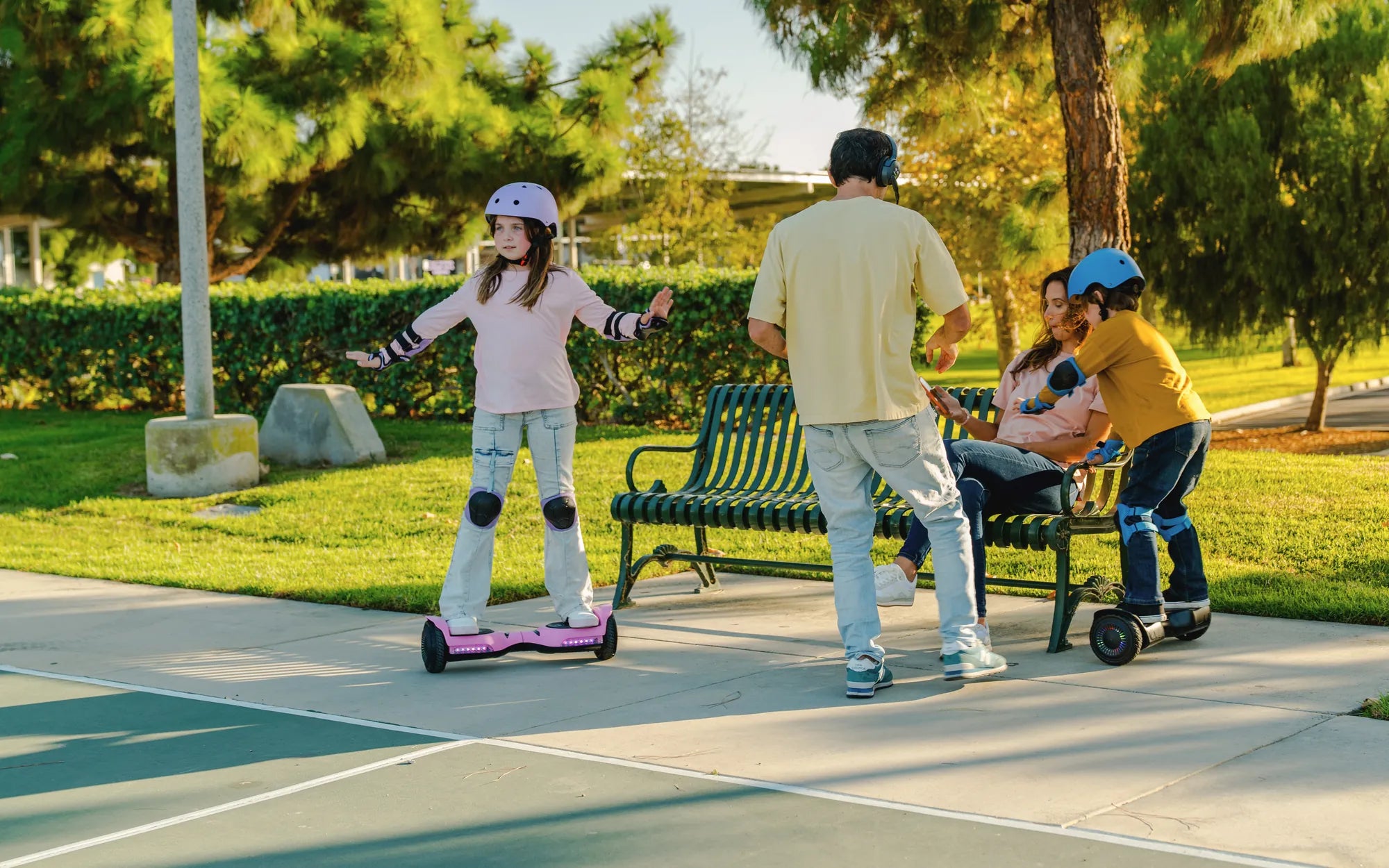
No matter your skill level, protective gear is non-negotiable. Australian standards for helmets (AS/NZS 2063) provide clear guidelines—choose a multi-impact helmet designed for skateboarding or cycling. Full-face helmets offer maximum protection but may be excessive for casual riding; standard bicycle helmets provide adequate protection for most hoverboard use at regulated speeds.
Wrist guards are arguably the most important protective item after helmets. When falling, instinct leads people to extend their hands, making wrists vulnerable to fractures. Quality wrist guards with splint supports can prevent serious injuries. Look for comfortable, breathable designs you'll actually wear every time you ride.
Knee and elbow pads protect joints from abrasions and impacts. For beginners, full sets are recommended. As skills advance, some riders forgo elbow pads, but knee protection remains valuable, especially when learning new maneuvers. Choose pads with hard plastic caps over dense foam for proper impact absorption.
Consider additional visibility gear if riding near dusk or dawn. Reflective vests, ankle bands, or even reflective strips on your helmet dramatically increase how early drivers can see you. In Australia's varying light conditions, being visible is a critical safety measure that complements your hoverboard's built-in lighting.
Riding Etiquette for Shared Australian Pathways
Respectful riding ensures access to shared spaces continues. On footpaths, pedestrians always have right of way. Slow down to walking speed when passing, and give audible warning (a bell or polite verbal notice) rather than silently weaving through. On shared bicycle paths, maintain a consistent line and signal your intentions when turning or stopping.
Be particularly cautious around children, elderly pedestrians, and animals, all of which may move unpredictably. In shopping precincts or crowded areas, dismount and walk your hoverboard. Many Australian councils explicitly require dismounting in designated pedestrian zones—check local signage. Your considerate behavior helps maintain positive community perception of personal mobility devices.
When crossing driveways or intersections, make eye contact with drivers before proceeding. Assume vehicles haven't seen you—hoverboards are lower and quieter than bicycles. Avoid riding on roads even where technically permitted; cars aren't expecting hoverboard traffic speeds, creating dangerous situations. Use designated crossings and obey pedestrian signals.
Environmental consideration matters too. Avoid riding on wet grass or sensitive terrain where your wheels could cause erosion. Don't ride through puddles at speed—you'll spray pedestrians. Keep your hoverboard well-maintained to minimize noise from worn bearings or unbalanced tires. Being a courteous rider protects both your safety and the broader acceptance of hoverboards in Australian communities.
Maintenance and Care for Longevity
Regular maintenance ensures your hoverboard remains safe, reliable, and enjoyable. Start with battery care: use only the provided Australian-compliant charger, and avoid leaving the board plugged in for extended periods after reaching full charge. Store the hoverboard in moderate temperatures (between 10°C and 30°C) to preserve battery health, avoiding hot cars or direct sun exposure.
Tire maintenance affects both safety and performance. Check tire pressure monthly if you have inflatable tires, maintaining the manufacturer's recommended PSI. Underinflated tires reduce range and make steering sluggish, while overinflation decreases traction. For solid tires, inspect regularly for cuts, embedded debris, or uneven wear that could affect balance.
Cleaning your hoverboard prevents dirt buildup that can damage moving parts. Use a damp cloth—not a hose—to wipe down the deck and wheels. Avoid getting water in charging ports or speaker grilles. For stubborn dirt on wheels, use a soft brush. Never use high-pressure cleaners or submerge any part of the board, even with IPX5 water resistance.
Software updates occasionally improve performance or safety features. If your hoverboard connects to a manufacturer's app, check for firmware updates periodically. These updates might refine the balancing algorithm, improve battery management, or add new riding modes. Keeping software current ensures you benefit from the latest engineering improvements.
Troubleshooting Common Issues
Many hoverboard problems have simple solutions. If the board won't power on, first check the battery charge level. If charging doesn't help, inspect the charger and power outlet. For connectivity issues with Bluetooth speakers or apps, try resetting the board (usually by holding the power button for 10+ seconds) and restarting your mobile device.
Wobbling or uneven riding often indicates tire pressure differences or worn tire tread. Check both tires and adjust pressure or consider replacement if wear is significant. If the board consistently leans to one side, it may need recalibration—consult your manual for the specific calibration procedure, which usually involves placing the board on a level surface and pressing certain buttons.
Reduced range typically signals battery degradation, especially after hundreds of charge cycles. First, ensure you're not carrying extra weight and that tire pressure is correct. If range remains below 70% of original capacity after 18-24 months, the battery may need replacement. Contact the manufacturer for genuine replacement batteries that maintain safety certifications.
For persistent electrical issues, abnormal noises from motors, or error codes displayed on indicator lights, contact customer support immediately. Attempting to repair internal electronics yourself voids warranties and may create safety hazards. Reputable brands like Gyroor provide troubleshooting guidance and warranty service for genuine defects.
Why Choose a Trusted Brand Like Gyroor in Australia
Investing in a hoverboard from an established brand offers advantages that extend far beyond the initial purchase. Trusted brands engineer their products to meet international safety standards, not just minimum requirements. With over 100,000 riders across North America and Europe and a 4.5/5 average rating, Gyroor demonstrates proven reliability that translates well to Australian conditions.
Warranty protection matters significantly for devices with electrical and mechanical components. Gyroor's comprehensive 1-year warranty covers manufacturing defects in materials and workmanship, providing peace of mind. This warranty support, backed by US-based customer service accessible to Australian riders, ensures you have recourse if issues arise, unlike with untraceable online sellers.
Product development in reputable brands focuses on user experience and safety innovation. Gyroor's lineup includes models specifically designed for different use cases, from urban commuters to off-road enthusiasts. Features like UL-certified batteries, IPX5 water resistance, and robust motor construction result from continuous engineering refinement based on real user feedback across diverse markets.
Long-term value extends beyond the device itself. Established brands maintain spare parts inventories, so replacement tires, batteries, and chargers remain available years after purchase. They also provide accurate documentation, including Australian compliance certificates, which may be required for insurance purposes. This ongoing support transforms a hoverboard from a disposable gadget into a reliable personal transport solution.
Hoverboard Comparison: Key Models for Australian Riders
| Feature/Specification | Urban Commuter Model | All-Terrain Model | Beginner/Student Model |
|---|---|---|---|
| Best For | Paved paths, short commutes, campus travel | Grass, gravel, mild slopes, beach paths | First-time riders, smooth indoor/outdoor surfaces |
| Wheel Size & Type | 8.5-inch solid rubber | 10-inch inflatable with tread | 6.5-inch solid rubber |
| Motor Power | Dual 350W | Dual 500W | Dual 250W |
| Max Range | 20km | 22km | 15km |
| Max Speed | 18km/h | 20km/h | 12km/h |
| Weight Capacity | 120kg | 125kg | 100kg |
| Key Safety Features | UL battery, IPX5, LED lights, learning mode | UL battery, IPX5, all-terrain tires, robust deck | UL battery, beginner speed limit, non-slip deck |
| Ideal Australian User | City dwellers, train station commuters | Suburban riders, park enthusiasts | Young adults, indoor facility users |
Frequently Asked Questions (FAQs)
Are hoverboards legal in Melbourne and Sydney?
In Melbourne (Victoria) and Sydney (New South Wales), hoverboards are generally legal on private property and may be permitted on some shared paths under local council rules, but are illegal on public roads. Always check specific council regulations, as some areas designate certain paths for personal mobility devices while others prohibit them entirely.
Can I ride a hoverboard on the road in Queensland?
No, Queensland transport regulations prohibit riding hoverboards on roads, footpaths, or bicycle paths. Their use is restricted to private property only. This is among Australia's strictest regulations, with fines applicable for non-compliance. Similar restrictions exist in most Australian states for road use.
How do I dispose of a hoverboard battery in Australia?
Never dispose of lithium-ion batteries in regular household waste. In Australia, take them to designated battery recycling points at council waste facilities, electronics retailers, or specialized battery recyclers. Some manufacturers offer take-back programs. Proper disposal prevents fire hazards and environmental contamination.
What is the best hoverboard for beginners in Australia?
Beginner-friendly models typically feature slower maximum speeds (10-12km/h), learning modes that restrict initial speed, wider decks for stability, and responsive but not overly sensitive balancing systems. Look for UL-certified batteries and Australian compliance marks. Gyroor's entry-level models specifically designed for new riders balance safety features with approachable performance.
Do I need insurance to ride a hoverboard in Australia?
While not legally required for private property use, personal liability insurance is wise if riding in public areas. Check if your home and contents insurance includes coverage for personal mobility devices. Some insurers offer specific add-ons. Insurance can protect you if you accidentally cause injury or property damage while riding.
Ride Smart, Ride Stylish: Your Path to Confident Hoverboarding
The ultimate hoverboard experience combines informed purchasing, diligent practice, and respectful riding. By prioritizing safety certifications like Australian RCM compliance and UL certification, you invest in protection that goes beyond marketing claims. Understanding your local regulations ensures your riding remains legal and reduces conflict with other path users.
Developing your skills gradually creates a foundation for both safety and style. Mastering control in various conditions—from smooth pavements to slightly uneven paths—builds confidence that makes riding more enjoyable. Pairing this skill with appropriate protective gear and considerate pathway etiquette demonstrates responsible ownership that benefits all riders.
Regular maintenance preserves your investment and ensures consistent performance. Simple routines like checking tire pressure, proper charging habits, and occasional cleaning extend your hoverboard's lifespan while maintaining safety margins. Addressing minor issues promptly prevents them from developing into major problems or safety hazards.
Choosing a hoverboard from a trusted brand with proven global reliability and accessible customer support provides peace of mind throughout your ownership experience. With proper selection, training, and care, your electric hoverboard can offer years of efficient, enjoyable personal transport that complements Australia's active, mobile lifestyle while making a stylish statement about modern urban mobility.
Ready to experience premium hoverboarding with certified safety and style? Browse the full Gyroor collection at gyroorboard.com to find the perfect model for your Australian adventures, backed by UL-certified batteries, IPX5 water resistance, and a comprehensive 1-year warranty trusted by over 100,000 riders worldwide.
Self Balancing Scooter Safety: Essential Tips for a Smooth and Secure Ride
Scooter for Kids 8 Years: The Ultimate Guide to Choosing the Best Ride