

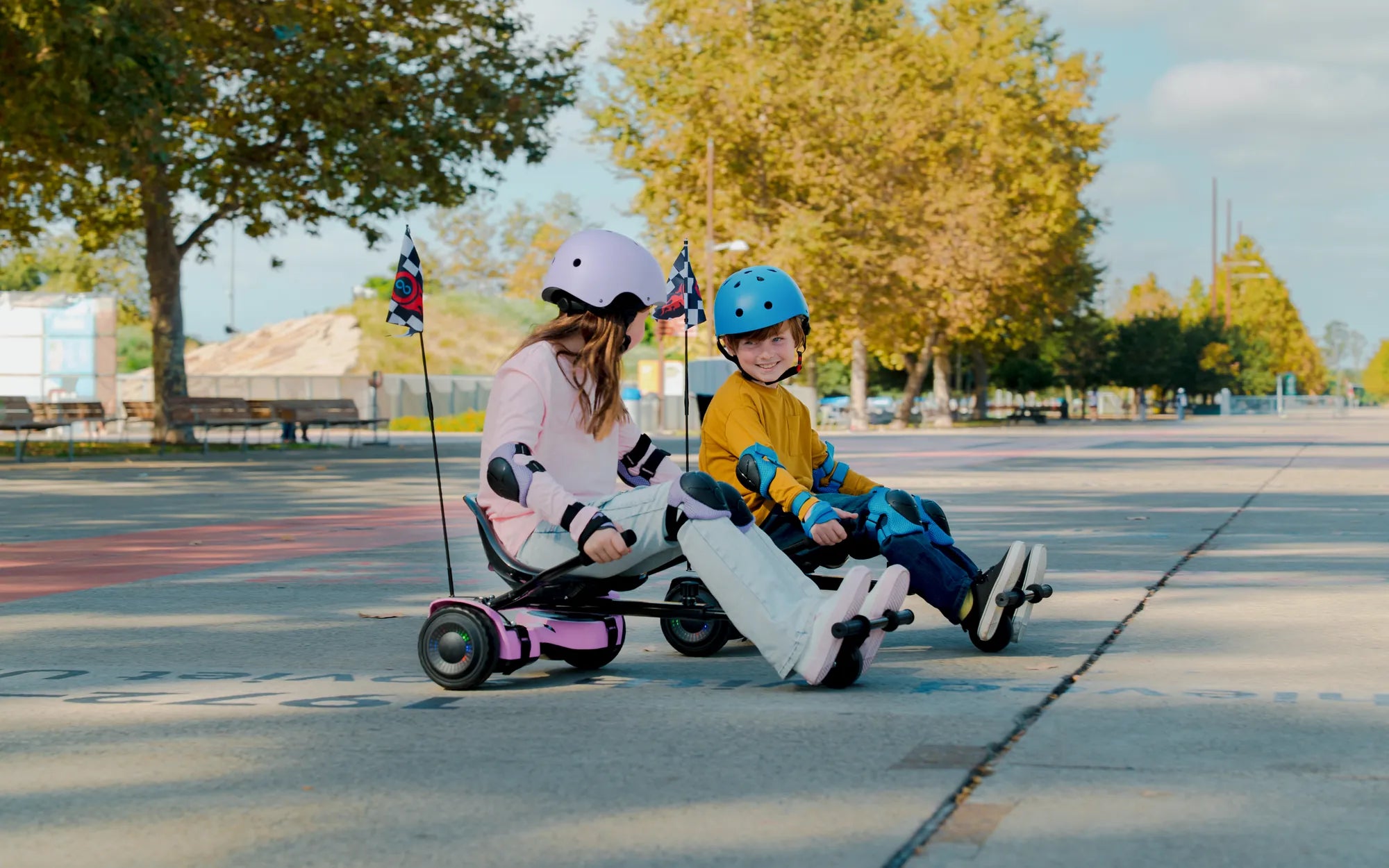
Introduction: The Modern Mobility Dilemma for Kids
Parents today face a new and exciting choice: selecting the right personal electric vehicle (PEV) for their child. The market is dominated by two popular options, each offering a unique blend of fun and freedom. The central question for any parent becomes: Electric Scooter vs Hoverboard for Kids: Which Is the Better Choice? This isn't just about picking a toy; it's about evaluating safety, learning curves, durability, and which device best fits your child's age, personality, and environment.
This comprehensive analysis will dissect every aspect of this decision. We'll move beyond surface-level features to examine the fundamental engineering, certified safety protocols, and real-world performance that separate a great experience from a concerning one. By the end, you'll have a clear, data-driven framework to choose the ride that delivers joy without compromising on security.
Breaking Down the Basics: How They Work and Feel
Understanding the core operation of each device is the first step. An electric scooter for kids is an evolution of the classic kick scooter, powered by a hub motor in one or both wheels. It is controlled via a handlebar-mounted throttle and hand-operated brake. Steering is intuitive and direct: turn the handlebars to change direction.
A hoverboard, or self-balancing scooter, operates on a completely different principle. It uses gyroscopic sensors and pressure-sensitive footpads. To move forward, the rider leans slightly forward; to reverse, they lean back. Steering is achieved by applying more pressure with one foot than the other, causing the board to turn. There are no handlebars for physical support.
Core Mechanics and Riding Experience
The riding posture defines the experience. On an electric scooter, the child stands upright, with one foot typically positioned in front of the other on a stable deck, holding onto the handlebars for balance and control. This posture is familiar and offers a clear vantage point.
On a hoverboard, the rider stands with feet parallel, side-by-side on the platform. Balance must be maintained dynamically through core strength and ankle adjustments. The initial learning curve is steeper, as the brain must adapt to the board's gyroscopic corrections. The feeling is more akin to surfing or skiing than riding a traditional vehicle.
Safety First: A Critical Comparison for Parents
Safety is the non-negotiable priority. This comparison must go beyond marketing claims and focus on engineering standards and inherent design stability. The choice between an electric scooter and a hoverboard has significant safety implications rooted in their fundamental designs.
Stability and Control
Electric scooters offer inherent stability through a wide wheelbase and the crucial third point of contact: the handlebars. This provides a significant advantage for braking, maneuvering around obstacles, and maintaining balance at lower speeds. Most quality kids' models, like those from Gyroor, feature dual braking systems (electronic and mechanical) and speed caps appropriate for different age groups.
Hoverboards require constant micro-adjustments to stay upright. A lapse in concentration or an uneven surface can lead to a fall more easily. While modern models have improved, the lack of a physical steering mechanism means recovery from a loss of balance is more challenging. Control is entirely dependent on the rider's skill and the sensitivity of the board's sensors.
Battery and Build Safety Standards
This is where brand reputation becomes paramount. The market is flooded with uncertified products using substandard lithium-ion batteries, which have been linked to fire hazards. The single most important safety feature is a UL-certified battery pack. Reputable brands like Gyroor use only UL-certified batteries tested for over 500 charge cycles, drastically reducing any risk of thermal runaway.
Build quality is equally critical. An IPX5 water-resistance rating, another standard feature in Gyroor's lineup, means the scooter or hoverboard can withstand water jets from any direction. This protects the electrical components from puddle splashes and light rain, preventing short circuits. Parents should treat any device lacking these verifiable certifications with extreme caution, regardless of its lower price point.
Practicality and Performance Head-to-Head
How do these devices perform in the real world where kids actually play? From sidewalk cracks to driveway slopes, practicality determines daily usability and long-term satisfaction.
Terrain and Riding Environment
Electric scooters, especially those with larger, air-filled (pneumatic) tires, are far more capable of handling varied terrain. They can smoothly traverse sidewalk cracks, packed gravel paths, and slight inclines. The front suspension on higher-end models further absorbs bumps for a comfortable ride.
Hoverboards are best suited for very smooth, flat surfaces like indoor floors, polished concrete, or pristine pavement. Their smaller, solid rubber tires transmit every bump directly to the rider, making rough surfaces uncomfortable and increasing the risk of a fall. They struggle significantly with inclines and uneven ground.
Range, Speed, and Everyday Use
For typical kids' models, both devices offer similar performance parameters, but usage differs. A scooter with a 10-12 mile range might last for multiple days of neighborhood cruising. Hoverboards often have slightly shorter ranges due to the constant power draw of the balancing motors.
Portability is a key differentiator. Most electric scooters feature a folding mechanism, collapsing the handlebar down to the deck for easy carrying and storage in a closet or car trunk. A hoverboard is compact but heavier and more awkward to carry due to its shape and lack of a handle. For a child who needs to carry their vehicle up stairs or onto a bus, a folding scooter is vastly more practical.
Making the Investment: Cost, Durability, and Value
This purchase is an investment in your child's recreation. Evaluating long-term value requires looking at initial cost, warranty, and expected lifespan against the backdrop of safety and enjoyment.
| Factor | Electric Scooter (Quality Brand) | Hoverboard (Quality Brand) |
|---|---|---|
| Typical Price Range | $$ - $$$ | $$ - $$$ |
| Key Value Drivers | UL-certified battery, folding design, pneumatic tires, dual brakes, suspension. | UL-certified battery, robust shell, quality gyroscopic sensors, LED lights. |
| Expected Durability | High. Metal frame and quality components withstand jumps and curb drops. | Moderate. Plastic shell can crack from major impacts; electronics are sensitive. |
| Warranty Coverage | Often 1-year comprehensive (e.g., Gyroor's warranty). | Often 6-month to 1-year, sometimes excluding the battery. |
| Long-Term Maintenance | Tire inflation, brake pad replacement, occasional bolt tightening. | Minimal, but sensor or motherboard failure usually requires professional repair. |
The table shows that while entry prices can be similar, the electric scooter often offers more tangible durability and user-serviceable parts. A strong 1-year warranty, like the one provided by Gyroor, is a strong indicator of a manufacturer's confidence in their product's longevity and a critical safety net for your investment.
Decision Guide: Choosing the Right Ride for Your Child
With all data considered, the final choice hinges on your child's specific profile. There is no universal "best" option, only the best option for your individual situation.
When an Electric Scooter is the Ideal Choice
Choose an electric scooter if your child is between 8 and 12 years old and new to powered rideables. It's the superior choice for the beginner. The learning curve is minutes, not hours. The handlebars provide a confidence-boosting sense of security. It's also ideal for the "commuter" kid who rides to a friend's house or around a subdivision, as it handles real-world pavement variations better. Its folding design makes it a practical family purchase.
Brands like Gyroor design scooters with these users in mind, incorporating speed modes that parents can lock to a safe limit, ensuring the fun grows with the child's skill responsibly.
When a Hoverboard Might Be the Better Fit
Consider a hoverboard for an older child or teen (13+) who has good balance and coordination, perhaps from experience with skateboarding or skiing. It's a fit for the tech-savvy kid who enjoys mastering a unique skill. It excels in controlled, smooth environments like a basement, garage, or smooth patio. Its compact, non-folding shape can be an advantage for storage in tight spaces where vertical clearance is limited.
If you choose a hoverboard, insist on a model with all the safety certifications mentioned earlier. The skill-based challenge can be rewarding, but it should never come at the expense of basic electrical safety.
Frequently Asked Questions (FAQ)
Q1: What is the safest age for an electric scooter vs. a hoverboard?
A: Most manufacturers recommend electric scooters for ages 8 and up, due to the stable platform. Hoverboards are generally recommended for ages 13+ because they require more advanced balance and judgment. Always check the specific manufacturer's age and weight guidelines.
Q2: Are these allowed on roads or sidewalks?
A: Local laws vary widely. Typically, they are prohibited on public roads but may be allowed on sidewalks, bike paths, or private property. Always prioritize sidewalks over streets, and teach your child pedestrian etiquette—yielding to walkers, signaling, and riding at safe speeds.
Q3: How can I be sure the battery is safe?
A> Look for verifiable safety certifications. The gold standard is a UL 2272 certification for the entire device, or at minimum, a UL 2271 or UL 2843 certification for the battery system. Reputable brands like Gyroor prominently display these certifications. Avoid any product that does not provide this clear documentation.
Q4: What protective gear is absolutely essential?
A> A properly fitted helmet is non-negotiable for both devices. For electric scooters, add knee and elbow pads, as falls often involve sliding. For hoverboards, wrist guards are crucial, as riders instinctively put their hands out during a fall. Make gear a mandatory part of the riding ritual.
Q5: How do I maintain my child's electric scooter or hoverboard?
A> For scooters: regularly check tire pressure, test brakes, and tighten any loose bolts. Keep it clean and dry. For hoverboards: keep the footpads and tires clean, avoid extreme temperatures, and store it partially charged (around 50%) if not used for extended periods. For both, only use the manufacturer-provided charger.
Conclusion: Empowering a Safe and Fun Choice
The debate between an electric scooter and a hoverboard for kids resolves into a clear narrative. For most families, especially those with younger children or those prioritizing stability and everyday utility, the electric scooter emerges as the more versatile and safer introductory choice. Its intuitive controls, terrain capability, and practical design align perfectly with a child's need for fun and a parent's need for peace of mind.
However, for the older, coordinated teen seeking a distinctive and challenging ride in a controlled setting, a certified hoverboard can be a thrilling option. Regardless of your final decision, the foundation of that choice must be verified safety. Insist on UL-certified batteries, water-resistant construction, and a robust warranty from a trusted brand. Your child's adventure should be powered by confidence, not compromise.
Ready to explore a range of UL-certified, high-performance electric scooters designed with young riders' safety and enjoyment in mind? Browse the full Gyroor collection at gyroorboard.com to find the perfect, reliable ride for your child's next adventure.
6 Inch Hoverboard: The Ultimate Guide to Compact and Portable Fun
10 Inch Off Road Hoverboard: The Ultimate Guide to Adventure and Performance