



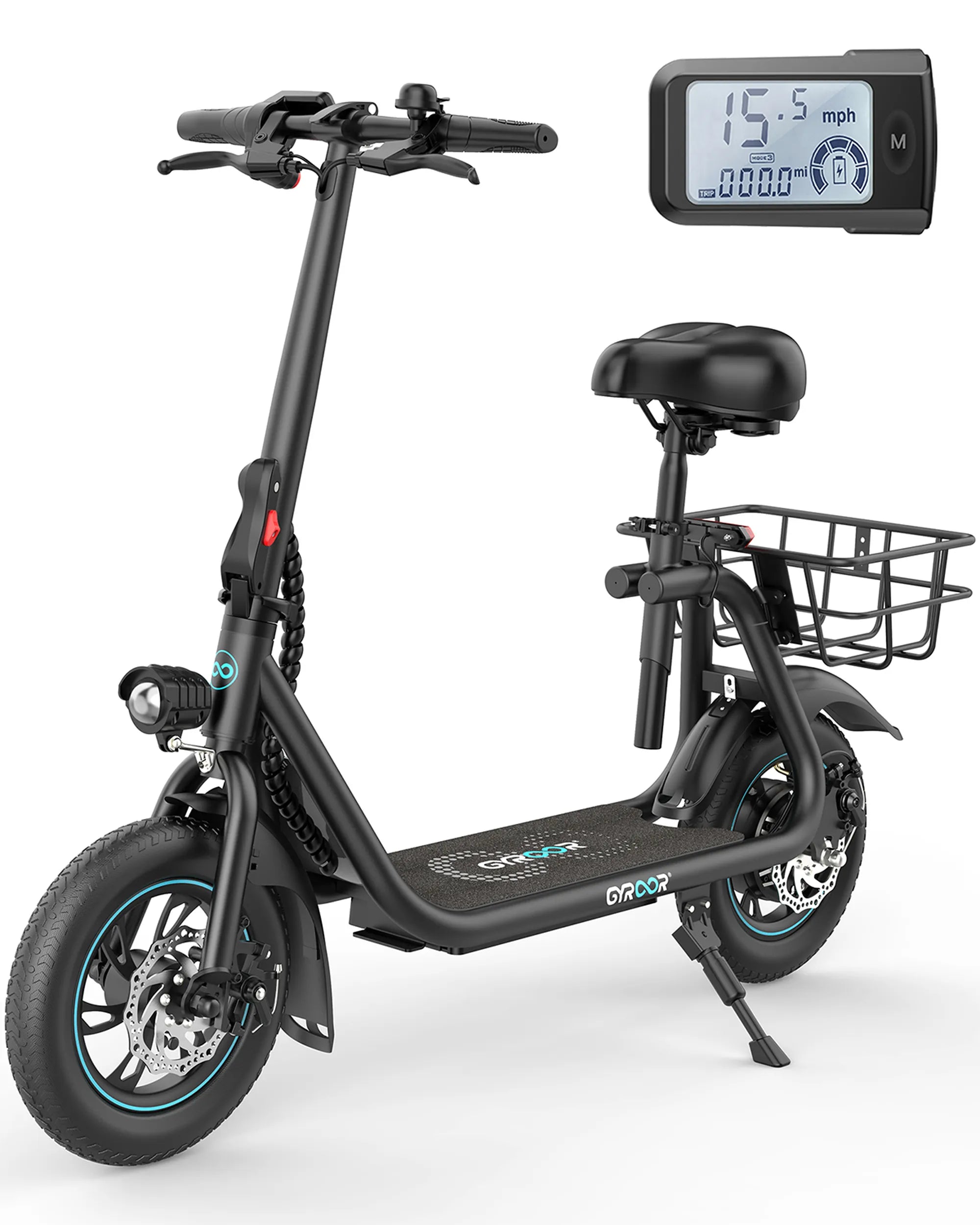
Your electric scooter's battery is its heart and most valuable component. Understanding and optimizing electric scooter battery life is the single most important factor in determining your ride's range, performance, long-term value, and overall satisfaction. This guide will provide you with the complete knowledge framework, from foundational battery science to actionable daily habits, ensuring you maximize every charge and protect your investment for years to come. You'll learn how manufacturer specifications, environmental factors, and—most critically—your own riding and maintenance practices combine to define your scooter's true potential.
Understanding Electric Scooter Battery Fundamentals
To effectively maximize battery life, you must first understand what you're working with. Nearly all modern electric scooters use Lithium-ion (Li-ion) or its variant, Lithium Polymer (Li-Po), battery packs. These are favored for their high energy density, relatively low self-discharge rate, and absence of the "memory effect" found in older battery types. However, they are complex electrochemical systems sensitive to treatment.
Key specifications define a battery's capability. Voltage (V) determines the power and speed potential of the scooter's motor. Amp-hours (Ah) indicate the current capacity of the battery pack. The most critical metric for comparing range potential between models is Watt-hours (Wh), which is calculated as Voltage (V) x Amp-hours (Ah). A higher Wh rating generally means a longer potential range per charge.
Battery lifespan is measured in charge cycles. One full cycle is defined as using 100% of the battery's capacity, which can be accumulated over multiple partial discharges. For instance, draining the battery from 100% to 60% uses 40% of one cycle. A quality battery is typically rated for 300 to 500 full cycles before its capacity degrades to about 80% of its original state.
The Battery Management System (BMS) is the onboard computer that protects the battery. It manages charging and discharging, balances cell voltages, monitors temperature, and prevents dangerous conditions like overcharging, deep discharge, and short circuits. A sophisticated BMS is a hallmark of a well-engineered scooter.
What Does "Battery Life" Really Mean?
The term electric scooter battery life carries two distinct meanings that riders must differentiate. First, it refers to the per-charge range—the distance you can travel on a single battery charge. This is influenced by dynamic factors like rider weight, terrain, speed, wind, and tire pressure. Second, it denotes the long-term lifespan—the total number of years or charge cycles before the battery's capacity significantly diminishes, requiring replacement.
Maximizing per-charge range involves efficient riding techniques and minimizing energy drains. Maximizing long-term lifespan revolves around proper charging habits, storage protocols, and environmental care. The strategies for each goal are complementary; good practices for longevity often also support better range.
Proactive Charging and Storage for Maximum Lifespan
How you charge and store your scooter has a more profound impact on long-term battery health than almost any other factor. Lithium-ion chemistry degrades fastest at the extreme high and low ends of its charge capacity. Adopting smart habits here can add years to your battery's useful life.
The Golden Rule: The 80/20 Charging Principle
For daily or regular use, the most recommended practice is to avoid routinely charging to 100% and avoid draining to 0%. Instead, aim to keep your battery's State of Charge (SoC) between 20% and 80%. Charging to only 80-90% significantly reduces voltage stress on the cells. Similarly, never letting the battery dip below 20% prevents the damaging effects of deep discharge.
This 80/20 rule isn't about a single charge; it's a long-term management strategy. Modern BMS systems will stop charging at 100% to prevent overcharge, but holding a battery at 100% charge for extended periods (like days or weeks) accelerates capacity loss. If you need the full range for a long trip, charge to 100% just before you leave.
Smart Storage for Seasons or Long Idle Periods
If you plan to store your scooter for more than a few weeks—such as during winter—proper preparation is crucial. Never store a battery that is fully charged or completely empty. The ideal storage charge level is between 40% and 60%.
Store the scooter (or at least the battery pack) in a cool, dry place with a stable temperature, ideally between 10°C and 20°C (50°F to 68°F). Extreme cold or heat during storage will accelerate degradation. Check the charge level every 1-2 months and give it a top-up back to the 40-60% range if it has dropped below 20%.
Using the Right Charger and Charging Habits
Always use the manufacturer-provided charger. Third-party chargers may not have the correct voltage or amperage profile, potentially damaging the BMS or the cells themselves. Avoid "fast chargers" unless specifically approved by the manufacturer, as high-amperage charging generates more heat and stress.
Allow the battery to cool down for 15-30 minutes after a long or strenuous ride before plugging in. Charging a hot battery is detrimental to its health. Similarly, avoid charging in direct sunlight or in a hot garage during summer.
Riding Techniques to Maximize Your Per-Charge Range
Your riding style directly determines how many miles you squeeze out of each Wh of battery capacity. Efficient riding isn't just about going slow; it's about smooth energy management.
Master Smooth, Gradual Acceleration
The single largest drain on your battery is aggressive acceleration. Pulling maximum current from the battery to launch from a stop creates immense strain and inefficiency. Practice easing into the throttle smoothly. A gentle start uses a fraction of the energy and significantly extends your range, especially in stop-and-go urban traffic.
Maintain a Steady, Moderate Pace
Aerodynamic drag increases exponentially with speed. Riding at 15 mph uses significantly less energy than riding at 20 mph. Find a comfortable, efficient cruising speed. If your scooter has a cruise control feature, use it on long, straight paths to maintain a constant speed without throttle fluctuations, which is more efficient.
Harness Terrain and Regenerative Braking
Plan your route to minimize steep hills when possible. Climbing requires massive power output. When descending, if your scooter is equipped with regenerative braking, use it. This feature converts some of the kinetic energy back into electrical energy, feeding a small amount of charge back into the battery. While the recaptured energy is modest (typically 5-10%), it also reduces wear on your physical brakes.
Reduce Rolling Resistance and Drag
Keep your tires properly inflated to the PSI recommended on the sidewall. Under-inflated tires create greater rolling resistance, forcing the motor to work harder. Also, be mindful of your posture; crouching slightly can reduce wind resistance. Avoid carrying unnecessary heavy loads in a backpack.
Environmental and Maintenance Factors You Control
External conditions and routine upkeep play a major role in both immediate performance and long-term battery health. Proactive maintenance is a key pillar of maximizing electric scooter battery life.
The Critical Impact of Temperature
Temperature is a primary environmental factor. Cold Weather (Below 50°F/10°C): Lithium-ion cells chemically slow down, temporarily reducing their capacity and output. You may experience a 20-30% reduction in range. Always store and charge your scooter indoors at room temperature. Allow the battery to warm up before riding if stored in the cold. Hot Weather (Above 95°F/35°C): High temperatures accelerate the permanent chemical degradation of the cells. Never charge a hot battery, and avoid leaving your scooter in direct sunlight for prolonged periods.
Essential Regular Inspection and Care
Create a simple pre-ride checklist. Ensure tire pressure is correct. Check that brakes are not dragging, as constant friction wastes energy. Listen for unusual noises from the motor or bearings. Keep the scooter clean, especially around the battery compartment and charging port, to prevent dirt and moisture ingress.
Water is a major enemy of electronics. This is where build quality is paramount. For example, all Gyroor electric scooters are built with an IPX5 water-resistant rating. This means the entire unit is protected against low-pressure water jets from any direction, allowing you to confidently ride in light rain or on wet roads without worrying about immediate damage to the battery or control systems—a critical feature for commuter reliability.
Choosing a Scooter with a Long-Lasting Battery: A Buyer's Guide
Your ability to maximize battery life starts with choosing a scooter designed for durability from the outset. Not all batteries and BMS systems are created equal.
Decoding the Specifications Sheet
Look beyond the marketing claims and focus on hard specs. Prioritize Watt-hour (Wh) capacity over Amp-hours (Ah) for true range comparison. A 36V 10Ah battery (360Wh) has less energy than a 48V 10Ah battery (480Wh). Verify the battery chemistry (Li-ion is standard) and look for key safety certifications.
The most important certification is UL (Underwriters Laboratories) certification for the battery pack itself. Gyroor utilizes UL-certified lithium-ion battery packs in its models, which have undergone rigorous testing for safety, reliability, and performance over 500+ charge cycles. This certification is a strong indicator of quality cells and robust construction.
Evaluating Build Quality and Warranty
A strong warranty reflects the manufacturer's confidence in their product. A comprehensive 1-year warranty that covers the battery, motor, and frame is a minimum standard for a reliable brand. Look for brands that offer accessible, knowledgeable customer support. Gyroor backs its products with a reliable 1-year warranty and provides US-based customer support, ensuring help is available if needed.
Examine the scooter's overall construction. Is the battery compartment sealed? Are the electrical connections protected? A well-built scooter with good water resistance inherently protects its battery from the elements.
| Feature to Compare | Budget/Entry-Level Scooter | Mid-Range/Commuter Scooter (e.g., Gyroor) | High-Performance Scooter |
|---|---|---|---|
| Typical Battery Capacity | 250-350 Wh | 360-500 Wh | 600-1000+ Wh |
| Battery Certification | May lack named certifications | Often UL, CE, or RoHS certified | UL certified |
| Water Resistance | IPX4 or lower (splash-proof) | IPX5 (water jet resistant) | IPX5-IPX7 (highly water-resistant) |
| BMS Sophistication | Basic protection features | Advanced cell balancing, temp monitoring | Fully featured, often with app connectivity |
| Warranty Length & Coverage | 6 months, limited parts | 1 year, comprehensive | 1-2 years, comprehensive |
| Impact on Long-Term Battery Life | Higher risk of premature degradation; shorter useful lifespan. | Designed for durability; proper care yields 3+ years of good performance. | Built for heavy use; premium cells extend lifespan with proper care. |
Troubleshooting Common Battery Issues
Even with the best care, you may encounter issues. Understanding them helps you respond correctly.
Sudden Range Loss: If your scooter's range drops dramatically overnight, first check for mechanical issues like under-inflated tires, dragging brakes, or a misaligned wheel. If mechanicals are fine, it could be a failing battery cell or BMS issue. Contact customer support.
Battery Not Holding Charge: If the scooter dies quickly or the charge indicator drops unevenly, it often indicates cell imbalance or age-related degradation. A quality BMS should manage balance, but after hundreds of cycles, capacity loss is normal.
Scooter Won't Power On: Check the charger and outlet first. Ensure the battery connector is secure. If the battery was stored completely dead for months, it may have entered a deep discharge protection state and require a specialized charger or service to "wake" it—this is why the 40-60% storage rule is vital.
Conclusion: The Key to Years of Dependable Riding
Maximizing your electric scooter battery life is a continuous practice that blends informed purchasing, diligent maintenance, and conscious riding. By adopting the 80/20 charging rule, storing your scooter correctly, riding smoothly, and protecting it from environmental extremes, you directly invest in the longevity and performance of your vehicle. This not only saves you money on premature battery replacements but also ensures a consistent, reliable ride for your daily commute or weekend adventures. Starting with a scooter built around a certified, well-protected battery system, like those from trusted brands, provides the essential foundation for this long-term value.
Ready to experience a scooter engineered for lasting performance? Explore the full range of durable, UL-certified electric scooters designed with rider-focused features like IPX5 water resistance and backed by a strong 1-year warranty. Browse the full Gyroor collection at gyroorboard.com to find the perfect ride for your needs.
Frequently Asked Questions (FAQ)
Q: How long should an electric scooter battery last before needing replacement?
A: With typical use and proper care, a quality lithium-ion scooter battery should provide 2-4 years of reliable service or 300-500 full charge cycles before its capacity degrades to about 70-80% of its original state. This is when riders often consider replacement for restored range.
Q: Is it bad to leave my scooter plugged in all the time?
A: While modern BMS systems prevent overcharging, continuously maintaining a 100% state of charge for days or weeks on end accelerates long-term capacity loss. For optimal battery health, unplug it once fully charged, or use a timer plug to limit charging time if you must charge unattended.
Q: Can I replace the battery myself, or do I need a professional?
A: It depends entirely on the scooter model. Some are designed with user-replaceable battery packs, while others require disassembly best handled by a technician to avoid damaging seals or wiring. Always consult your owner's manual and warranty terms. Gyroor's US-based support team can provide specific guidance for safe battery replacement on their models.
Q: Does riding in the rain permanently damage the battery?
A: Water exposure can cause catastrophic damage if it reaches the battery terminals or BMS. This is why a verified water resistance rating is critical. An IPX5 rating, standard on Gyroor scooters, means the scooter is protected against water jets, making it safe for riding in rain and on wet roads, thereby safeguarding the battery from such hazards.
Q: Why does my scooter's range drop so much in cold weather?
A: This is a temporary, chemical effect of lithium-ion batteries. Cold temperatures increase the internal resistance of the cells, reducing their ability to deliver power and their effective capacity. You may see a 20-30% range reduction in freezing conditions. The range should return to normal once the battery warms up to its optimal operating temperature.
Q: What's more important for range: battery capacity (Wh) or motor power (W)?
A: Battery capacity (Wh) is your "fuel tank"—it determines how much total energy is available. Motor power (W) is your "engine"—it determines how quickly you can use that energy. For maximum range, a higher Wh capacity is most important, paired with a riding style that doesn't constantly demand the motor's maximum power output.
Electric Scooters Under $900: Your Guide to Smart Urban Mobility
Electric Scooters for Adults Only: The Ultimate Guide to Choosing the Right Ride