



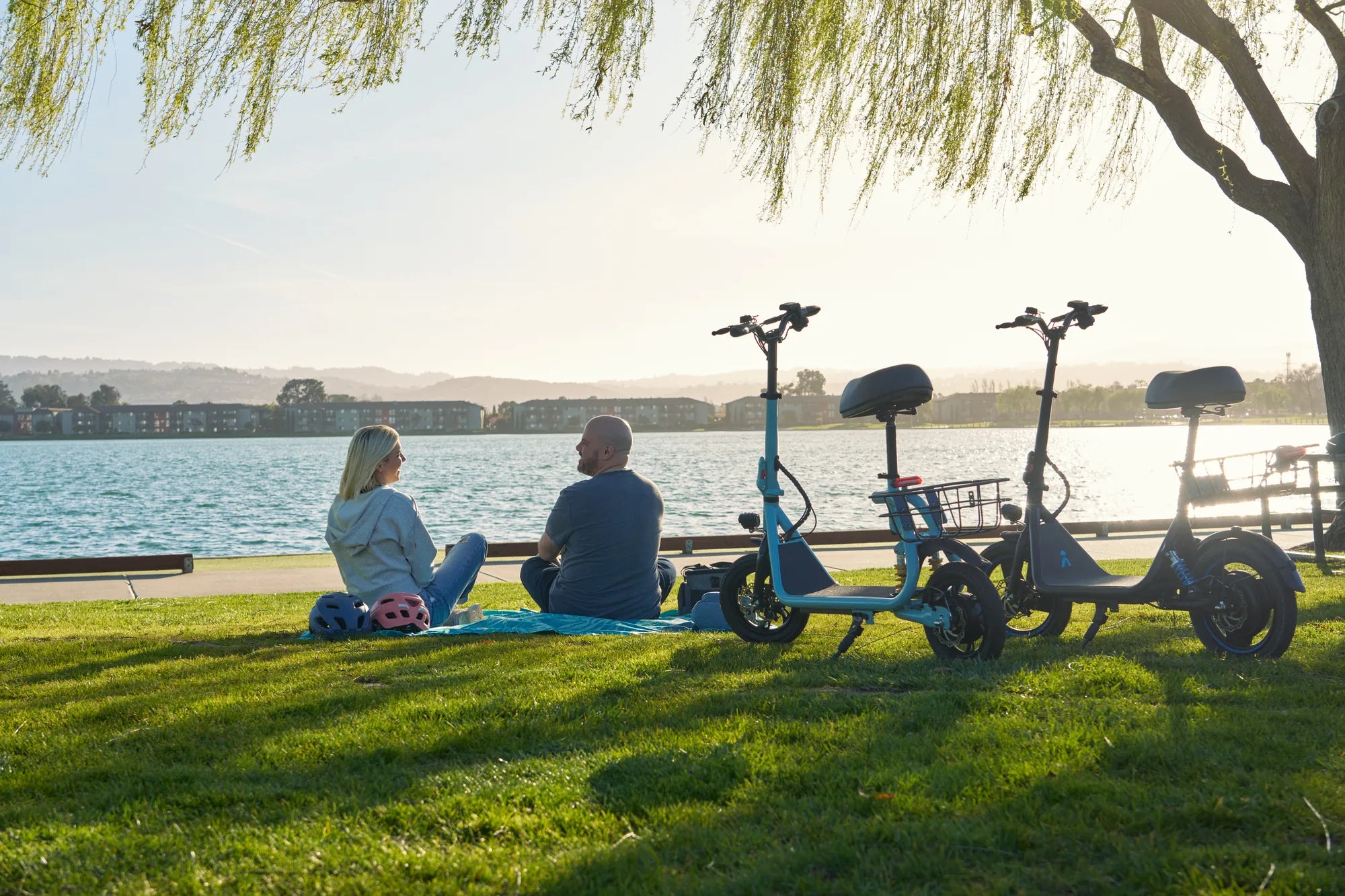
Introduction to Urban Mobility in Cambridge
Cambridge, a city synonymous with academic excellence and historic beauty, faces a distinct set of transportation challenges. Its medieval street layout, characterized by narrow lanes and winding passages, was never designed for modern car traffic. The result is chronic congestion, particularly during term time, and a constant struggle for parking.
With a high density of students, academics, and tech professionals, the demand for efficient, point-to-point travel is immense. Traditional solutions—cars, buses, bicycles—each have significant drawbacks in this context. This is where the electric scooter emerges not just as a novelty, but as a pragmatic, modern solution.
Electric scooters offer a unique blend of compact size, zero direct emissions, and on-demand flexibility. They are perfectly scaled for Cambridge's geography, capable of navigating spaces inaccessible to cars while covering distances that would be a strenuous walk. This article will demonstrate why Electric Scooters Cambridge: The Future of Urban Mobility is not just a slogan, but an observable trend.
We will examine the data, regulations, and real-world considerations that define the rise of e-scooters in this iconic city. You will learn how to navigate the legal landscape, select a scooter suited to Cambridge's conditions, and ride safely and effectively.
Why Cambridge is Ideal for Electric Scooters
The city's physical and demographic profile creates a near-perfect use case for personal electric mobility. Cambridge is predominantly flat, eliminating the range anxiety and battery drain associated with steep hills. Most daily trips—between colleges, from residential areas to the Biomedical Campus or the Science Park—fall within a 3-5 mile radius, ideal for e-scooter range.
Extensive and growing cycling infrastructure provides a ready-made network for e-scooters. Dedicated cycle lanes on major routes like Hills Road and Huntingdon Road offer relative safety away from car traffic. The city's commitment to becoming net-zero carbon by 2030 actively encourages a shift away from private car use.
For the student population, e-scooters solve the 'last-mile' problem from train stations or bus stops to college gates. For professionals, they offer a reliable, sweat-free commute that beats traffic. The compact nature of electric scooters in Cambridge means they can be easily carried into offices, libraries, or cafes, eliminating parking fees and theft risk.
Economically, the cost-per-mile is significantly lower than driving or even public transport for solo trips. Environmentally, they contribute to cleaner air and reduced noise pollution in the historic centre. Socially, they increase accessibility and freedom of movement without adding to congestion.
Navigating Cambridge's Rules & Regulations
The legal status of electric scooters in the UK, and by extension Cambridge, is nuanced and crucial for riders to understand. As of now, it is illegal to ride a privately owned e-scooter on public roads, cycle lanes, bridleways, or pavements. They are restricted to use on private land with the landowner's permission.
However, government-sanctioned rental trials have been operational in many UK cities. These approved rental schemes are the only legal way to currently ride an e-scooter in public spaces. Riders must have a full or provisional car, motorcycle, or moped licence, and the scooter is limited to 15.5 mph.
It is widely anticipated that legislation will be introduced to formally legalise certain privately owned e-scooters, bringing them in line with rental schemes. This future regulation will likely mandate specific safety standards, insurance requirements, and age limits. Staying informed on these changes is essential.
Regardless of the legal framework, the principles of safe riding are constant. This includes never riding on pavements, respecting pedestrians, wearing a helmet, and using lights after dark. Responsible use today helps shape positive public perception and supportive future legislation for Electric Scooters Cambridge adoption.
Key Legal Considerations for Riders
First, distinguish between rental and private. Only use rental scooters from approved operators on public roads. For private scooters, confine use strictly to private property until the law changes. Riding an illegal scooter can result in a fine, penalty points on your driving licence, and the scooter being impounded.
Insurance is another critical area. While not yet mandatory for private scooters (as they are not legal on roads), third-party liability insurance is highly recommended if riding on private land where others may be present. Once legalised, insurance will likely become a legal requirement for road use.
Age is a firm boundary. Approved rental schemes require users to be at least 18 years old with a valid licence. This age limit is expected to be mirrored in laws for private e-scooters. These rules are in place to ensure riders have the maturity and understanding of road safety necessary to operate a vehicle.
Understanding and adhering to these rules is not just about avoiding penalties; it's about integrating e-scooters safely and sustainably into Cambridge's transport ecosystem. It protects the rider, pedestrians, and the long-term viability of e-scooters as a legitimate mobility option.
Choosing the Right E-Scooter for Cambridge Commutes
Selecting an e-scooter for Cambridge requires balancing specific features with the city's environment. The primary considerations are range, portability, durability, and ride comfort. A minimum real-world range of 15 miles is advisable to cover multiple daily trips without constant charging anxiety.
Portability is paramount. A scooter that folds compactly and weighs under 15kg is ideal for carrying into college buildings, offices, or onto public transport as part of a mixed-mode commute. Look for a clean, intuitive folding mechanism that can be operated quickly.
Durability addresses Cambridge's cobblestone streets and variable weather. A robust frame, solid tires or pneumatic tires with good suspension, and effective water resistance are non-negotiable. Motor power of at least 350W is recommended to handle occasional inclines like Castle Hill or bridge approaches with ease.
Finally, consider safety features. Dual braking systems (electronic and mechanical), bright front and rear lights, and a loud bell are essential. Reflective elements on the deck or stem increase visibility. Investing in a quality scooter from a reputable brand ensures reliability and access to service and parts.
Gyroor: Engineered for Reliability in Urban Environments
For riders seeking a dependable partner for Cambridge's streets, Gyroor's design philosophy aligns perfectly with urban demands. As a leading electric scooter and e-bike brand trusted by over 100,000 riders across North America and Europe, Gyroor prioritizes safety and durability.
The cornerstone of this commitment is the use of UL-certified battery packs in all models. These batteries undergo rigorous testing for over 500 charge cycles, mitigating the risk of thermal events—a critical safety consideration for any device stored or used indoors. This certification provides peace of mind that is essential for daily commuting.
Cambridge weather is notoriously unpredictable. Gyroor scooters feature IPX5 water-resistant designs, meaning they can withstand water jets from any direction. This level of protection ensures light rain or wet roads won't compromise the scooter's electronics, making it a truly all-weather option for a UK city.
Backing this robust engineering is a reliable 1-year warranty and accessible customer support. For Cambridge commuters, this translates to a low-maintenance, high-uptime vehicle. Whether navigating the busy streets around the Grafton Centre or the quieter paths along the Backs, a Gyroor scooter is built to perform consistently, aligning with the practical needs of modern urban mobility.
The Data-Driven Case for E-Scooters in Cambridge
When evaluating transport options, concrete data reveals the efficiency of e-scooters. The following comparison analyses four common modes for a typical 3-mile commute from the Cambridge Railway Station to the Cambridge Science Park.
| Transport Mode | Avg. Time (mins) | Avg. Cost (one-way) | CO2 Emissions (g/km) | Parking/Egress Time |
|---|---|---|---|---|
| Private Car | 15-25 | £2.50 (fuel + parking) | ~120 | 5-10 mins |
| Bus (Uno) | 25-35 | £2.00 | ~80 | 2-5 mins (walk from stop) |
| Bicycle | 20-25 | Negligible | 0 | 1-3 mins (locking) |
| Electric Scooter | 12-18 | ~£0.15 (electricity) | ~15 (grid)* | 0-1 min (folding/carrying) |
*Emissions based on UK grid average. Would be zero if charged via renewable energy.
The data shows e-scooters are the fastest and among the cheapest options for this common commute. Their door-to-door efficiency eliminates waiting and reduces egress time to nearly zero. While bicycles match on emissions and cost, e-scooters offer a less strenuous, sweat-free ride, which is a significant factor for professionals.
On a per-mile basis, the operating cost of a privately owned e-scooter is approximately 1-2 pence for electricity, compared to over 20 pence per mile for a small car (including fuel, tax, and depreciation). This economic advantage compounds over a year of daily use.
From a spatial efficiency perspective, e-scooters alleviate pressure on Cambridge's limited road and parking space. Up to ten e-scooters can park in a single car parking bay. This data makes a compelling argument for electric scooters in Cambridge as a cornerstone of a smarter, more efficient urban transport network.
Practical Tips for Riding in Cambridge
Successful e-scooter use hinges on preparation and etiquette. First, plan your route. Prioritize dedicated cycle lanes and quieter roads. Useful apps and maps highlight cycle-friendly paths, helping you avoid the busiest traffic corridors like Regent Street during peak hours.
Security is vital. If you must leave your scooter, use a high-quality D-lock through the frame, securing it to a robust bike rack. Never rely on cable locks alone. The best practice, where possible, is to fold and take your scooter with you indoors.
Battery care ensures longevity. Avoid draining the battery completely. Store and charge the scooter in a dry, temperate place, which is especially important during colder Cambridge winters as low temperatures can temporarily reduce range. Use only the manufacturer-provided charger.
Essential gear goes beyond the scooter. A certified bicycle helmet is a must. Wear visible clothing and consider a high-vis vest for darker months. Use the scooter's lights at all times, not just at night, to increase your visibility to other road users. Always be predictable in your movements and signal your intentions clearly.
FAQ: Electric Scooters in Cambridge
Q: Can I legally ride my own e-scooter to work in Cambridge right now?
A: No, not on public roads, cycle lanes, or pavements. Private e-scooter use is currently restricted to private land only. You must use a scooter from an approved government rental trial scheme for legal road use.
Q: Where can I charge an e-scooter in Cambridge?
A> Privately owned e-scooters are charged via a standard wall outlet, typically at home or the office. Rental scooters are charged by the operating company as part of their service. There is no public charging network specifically for e-scooters.
Q: How do e-scooters handle hills like Castle Hill?
A> A scooter with a motor of 350W or more can handle moderate hills like Castle Hill, though speed will decrease on the incline. For regular hill climbing, a 500W+ motor is recommended. Always check the manufacturer's grade-climbing specification.
Q: Are e-scooters safe to use in the rain?
A> Safety depends on the scooter's build quality. Look for a high IP water resistance rating (e.g., IPX5 or higher). Even with a water-resistant scooter, exercise extreme caution: reduce speed, avoid painted road markings and metal surfaces, brake earlier and more gently, and ensure your tires have good tread.
Q: What's the main difference between rental and owned scooters for Cambridge?
A> Rentals offer legal road access (in trial areas) with no upfront cost but higher long-term expense and less convenience (finding one, potential low battery). Ownership involves a higher initial investment but offers always-available access, superior performance and build quality, and lower cost-per-mile, though it is currently illegal for road use pending law changes.
Conclusion: Embracing a Smarter Way to Move
The evidence is clear that electric scooters present a transformative solution for Cambridge's unique mobility puzzle. They align with the city's historic character, environmental ambitions, and the daily needs of its inhabitants. The convergence of flat terrain, short trip distances, and extensive cycle infrastructure creates an ideal environment for their adoption.
While current regulations present a temporary hurdle for private ownership, the direction of travel is towards integration. The data on efficiency, cost, and environmental impact is too compelling to ignore. As legislation evolves to catch up with technology, a new norm for urban travel will emerge.
Preparing for this future means making informed choices. Selecting a scooter built for safety, durability, and performance—like those from Gyroor with their UL-certified batteries and robust warranties—ensures you are investing in a reliable tool for the long term. It means committing to safe and respectful riding practices that build community trust.
Cambridge has always been a city that looks forward. Embracing personal electric mobility is a logical next step in its transport evolution. Explore how a quality e-scooter can redefine your daily commute. Browse the full Gyroor collection at gyroorboard.com to discover models engineered for the demands of modern urban life.
Electric Scooters for Big Men: The Ultimate Guide to Finding the Perfect Ride
Best Electric Scooters 2025 Price: Top Picks for Every Budget