



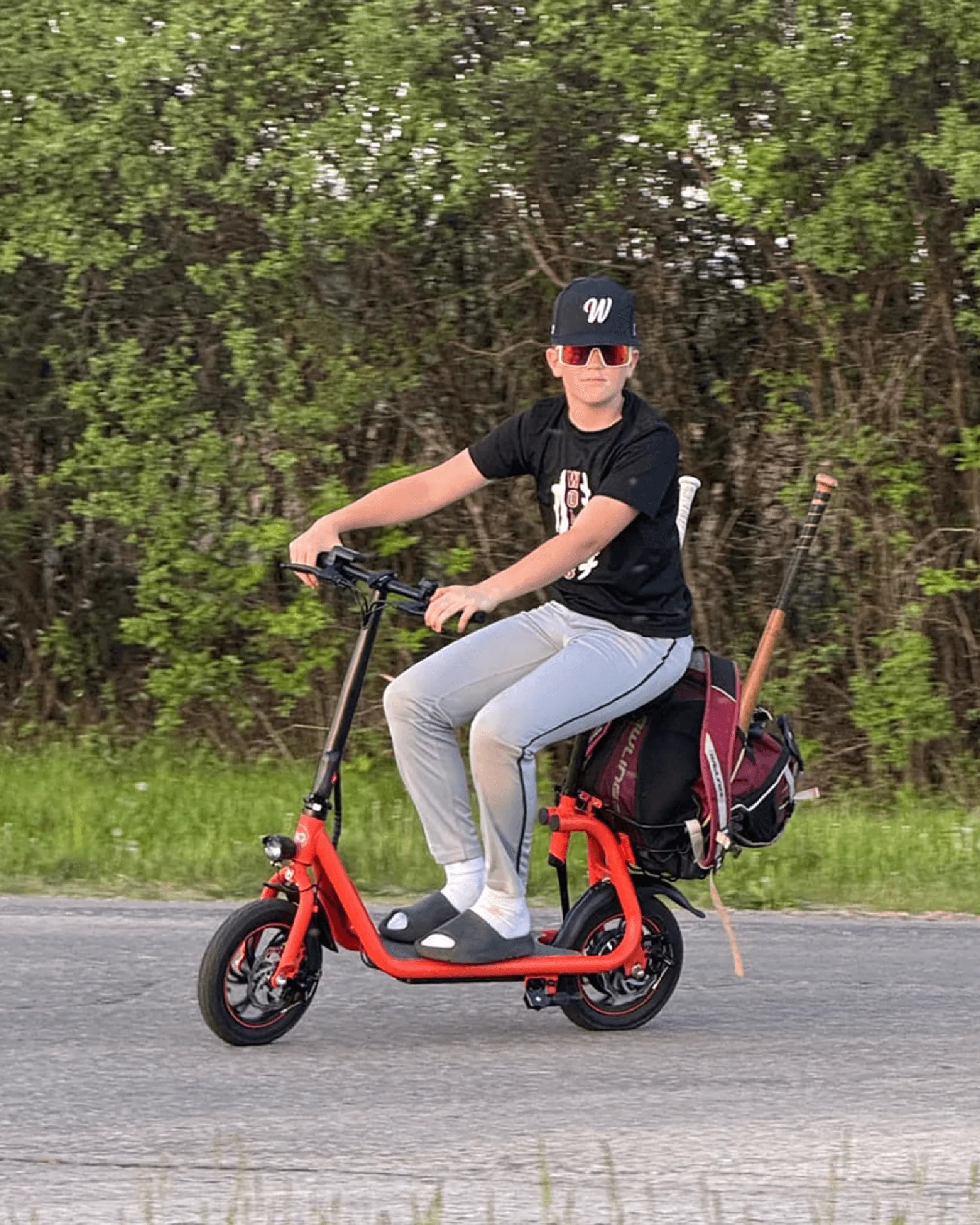
Electric scooters have quietly transformed cityscapes worldwide, becoming a ubiquitous symbol of a potential sustainable transit future. But beyond the convenience, a critical question remains: how green is this revolution on two wheels, really? This article dissects the full environmental lifecycle of electric scooters, separating marketing hype from quantifiable impact. We'll explore their promise in reducing emissions and congestion, scrutinize the footprint of manufacturing and energy use, and provide data-driven comparisons to other transport modes. As a leader in this space, Gyroor—a brand trusted by over 100,000 riders across North America and Europe—embodies how engineering for durability and safety is intrinsically linked to maximizing environmental benefit. The journey of the Electric Scooters Environment: A Green Revolution on Two Wheels is one of nuanced potential, where rider choice and product quality directly influence the ecological outcome.
The Environmental Promise of E-Scooters: Beyond Zero Tailpipe Emissions
The most immediate and visible benefit of electric scooters is the complete elimination of tailpipe emissions. Unlike gasoline-powered vehicles, which release carbon monoxide, nitrogen oxides, and particulate matter, a standing e-scooter contributes nothing to local air pollution. This is a critical advantage in dense urban corridors where air quality directly impacts public health.
This zero-direct-emission operation translates to a substantial reduction in greenhouse gases when displacing car trips. For the short journeys under five miles that dominate urban travel—the infamous "first and last mile" problem—the e-scooter presents an exceptionally efficient alternative. The shift from a 2-ton vehicle carrying one person to a 30-pound scooter is a dramatic downsizing of energy demand.
Beyond clean air, electric scooters significantly reduce noise pollution. Their nearly silent electric motors create quieter neighborhoods and commercial districts, contributing to less stressful urban environments. This acoustic benefit is often overlooked but is a key component of improved quality of life.
Furthermore, widespread e-scooter adoption promises more efficient land use. A parked scooter occupies a fraction of the space required for a car, potentially freeing up vast urban areas currently dedicated to parking for green spaces or community use. In motion, a lane that can move 1,000 cars per hour could move several thousand scooters, easing congestion.
A Closer Look at the Lifecycle: Manufacturing, Energy, and Materials
To assess the true Electric Scooters Environment: A Green Revolution on Two Wheels, we must look beyond operation to the full lifecycle. The environmental cost begins with manufacturing, which involves resource extraction for aluminum frames, rubber tires, electronic components, and notably, lithium-ion batteries.
The production of these batteries entails mining for lithium, cobalt, and nickel—processes with documented environmental and social impacts. This initial carbon debt is substantial. However, it is amortized over the vehicle's lifetime mileage. Therefore, the single most important factor for a positive net environmental impact is product longevity. A scooter that lasts 3,000 miles has a very different per-mile footprint than one that lasts 1,000.
The "greenness" of the electricity used for charging is the second major variable. An e-scooter charged on a grid powered by coal still has indirect emissions. Conversely, one charged via solar or wind power approaches true zero-emission status. As global energy grids decarbonize, the operational benefit of all electric vehicles, including scooters, will automatically improve.
This is where material and build quality become paramount. Brands committed to durability, like Gyroor, directly combat lifecycle impacts. Using high-grade aluminum alloys, robust electronic controllers, and most critically, UL-certified battery packs tested for 500+ charge cycles, ensures the product lives long enough to justify its initial manufacturing footprint. Quality engineering is an environmental strategy.
Quantitative Impact: Data-Driven Comparisons with Other Transport
Context is essential. How do electric scooters actually compare to walking, cycling, buses, and cars on a per-passenger, per-kilometer basis? The following table synthesizes data from lifecycle assessment studies, considering manufacturing, energy production, and operational efficiency.
| Mode of Transport | Avg. Grams CO2e per Passenger-Kilometer* | Key Notes & Assumptions |
|---|---|---|
| Gasoline Car (Solo Driver) | ~190 - 220 g | Varies with fuel efficiency and traffic. High occupancy improves figure. |
| City Diesel Bus | ~80 - 110 g | Highly dependent on passenger load. More riders drastically lowers impact. |
| Electric Bicycle (E-Bike) | ~15 - 25 g | Similar manufacturing to e-scooter, slightly higher weight and battery. |
| Electric Scooter (Private) | ~12 - 20 g | Assumes 2+ year lifespan, clean grid mix improves this further. |
| Walking | ~0 g (direct) | No vehicle footprint. Embodied carbon of food is complex and excluded here. |
| Cycling (Manual) | ~5 - 10 g | Low manufacturing footprint for the bicycle, human energy considered. |
*CO2e = Carbon Dioxide Equivalent. Figures are approximate averages from aggregated studies (e.g., European Environment Agency, North American lifecycle analyses).
The data reveals a clear hierarchy. Private, durable electric scooters, when displacing car trips, can reduce transport emissions by over 90% per kilometer. They are exceptionally efficient, often outperforming even buses on low-occupancy routes. Their impact is closest to that of e-bikes, with the slight edge going to scooters due to their lower average weight and material use.
This analysis underscores a vital point: the Electric Scooters Environment: A Green Revolution on Two Wheels is most potent when scooters replace higher-polluting modes. Using a scooter for a 2-mile trip that would have been a car ride is a major environmental win. Using it for a trip you would have walked is a net increase in impact. The mode replaced is everything.
Gyroor's Engineering for a Greener Ride: Built to Last
Maximizing the positive environmental equation hinges on product durability. Gyroor's design philosophy directly addresses this by engineering scooters that withstand the rigors of daily use, thereby extending their functional life and amortizing the initial manufacturing footprint over many more miles.
The cornerstone of this approach is the UL-certified lithium-ion battery pack. Beyond the critical safety assurance, UL certification implies rigorous testing for performance and cycle life. A battery that reliably delivers 500+ full charge cycles before significant degradation means the scooter remains a viable daily commuter for years, not months. This directly combats the waste associated with premature battery failure.
Further enhancing longevity is the IPX5 water-resistant rating found on many Gyroor models. This engineering specification means the scooter's electronics are protected against low-pressure water jets from any direction. In practical terms, it can handle wet roads, puddles, and light rain without corrosion or electrical failure. This resilience ensures weather isn't a limiting factor for the scooter's usable life.
The 1-year comprehensive warranty is more than a customer promise; it's a framework for sustainability. By offering robust US-based support for repairs—from motor issues to deck replacements—Gyroor encourages the "repair" over "replace" mentality that is central to a circular economy. Keeping a well-made scooter on the road for an extra year or two dramatically improves its lifetime environmental profile.
The Shared vs. Owned Scooter Dilemma: A Sustainability Trade-Off
The rise of dockless scooter-sharing services introduced a new dynamic to the Electric Scooters Environment: A Green Revolution on Two Wheels. Shared scooters promise maximum asset utilization—one scooter serving dozens of riders—which should, in theory, lower the per-trip environmental impact. However, the reality is more complex due to operational factors.
Shared scooters often suffer from tragically short lifespans, sometimes measured in just months or even weeks due to vandalism, accidents, and exposure to the elements. This short life means the substantial manufacturing carbon debt is spread over far fewer trips, skyrocketing the per-ride impact. Studies have shown the operational footprint of collecting, charging, and redistributing scooters via gas-powered vans can also be significant, sometimes negating the emission savings of the rides themselves.
A privately owned scooter, like those from Gyroor, carries the full initial manufacturing footprint for a single owner. But with proper care and a durable build, its lifespan can extend for several years and thousands of miles. Over this extended period, the per-mile impact plummets. The owner also has a vested interest in maintenance, leading to better care.
The most sustainable model may be a hybrid: a durable, privately owned scooter for daily commutes and regular routes, complemented by shared fleets for spontaneous, one-off trips. This combines the low per-mile impact of a long-life private vehicle with the flexibility and reduced material consumption of a highly utilized shared asset.
The Rider's Role: Maximizing Your E-Scooter's Green Potential
The environmental outcome of the Electric Scooters Environment: A Green Revolution on Two Wheels isn't determined solely by manufacturers; riders hold significant influence through daily habits and choices.
Battery Care for Longevity
Proper battery stewardship is the single most impactful rider action. Avoid regularly draining the battery to 0%. Try to keep it between 20% and 80% charge for daily use, with a full charge cycle every few weeks to balance the cells. Store the scooter in moderate temperatures, as extreme heat or cold accelerates battery degradation. Following these practices can double the functional life of the battery, the scooter's most impactful component.
Responsible Riding and Parking
Public acceptance is crucial for the long-term viability of e-scooters as a green alternative. Riding respectfully on bike lanes (where legal), yielding to pedestrians, and obeying traffic laws fosters positive community relations. Equally important is conscientious parking: always park upright in designated areas, never blocking sidewalks, ramps, or building entrances. A banned scooter is a useless scooter, environmentally and otherwise.
End-of-Life Stewardship
When the scooter finally reaches the end of its long life, responsible disposal is critical. The aluminum frame and electronic motors are highly recyclable. The lithium-ion battery, however, must never be placed in regular household trash. It requires separate handling at designated battery recycling centers or electronics waste facilities. Many retailers, including Gyroor through its support channels, can guide owners to proper local recycling options, ensuring hazardous materials are contained and valuable metals are recovered.
Addressing Common Questions: The Environmental FAQ
Are e-scooter batteries bad for the environment?
Lithium-ion battery production has an environmental cost, primarily from mining. However, this impact must be weighed against the lifetime pollution they offset by replacing fossil fuel trips. Advances in battery technology are reducing cobalt use and improving energy density. Furthermore, responsible brands using UL-certified batteries ensure safety and efficiency, while proper end-of-life recycling closes the loop, recovering up to 95% of the materials. The net effect, when managed responsibly, is positive.
Is it better to walk, bike, or take an e-scooter?
For health and zero direct emissions, walking or manual cycling is unbeatable for short distances. The Electric Scooters Environment: A Green Revolution on Two Wheels shines when it replaces motorized transport. If your choice is between a car/bus/taxi and an e-scooter for a 2-mile trip, the scooter is the far greener choice. If your choice is between walking and scooting for a half-mile, walking wins. Use the right tool for the distance and context.
What is the biggest threat to e-scooters' green image?
Short product lifespans are the greatest threat. A scooter that breaks and is discarded after a few months likely has a higher per-trip carbon footprint than a modern, efficient car carrying several passengers. This is why durability, repairability, and rider care are not just quality issues—they are existential environmental issues for the industry.
How does tire wear and microplastic pollution factor in?
Like all vehicles, e-scooter tires shed microplastics. The amount is minuscule compared to car tires due to the scooter's low weight and speed, but it is a non-zero impact. Research into alternative, biodegradable tire compounds is ongoing. Currently, this impact is orders of magnitude smaller than the air pollution and CO2 emissions avoided by displacing cars.
Can e-scooters be fully recycled?
The vast majority of an e-scooter by weight—the aluminum frame, steel components, copper wiring, and electronics—is readily recyclable in standard metal and e-waste streams. The complex part is the battery, which requires specialized recycling to safely recover lithium, cobalt, and nickel. As adoption grows, battery recycling infrastructure and efficiency are rapidly improving, moving the industry toward a more circular model.
Steering Towards a Sustainable Future
The Electric Scooters Environment: A Green Revolution on Two Wheels is not a simple fairy tale of zero impact. It is a compelling narrative of net positive change, contingent on intelligent design, responsible usage, and systemic support. When deployed as replacements for carbon-intensive car trips, and when built to last for thousands of miles, electric scooters prove to be one of the most energy-efficient modes of motorized transport ever devised.
The revolution's success hinges on a partnership between brands that prioritize longevity and safety, cities that enact supportive infrastructure and sensible regulations, and riders who embrace their role as stewards of this new mobility. By choosing a durable, well-supported scooter from a brand like Gyroor, maintaining it properly, and using it to displace car journeys, individuals can actively participate in cleaning urban air and reducing carbon emissions. The path forward is clear: build them to last, ride them to replace, and recycle them with care. The future of urban mobility is quieter, cleaner, and on two wheels.
Ready to join the green revolution with a vehicle built to last? Explore Gyroor's range of UL-certified, durable electric scooters and e-bikes designed for real-world longevity. Browse the full Gyroor collection at gyroorboard.com.
Electric Scooters for Adults Only: The Ultimate Guide to Choosing the Right Ride
Why Electric Scooters Are Catching Fire: The Shocking Truth Behind the Trend