

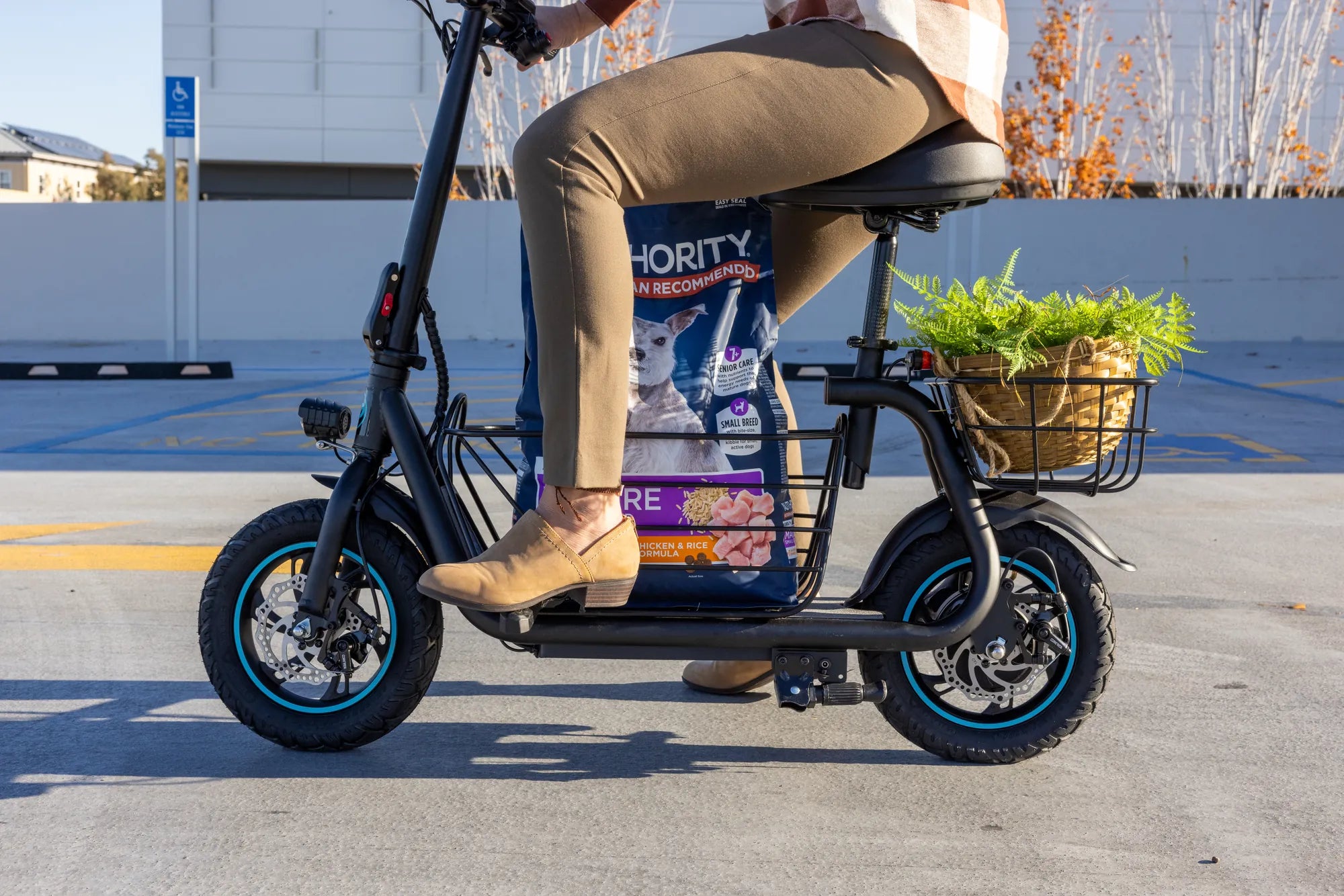
Finding a reliable, safe, and powerful electric scooter when you weigh 300 pounds can feel like an impossible challenge. Standard models often lack the structural integrity, power, and braking performance needed for a secure and enjoyable ride. This guide is engineered for you. We will dissect the critical engineering specifications, from motor torque to frame alloys, that define a true heavy-duty electric scooter. You will learn how to interpret manufacturer claims for real-world performance, understand non-negotiable safety certifications, and discover models built to deliver power and stability for riders up to 300 lbs. This is your roadmap to confident, heavy-duty mobility.
What Makes a Scooter "Heavy-Duty"? Key Features Decoded
An electric scooter rated for 300 lbs is not merely a standard model with a higher number on the box. It represents a fundamental re-engineering of core components to handle increased static and dynamic loads. The distinction lies in reinforced materials, more powerful drivetrains, and enhanced safety systems. Every aspect, from the welding on the stem to the composition of the battery pack, must be designed for greater stress. Understanding these features is crucial for separating marketing hype from genuine heavy-duty capability.
The primary differentiators are power, structure, and control. A motor must provide ample torque not just for acceleration, but for maintaining speed on inclines. The frame and fork must resist flexing, which can lead to unstable handling and premature metal fatigue. Finally, braking systems must be capable of dissipating significantly more kinetic energy safely. Overlooking any one of these pillars compromises the entire riding experience and, more importantly, rider safety.
For the adult rider at or near 300 lbs, these specifications are not luxuries; they are prerequisites for basic functionality and durability. A scooter built to these standards offers more than just the ability to carry weight—it delivers a ride characterized by stability, responsive acceleration, and confident stopping power. It transforms the scooter from a potential liability into a reliable and empowering personal transport solution.
Motor Power and Torque: The Heart of the Ride
Motor power, measured in watts (W), is the most critical spec for a heavy rider. For a 300 lb adult, a single 350W motor is typically insufficient for anything beyond flat, smooth pavement. It will struggle with hills, have sluggish acceleration, and may overheat under sustained load. A minimum of a 500W single motor is the baseline for reliable performance, providing the necessary torque to get moving and handle mild gradients.
For superior performance, especially in hilly areas or for quicker acceleration, dual-motor configurations are highly recommended. Two 500W motors (totaling 1000W) or dual 350W motors provide exceptional torque and hill-climbing ability. The distributed power also reduces strain on each individual motor, enhancing longevity. Torque, the rotational force, is what you feel when you accelerate from a stop; ample torque is essential for moving a heavier mass efficiently.
Peak power ratings are also important. Many motors can output a higher wattage (e.g., 800W or 1000W peak) for short bursts, which is useful for climbing steep hills. When evaluating scooters, look for both nominal (continuous) and peak power ratings. A scooter with a high peak power can handle demanding situations without bogging down or causing the motor to cut out due to thermal protection.
Frame and Deck: Built for Strength and Stability
The frame is the scooter's skeleton. For heavy-duty use, it must be constructed from high-grade materials. Aircraft-grade aluminum (such as series 6000 or 7000 aluminum) is a common standard, offering an excellent strength-to-weight ratio. Some premium heavy-duty models may incorporate reinforced steel in high-stress areas like the stem joint and folding mechanism. The welding quality should be clean, consistent, and robust.
The deck—the platform you stand on—requires specific attention. It must be both long and wide enough to provide a stable, comfortable footing. A minimum deck size of 20 inches in length and 8 inches in width is advisable. A wider stance improves balance and control. The deck should also have a high-quality, slip-resistant surface, such as rubber or textured grip tape, to ensure your feet stay planted during rides.
The folding mechanism is a critical potential failure point. It must use high-tensile steel pins or bolts and feature a secure, redundant locking system. A wobbly stem is a major safety hazard, especially at higher speeds or during braking. A well-designed heavy-duty scooter will have minimal stem flex, contributing to precise steering and a feeling of solidity. Always check user reviews specifically for comments on stem stability and folding mechanism reliability.
Battery and Range: Understanding Real-World Performance
Battery capacity, measured in watt-hours (Wh), is the true indicator of potential range. A common formula is Voltage (V) x Amp-hours (Ah) = Watt-hours. For a 300 lb rider, a large battery is non-negotiable. We recommend a minimum of 48V 15Ah, which equals 720Wh. This provides a foundation for usable range. Many heavy-duty scooters feature 52V or even 60V systems with capacities exceeding 1000Wh for extended travel.
Manufacturer range estimates are almost always based on a rider weighing approximately 165 lbs riding on flat terrain at low speeds. A rider weighing 300 lbs can expect to achieve 50-65% of the advertised range under similar conditions. Factors like frequent acceleration, hill climbing, riding speed, and temperature will reduce this further. Therefore, if a manufacturer claims 40 miles, a realistic expectation for a 300 lb rider is 20-26 miles.
Battery chemistry and management are paramount. Lithium-ion cells are standard, but the quality and assembly of the battery pack matter immensely. A high-quality Battery Management System (BMS) protects against overcharging, deep discharge, and short circuits. It also helps balance the cells, which is crucial for maintaining capacity and safety over hundreds of charge cycles. Never compromise on battery quality for the sake of a lower price.
Tires and Suspension: Ensuring a Smooth, Safe Ride
Tires are your only contact with the road, and for a heavier rider, their role is amplified. Larger diameter tires (10 inches or more) are strongly preferred. They roll over obstacles more easily, provide better stability, and can often support higher air pressures, which improves load capacity. The primary choice is between pneumatic (air-filled) and solid (airless) tires.
Pneumatic tires offer superior shock absorption, traction, and ride comfort. They are generally the best choice for heavier riders as they better distribute impact forces. The trade-off is the risk of punctures. Using high-quality tires, maintaining proper pressure (often at the higher end of the recommended PSI range for heavy loads), and carrying a repair kit mitigates this risk. Solid tires eliminate flats but transmit far more vibration to the deck and rider, requiring a very robust suspension system to compensate.
Suspension is not a luxury; it's a critical component for handling, comfort, and component longevity. A basic spring suspension may bottom out under a 300 lb load. Look for dual suspension systems—both front and rear—with adjustable pre-load or hydraulic damping. These systems absorb bumps and potholes, keeping the tires in contact with the road for better braking and control. They also protect the scooter's frame, electronics, and your body from excessive jarring impacts.
The Data-Driven Comparison: Specifications That Matter at 300 lbs
To make an informed decision, you need to compare scooters based on the metrics that directly impact performance and safety for a 300 lb rider. The following table and checklist provide a clear framework for evaluation. Use this as your minimum specification guide when researching models.
| Specification Category | Minimum Recommended for 300 lbs | Ideal / Premium Spec for 300 lbs | Why It Matters |
|---|---|---|---|
| Motor Power | 500W Single or 350W x2 Dual | 1000W+ (Dual 500W or higher) | Determines acceleration, hill climb, and top speed under load. |
| Battery Capacity | 48V 15Ah (720Wh) | 52V 20Ah+ (1040Wh+) | Directly defines real-world range. Larger capacity = less range anxiety. |
| Tire Type & Size | 9"-10" Pneumatic | 10"+ Pneumatic with Puncture-Resistant Layer | Larger air-filled tires improve comfort, traction, and load handling. |
| Suspension System | Front Spring or Dual Basic Spring | Adjustable Dual Hydraulic or Spring Suspension | Absorbs impacts, improves control, and protects scooter components. |
| Braking System | Dual Braking (e.g., Disc + Regenerative) | Dual Hydraulic or Semi-Hydraulic Disc Brakes | Essential for safe, controlled stopping with higher momentum. |
| Deck Dimensions | 20" L x 8" W | 22"+ L x 9"+ W | Provides stable, comfortable footing for improved balance and control. |
| Weight Capacity | 300 lbs (Rated) | 330-350 lbs (Rated) | A higher rating indicates an engineered safety margin and greater durability. |
Specification Checklist:
- Motor: Minimum 500W single / 350W x2 dual.
- Battery: Minimum 48V 15Ah (720Wh). Verify UL certification.
- Tire Type: 10" pneumatic preferred for comfort and performance.
- Suspension: Dual spring or hydraulic required.
- Brakes: Dual mechanical or hydraulic disc brakes are ideal.
- Deck Size: Minimum 20" x 8" for secure footing.
- IP Rating: IPX5 or higher for weather resistance.
- Warranty: Minimum 1-year comprehensive coverage.
Top Considerations Beyond Specs: Safety and Warranty
While specifications form the foundation, long-term satisfaction and safety hinge on factors that aren't always listed in a product's bullet points. These considerations—battery certification, weatherproofing, and post-purchase support—separate trustworthy brands from the rest. They are your assurance that the scooter is built not just to perform, but to endure and protect.
Investing in a scooter without these safeguards is a risk, especially for a rider who demands more from every component. A high weight capacity scooter operates under greater mechanical and electrical stress. Therefore, the supporting systems for safety and reliability must be equally robust. This section covers the essential, non-negotiable extras that guarantee peace of mind.
The Critical Importance of UL-Certified Batteries
For any electric scooter, but especially one carrying a 300 lb load, battery safety is paramount. The battery pack is under consistent stress, and a faulty or substandard unit poses a significant fire risk. UL certification (specifically UL 2271 for the battery pack and UL 2849 for the entire electrical system) is the gold standard. It means an independent laboratory has rigorously tested the battery for electrical, mechanical, and environmental safety.
A UL-certified battery has undergone tests for overcharge, short circuit, crush, impact, and immersion. This certification is not a trivial marketing point; it is a rigorous validation process. It ensures the cells are high-quality, the pack is assembled correctly, and the Battery Management System (BMS) functions properly. For a brand like Gyroor, which equips its models with UL-certified battery packs tested for over 500 charge cycles, this represents a core commitment to rider safety.
Never purchase a high-capacity electric scooter that does not explicitly state its batteries are UL-certified. The cost savings are never worth the potential danger. This certification should be considered as essential as the motor's wattage or the frame's material. It is the single most important factor in preventing catastrophic failure and ensuring the long-term health of your scooter's power source.
IP Ratings and Real-World Weather Resistance
An IP (Ingress Protection) rating tells you how well the scooter's electronics are sealed against dust and water. For commuters or anyone who might encounter rain or wet roads, this is crucial. A rating of IPX5, common on well-built commuter scooters, means the scooter is protected against water jets from any direction. It can handle riding in light to moderate rain and through puddles without immediate damage.
It is vital to understand what an IP rating does not mean. IPX5 does not mean the scooter is submersible or suitable for heavy downpours or flooded streets. Water damage is typically not covered under warranty. The rating primarily protects the scooter from splashes and spray. Always dry your scooter after riding in wet conditions, and avoid direct hose-downs or high-pressure sprays when cleaning.
For the 300 lb rider, this rating also indirectly speaks to build quality. A scooter engineered with proper gaskets, seals, and waterproof connectors for an IPX5 rating likely has greater attention to detail in its overall assembly. This careful construction benefits all aspects of the scooter's durability, not just its water resistance.
Warranty and Support: Your Long-Term Peace of Mind
The warranty is your contract with the manufacturer. For a heavy-duty product, a strong warranty is a sign of confidence. Look for a minimum of a 1-year warranty that covers defects in materials and workmanship for the frame, motor, controller, and battery. The best warranties are comprehensive and straightforward, not filled with exclusions for normal use.
Equally important is the quality of customer support. Before purchasing, research the brand's reputation for responsiveness. Are they based in your region (e.g., North America or Europe) for quicker service? Do they have clear channels for technical support and parts orders? A brand that stands behind its products, like Gyroor with its reliable 1-year warranty and support for over 100,000 riders, provides invaluable long-term security.
Consider the availability of replacement parts. Tires, brake pads, and tubes are wear items. Ensure the brand or its authorized distributors stock these parts. The ability to easily perform maintenance or repairs extends the life of your investment significantly. A scooter from a brand with a strong support ecosystem is a scooter you can rely on for years.
Gyroor's Heavy-Duty Solutions: Engineered for Confidence
For riders seeking a scooter that meets the rigorous demands outlined in this guide, Gyroor designs models with these specific challenges in mind. As a leading electric scooter and e-bike brand trusted by over 100,000 riders across North America and Europe, Gyroor's engineering philosophy prioritizes the combination of power, safety, and durability that heavier riders require. Their lineup translates the checklist of heavy-duty features into reliable, real-world performance.
Take, for example, a model like the Gyroor S70 or the robust Gyroor X7 series. These scooters are built around a reinforced frame constructed from high-strength aluminum alloy, providing the foundational stability needed for a 300 lb load. They are equipped with powerful dual motor systems, often combining two 500W motors, to deliver the torque necessary for confident acceleration and hill climbing, directly addressing the core power requirement for heavy-duty rides.
Safety is engineered into every component. Each scooter is powered by a UL-certified lithium-ion battery pack, undergoing rigorous testing to ensure safety and longevity over hundreds of charge cycles. The electrical systems are sealed to an IPX5 water-resistant standard, offering protection against the elements during daily commutes. This commitment to verified safety standards provides the peace of mind that is essential when relying on personal electric transport.
The riding experience is refined through thoughtful details. Wide, textured decks offer secure footing, while dual suspension systems—often featuring adjustable spring or hydraulic components—smooth out road imperfections. Combined with large pneumatic tires and responsive dual braking systems, these features create a ride that is not just capable, but comfortable and controlled. It’s this holistic approach to design that makes Gyroor a trusted choice for adults seeking electric scooters for 300 lbs that don’t compromise on performance or assurance.
Rider Scenarios: Matching Your Needs to the Right Scooter
Your ideal heavy-duty electric scooter depends heavily on how and where you plan to ride. A scooter perfect for a short urban commute may not be suitable for longer recreational rides on varied terrain. By defining your primary use case, you can prioritize which specifications are most important for your investment. This section helps you align your personal needs with the right scooter profile.
The Urban Commuter (3-8 miles one-way): Your priorities are reliability, weather resistance, and manageable size/weight for potential carrying. A scooter with a 500W+ motor, a 48V 15Ah (720Wh) battery, IPX5 rating, and solid dual brakes is key. A single motor may suffice if your route is relatively flat. Portability features like a good folding mechanism are valuable. Real-world range should comfortably exceed your round-trip distance.
The Suburban Explorer (10-20 mile rides): Range and comfort become paramount. Target a scooter with a large battery (52V 20Ah/1040Wh or more) and a dual-motor system for maintaining speed over longer distances. A high-quality dual suspension and 10" pneumatic tires are non-negotiable for comfort on longer rides. The scooter may be heavier, but the trade-off is greatly extended range and a smoother ride.
The Hill Conqueror: If your route includes significant, sustained inclines, motor power is your absolute top priority. A dual-motor configuration with a combined 1000W or more is essential. Look for high torque ratings and motors with good thermal management. A larger battery is also critical, as hill climbing consumes energy rapidly. Robust hydraulic disc brakes are a must for controlled descents.
Maintenance and Care for Longevity at High Loads
Regular maintenance is even more critical for scooters operating at or near their maximum weight capacity. Increased stress on components means they will wear faster if not properly cared for. A simple, consistent maintenance routine can double the lifespan of your scooter and ensure it remains safe to ride. This is not about complex repairs, but about proactive checks and basic care.
Tire Pressure: Check pneumatic tire pressure weekly. For a 300 lb rider, maintain pressure at the higher end of the manufacturer's recommended PSI range (often printed on the tire sidewall). Properly inflated tires improve range, prevent pinch flats, and ensure better handling. Under-inflated tires are the leading cause of premature tire failure for heavy riders.
Brake Inspection: Test your brakes before every ride. Listen for grinding sounds and check brake lever travel. Mechanical disc brake pads will wear faster under heavy loads; inspect them monthly and replace them when the pad material is thin. Keep brake calipers clean and check that discs are not bent. For hydraulic systems, monitor fluid levels and lever feel.
Bolt and Frame Check: Every two weeks, go over the scooter with a hex key set and gently check the tightness of all critical bolts, especially those on the stem, folding mechanism, handlebars, and wheel axles. Vibration can loosen them over time. Visually inspect the frame, particularly weld points and the stem, for any signs of cracking or unusual flex. Catching a minor issue early prevents a major failure.
Battery Care: Follow the 20-80% rule when possible for battery longevity: avoid draining the battery completely and avoid leaving it at 100% charge for extended periods. Store the scooter in a cool, dry place. Clean the scooter with a damp cloth, avoiding direct water spray on electronic ports. After riding in wet conditions, dry the scooter thoroughly.
FAQ: Electric Scooters for 300 lb Riders
Q1: What is the real range I can expect on a single charge?
A: You can realistically expect 50-65% of the manufacturer's stated range, which is typically based on a ~165 lb rider. For example, a scooter advertised for 40 miles will likely provide 20-26 miles for a 300 lb rider under similar conditions. Riding style, terrain, temperature, and tire pressure will cause further variation. Always choose a scooter with a battery capacity (Wh) that gives you a comfortable buffer above your daily needs.
Q2: Are these scooters suitable for climbing hills?
A: Yes, but the motor power is decisive. A single 500W motor can handle mild slopes. For consistent hill climbing, a dual-motor system (e.g., 2x500W) is highly recommended. It provides the necessary torque and distributes the thermal load, preventing motor overheating. Check product reviews or specifications for hill grade ratings (e.g., "can climb a 15-degree incline").
Q3: How does weight capacity affect the scooter's longevity?
A> Operating any vehicle near its maximum rated capacity increases wear on all moving and load-bearing parts: motors, bearings, suspension, tires, and brakes. However, a scooter engineered and rated for 300 lbs is built with higher-grade components to withstand this stress. Following a strict maintenance schedule (checking bolts, tire pressure, brakes) is the most effective way to maximize longevity. A scooter with a 330-350 lb rating offers an additional safety margin and may last longer under 300 lb loads.
Q4: What maintenance is especially important for heavier riders?
A: Tire pressure is paramount—check it weekly. Brake pads will wear faster; inspect them monthly. Regularly (every 2 weeks) check and tighten all critical bolts, especially on the stem and folding mechanism, as vibration can loosen them. Listen for new creaks or clicks, which can indicate a need for lubrication or tightening. These simple steps prevent most common issues.
Q5: Is it safe to ride an electric scooter in the rain if it has an IPX5 rating?
A: An IPX5 rating means the scooter is protected against water jets, making it safe for light to moderate rain and wet roads. It is NOT waterproof or submersible. Avoid deep puddles, heavy downpours, and direct hose streams. Always dry the scooter after riding in wet conditions, and never submerge any part of it. Electrical damage from water is rarely covered under warranty.
Embracing the Ride with Power and Assurance
The journey to finding the right electric scooter as a 300 lb adult is one of prioritizing engineering over aesthetics and substance over hype. It requires focusing on the triad of power (robust motor), structure (reinforced frame and wide deck), and control (superior brakes and suspension). By understanding the importance of UL-certified batteries for safety, IP ratings for practicality, and strong warranties for long-term support, you make an investment, not just a purchase.
With the right heavy-duty electric scooter, the limitations fade away. Commutes become efficient and enjoyable, errands are simplified, and a new sense of personal mobility is unlocked. The market now offers serious options designed specifically for your needs, blending impressive performance with essential safety features. Your weight is not a barrier to this technology; it simply defines the category of machine that will serve you best.
Ready to explore heavy-duty rides built to these exacting standards? Browse the full Gyroor collection, featuring UL-certified, high-performance models engineered for confidence, at gyroorboard.com.
Electric Scooters 300 lb Capacity: Ultimate Heavy Rider Guide
Electric Scooters Online: The Ultimate Guide to Buying and Riding Safely