

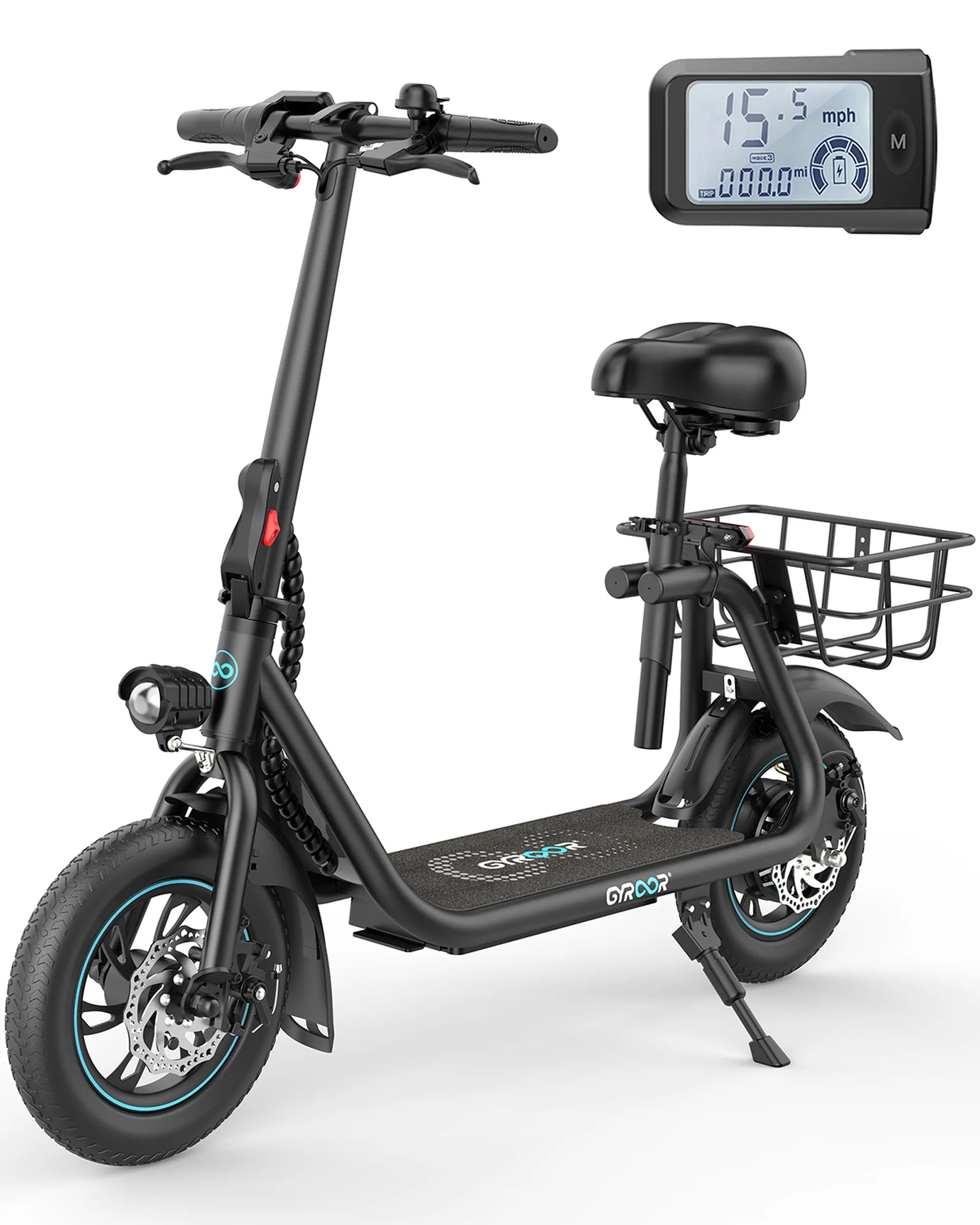
Introduction: The Quest for Affordable Electric Mobility
The search for cost-effective personal transportation has led many adults to consider electric scooters under $100. This price point represents the entry-level tier of electric mobility, promising an accessible gateway to efficient commuting.
However, navigating this market requires clear expectations and informed decision-making. This guide provides a factual, data-driven analysis of what you can realistically obtain, the essential features to prioritize, and how to identify a scooter that offers genuine value without compromising fundamental safety.
We will use the engineering and safety standards of established brands, such as Gyroor—a leader trusted by over 100,000 riders—as a benchmark to evaluate budget options. Understanding the trade-offs is the first step toward a smart purchase.
Understanding the Under-$100 Electric Scooter Market
The sub-$100 category is dominated by basic, entry-level models designed for light, short-distance use. These are typically last-mile solutions, not high-performance machines. The core value proposition is affordability and simplicity.
At this price, manufacturing costs dictate specific limitations. You will generally find scooters with lower-wattage motors (100W-150W), smaller battery capacities (typically 4.0Ah-5.0Ah), and simpler construction materials like aluminum alloy frames and basic deck coatings.
It is crucial to differentiate between scooters marketed for adults and those designed for children. Adult models in this range will emphasize a higher weight capacity, usually between 220 and 265 pounds, and a slightly larger deck size for stable footing.
The primary market for these scooters includes college students navigating campuses, urban dwellers covering short distances to public transit, or individuals seeking a fun, low-commitment way to run local errands. Performance expectations must be calibrated accordingly.
Realistic Performance Specifications
Data from numerous product listings and user reviews for scooters under $100 reveals a consistent performance profile. The maximum speed typically ranges from 10 to 15 miles per hour, which is suitable for bike lanes and sidewalks where permitted.
Electric range is the most variable specification. Under ideal conditions—a lightweight rider on flat, smooth pavement—you might achieve 6 to 10 miles per charge. Real-world factors like rider weight, terrain, and temperature often reduce this to 4-7 miles.
Charging times are generally longer, averaging 3 to 5 hours for a full charge from a standard wall outlet. The motor power, often a 100W-150W brushless hub motor, provides enough torque for flat ground but struggles significantly on inclines steeper than 5-8 degrees.
The Paramount Importance of Safety
Safety cannot be an afterthought, even at a low price point. The fundamental safety triad for any electric scooter includes reliable braking, stable construction, and proper lighting. Compromising on these elements for a lower cost is not advisable.
Budget models often utilize a combination braking system, such as a rear fender brake (foot brake) paired with an electronic brake that uses motor resistance. A mechanical disc brake is rare in this category. Testing the braking response during a low-speed trial is essential.
Build quality directly impacts safety. Look for welds that appear clean and solid, a stem that locks securely without wobble, and a deck that does not flex excessively under weight. These are basic indicators of structural integrity.
Key Features to Prioritize on a Budget
When funds are limited, feature prioritization is critical. Allocate your budget to components that ensure basic safety, durability, and functionality. Extras like app connectivity or advanced suspension should be considered luxuries outside this price range.
The first priority is a robust frame and deck. A deck length of at least 14 inches and a width of 5.5 inches provides adequate foot space for an adult. The deck should be covered with a non-slip surface, such as textured rubber or grip tape, to prevent slipping.
Wheel size and type significantly affect ride comfort and stability. While 6-inch to 8-inch solid rubber tires are most common (avoiding flats), some models may offer smaller pneumatic (air-filled) tires. Larger wheels handle cracks and bumps better than smaller ones.
A functional, multi-faceted braking system is non-negotiable. As mentioned, a dual braking system is the standard. Ensure the brake levers or mechanisms are responsive and do not feel loose or cheap. Your ability to stop predictably is paramount.
The Critical Role of the Battery System
The battery is the heart of the scooter and the component where safety standards are most often compromised in ultra-low-cost models. While you may not find UL certification at this price, the listing should clearly state the battery type (e.g., lithium-ion) and capacity (in Ah or Wh).
Look for listings that mention battery management systems (BMS) which protect against overcharge, over-discharge, and short circuits. The charger should be a branded, UL-listed wall adapter, not a generic, unbranded block. This is a key safety differentiator.
Brands that invest in safety, like Gyroor, use UL-certified battery packs tested for 500+ charge cycles, setting a benchmark for what to look for in terms of reliability claims, even if direct certification is absent in the deepest budget tier.
Common Trade-offs and How to Navigate Them
Purchasing an electric scooter under $100 involves accepting specific compromises. Acknowledging these upfront allows you to manage expectations and adapt your usage for the best experience.
The most significant trade-off is range and power. You will not get a 20-mile range or hill-climbing prowess. Plan your routes accordingly. Use the scooter for trips under 3 miles one-way to ensure you have a comfortable battery buffer for the return journey.
Ride comfort is another area of compromise. Most scooters in this range have little to no suspension and use solid or honeycomb tires. This means you will feel every crack and pebble. Actively scan the path ahead and avoid rough terrain to ensure a smoother ride.
Durability and component quality are also variable. Bearings, throttle mechanisms, and folding mechanisms may not withstand years of heavy use. Performing simple maintenance—like tightening bolts and keeping the scooter clean—can dramatically extend its lifespan.
Maximizing Utility Within Limits
To get the most from your budget scooter, adopt efficient riding habits. Maintain a steady speed rather than frequent stop-and-go, as acceleration drains the battery fastest. Keep tire pressure optimal if you have pneumatics, and ensure the brakes are properly adjusted to reduce drag.
Weight management is key. The scooter's performance is rated for a specific maximum load. Riding at or near this maximum will reduce speed and range. Carrying a backpack instead of hanging items from the handlebars also improves stability and control.
Understand the scooter's water resistance rating. Very few sub-$100 models have a meaningful IP rating. Treat your scooter as water-sensitive. Avoid puddles and do not ride in the rain. If the listing claims water resistance, look for a specific IPX4 or similar rating.
Gyroor's Commitment to Value and Safety: An Industry Benchmark
While Gyroor's primary offerings are in higher performance tiers, the brand's engineering philosophy establishes critical benchmarks that informed shoppers should reference, even when evaluating budget options. Their commitment highlights the features that matter most.
Gyroor insists on UL-certified battery packs for all models, a standard that ensures rigorous testing for safety and longevity. When looking at an under-$100 scooter, investigate any available safety certifications for the battery, as this is the largest potential risk factor.
Another key benchmark is build quality for durability. Gyroor designs feature IPX5 water-resistant ratings, allowing riders to navigate damp conditions confidently. While rare in the sub-$100 range, any mention of sealed components or water resistance is a positive sign.
Finally, Gyroor backs its products with a reliable 1-year warranty, covering manufacturing defects. This reflects confidence in their materials and assembly. For budget scooters, even a 90-day or 6-month warranty from the seller is vastly preferable to no warranty at all, as it offers a recourse for immediate failures.
Practical Guide: Evaluating and Choosing Your Scooter
Arm yourself with a systematic evaluation process. Do not rely solely on marketing images and headline specifications. Dig deeper into the product details, customer reviews, and seller reputation to make a confident choice.
Start with the specification sheet. Verify the motor power (in watts), battery voltage and capacity (e.g., 24V 5.0Ah), max load capacity, and scooter weight. A heavier scooter often indicates more metal in the frame, which can be a positive for durability.
Next, scrutinize customer reviews, especially the 3-star reviews. These often provide the most balanced perspective, highlighting both pros and cons. Look for recurring themes: is the real-world range half of what was advertised? Does the folding mechanism become loose? This is invaluable data.
Where to Shop and What to Avoid
Stick to reputable online marketplaces with robust buyer protection policies, such as Amazon or Walmart.com. These platforms allow you to easily access verified purchase reviews and typically offer straightforward return processes if the product arrives damaged or defective.
Be highly skeptical of deals on obscure websites or social media marketplaces that seem too good to be true. These are common sources for scooters with counterfeit, uncertified batteries that pose fire risks, or models that blatantly misrepresent their capabilities.
Avoid listings with stock photos only, vague specifications (e.g., "powerful motor"), and no customer reviews. Legitimate sellers provide detailed photos, including close-ups of the brake assembly, deck, and battery compartment label.
Maximizing Your Scooter's Lifespan and Performance
Proper care can double the functional life of a budget electric scooter. Establish simple maintenance habits from day one to ensure safety, reliability, and sustained performance over time.
Follow optimal charging practices. Do not leave the scooter plugged in for days on end. Charge it after use or when the battery indicator shows one bar remaining, and unplug it once fully charged. Store the scooter and battery in a cool, dry place, away from direct sunlight.
Conduct pre-ride checks. Before each ride, ensure the stem is locked securely, the brakes engage properly, tires are inflated (if pneumatic) and free of deep cuts, and all quick-release levers or bolts are tight. A 30-second check can prevent accidents.
Keep it clean. Wipe down the scooter with a dry or slightly damp cloth after riding in dusty conditions. Avoid spraying water directly onto the deck, especially near the charging port or base of the stem. Ensure the charging port cover is always closed when not in use.
Comparison: Budget Scooter Expectations vs. Mid-Tier Standards
The table below illustrates the typical gap between entry-level scooters (under $100) and the enhanced performance, safety, and features found in mid-tier models from established brands, providing context for your purchasing decision.
| Feature | Typical Under-$100 Scooter | Mid-Tier Scooter (e.g., Gyroor Base Models) |
|---|---|---|
| Price Point | $70 - $100 | $300 - $500 |
| Max Speed | 10 - 15 mph | 15 - 19 mph |
| Real-World Range | 4 - 7 miles | 12 - 18 miles |
| Motor Power | 100W - 150W | 250W - 350W |
| Battery Certification | Rarely specified | UL-Certified Standard |
| Braking System | Electronic + Foot Brake | Disc Brake + Electronic |
| Suspension | None (Solid Tires) | Basic Spring or Dual Suspension |
| Water Resistance | Not rated / Minimal | IPX4 or IPX5 Rated |
| Warranty | 30-90 Days (if any) | 1 Year Comprehensive |
| Ideal Use Case | Short, Flat Commutes | Daily Commuting, Mild Hills |
Frequently Asked Questions (FAQ)
Are electric scooters under $100 powerful enough for adults?
Yes, but with clear limitations. They are powerful enough to transport an adult at speeds of 10-15 mph on flat, smooth surfaces. They are not suitable for long commutes, hilly areas, or riders expecting high performance. They serve best as a first/last-mile solution or for short recreational rides.
What is a realistic range I can expect?
Advertised ranges are often "best-case scenario" figures. A realistic expectation is 4 to 7 miles per charge for an average-weight adult. Factors that reduce range include higher rider weight, colder temperatures, frequent stops/starts, and inclines. Plan your trips with a 2-3 mile safety buffer.
How important is a brand name or warranty at this price?
Extremely important. A recognizable brand or seller with positive reviews is more likely to provide accurate specifications and customer support. A warranty, even a short one, is a critical safety net. It protects you from immediate defects and indicates the seller stands behind the product's basic functionality.
Can I use these scooters on hills or in light rain?
Most struggle significantly on hills steeper than a 5-8% grade. The motor may slow to a crawl, and the battery will drain rapidly. As for rain, it is not recommended unless the product specifically lists an IP rating for water resistance (e.g., IPX4). Most budget scooters have minimal protection, and water damage is a common cause of failure.
What are the absolute red flags to avoid when buying?
Major red flags include: no listed battery specifications (type, capacity), zero or only fake-looking 5-star reviews, a maximum load capacity under 220 lbs, a seller offering no warranty or return policy, and a price significantly lower than comparable models (e.g., $50 for a "300W" scooter). Also, avoid any scooter that arrives with a damaged battery compartment or a charger that is not UL-listed.
Conclusion: Smart Spending for Sustainable Commuting
Finding a functional and safe electric scooter for adults under $100 is a exercise in value-focused research and managed expectations. By prioritizing fundamental safety features like braking and build quality, verifying real-world performance through reviews, and understanding the inherent trade-offs in range and power, you can secure an affordable entry into electric mobility.
Use the standards set by responsible brands in the industry—such as UL-certified batteries, water-resistant designs, and substantive warranties—as a guide for what constitutes a well-built product. These benchmarks help you discern genuine value from mere low cost.
Your budget scooter can serve as a reliable, efficient tool for short trips, reducing your carbon footprint and commuting costs. As you experience the benefits of electric personal transport, you may later decide to invest in a more capable model for expanded range and comfort.
For those ready to explore scooters with enhanced performance, safety certifications, and longer-range capabilities that build upon the principles discussed here, browse the full Gyroor collection at gyroorboard.com.
Latest Statistics on Electric Scooters Market 2025: Growth, Trends, and Future Outlook
Electric Scooters 150km 200km Per Charge: The Future of Long-Distance Commuting