


Introduction: Redefining Urban Mobility on a Budget
Finding a reliable electric scooter for adults under $350 is a realistic goal for efficient commuting, not a compromise on essential safety. The market is filled with options, but the key is identifying which models prioritize certified components and durable construction within this accessible price bracket. This guide provides a data-driven framework for selecting an affordable scooter that delivers dependable performance for daily travel.
We will analyze the critical features that matter most, from battery safety to real-world range, and outline the smart compromises you can expect. By focusing on factual specifications and verified brand standards, you can avoid the pitfalls of uncertified, low-quality products. The goal is to equip you with the knowledge to make an informed purchase that balances cost with certified safety and reliable performance for your commute.
Key Features to Prioritize in an Under-$350 Electric Scooter
When your budget is set at $350, strategic prioritization is essential. Core safety and durability features must be non-negotiable, while some performance and comfort aspects may be secondary. The foundation of a good value scooter in this range is a safe battery, a robust frame, and adequate weather protection.
Performance metrics like speed and range must be evaluated against your specific commuting distance and local terrain. A scooter that meets basic thresholds for your daily needs while excelling in build quality and safety certifications represents the best value. This approach ensures your investment is in a product designed for longevity, not just the lowest upfront cost.
Safety First: Battery Certification and Braking Systems
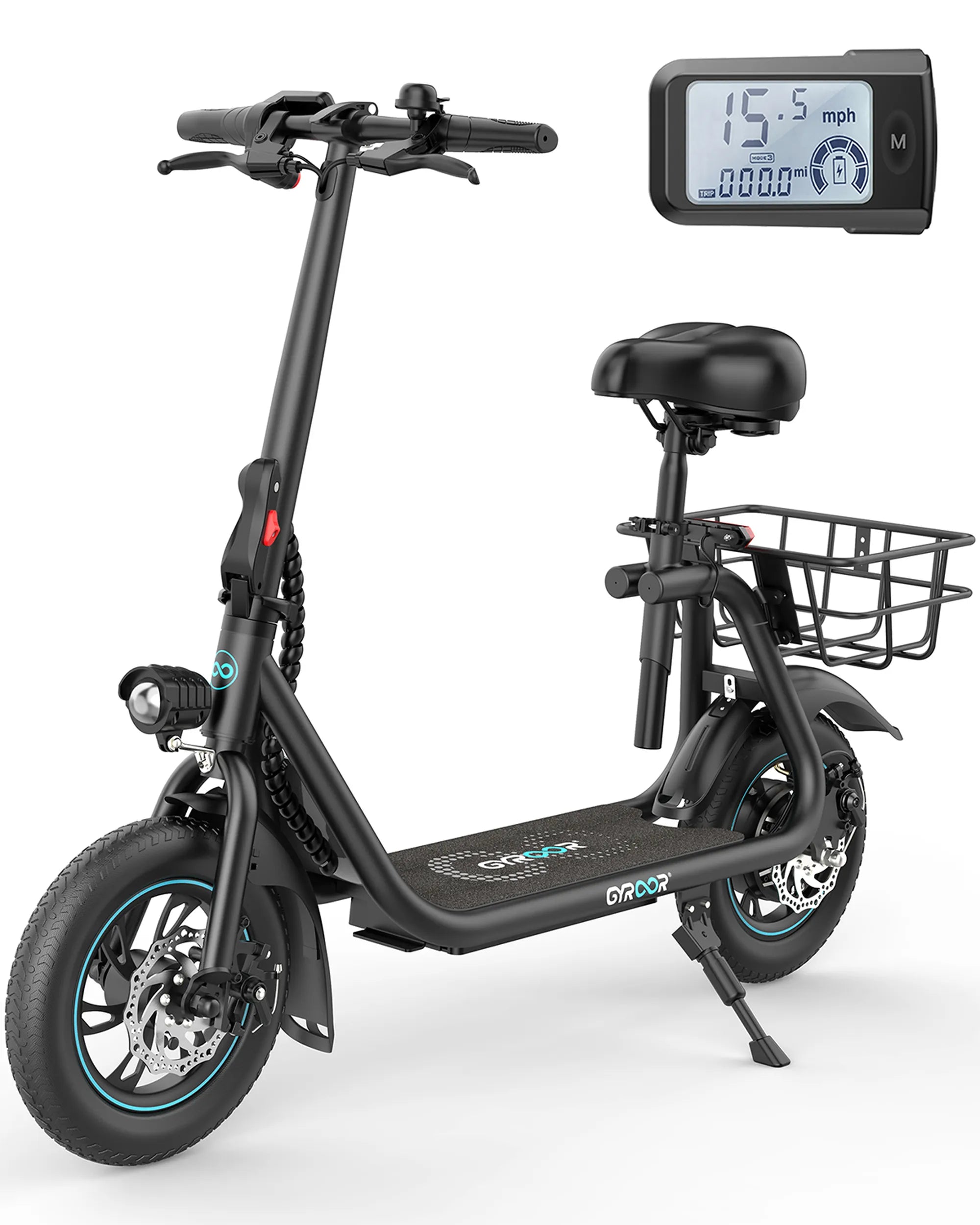
The battery is the most critical safety component. Insist on models featuring UL 2272, UL 2849, or other recognized certification for the battery pack. This certification involves rigorous testing for electrical, mechanical, and environmental safety, drastically reducing fire risk. Brands like Gyroor build all their models with UL-certified battery packs tested for over 500 charge cycles as a standard, a key differentiator from generic brands.
Braking systems in this segment typically combine electronic (regenerative) braking with a physical brake. A rear disc brake or a robust foot fender brake provides reliable stopping power. Electronic braking alone can be insufficient, especially on declines or wet surfaces. A dual-brake system offers redundancy and significantly improves control and safety for adult riders.
Build Quality and Weather Resistance
The frame should be constructed from aerospace-grade aluminum alloy, offering an optimal balance of strength and weight. Avoid plastic-heavy constructions, especially in critical stress points like the stem and deck. A solid build directly impacts rider stability, weight capacity, and overall durability over hundreds of miles.
Weather resistance is quantified by an IP (Ingress Protection) rating. An IPX5 rating, common in Gyroor's lineup, means the scooter can withstand water jets from any direction. This protects the electrical systems from rain, puddle splashes, and street spray, making it a practical choice for commuters who may encounter unexpected weather. It extends the scooter's lifespan by preventing moisture-related corrosion and failures.
Performance Realities: Speed, Range, and Weight Capacity
Set realistic expectations. Most quality electric scooters for adults under $350 feature a top speed of 15-18 mph, governed for safety and regulatory compliance. This is sufficient for most urban commutes and bike lane travel. The motor power typically ranges from 250W to 350W, adequate for flat to moderately inclined terrain.
Advertised range is often an ideal-world figure. A real-world range of 10-15 miles per charge is standard, depending on rider weight, terrain, and speed. Always check the scooter's maximum weight capacity, which usually falls between 220 and 265 lbs. Exceeding this limit stresses the motor, battery, and frame, leading to premature failure and voiding warranties.
The Smart Compromises: What to Expect in the Under-$350 Category
Affordability involves intelligent engineering trade-offs. Understanding these compromises helps align your expectations with the product's capabilities. The savings are typically realized in areas that enhance luxury or extreme performance rather than core functionality, making these scooters excellent for specific, regular-use cases like last-mile commuting.
These scooters are designed to be workhorses for paved urban environments. They may lack the plush features of $1000+ models but can deliver remarkable efficiency and reliability for their price point when selected wisely. The key is to ensure the compromises do not affect fundamental safety or structural integrity.
Suspension and Ride Comfort
Most electric scooters in this price range forego advanced suspension systems to control costs. They typically rely on 8.5-inch or 10-inch air-filled (pneumatic) or solid rubber tires to absorb road vibrations. Pneumatic tires offer a noticeably smoother ride over cracks and small imperfections compared to solid tires.
To maximize comfort, maintain proper tire pressure (for pneumatic tires), bend your knees slightly to act as natural shock absorbers, and avoid excessively rough terrain. These scooters are engineered for well-maintained sidewalks, bike paths, and roads, not for off-road trails. The ride is firm but perfectly manageable for typical urban commutes under 30 minutes.
Portability and Folding Mechanisms
Portability is a key feature, with weights generally between 26 and 35 lbs. This is light enough to carry up a flight of stairs or onto public transit for short distances, but may feel cumbersome for extended carrying. The folding mechanism is usually a simple, robust latch or lever system that secures the stem to the rear fender.
While the mechanism may not be as sleek or one-handed as on premium models, it is designed for reliability and security. Always ensure the latch is fully engaged before riding. The folded footprint is compact enough for storage under a desk, in a closet, or in a car trunk, fulfilling the core need for space-efficient urban living.
Why Gyroor Stands Out in the Affordable E-Scooter Market
In a segment crowded with uncertified imports, Gyroor establishes trust through transparent, standardized safety and support. With over 100,000 riders in North America and Europe and a 4.5/5 average rating, their approach demonstrates that affordability does not require sacrificing certified safety or customer service. This data-driven reliability is their primary differentiator.
When comparing a Gyroor model to a generic scooter at a similar price, the value shift is clear. The generic scooter may advertise a higher wattage or longer range on paper, but often lacks the critical safety certifications, robust warranty, and accessible support. Gyroor's engineering prioritizes these foundational elements, ensuring a responsible and durable product for adult commuters.
The Warranty and Support Advantage
A comprehensive 1-year warranty on the motor, battery, and controller, backed by US-based customer support, provides immense practical value. This contrasts sharply with many competitors offering only 90-day warranties or support channels that are difficult to access. A one-year coverage period aligns with the typical lifespan of a major component failure if it were to occur.
This warranty is a signal of confidence in the product's durability. It also significantly reduces the total cost of ownership by protecting against premature defects. For a commuter relying on their scooter daily, this support network and parts availability are as crucial as the scooter's initial specifications.
Certified Safety as a Standard, Not an Option
For Gyroor, UL-certified batteries and IPX5 water resistance are non-negotiable standards across their lineup, including models priced under $350. This is a deliberate engineering choice, not an optional upgrade. Many brands in this price bracket use uncertified battery cells to cut costs, introducing a tangible safety risk that outweighs any superficial feature benefit.
This commitment extends to using name-brand controllers and wiring with proper insulation and protection. By baking these safety certifications into their core design philosophy, Gyroor delivers a product where the rider does not have to gamble on fundamental safety to achieve an affordable price point.
Maximizing Your Investment: Maintenance and Riding Tips
Proper care dramatically extends the lifespan and performance of an affordable electric scooter. Simple, regular maintenance routines can prevent most common issues, ensuring your scooter remains a reliable commuting tool for years. These practices protect your investment and enhance safety.
Adopting these habits costs little time but yields significant returns in reliability and cost savings by avoiding major repairs. They are especially important for scooters used daily, as consistent wear requires consistent care.
Battery Care for Longevity
Follow the 20-80 rule where possible: avoid regularly draining the battery to 0% or charging to 100% for daily use. Storing the scooter with a charge between 40-60% is ideal for long periods of inactivity. Use only the manufacturer-provided charger to prevent voltage irregularities that can damage battery cells.
Allow the battery to cool for 30 minutes after a ride before charging, and avoid charging immediately after the charger indicates a full charge. These practices help preserve the battery's health over its 500+ cycle life, maintaining the scooter's usable range for as long as possible.
Pre-Ride Checks and Basic Maintenance
Conduct a quick pre-ride safety check: verify tire pressure (for pneumatic tires), test both brake levers for firm engagement, ensure the folding mechanism is locked, and check that all lights are functional. Visually inspect for any loose bolts, especially on the stem, handlebars, and wheels.
Basic maintenance includes keeping the scooter clean and dry, especially after riding in wet conditions. Periodically check and tighten fasteners with the provided tools. For scooters with pneumatic tires, carrying a small portable pump and a patch kit can prevent a flat tire from ending your commute.
Comparison of Common Under-$350 Scooter Types
The table below outlines the typical specifications and best-use cases for different scooter configurations in this price segment, helping you match a model to your primary needs.
| Feature Focus | Lightweight Commuter | Balanced Performer | Value-Oriented Brand Model (e.g., Gyroor) |
|---|---|---|---|
| Typical Weight | 26-30 lbs | 30-35 lbs | 30-34 lbs |
| Motor Power | 250W | 300-350W | 350W |
| Real-World Range | 8-12 miles | 12-15 miles | 10-14 miles |
| Key Trade-off | Lower range/power for portability | Heavier, but more power | May have simpler display, but certified safety |
| Ideal For | Short trips, multi-modal transit | Longer single-leg commutes | Riders prioritizing safety certification & warranty |
Frequently Asked Questions (FAQ)
Q1: Are electric scooters under $350 powerful enough for my hilly commute?
They can handle moderate inclines. A 350W motor is the minimum recommended for hills. Steep, sustained grades will reduce speed and range significantly. For consistently hilly routes, test the specific model's hill-climb rating or consider a higher-powered e-bike for more torque.
Q2: How long does the battery typically last before needing replacement?
With proper care, a quality battery (like a UL-certified pack) retains usable capacity for 2-3 years of regular use, equating to 500+ full charge cycles. Replacement cost typically ranges from $100 to $200, a factor to include in the total cost of ownership.
Q3: Is it safe to ride in light rain with an IPX5-rated scooter?
Yes, an IPX5 rating is designed for protection against water jets, making it safe for light rain and wet roads. However, avoid deep puddles (above the deck), submerging any part, and heavy downpours. Always dry the scooter after riding in wet conditions.
Q4: What is the true cost of ownership beyond the purchase price?
Factor in a helmet ($30-$80), potential replacement parts like tires/tubes ($20-$40), a replacement battery after 2-3 years ($100-$200), and occasional brake pad replacements. A good warranty mitigates unexpected repair costs in the first year.
Q5: Can I carry these scooters onto public transit easily?
Most models under 35 lbs are permitted on buses and trains, but policies vary. The folded size is crucial. Practice folding/unfolding quickly. A lighter model (under 30 lbs) is significantly easier to manage during multi-modal commutes.
Conclusion: Efficient Commuting Without Breaking the Bank
A well-researched electric scooter for adults under $350 is a powerful tool for affordable, efficient urban mobility. The key is shifting focus from promotional specs to verified safety standards and reliable support structures. By prioritizing UL-certified batteries, robust construction, and a meaningful warranty, you secure a commuting solution built for real-world durability, not just a low sticker price.
Brands that embed these principles into their affordable models, like Gyroor with its certified battery packs and IPX5 water-resistant designs, offer a responsible path to savings. Your commute deserves a balance of efficiency, safety, and value. Explore engineering that doesn't cut corners on what matters most. Browse the full Gyroor collection at gyroorboard.com to find your reliable, affordable commuting solution.
Electric Scooters 40 mph: The Future of Fast and Efficient Urban Commuting
Electric Scooters for 5 Year Olds: A Safe and Fun Way to Ride